


























Views
Downloads
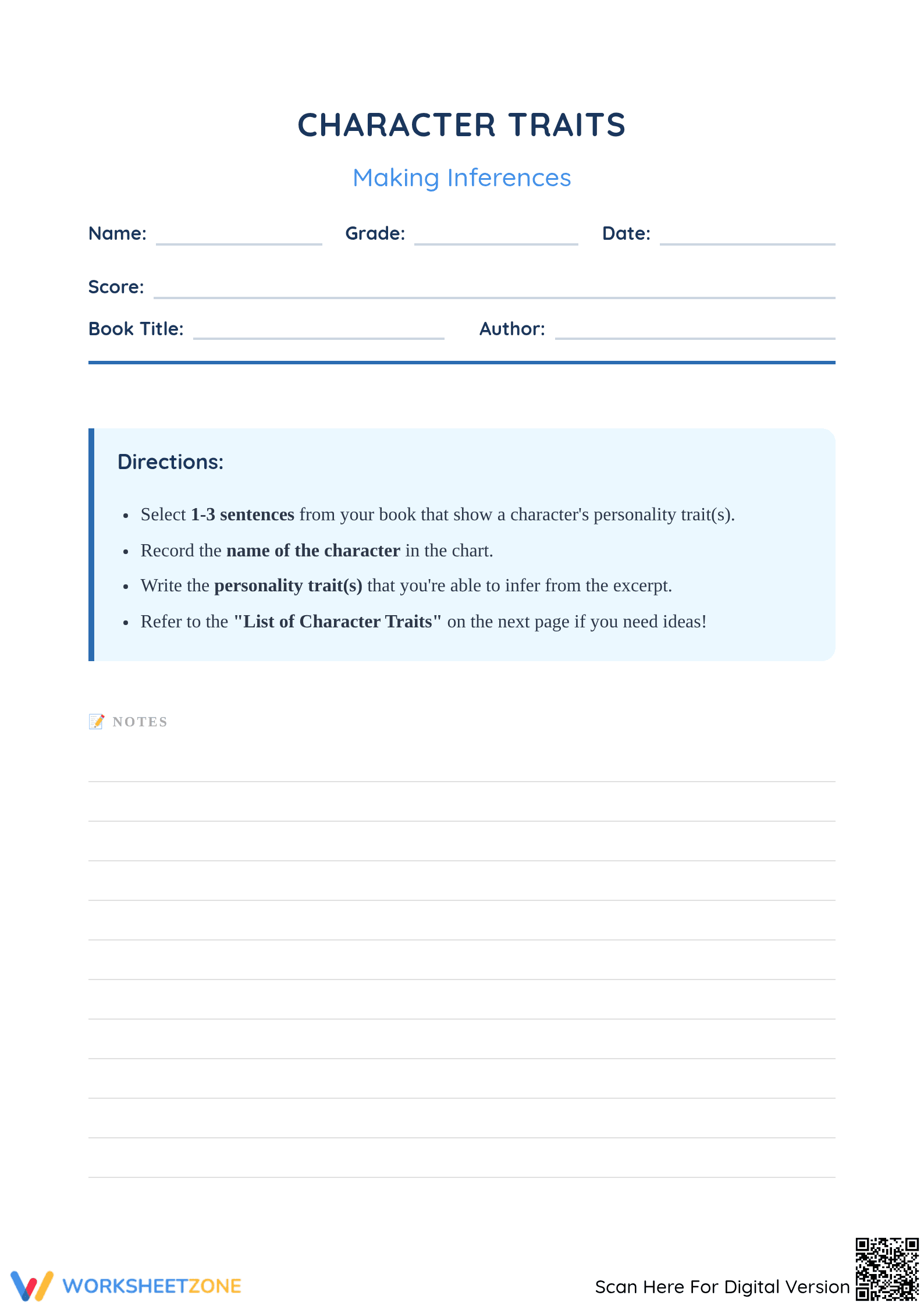

Essential Character Traits Inference Worksheet | Grade 4
Paste this activity's link or code into your existing LMS (Google Classroom, Canvas, Teams, Schoology, Moodle, etc.).
Students can open and work on the activity right away, with no student login required.
You'll still be able to track student progress and results from your teacher account.
Students master the ability to look beyond literal text to uncover deeper motivations. This worksheet guides Grade 4 learners through extracting specific dialogue to justify personality inferences. By bridging the gap between evidence and analysis, students develop a sophisticated understanding of character development. It transforms reading into an active investigation of human behavior.
At a Glance
- Grade: 4 · Subject: English Language Arts
- Standard:
RL.4.1— Draw inferences from text by citing specific details and examples- Skill Focus: Inferring character traits from evidence
- Format: 5 pages · 8 tasks · Reference list included · PDF
- Best For: Independent reading response and literature circles
- Time: 25–35 minutes
What's Inside
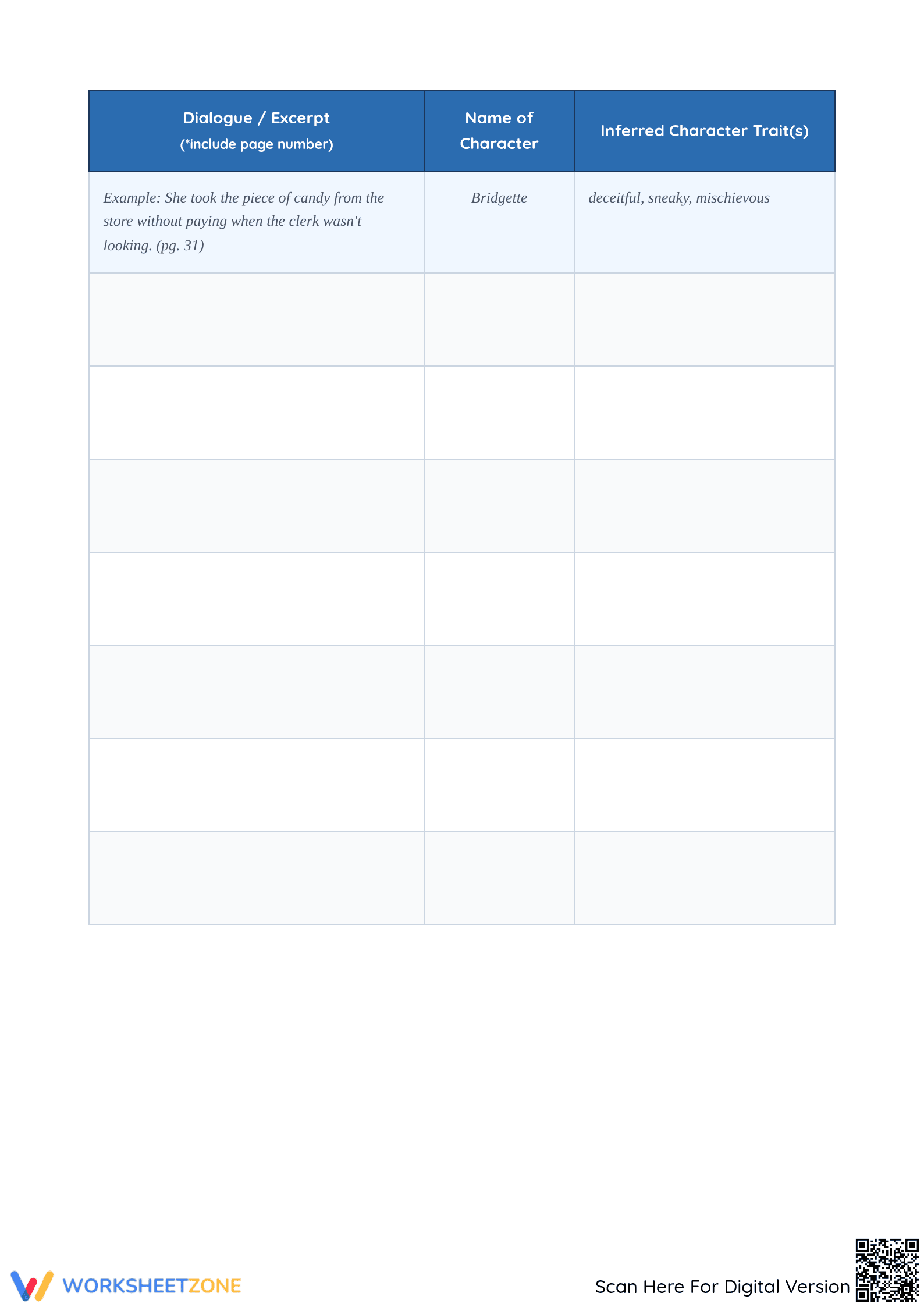
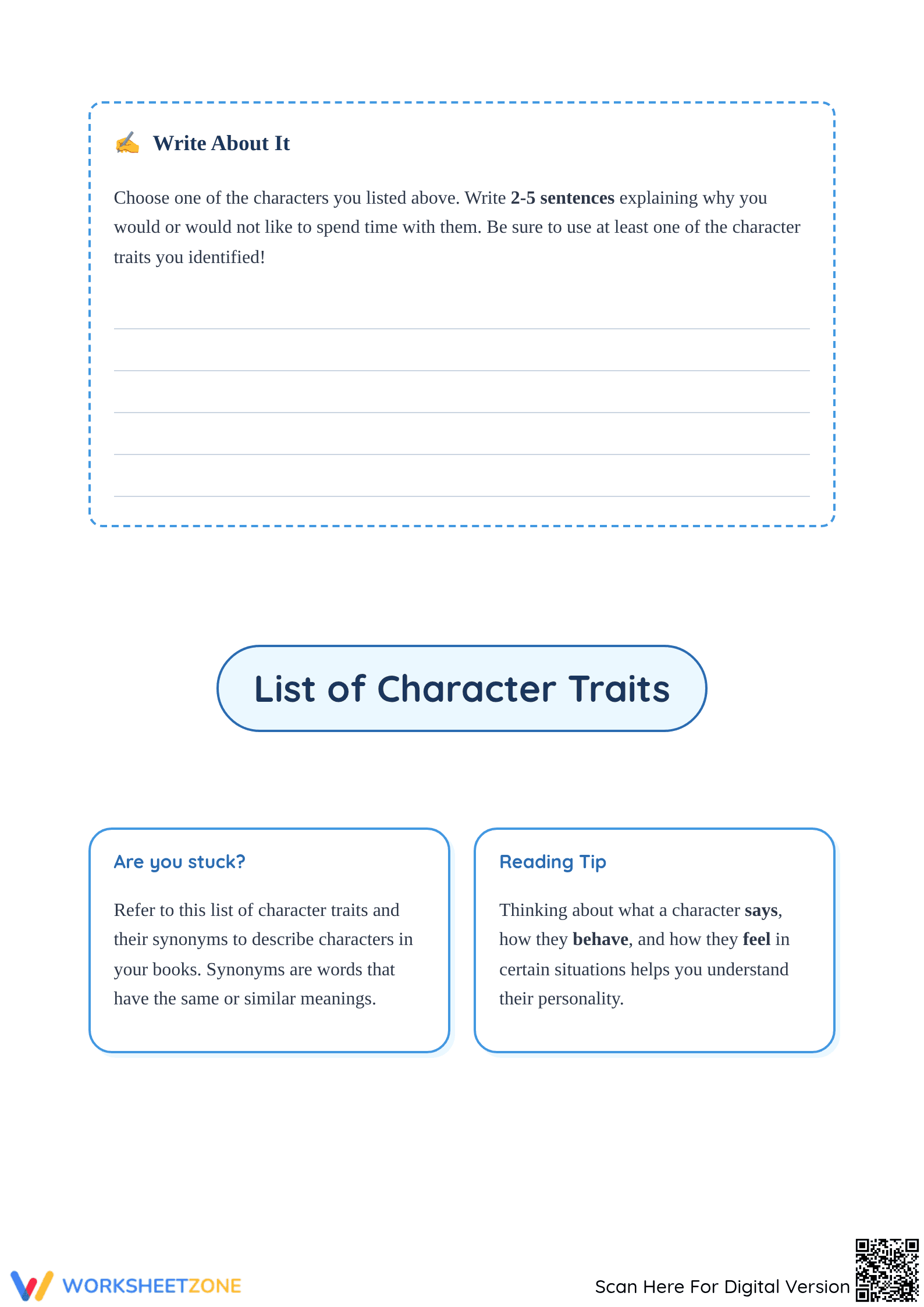
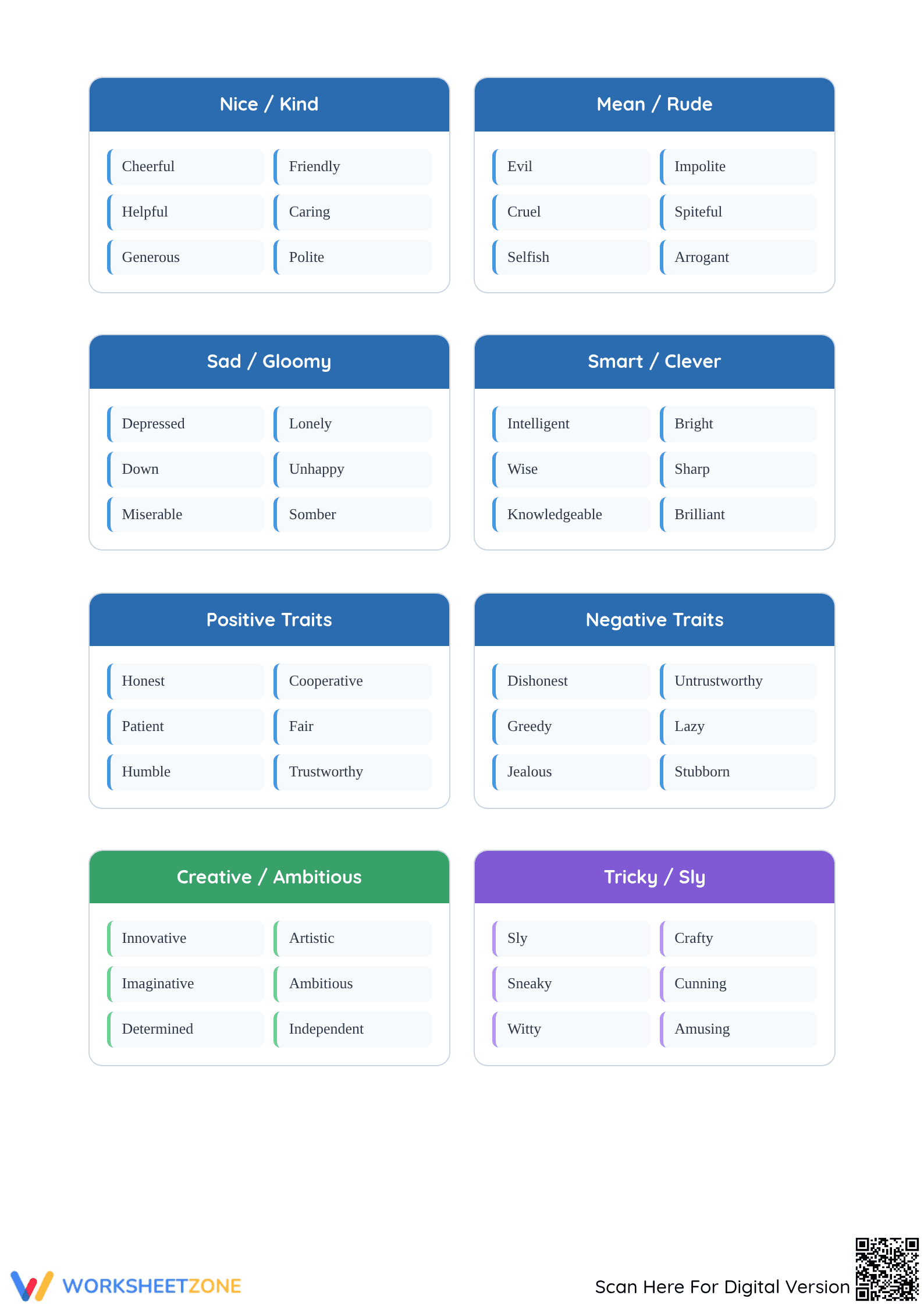
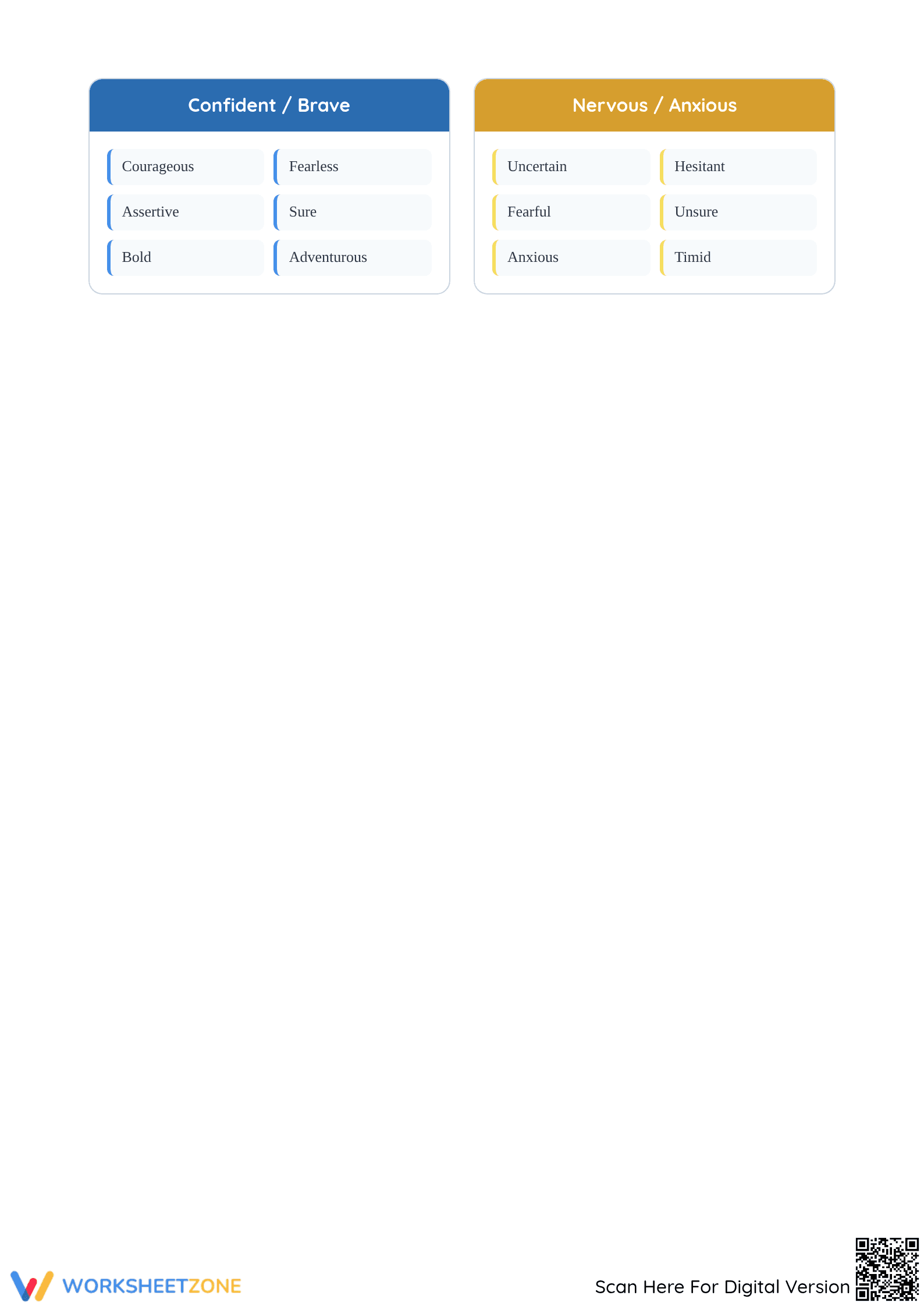
The packet includes a structured inference chart for text excerpts, character names, and traits. It features a "Write About It" extension prompt for synthesis. To support learners, a comprehensive three-page "List of Character Traits" is provided, categorized by types like "Smart/Clever" and "Tricky/Sly" to build academic vocabulary.
Skill Progression
- Guided practice: Students utilize the provided example and trait list to understand the link between action and identity.
- Supported practice: Students select 1-3 sentences from choice-reading books, recording them in six chart rows.
- Independent practice: The resource concludes with a writing task explaining character preferences, completing the gradual-release model.
This sequence ensures students move from recognition to application using the I Do, We Do, You Do framework.
Standards Alignment
The focus is `RL.4.1`, requiring students to refer to text details when drawing inferences. By citing dialogue, students also meet `RL.4.3`, describing characters' thoughts and actions. Both standard codes can be copied directly into lesson plans, IEP goals, or district curriculum mapping tools.
How to Use It
Deploy this during the "You Do" phase after a lesson on indirect characterization. Use the charts as a formative assessment; observe if students distinguish between temporary emotions and permanent traits. This activity typically takes 30 minutes when paired with a choice-reading book.
Who It's For
Designed for Grade 4 ELA, this resource supports general education and students requiring vocabulary scaffolding. The trait list serves as a differentiation tool for ELLs and students with IEPs struggling with word retrieval. It pairs with fiction passages or novel-study charts focused on character analysis.
In alignment with the CCSS.ELA-LITERACY.RL.4.1 mandate, this worksheet facilitates the transition from basic recall to complex textual analysis. Research from EdReports (2024) emphasizes that "high-quality instructional materials must explicitly link student-generated inferences to specific evidence located within the text" to foster long-term comprehension gains. By requiring students to transcribe dialogue before labeling a trait, this resource enforces the "evidence-first" approach recommended by Fisher & Frey (2014) in their work on close reading. The inclusion of a categorized trait list further supports the NAEP framework's emphasis on vocabulary breadth as a predictor of reading proficiency. As students identify personality patterns across 8 distinct tasks, they build the cognitive stamina required for middle-school literary analysis. This structured approach ensures that the plain-English skill of drawing inferences becomes a repeatable, evidence-based habit rather than a series of guesses.


