


























Views
Downloads
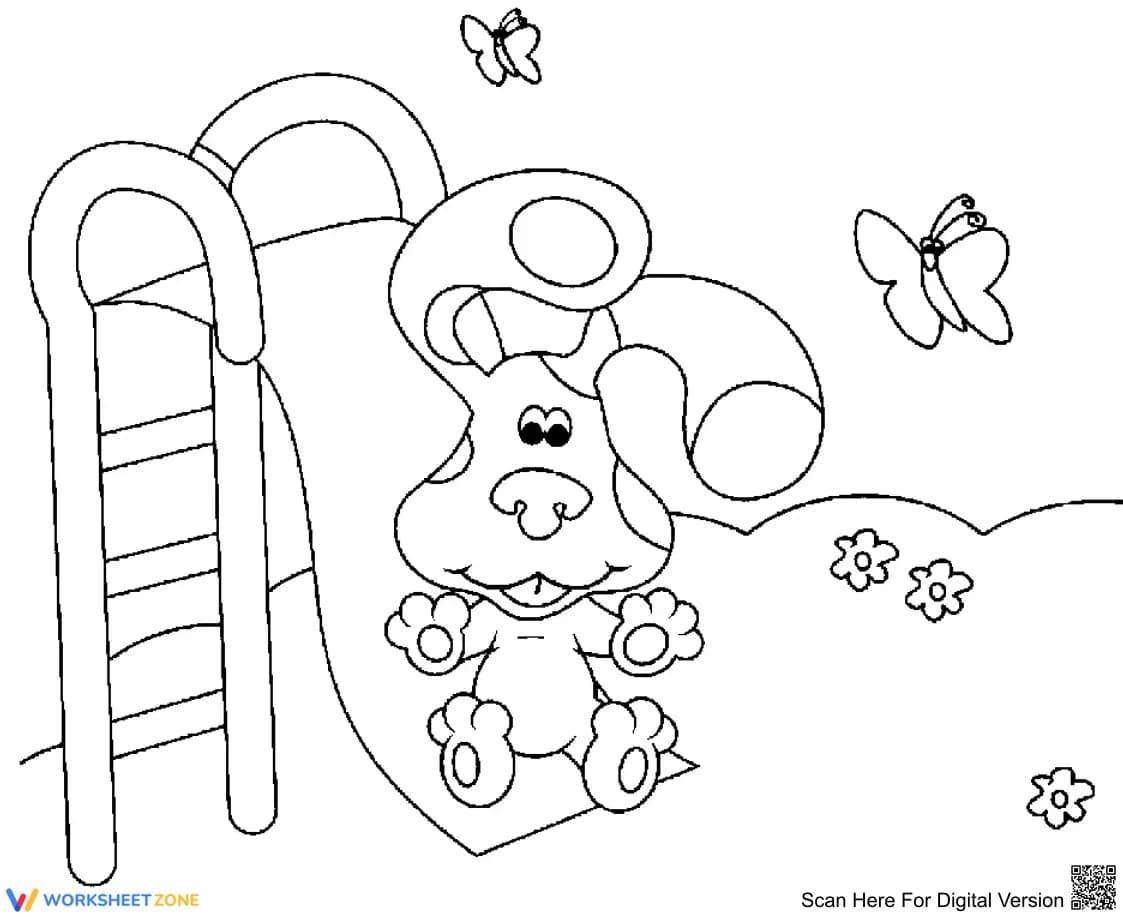

Blues Clues Coloring Page | Essential Printable Worksheet
Paste this activity's link or code into your existing LMS (Google Classroom, Canvas, Teams, Schoology, Moodle, etc.).
Students can open and work on the activity right away, with no student login required.
You'll still be able to track student progress and results from your teacher account.
This Blue's Clues coloring worksheet provides early learners with a creative outlet to develop essential fine motor skills and hand-eye coordination. By engaging with a familiar character, students practice precision and color selection while building the foundational muscles needed for writing. It is a perfect supplemental activity for early literacy and art blocks.
At a Glance
- Grade: Kindergarten · Subject: Arts & ELA
- Standard:
CCSS.ELA-LITERACY.SL.K.5— Add drawings or visual displays to descriptions to provide additional detail- Skill Focus: Fine motor control and creativity
- Format: 1 page · 1 task · No answer key required · PDF
- Best For: Morning work or early finisher activity
- Time: 15–20 minutes
This single-page PDF features a high-quality line-art illustration of Blue sliding down a playground chute. The design includes large, clear boundaries suitable for crayons, markers, or colored pencils. There are no complex instructions, making it accessible for independent work. The scene includes background elements like flowers and butterflies to encourage detailed coloring and spatial awareness.
Zero-Prep Workflow
The zero-prep workflow for this resource is designed for maximum efficiency in busy classrooms. First, print the single-page PDF (30 seconds). Second, distribute the sheets along with coloring supplies to your students (1 minute). Third, review the completed work to observe grip strength and color choice (30 seconds). Total teacher preparation time is under 2 minutes, making it an ideal sub plan or transition filler.
Standards Alignment
The primary standard addressed is `CCSS.ELA-LITERACY.SL.K.5`, which encourages students to use visual displays to enhance their communication and descriptions. While primarily an artistic task, it supports the development of the tripod grip necessary for meeting writing standards. This standard code can be copied directly into lesson plans, IEP goals, or district curriculum mapping tools.
How to Use It
Use this worksheet during the "after" phase of a direct instruction lesson on playground safety or as a calming transition after recess. It serves as an excellent formative assessment tool; observe how students handle their coloring tools to identify those needing additional fine motor support. Expect students to spend 15 to 20 minutes completing the scene.
Who It's For
This resource is designed for Kindergarten through Grade 2 students, particularly those who benefit from familiar media characters to increase engagement. It is highly effective for English Language Learners (ELLs) as a low-stress vocabulary-building activity. Pair this with a Blue's Clues storybook or a lesson on primary and secondary colors to extend the learning experience.
Research from Fisher & Frey (2014) emphasizes the importance of visual representation in early childhood development, noting that activities like coloring are not merely recreational but foundational for literacy. By engaging with the `CCSS.ELA-LITERACY.SL.K.5` standard, students bridge the gap between abstract thought and physical expression. This worksheet targets the development of the intrinsic muscles of the hand, which are critical for the eventual mastery of cursive and print writing. According to the NAEP, students who demonstrate strong fine motor control in early grades often show higher proficiency in later academic tasks. This Blue's Clues activity provides a high-interest, low-affective filter environment where students can practice these skills without the pressure of formal assessment. It serves as a bridge between play and academic rigor, ensuring that young learners remain motivated while meeting developmental milestones in both art and English Language Arts.


