


























Views
Downloads

Beginning Sounds Match-Up | Printable Grade 1 Phonics
Paste this activity's link or code into your existing LMS (Google Classroom, Canvas, Teams, Schoology, Moodle, etc.).
Students can open and work on the activity right away, with no student login required.
You'll still be able to track student progress and results from your teacher account.
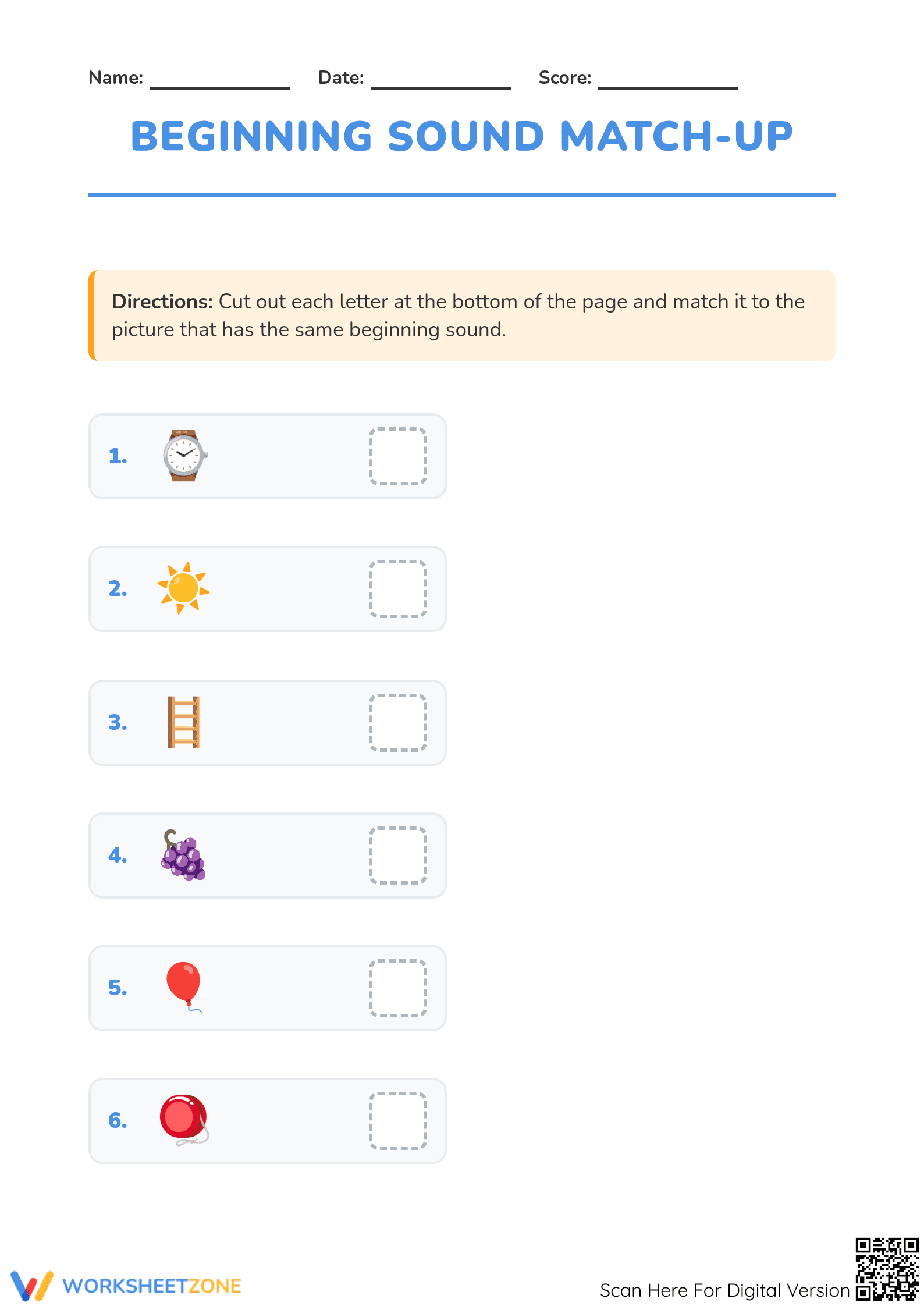
This beginning sounds worksheet helps Grade 1 students strengthen their phonemic awareness by matching familiar images to their corresponding initial letters. By completing these hands-on cut-and-paste tasks, early readers reinforce letter-sound correspondence, a critical foundational skill for decoding and reading fluency.
At a Glance
- Grade: 1 · Subject: ELA
- Standard:
CCSS.ELA-LITERACY.RF.1.2.C— Isolate and pronounce initial sounds in words- Skill Focus: Beginning sounds
- Format: 2 pages · 10 problems · Answer key included · PDF
- Best For: Independent practice
- Time: 15–20 minutes
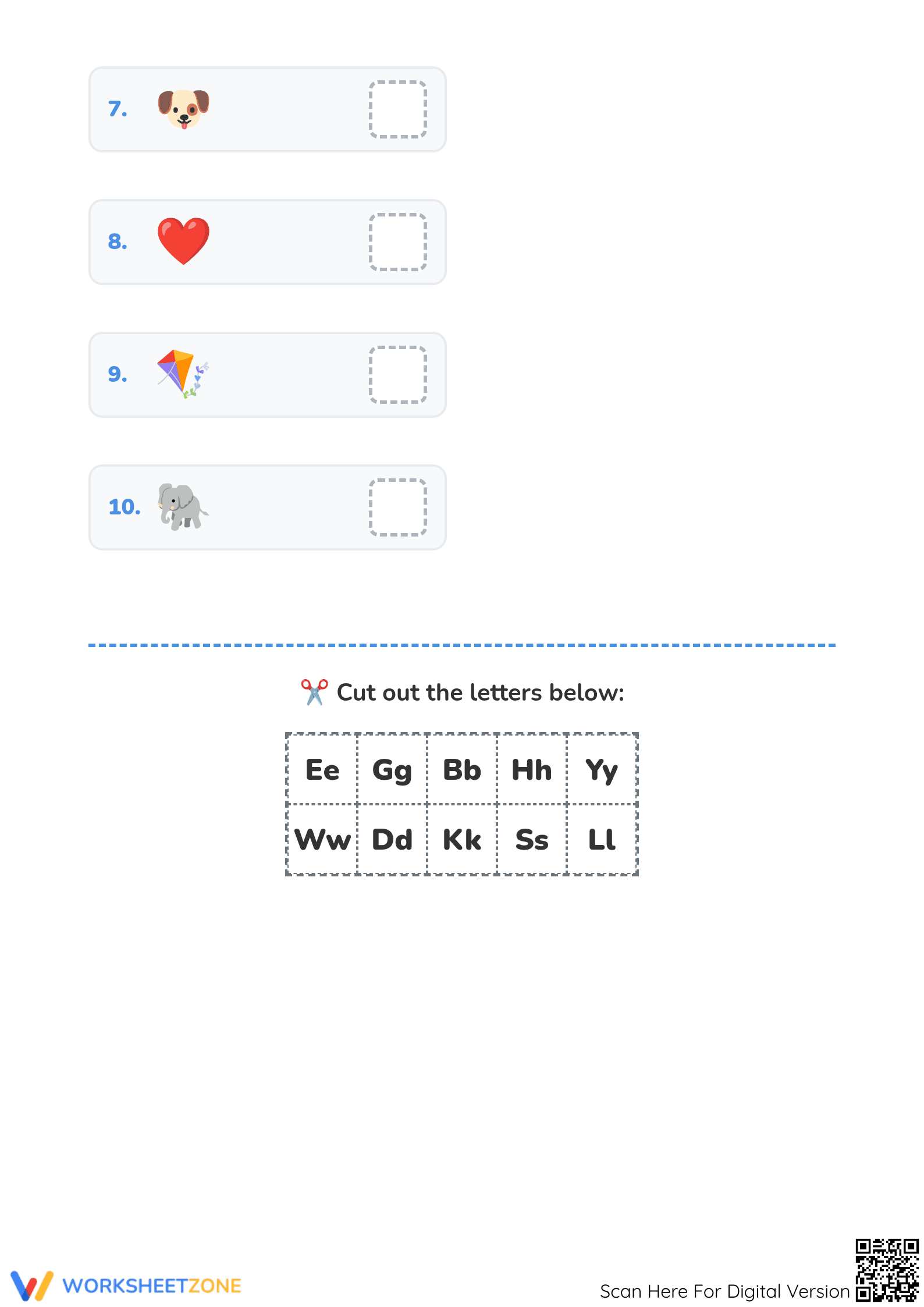
This resource features two student pages containing a total of 10 picture-to-letter matching tasks. Students will look at easily recognizable images, such as a sun, dog, and balloon, and identify the starting phoneme. The second page includes a dashed cut-out section at the bottom with 10 corresponding uppercase and lowercase letter pairs. A complete answer key is provided to ensure accurate grading and quick reference.
Designed for immediate classroom implementation, this activity requires minimal teacher setup:
- Print (1 minute): Generate copies of the two-page PDF for each student.
- Distribute (1 minute): Hand out the worksheets along with scissors and glue sticks.
- Review (3 minutes): Briefly model how to cut out the letter tiles and paste them next to the matching picture.
With under two minutes of actual prep time, this resource is highly effective for morning work, literacy centers, or as a reliable emergency sub plan.
This activity is directly aligned to CCSS.ELA-LITERACY.RF.1.2.C, requiring students to isolate and pronounce initial, medial vowel, and final sounds (phonemes) in spoken single-syllable words. It also supports general letter-sound correspondence mastery. Both standard codes can be copied directly into lesson plans, IEP goals, or district curriculum mapping tools.
Teachers can deploy this worksheet during independent literacy centers after direct instruction on consonant sounds. Students can work at their own pace, cutting and pasting the letters to demonstrate their understanding. Alternatively, it serves as an excellent formative assessment tool. While students work, teachers can observe their fine motor skills and note which specific initial phonemes require reteaching. Expect students to complete the 10 tasks within 15 to 20 minutes.
This worksheet is primarily designed for Grade 1 students developing their phonics skills, but it also serves as a valuable review for Grade 2 students who need extra support. The visual nature of the tasks makes it highly accessible for English Language Learners and students receiving special education services. Pair this activity with a whole-class anchor chart reviewing the alphabet and initial consonant sounds.
Mastering letter-sound correspondence is a critical milestone in early literacy development. According to Fisher & Frey (2014), providing students with structured, hands-on opportunities to manipulate letters and sounds significantly improves their decoding abilities and overall reading comprehension. This worksheet directly targets CCSS.ELA-LITERACY.RF.1.2.C, ensuring students can accurately isolate and pronounce initial sounds in words. By integrating tactile elements like cutting and pasting, the activity engages multiple learning modalities, which is particularly beneficial for young learners solidifying their phonemic awareness. Consistent practice with these foundational phonics skills reduces the cognitive load required for word recognition, allowing students to focus on meaning and fluency as they progress through primary grades. This evidence-based approach ensures that early readers build the robust phonetic foundation necessary for long-term academic success.


