


























Views
Downloads

Informative Essay Writing Worksheet | Grade 3 Printable
Paste this activity's link or code into your existing LMS (Google Classroom, Canvas, Teams, Schoology, Moodle, etc.).
Students can open and work on the activity right away, with no student login required.
You'll still be able to track student progress and results from your teacher account.
This Grade 3 informative writing worksheet guides students through the essential steps of drafting an essay. By breaking the writing process into manageable phases, young writers learn to select a topic, organize their facts, and compose a strong introductory paragraph with an engaging hook.
At a Glance
- Grade: 3 · Subject: English
- Standard:
CCSS.ELA-LITERACY.W.3.2— Write informative texts to examine a topic and convey ideas clearly.- Skill Focus: Informative Essay Structure
- Format: 3 pages · 3 structured tasks · Open-ended · PDF
- Best For: Writing workshop and independent practice
- Time: 30–45 minutes
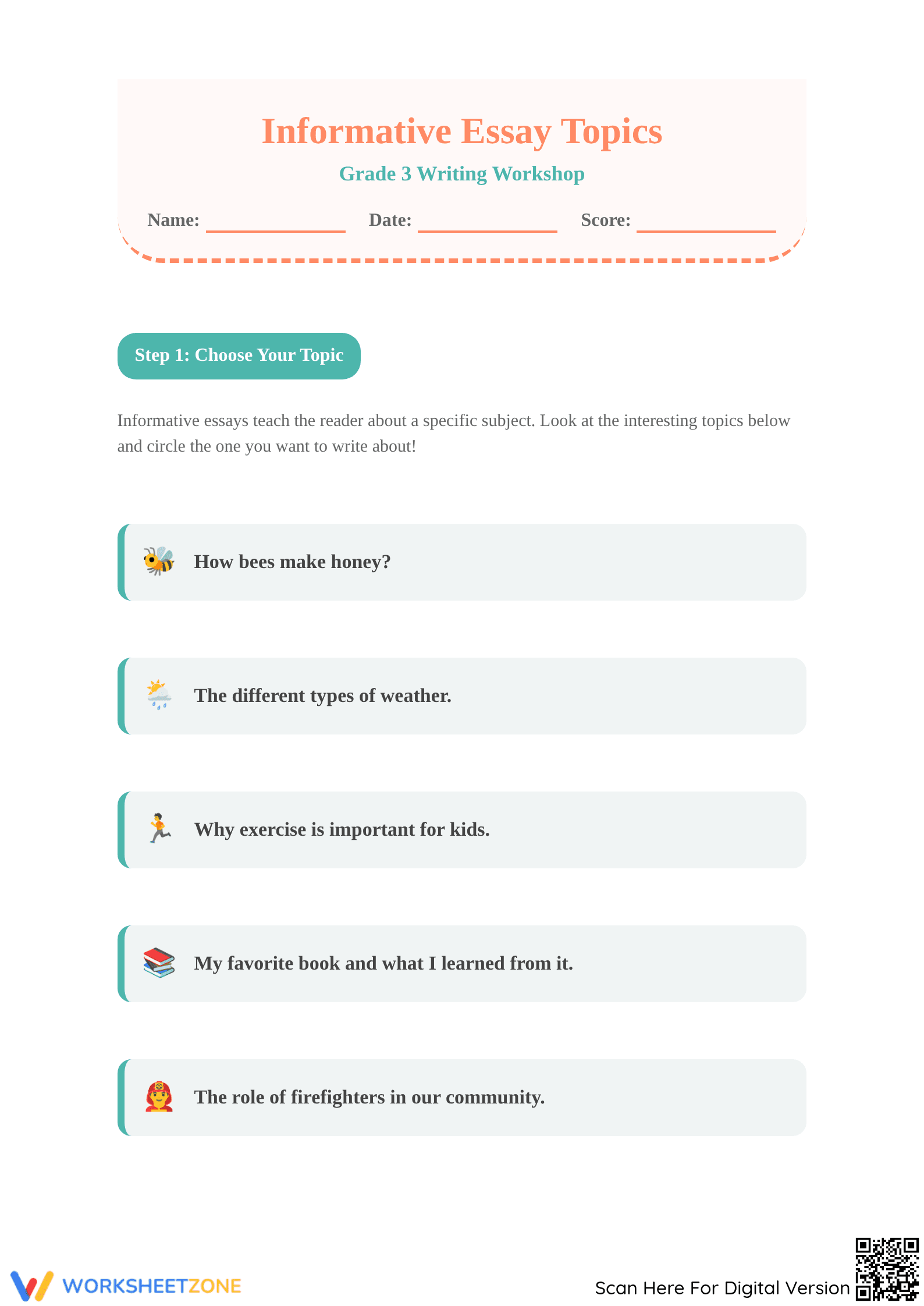
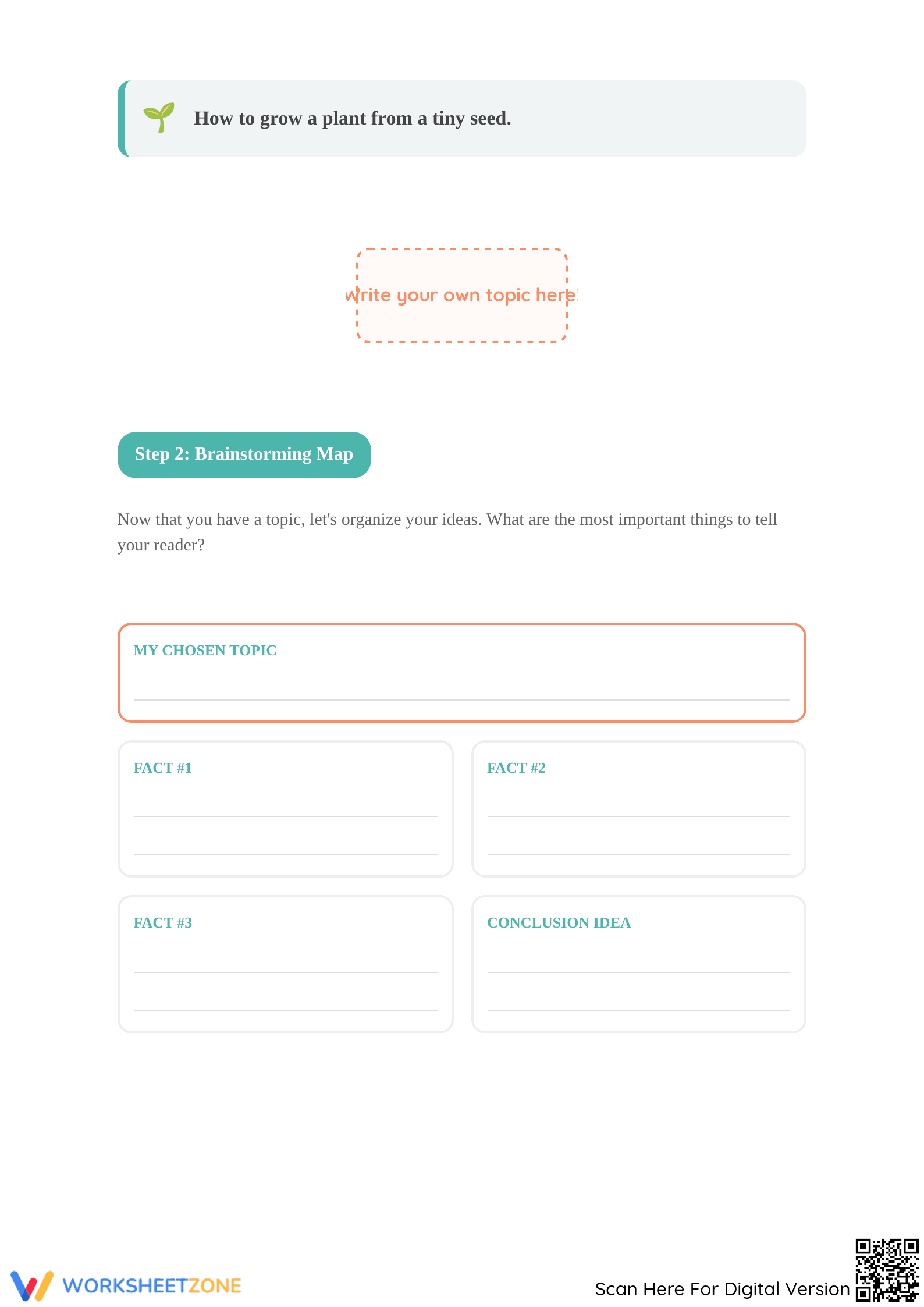
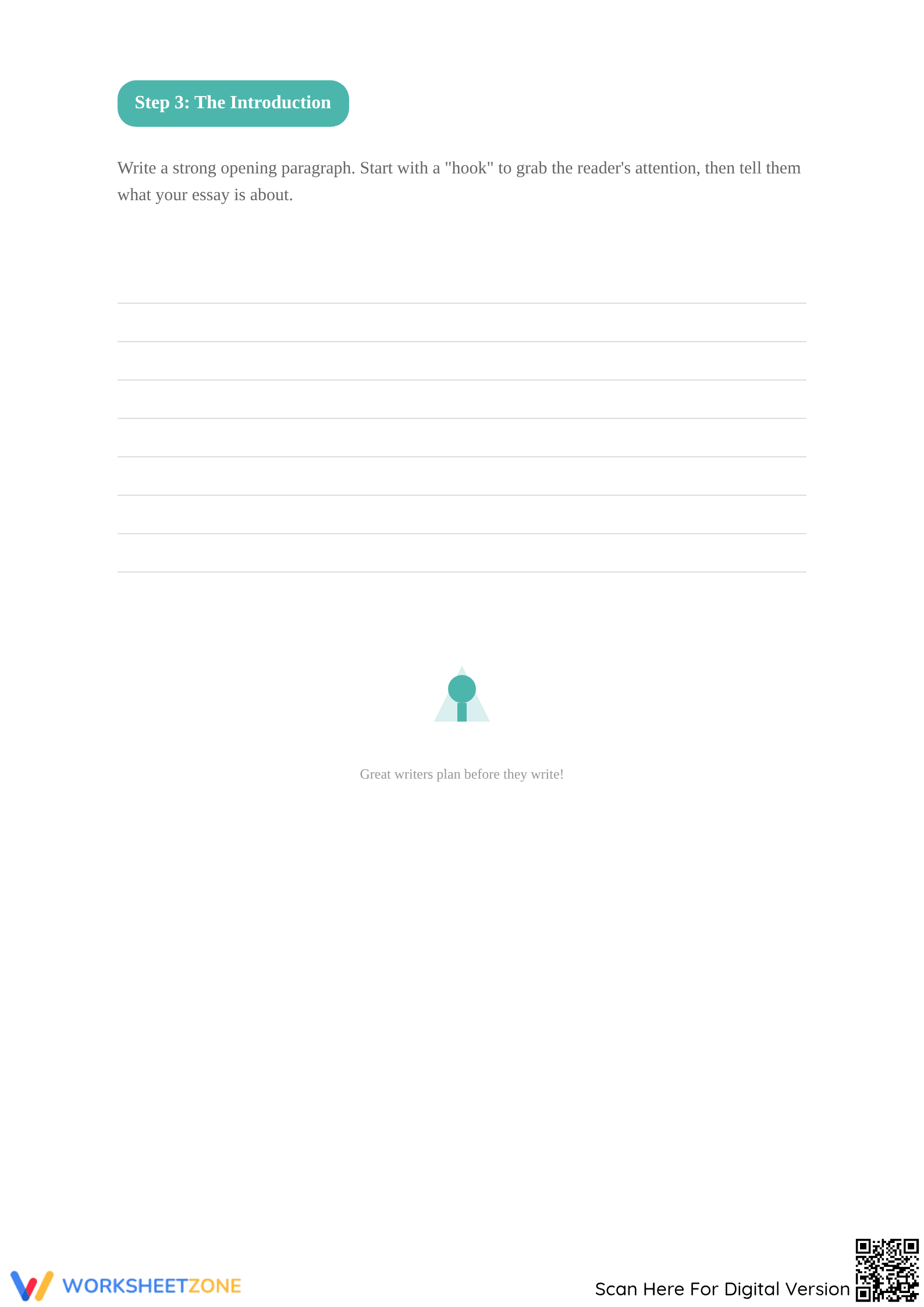
Inside this three-page packet, students will find a clear, step-by-step framework for essay creation. Page one offers a menu of high-interest topics alongside a blank space for original ideas. Page two features a graphic organizer designed to map out three core facts and a conclusion. Finally, page three provides lined space specifically dedicated to drafting a compelling introduction. Because this is a creative writing exercise, answers will vary and no formal answer key is required.
Skill Progression
- Guided practice: Students begin by selecting a topic from a curated list, reducing the cognitive load of brainstorming from scratch.
- Supported practice: The brainstorming map isolates each component of the essay body, prompting students to list three distinct facts and a concluding thought.
- Independent practice: Writers apply their plan to draft a complete introductory paragraph, focusing on creating a strong hook to grab the reader's attention.
This gradual-release approach ensures students build confidence at each stage of the writing process before moving on to full essay composition.
Standards Alignment
This resource is directly aligned to CCSS.ELA-LITERACY.W.3.2: Write informative/explanatory texts to examine a topic and convey ideas and information clearly. It also supports foundational organization skills by requiring students to group related information together. Both standard codes can be copied directly into lesson plans, IEP goals, or district curriculum mapping tools.
How to Use It
Deploy this resource during your dedicated writing block to introduce or reinforce informative essay structure. It works exceptionally well as a multi-day project where students complete one page per day. As a formative assessment tip, review the brainstorming maps before students begin drafting their introductions to ensure their facts are relevant and logically grouped. Expect the entire packet to take between 30 and 45 minutes of active writing time.
Who It's For
This worksheet is designed for third-grade students developing their nonfiction writing skills. The structured graphic organizer provides excellent scaffolding for visual learners and students who struggle with executive functioning or organizing their thoughts. Pair this activity with a mini-lesson on writing strong hooks or an anchor chart detailing the differences between facts and opinions.
Mastering the informative essay structure is a critical milestone for elementary writers. According to the RAND AIRS 2024 report on literacy development, providing students with structured graphic organizers significantly improves their ability to sequence ideas and produce coherent nonfiction texts. This resource specifically targets CCSS.ELA-LITERACY.W.3.2, helping students write informative texts to examine a topic and convey ideas clearly. By breaking the complex task of essay writing into distinct phases—topic selection, fact mapping, and introduction drafting—educators can reduce cognitive overload and foster greater writing independence. The scaffolded design ensures that young learners can focus on content generation rather than formatting struggles. Utilizing tools that explicitly teach these organizational strategies builds a strong foundation for the more rigorous analytical writing demands students will face in upper elementary and middle school grades.


