


























Views
Downloads
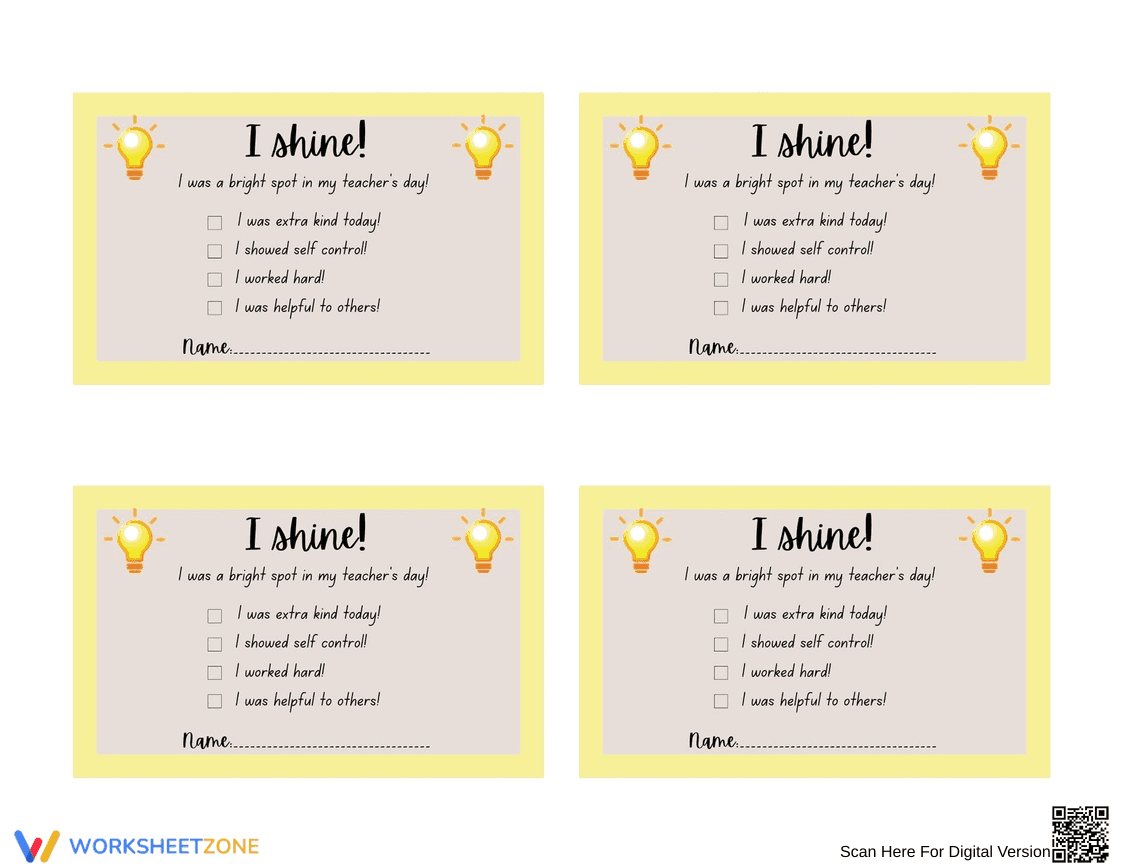

Printable Positive Behavior Tickets | Grade 2 SEL
Paste this activity's link or code into your existing LMS (Google Classroom, Canvas, Teams, Schoology, Moodle, etc.).
Students can open and work on the activity right away, with no student login required.
You'll still be able to track student progress and results from your teacher account.
These positive behavior tickets provide immediate reinforcement for students demonstrating strong character in the classroom. By recognizing specific actions like self-control, kindness, and hard work, teachers can build a supportive learning environment. This resource helps students connect their daily choices to positive outcomes and peer relationships.
At a Glance
- Grade: 2 · Subject: SEL
- Standard:
CCSS.ELA-LITERACY.SL.2.1.A— Follow agreed-upon rules for discussions and behavior- Skill Focus: Positive behavior reinforcement
- Format: 1 page · 4 tickets · No answer key · PDF
- Best For: Classroom management and rewards
- Time: 1–2 minutes
This single-page printable contains four identical "I shine!" behavior tickets designed for quick distribution. Each ticket features a cheerful yellow lightbulb design and four specific checkboxes: "I was extra kind today!", "I showed self control!", "I worked hard!", and "I was helpful to others!". A dedicated line allows the teacher to write the student's name, making the recognition personal.
This resource is designed for immediate classroom implementation with a streamlined workflow:
- Print (1 minute): Generate as many copies as needed on standard paper or bright cardstock.
- Distribute (1 minute): Cut the page into four individual tickets and keep them on your desk or clipboard.
- Review (1 minute): Check the appropriate box and hand the ticket to a student demonstrating positive behavior.
Total teacher prep time is under two minutes. These tickets are also excellent for substitute teachers to use as a simple, effective classroom management tool during your absence.
This resource aligns with CCSS.ELA-LITERACY.SL.2.1.A: "Follow agreed-upon rules for discussions and carry out assigned roles." By explicitly rewarding students for self-control and helpfulness, teachers reinforce the foundational behaviors required for collaborative learning and effective communication. Both standard codes can be copied directly into lesson plans, IEP goals, or district curriculum mapping tools.
Teachers can utilize these tickets during independent work time to quietly reward students staying on task. Simply walk by, check the "I worked hard!" box, and leave it on their desk. Alternatively, use them at the end of the day as a closing routine, highlighting students who were "extra kind" during recess. Formative assessment observation tip: track which students rarely receive tickets to identify those needing additional behavioral support. Expected completion time is instantaneous.
This resource is ideal for early elementary students who benefit from tangible, immediate positive reinforcement. It works exceptionally well for neurodivergent learners or students with behavioral IEP goals who need concrete evidence of their success. Pair these tickets with a classroom anchor chart detailing what "self-control" and "hard work" look and sound like in practice.
Implementing structured positive reinforcement tools like these behavior tickets directly supports CCSS.ELA-LITERACY.SL.2.1.A by helping students follow agreed-upon rules for discussions and behavior. According to a comprehensive EdReports 2024 analysis of classroom management strategies, classrooms that utilize a consistent 4-to-1 ratio of positive to corrective feedback experience significantly fewer disruptions and much higher levels of student engagement. Tangible recognition items provide a physical artifact of success that students can proudly take home, effectively bridging the gap between school and family communication. By isolating specific skills such as self-control, helpfulness, and kindness, educators move away from vague praise and toward actionable, repeatable behaviors. This targeted approach not only improves the immediate classroom climate but also builds the long-term intrinsic motivation and emotional regulation skills essential for academic success across all core subject areas.


