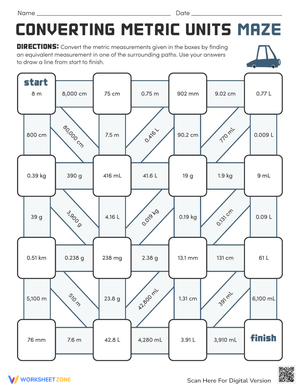
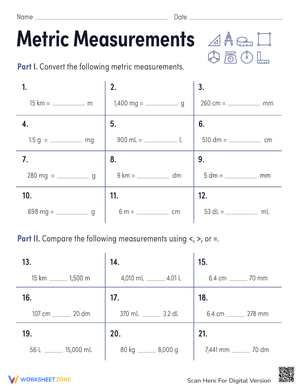
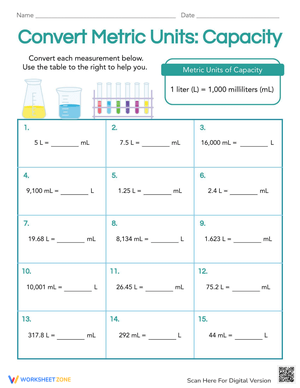
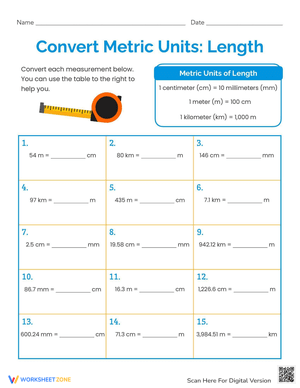
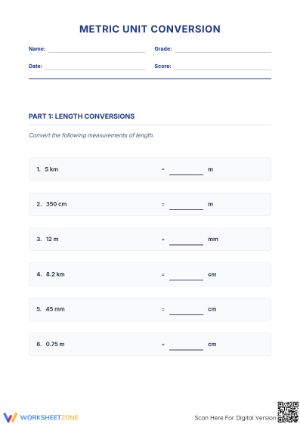
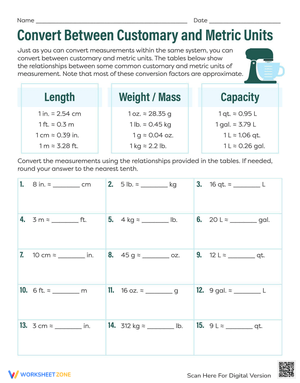
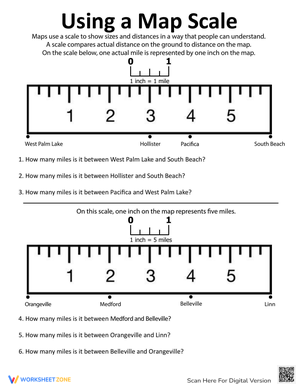
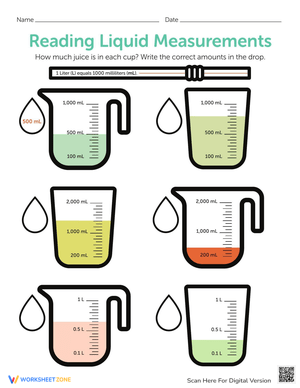
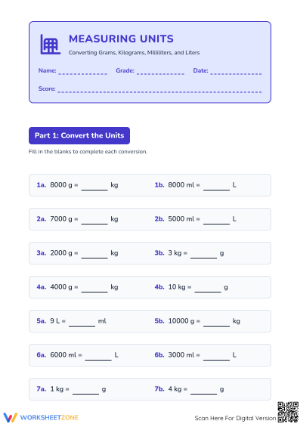
These units of measurement worksheets cover the full span of elementary measurement instruction — from a second grader deciding whether to measure the classroom in inches or feet, to a fifth grader converting kilometers to meters inside a multi-step word problem. Each page targets a specific skill within either the customary or metric system, giving teachers something they can drop into a lesson without retrofitting it to fit the day's objective.
Concepts Addressed Across the Grade Levels By These Units Of Measurement Worksheets
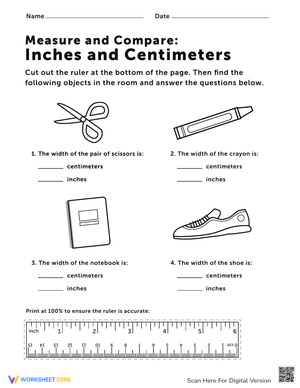
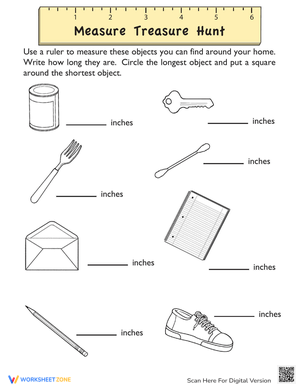
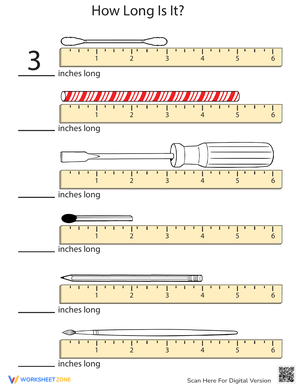
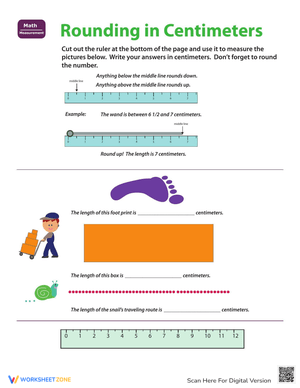
Measurement instruction doesn't look the same in second grade as it does in fifth, and the worksheets reflect that. In the early grades, students compare lengths using non-standard units — paper clips, cubes, hand spans — before shifting to inches and centimeters. That transition isn't trivial: students who measure successfully with cubes still need to learn that a standard unit stays the same length regardless of who holds the ruler. Worksheets at this stage ask students to order objects from shortest to longest, match items to approximate measurements, and identify which of two lengths is greater.
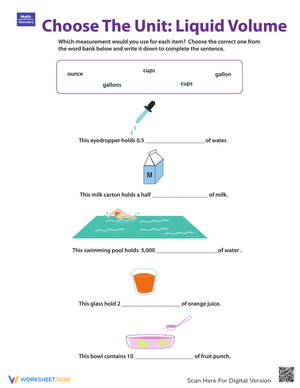
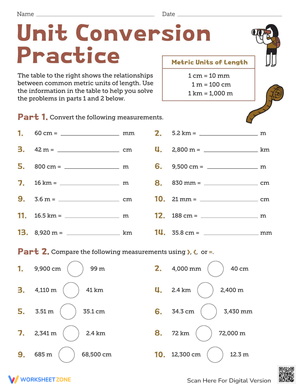
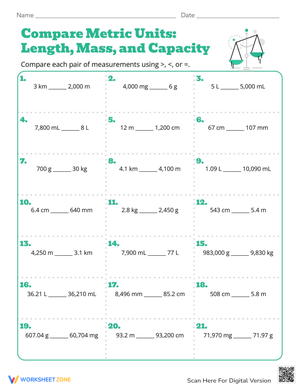
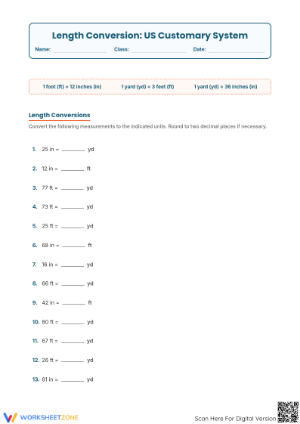
By third and fourth grade, the work moves toward unit selection. Students decide whether a swimming pool holds gallons or cups, whether a paperclip weighs ounces or pounds, whether a road is measured in feet or miles. Fill-in-the-blank and matching formats work well here because they force a discrete choice — students can't fudge an answer by writing something vaguely plausible. In fifth and sixth grade, the sheets shift to conversion: 36 inches to feet, 5 kilometers to meters, or word problems that require a conversion before any calculation can happen. These upper-elementary pages align with CCSS 5.MD.A.1, which expects students to convert within a given measurement system and use those conversions to solve multi-step problems.
Customary and Metric — Keeping the Systems Separate Before Mixing Them
US classrooms carry an instructional burden that most other countries don't: students have to learn two measurement systems simultaneously, one they use at home and one they use in science class. Worksheets that mix customary and metric units before students have internalized each system independently tend to produce a specific kind of confusion — students write centimeters when they mean inches, or they apply a metric conversion factor to a customary problem. The pages here address each system in dedicated sets before introducing activities that require students to move between the two.
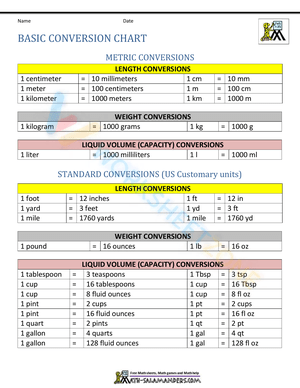
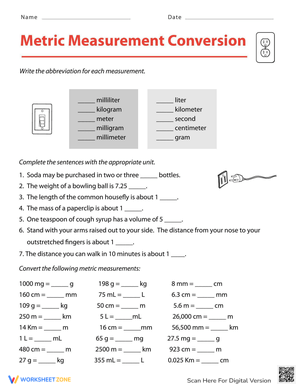
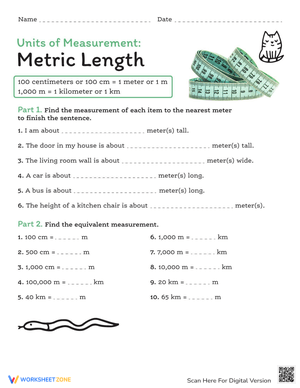
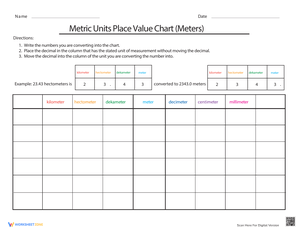
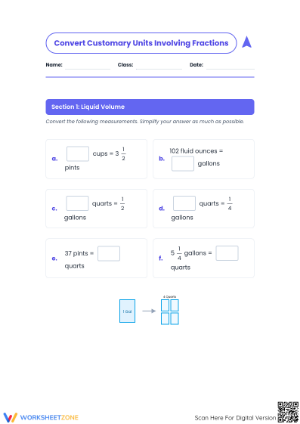
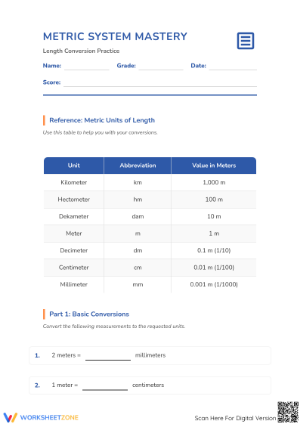
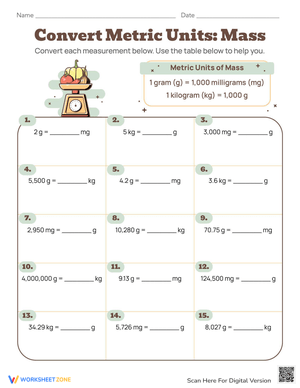
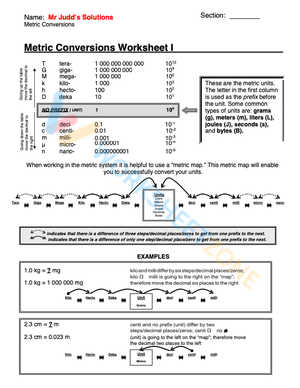
Customary units covered across the length, weight, and capacity strands include inches, feet, yards, and miles; ounces, pounds, and tons; and cups, pints, quarts, and gallons. Metric coverage includes millimeters, centimeters, meters, and kilometers for length; grams and kilograms for mass; and milliliters and liters for capacity. Conversion reference charts print alongside several of the practice pages — teachers can cut the chart off once students have enough repetitions to recall that 1 kilometer equals 1,000 meters without looking it up.
Worksheets' Formats in This Collection
The worksheets come in four main formats, chosen because each one targets a different cognitive demand:
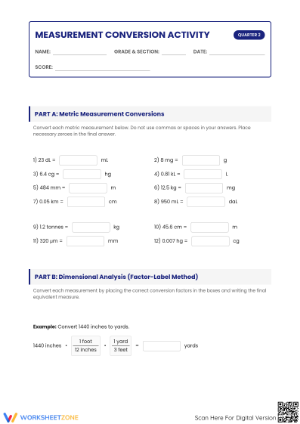
- Equation completion — students fill in a missing value in a conversion equation like 4 feet = ___ inches, which surfaces whether they know to multiply by 12 or divide.
- Unit-to-object matching — students draw lines connecting a real object to its most appropriate unit, building the estimation sense that word problems later depend on.
- Word problems set in familiar contexts — cooking, track and field, science experiments — where students must select a unit, convert if needed, then calculate.
- Cut-and-sort ordering tasks — students physically arrange unit labels from smallest to largest within a system, particularly useful for grades 2 through 4, where handling something tangible reinforces what the number line alone doesn't always settle.
Where Students Get Stuck — and What the Worksheets Do About It
The most persistent conversion error isn't mixing up the numbers — it's not knowing whether to multiply or divide. A student who has memorized that 1 foot equals 12 inches will still write 3 feet = 3 ÷ 12 inches because the direction of the conversion wasn't made explicit during instruction. Several worksheets include error-analysis problems specifically designed to surface this: a completed conversion is shown with a deliberate mistake — say, 2 pounds written as 16 ounces rather than 32 — and the student marks the error, explains what went wrong, and writes the correction. That sequence is harder to shortcut than a fill-in-the-blank, and it produces more honest formative data.
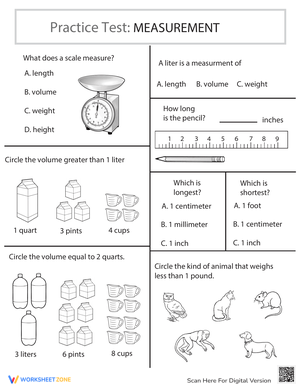
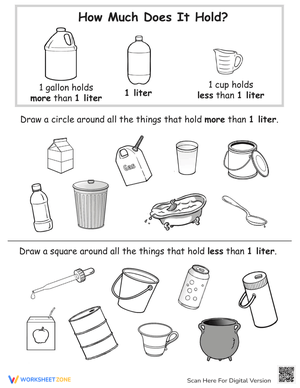
Unit selection problems reveal a different gap. Students who correctly measure a pencil in centimeters will still write that a car's fuel tank holds "about 15 milliliters" because they haven't built intuitive scale for the units. Matching pages that pair units with photographs of recognizable objects address this more directly than any amount of definition work does.
Recommended Lesson Planning Strategies To Take Full Advantages Of These Worksheets
A routine that works: open with five minutes of hands-on measuring — students use a ruler or balance scale on actual objects at their desks — then move into a 10-to-15-minute worksheet session. The physical measuring primes the vocabulary and reduces cognitive load on the page that follows. Completed worksheets from that session give enough information to sort students into reteach groups for the next morning.
The pages also fit naturally into the Friday review block, Monday warm-ups, and those eight minutes before a specials transition when there's not enough time to start something new but too much time to sit idle. Homework assignments that extend the work into students' actual environments — measure three things in your kitchen in cups, find two distances in your neighborhood and write them in feet — are worth the occasional conversation when a student comes back and says the measuring tape only had inches but the worksheet asked for centimeters. That conversation is the lesson.
Frequently Asked Questions
Should customary or metric units come first in US classrooms?
Most US curricula sequence customary first because students already have some informal experience with inches and pounds from daily life. Metric usually follows, and teachers often find it easier to introduce metric conversions once students have seen the general logic of conversion — metric's base-10 structure tends to make the arithmetic simpler, even if the units are less familiar. Mixing systems before students are secure in each one independently usually slows both down.
How do these worksheets work alongside hands-on measurement tools?
They work as the consolidation phase, not the introduction. Students who have physically measured objects with rulers, balance scales, and graduated cylinders come to the page with referents — they know roughly how heavy a gram feels. Worksheets without that prior physical experience ask students to perform symbol manipulation without meaning attached to the symbols, which is why so many students can complete a conversion correctly on paper and still answer "about 10 kilograms" when asked how much a pencil weighs.
Which pages are appropriate for students with IEPs that include math accommodations?
The tiered versions with printed reference charts and reduced problem sets align with common accommodations around reduced assignment length and access to tools. For students who need additional processing support, the cut-and-sort format often works better than equation-based pages because the physical sorting externalizes the comparison work the student would otherwise have to hold in working memory.













 Interactive Worksheet Maker
 Quiz Maker
 Word Search Maker
 Crossword Puzzle Maker
 Word Scramble Generator
 Sentence Scramble Generator
 Handwriting Worksheet Generator
 Name Tracing Generator
 Fill In The Blank Generator