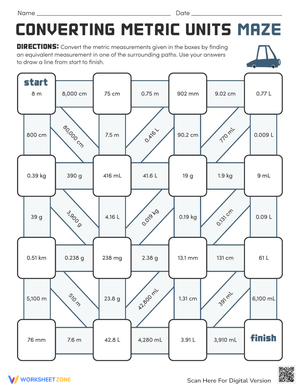
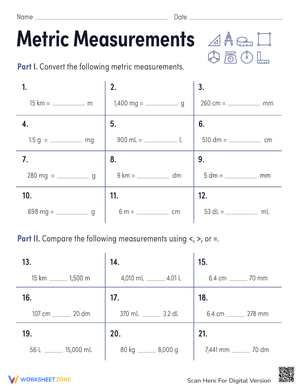
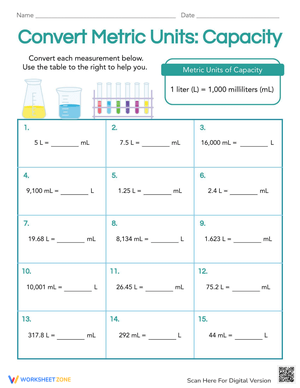
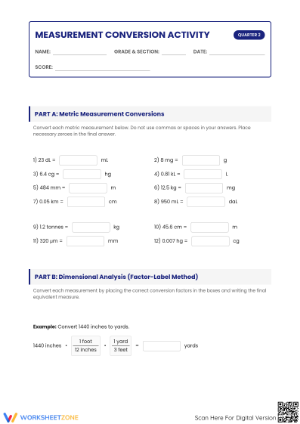
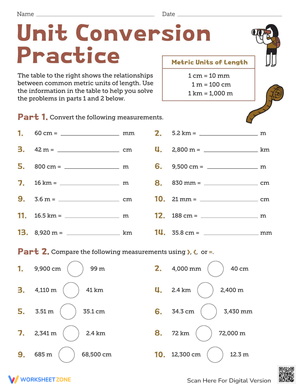
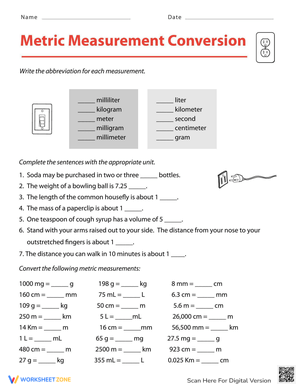
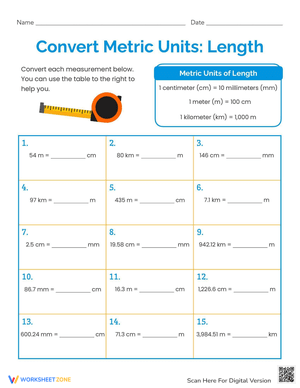
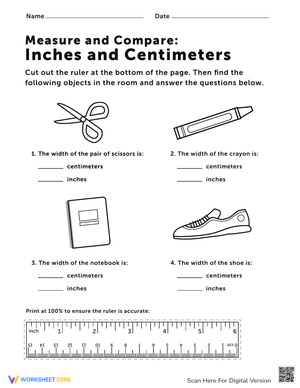
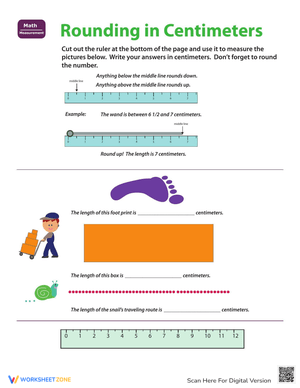
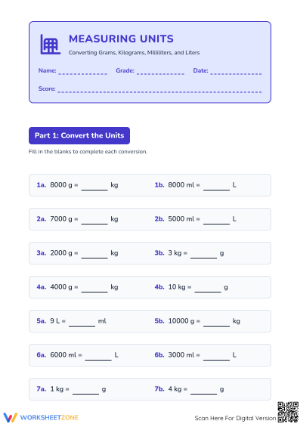
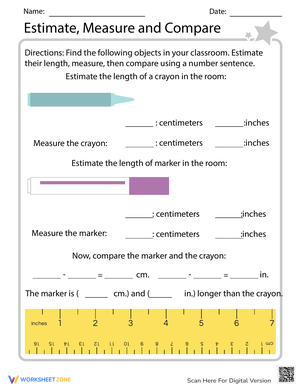
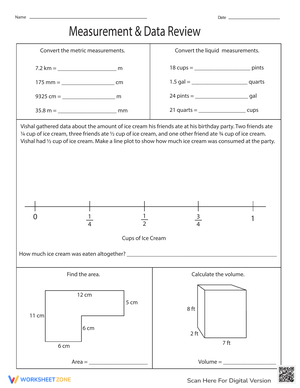
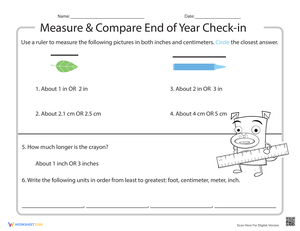
These metric measurement worksheets give teachers a print-ready path from basic unit recognition in third grade through multi-step conversions in seventh and eighth — organized around the base-10 structure that makes the metric system teachable once students see the pattern clearly. Each page targets a specific skill rather than scattering attention across the full prefix ladder, which means you can slot them into a lesson precisely where the gap is.
The Specific Skills These Metric Measurement Worksheets Target
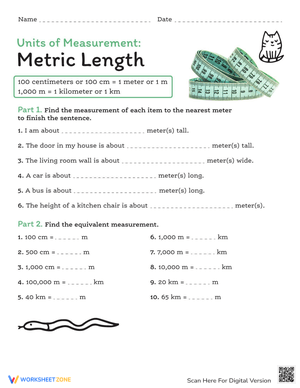
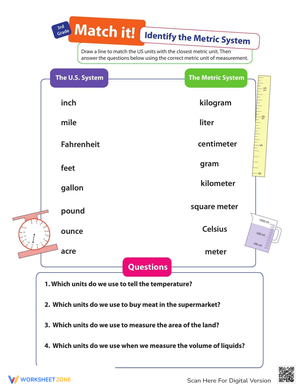
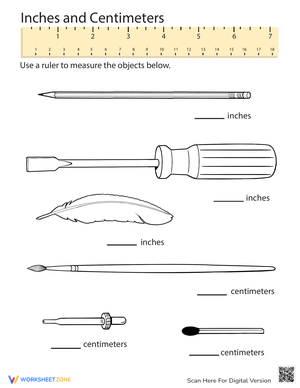
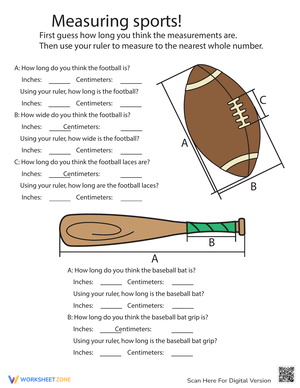
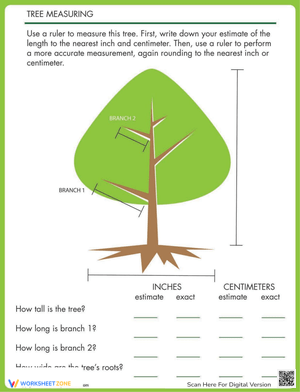
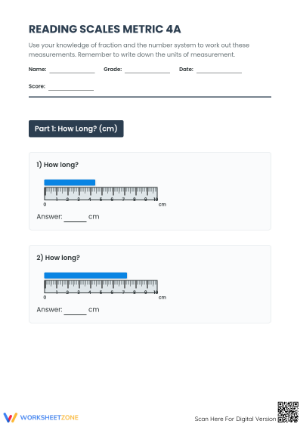
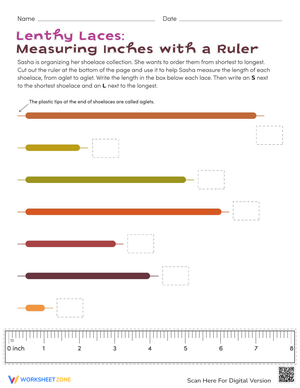
The set moves through four layers of metric fluency. At the foundation: identifying which base unit belongs to which measurement type — meters for length, grams for mass, liters for volume — and reading measuring tools marked in metric increments. A centimeter ruler and a graduated cylinder demand different reading strategies, and students need repeated contact with both before those readings become automatic.
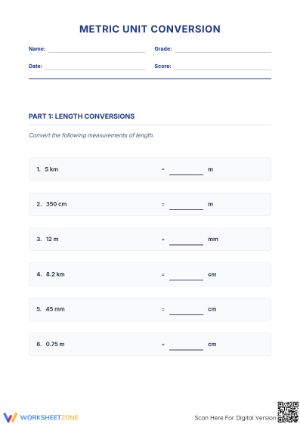
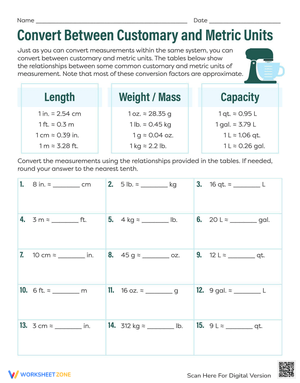
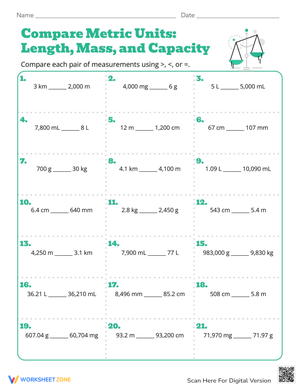
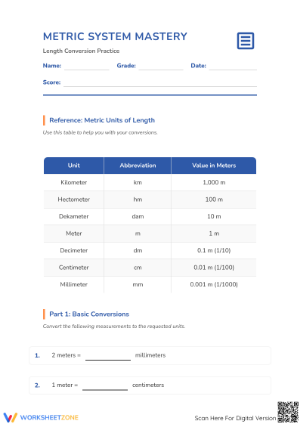
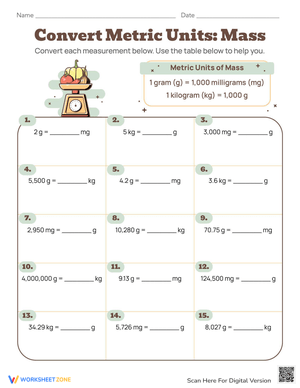
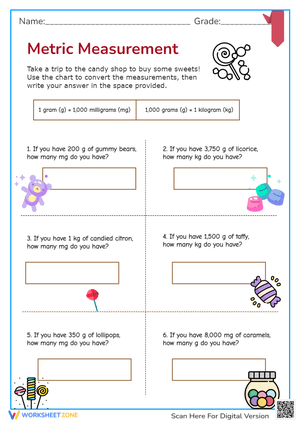
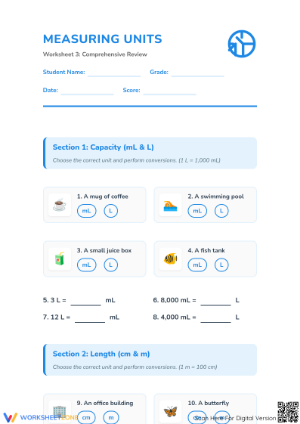
From there, worksheets address single-step prefix conversions (centimeters to millimeters, kilograms to grams), then multi-step conversions that cross two or more prefix levels, and finally word problems that require a conversion before the math problem itself can be solved. That last category is where metric fluency actually gets tested — not in isolation, but embedded in a context where the unit mismatch isn't flagged for the student.
Where These Fit in Grades 3 Through 8
In grades 3 and 4, the work is almost entirely conceptual: matching units to measurement types, circling the reasonable estimate (would you measure a pencil in centimeters or kilometers?), and reading rulers to the nearest centimeter. The prefix system appears here only in vocabulary form — students should recognize kilo- and centi- without converting yet. Pushing conversion too early at this level creates the exact surface-level memorization that falls apart when the context changes.
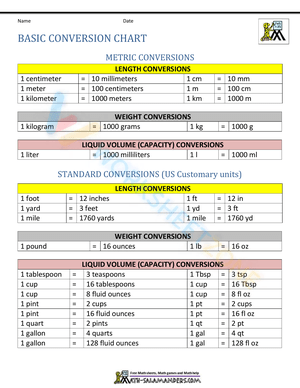
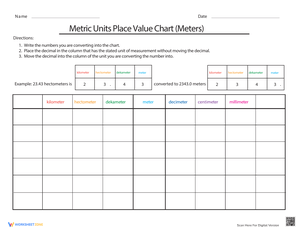
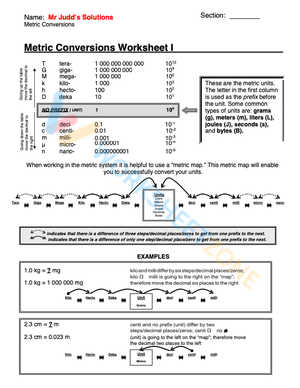
Grades 5 and 6 introduce conversion, and this is where the base-10 structure pays off. Students who understand place value can learn that moving down the prefix ladder is multiplication by 10 and moving up is division — and the mnemonic King Henry Died By Drinking Cold Milk gives them an anchor for prefix order. Worksheets at this level benefit from a small reference chart printed at the top of the page; remove the scaffold after two or three sessions once students stop consulting it mid-problem.
Middle school pages shift toward multi-step conversions, mixed-unit review sets, and problems where conversion is a prerequisite step rather than the goal. A student who cannot automatically convert 3.5 km to meters will stall on a rate problem that requires the conversion first. These pages work particularly well as science-block warm-ups the week before a lab involving metric instruments — the cross-block timing matters more than most teachers expect.
Standards Alignment
Common Core 4.MD.A.1 asks students to express measurements in larger units in terms of smaller ones — a 4-meter ribbon is 400 centimeters — and 4.MD.A.2 brings that into word problems. These two standards mark the moment when metric units stop being vocabulary and start being operational tools. The grade 4 pages here address both directly, making them useful as formative checks before the heavier conversion work that 5.MD.A.1 introduces the following year. Teachers working in states that have moved away from CCSS will find the same progression represented in NGSS science practices and most state math frameworks, since metric fluency appears in science standards regardless of math alignment.
Common Mistake Of Students That Teachers Should Aware and Address
The most consistent error isn't forgetting the prefix order — it's multiplying when the problem calls for division. A student asked to convert 4,500 milliliters to liters will multiply by 1,000 rather than divide, arriving at 4,500,000. The error isn't random: students have practiced "converting to a smaller unit means multiply," and here they apply that rule without checking whether the target unit is larger or smaller than the starting unit. Worksheets that require students to write an arrow indicating direction of conversion before they calculate cut this error noticeably.
A separate problem appears with multi-step conversions: students perform the first step correctly, then treat the result as a final answer. Converting kilometers to centimeters requires two steps (km → m → cm), and many students stop after the first. Explicitly spacing these problems apart — one step on one line, a second step beneath it — surfaces the error before it calculates into something that looks plausible.
Recommended Lesson Planning Strategies To Take Full Advantages Of These Worksheets
The most reliable classroom use is a five-minute conversion drill at the start of the period, two or three times per week over a unit. Spaced retrieval at low stakes builds automaticity in a way that a single long worksheet does not. A half-page with eight conversion problems is enough; the goal is speed and accuracy on familiar formats before the complexity scales up.
Station rotations work well when the class needs contact with all three measurement types in one period — one station for length, one for mass, one for volume — with students rotating every eight to ten minutes. The format works especially well in a combined math-science block where a lab follows the rotation: students have just named the units they are about to use.
One classroom move worth trying: after students complete a conversion worksheet, give them four minutes to write a word problem of their own using the same units. The reversal is cognitively harder than solving a provided problem. A student who writes a problem about measuring juice in milliliters and then converting to liters has to construct the conversion relationship from scratch — and that construction is what gets tested on unit assessments.
Frequently Asked Questions
My students can convert centimeters to millimeters but fall apart on kilometers to centimeters. What's happening?
Single-step conversions become procedural quickly — students learn the pair and apply it without reasoning about the prefix relationship. Multi-step conversions expose whether students actually understand the structure or have only memorized adjacent pairs. The fix is to make the intermediate step explicit and visible on paper: write the starting unit, draw an arrow to the middle unit with the factor labeled, then draw a second arrow to the target unit. Students who skip that middle step tend to guess the combined factor rather than calculate it.
How do I connect these worksheets to what students are doing in science?
Coordinate the timing rather than the content. If students will measure mass in grams and kilograms during a science lab on Thursday, run the gram-kilogram conversion worksheet on Tuesday. The two-day gap between paper practice and instrument use is enough for retrieval without so much lag that the connection is lost. Students who arrive at the scale having already converted on paper recognize the unit faster and make fewer recording errors.
Do students need to memorize all seven prefix levels?
For grades 3 through 6, the working set is kilo-, centi-, and milli- alongside the base unit. Hecto-, deka-, and deci- appear in the full mnemonic but rarely in practical measurement at this level. Teaching all seven at once increases cognitive load without proportional payoff. Introduce the full ladder in grade 7 or 8 when multi-step conversions require crossing more than two levels.













 Interactive Worksheet Maker
 Quiz Maker
 Word Search Maker
 Crossword Puzzle Maker
 Word Scramble Generator
 Sentence Scramble Generator
 Handwriting Worksheet Generator
 Name Tracing Generator
 Fill In The Blank Generator