What Kindergarten Shapes Worksheets Should Cover
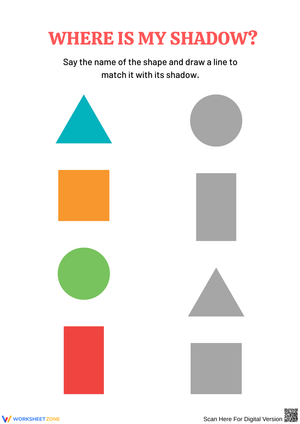
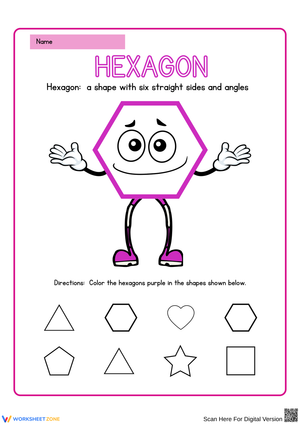
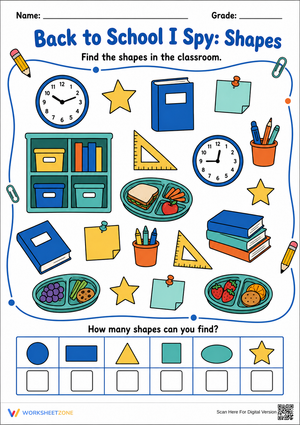
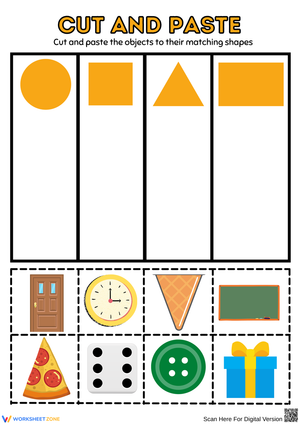
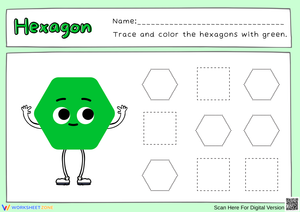
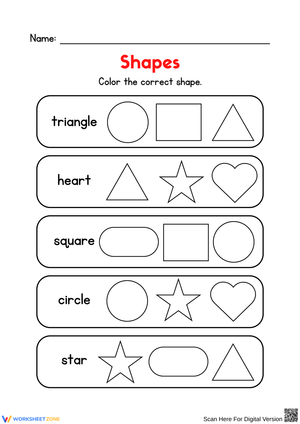
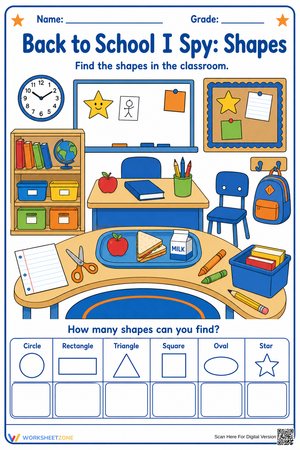
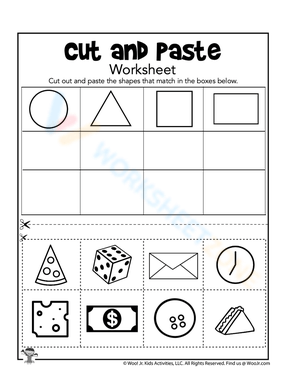
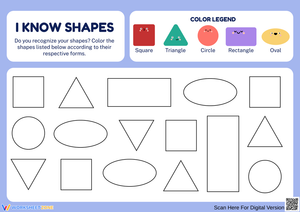
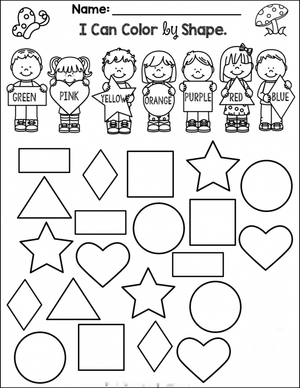
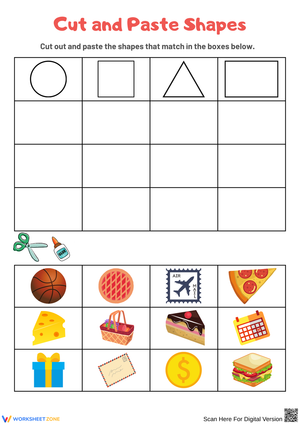
Kindergarten geometry instruction moves fast: students start the year pointing at a circle and finish it describing sides, corners, and flat versus solid shapes. Worksheets built for this unit at worksheetzone.org/worksheets/kindergarten/math/geometry/shapes need to track that progression instead of repeating the same naming task for eight weeks straight. A strong set of shapes worksheets gives you naming practice, positional language prompts, attribute comparison, and shape-building tasks, all in the same format your students already recognize from daily math block routines.
Because kindergarten geometry standards build directly on each other, worksheets that jump straight to composing shapes without first reinforcing naming and attributes will leave gaps for your lower-readiness groups. Sequencing your printable practice to match the standards keeps whole-class instruction and small-group intervention pointed at the same skills.
Aligning Worksheets to CCSS K.G.A.1 and K.G.A.2
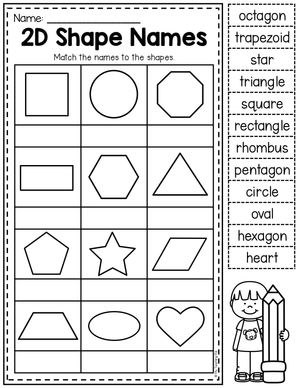
CCSS K.G.A.1 asks students to describe objects in the environment using shape names alongside positional terms like above, below, beside, in front of, behind, and next to. Worksheets that pair a shape picture with a short positional prompt, such as circling the triangle above the square, do double duty for geometry vocabulary and spatial language that students also need for early reading comprehension tasks.
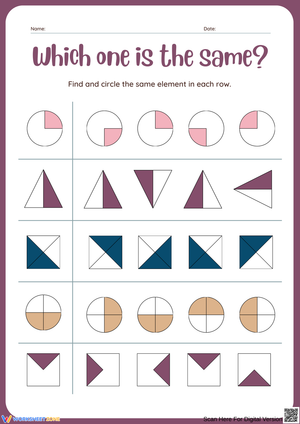
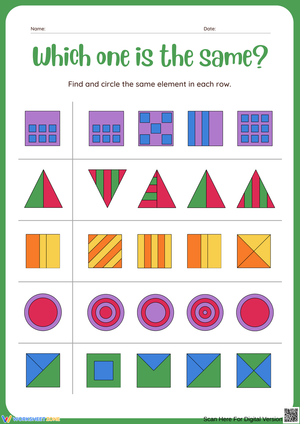
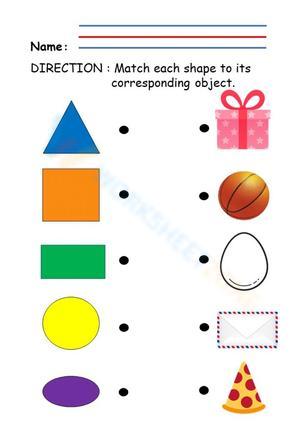
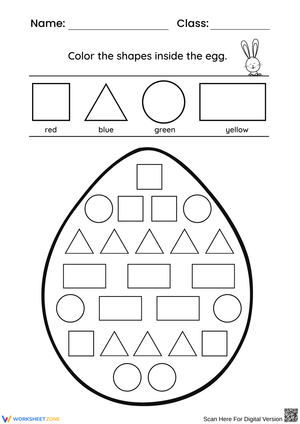
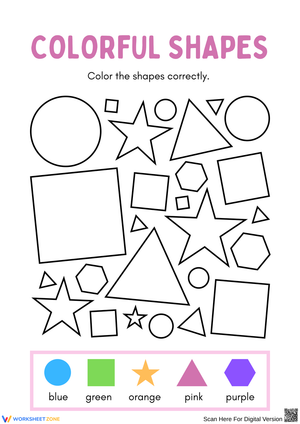
K.G.A.2 raises the bar by requiring students to correctly name shapes regardless of orientation or size, which is exactly where many kindergartners stumble. A triangle rotated on its point or a rectangle that is unusually long often gets mislabeled, even by students who can name a textbook-perfect shape instantly. Worksheets that intentionally rotate, resize, and stretch shapes across a single page are more diagnostic than sets that only show shapes in standard position, because they surface this specific misconception rather than masking it.
Moving From Naming to Comparing Shape Attributes
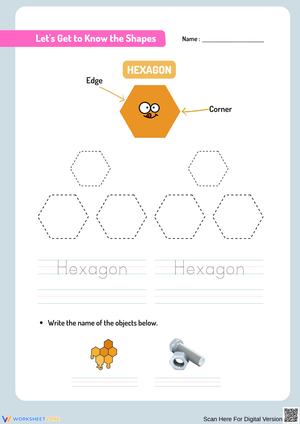
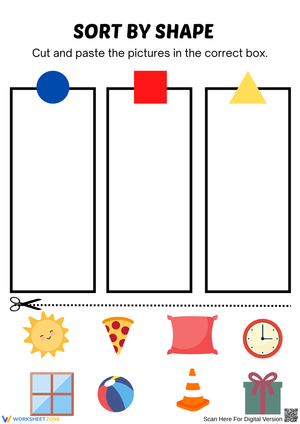
K.G.B.4 pushes students past naming into analyzing and comparing 2D and 3D shapes using informal attribute language: number of sides, number of vertices or corners, and whether a shape is flat or solid. Worksheets that ask students to sort shapes by number of sides, or to circle the shape with more corners in a pair, build the academic vocabulary students need before they can explain their reasoning in a small-group discussion.
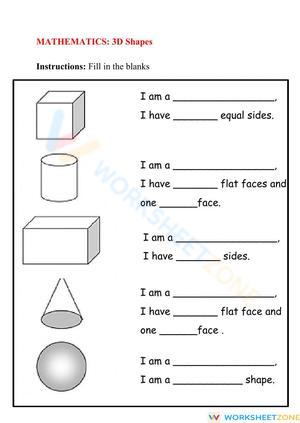
This is also where shapes worksheets start to double as writing practice. A simple sentence frame under a shape image, such as This shape has ___ sides and ___ corners, gives students a low-stakes way to practice math language they will need again in first-grade geometry.
2D and 3D Shape Sorting Practice
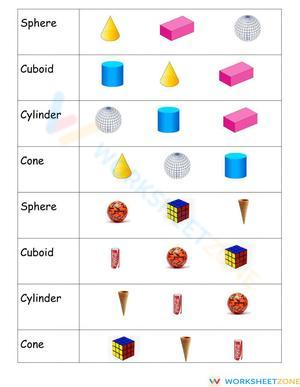
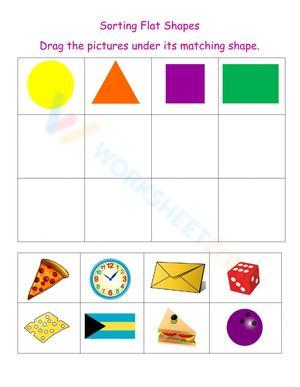
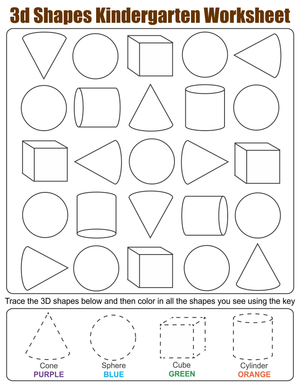
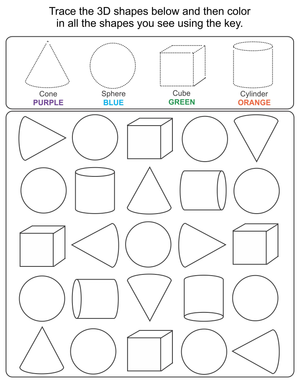
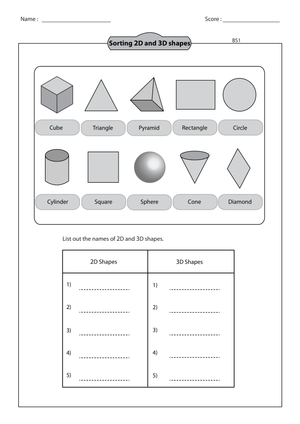
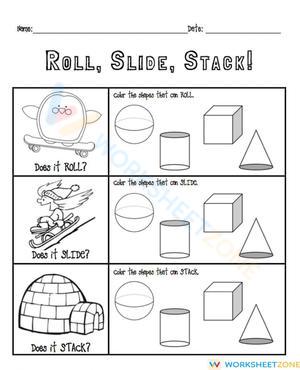
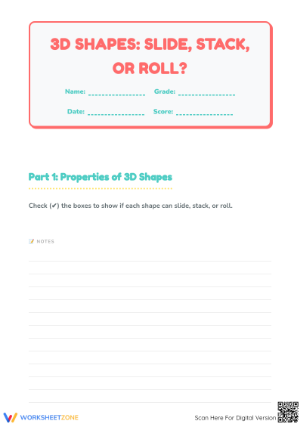
K.G.A.3 requires students to identify shapes as two-dimensional or three-dimensional. Sorting worksheets that mix flat shapes like circles and hexagons with solid shapes like cubes and cones give students repeated, low-prep practice distinguishing flat from solid, which is a distinction many students only really internalize after handling real blocks and then transferring that understanding to a printed page.
According to the Common Core State Standards Initiative, kindergarten geometry standard K.G.A.2 requires students to correctly name shapes such as squares, circles, triangles, and hexagons regardless of their orientation or overall size, a distinction outlined in the official K.G.A.2 standard published at thecorestandards.org.
Building and Composing Shapes
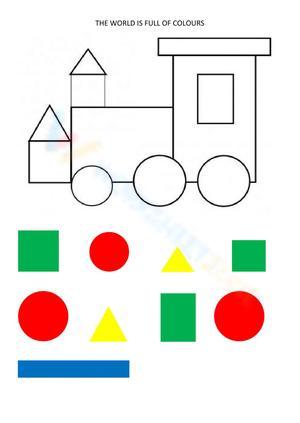
K.G.B.5 asks students to model shapes by building and drawing them, while K.G.B.6 asks them to compose simple shapes to form larger shapes, such as joining two triangles to make a rectangle. Worksheets alone cannot fully teach this standard, but they are useful as a follow-up to hands-on pattern block work: a page where students trace which two shapes combine to build a given larger shape checks whether the concept transferred from manipulatives to paper.
Save these composing worksheets for after students have had physical practice with pattern blocks or tangrams. Introducing composition tasks on paper before students have manipulated real shapes tends to produce guessing rather than genuine understanding of how parts relate to wholes.
Frequently Asked Questions
1. What shapes should kindergartners know by the end of the year
By the end of kindergarten, students should reliably name common 2D shapes such as circles, squares, triangles, rectangles, and hexagons, along with common 3D shapes such as cubes, cones, cylinders, and spheres, and be able to describe basic attributes like sides and corners for each.
2. How do shapes worksheets align with Common Core kindergarten geometry standards
Shapes worksheets can be mapped directly to CCSS K.G.A.1 through K.G.B.6, moving from naming and positional language, to distinguishing 2D from 3D shapes, to comparing attributes, and finally to modeling and composing shapes from smaller parts.
3. How can teachers use shapes worksheets for intervention versus enrichment
For intervention, choose worksheets with a single shape focus, large clear images, and minimal distractors so students can build naming accuracy before adding complexity. For enrichment, choose worksheets involving shape composition, less common polygons, or attribute comparison across multiple shapes at once.
4. How often should shape recognition be assessed in kindergarten
A short shapes worksheet used weekly as a warm-up or exit task gives enough data to catch misconceptions like orientation confusion early, without turning shape review into a lengthy separate assessment block.













 Interactive Worksheet Maker
 Quiz Maker
 Word Search Maker
 Crossword Puzzle Maker
 Word Scramble Generator
 Sentence Scramble Generator
 Handwriting Worksheet Generator
 Name Tracing Generator
 Fill In The Blank Generator