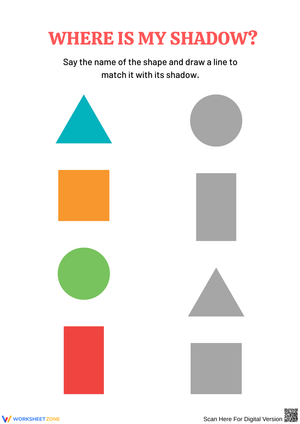
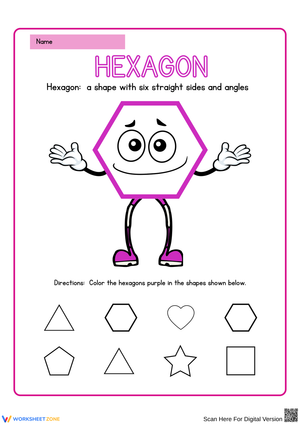
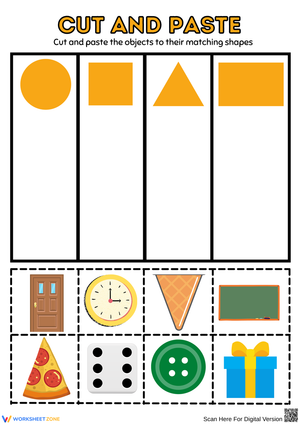
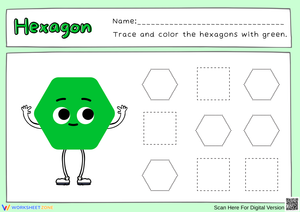
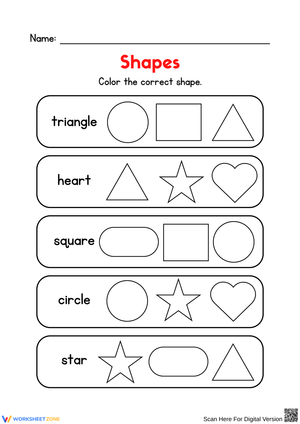
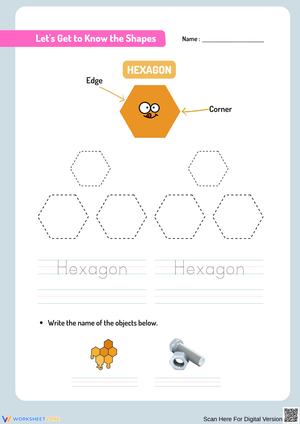
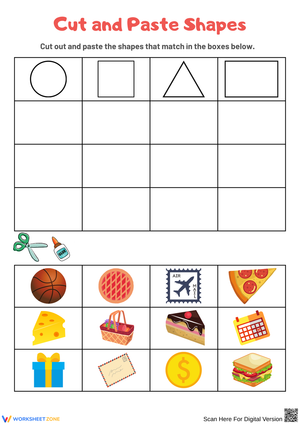
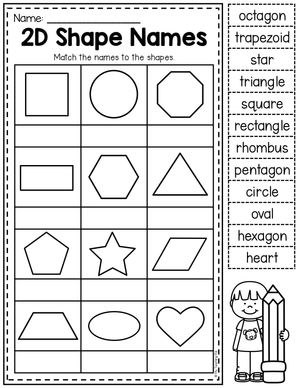
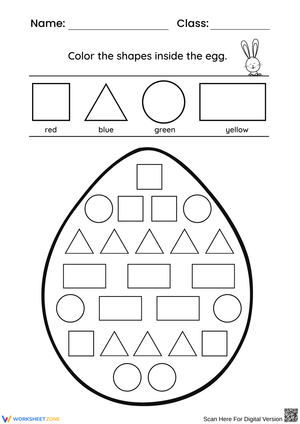
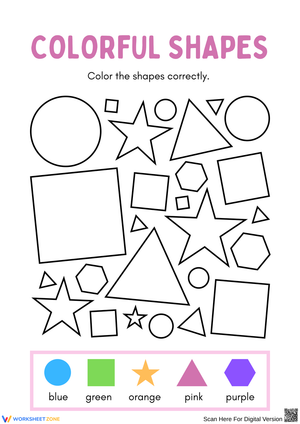
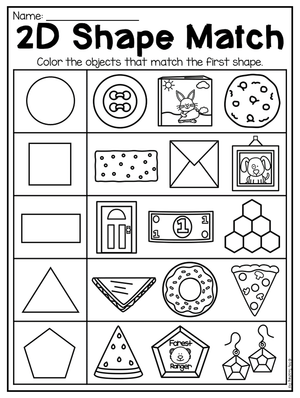
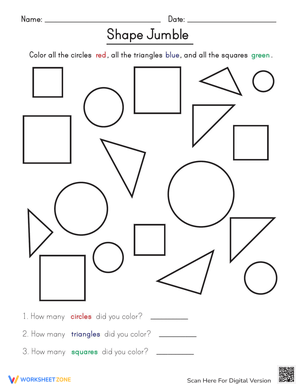
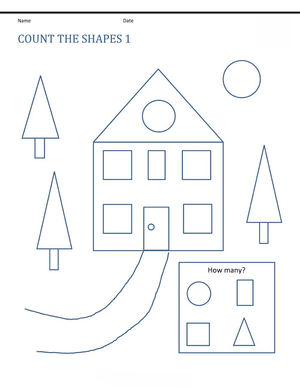
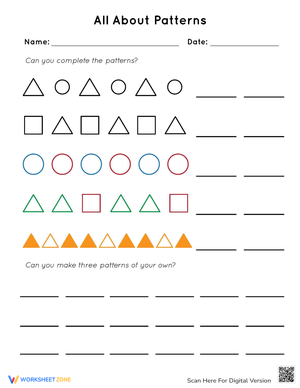
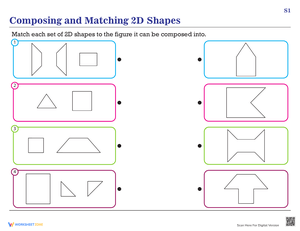
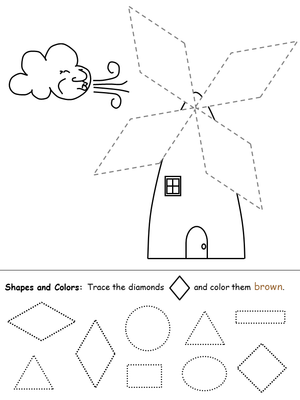
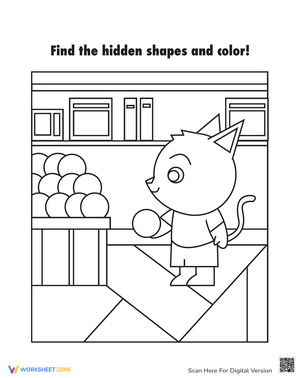
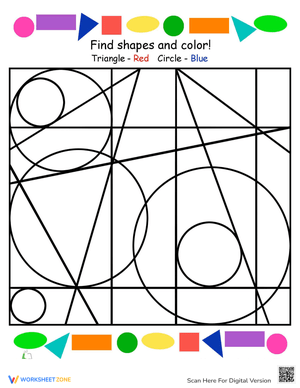
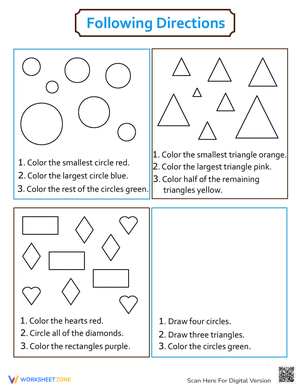
Kindergarten 2D shapes worksheets give students repeated, low-pressure practice with naming circles, squares, triangles, rectangles, and hexagons, which sets up the rest of the K-12 geometry sequence. Rather than treating shape identification as a one-time unit, worksheets let teachers spread this skill across weeks, revisiting it in warm-ups, centers, and homework so recognition becomes automatic instead of memorized for a single test.
Because kindergarten geometry standards focus on flexible recognition rather than rote labeling, worksheets need to present shapes in varied sizes, colors, and orientations. A worksheet that only shows a single upright triangle does not build the same skill as one that also shows a rotated, stretched, or small triangle next to a large one. This variety is what allows students to generalize the concept of triangle instead of memorizing one picture.
The Core Shape Set Every Kindergartner Should Know
Across most kindergarten classrooms, the core 2D shape set that worksheets should reinforce includes:
- Circle
- Square
- Triangle
- Rectangle
- Hexagon
These five shapes form the backbone of kindergarten geometry instruction and are the shapes most commonly referenced in grade-level standards and classroom materials. Worksheets that cycle through all five, rather than overemphasizing circles and squares, help close gaps for shapes students see less often, such as hexagons.
Sequencing Shape Recognition: From Sorting to Naming to Describing
Shape instruction tends to move through three stages, and worksheets work best when they are matched to the right stage rather than jumping straight to abstract naming tasks.
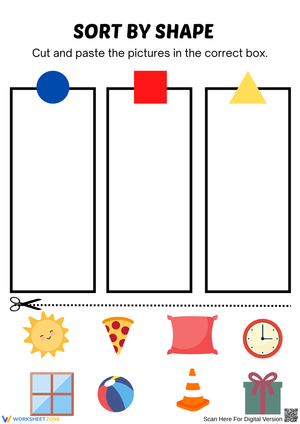
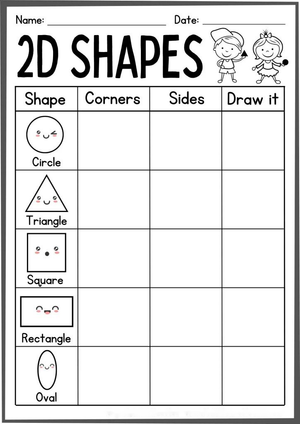
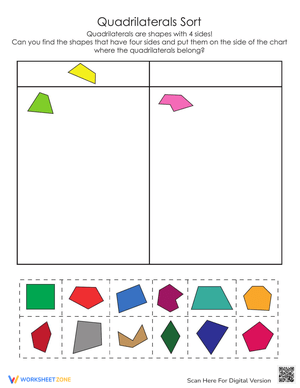
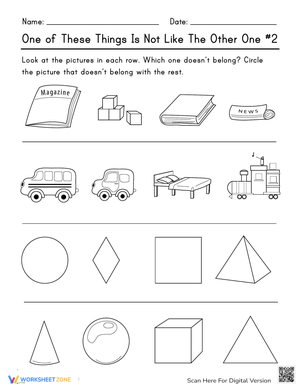
Early in the year, sorting worksheets ask students to group shapes by type without necessarily writing or saying the shape name. This builds visual discrimination first. Mid-year, naming worksheets ask students to label shapes directly, often by circling the correct word or writing it. By the second half of the year, describing worksheets push further, asking students to identify attributes like the number of sides or corners a shape has, which prepares them for the describing language expected in kindergarten geometry standards.
One pattern worth watching for is that students often master circle and square recognition well before hexagon recognition, simply because hexagons appear far less often in everyday classroom materials and picture books. Teachers who track shape-by-shape accuracy, rather than a single overall geometry score, tend to catch this gap earlier and can add a few extra hexagon-focused worksheets in weeks five through seven of instruction rather than waiting for an end-of-unit check to reveal the weak spot.
Building Positional Language Alongside Shape Identification
Kindergarten geometry is not only about naming shapes. Grade-level standards also call for describing objects using positional language such as above, below, beside, in front of, behind, and next to. Worksheets that combine shape identification with a positional prompt, for example asking a student to circle the triangle that is above the square, cover two skills in a single task rather than treating them as separate lessons.
Positional language is an explicit part of kindergarten geometry instruction rather than an optional extra. By embedding position words into shape worksheets, teachers build two competencies at once while keeping the cognitive load manageable for young learners.
Classroom Implementation
A few practical habits make 2D shapes worksheets more effective in a kindergarten classroom:
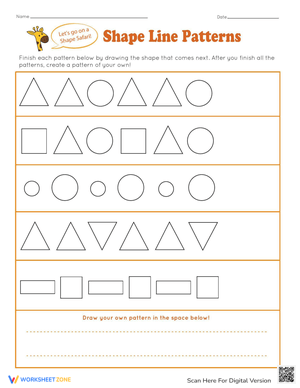
- Rotate and resize shapes across worksheets so students do not learn a single fixed image per shape.
- Pair every third or fourth naming worksheet with a positional-language prompt to reinforce spatial awareness alongside shape recognition.
- Keep a running, shape-by-shape tally rather than a single geometry grade, so gaps in less common shapes like hexagons do not hide behind strong circle and square scores.
- Use short, two-shape worksheets for small-group intervention rather than full five-shape sheets when addressing a specific confusion like square versus rectangle.
- Alternate between quick ID checks and slower attribute-description tasks to build a fuller formative picture over the unit.
Frequently Asked Questions
1. Which 2D shapes should kindergartners be able to identify by the end of the year?
By the end of kindergarten, students are generally expected to reliably name circles, squares, triangles, rectangles, and hexagons regardless of their size or orientation.
2. How do these worksheets align with kindergarten geometry standards?
Kindergarten 2D shapes worksheets can be designed to cover shape naming, positional description, and classifying shapes as flat versus solid, supporting the foundational geometry competencies expected at this grade level.
3. What is the difference between 2D and 3D shape instruction at the kindergarten level?
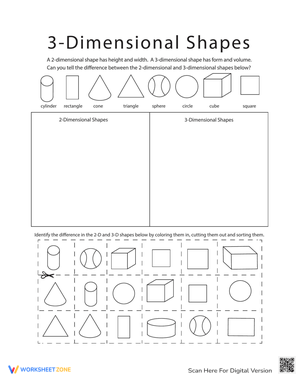
Kindergarten teachers distinguish between two-dimensional, or flat, shapes and three-dimensional, or solid, shapes, so 2D shapes worksheets should be paired with separate 3D shape materials rather than combined into one undifferentiated set.
4. How can teachers use these worksheets for small-group or intervention support?
Isolating commonly confused shape pairs, such as square and rectangle, into short, focused worksheets tends to work better for intervention groups than using a general worksheet that covers all five core shapes at once.
5. How often should kindergarten teachers assess shape recognition skills?
Quick shape-ID checks work well weekly or biweekly during active instruction, while slower attribute-description tasks are better suited to end-of-unit or progress-monitoring checkpoints, giving a fuller picture without overloading daily instruction time.













 Interactive Worksheet Maker
 Quiz Maker
 Word Search Maker
 Crossword Puzzle Maker
 Word Scramble Generator
 Sentence Scramble Generator
 Handwriting Worksheet Generator
 Name Tracing Generator
 Fill In The Blank Generator