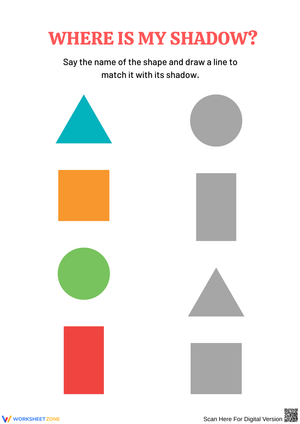
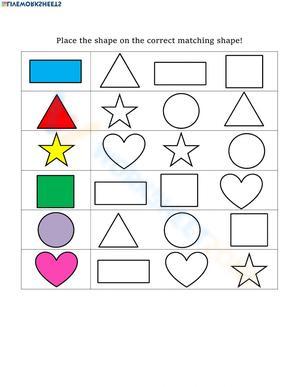
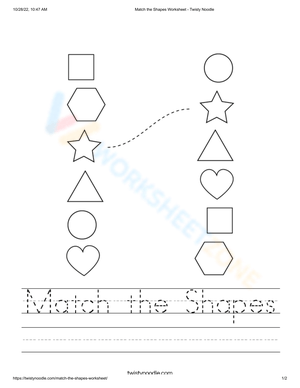
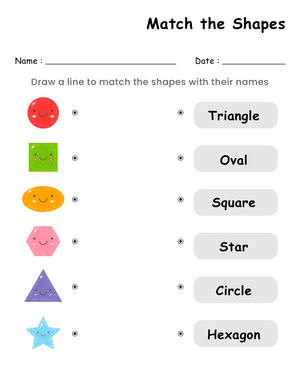
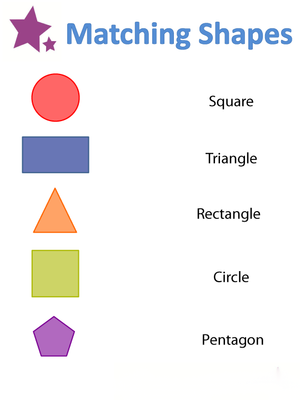
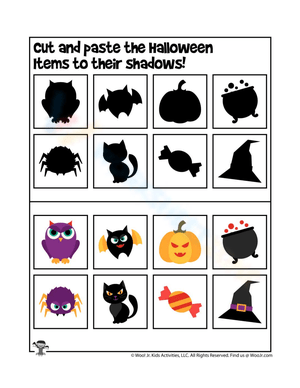
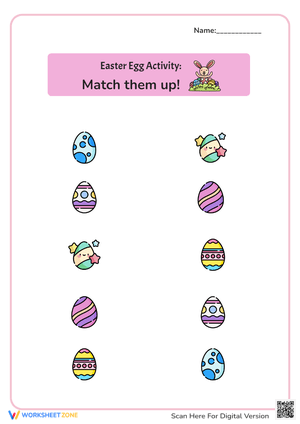
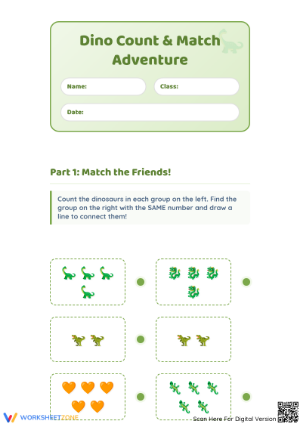
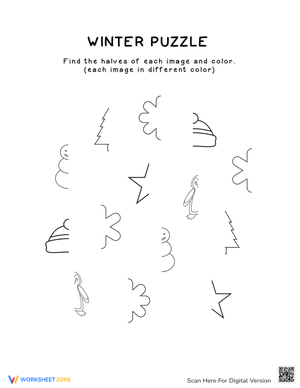
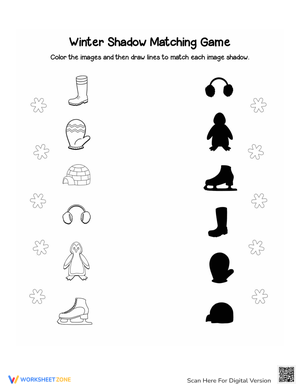
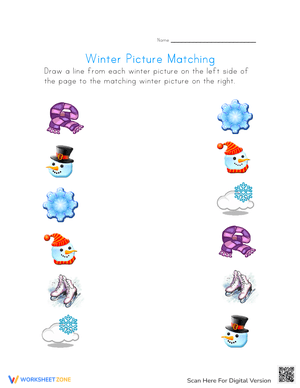
These matching shapes printable worksheets for kindergarten give teachers a targeted set of resources for geometric identification at the point in the year when students are first being asked to think about shapes by their attributes rather than by how they look. Each worksheet targets the same core skill — pairing shapes that share defining properties — while varying size, color, and orientation so students cannot rely on a single visual snapshot to find the match.
What the Set Builds, Shape by Shape
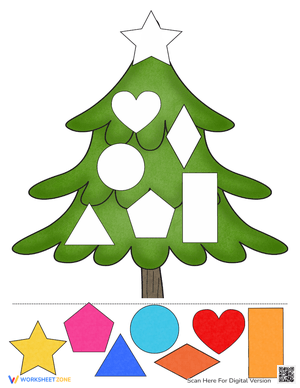
The two-dimensional shapes across these worksheets are circles, squares, triangles, rectangles, and hexagons. Circles appear in multiple sizes so students encounter the concept that name follows form, not scale. Hexagons demand the most active verification because six sides requires counting rather than a quick glance, and the worksheets use that difficulty intentionally — students mark each side before connecting the pair. Triangles are where the most instructional payoff happens: the set includes equilateral, right, and obtuse triangles placed at various orientations, so students must count edges and corners rather than match silhouettes.
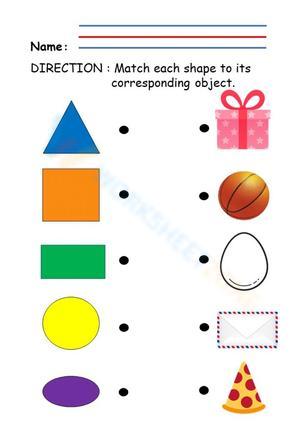
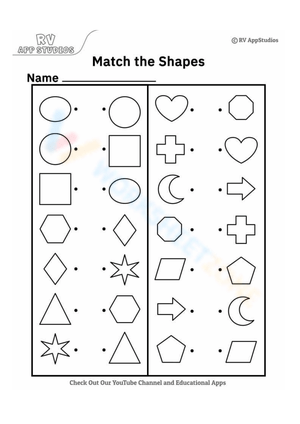
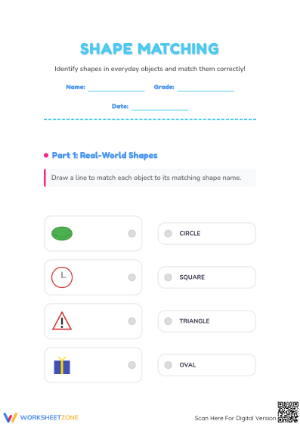
Students underline defining features, draw connecting lines between matching pairs, and in several worksheets write the number of sides next to each shape before making any connection. That counting step before the match is the one that builds genuine understanding rather than quick visual sorting. Some worksheets place a geometric shape beside a real-world object — a clock face next to a circle, a window next to a rectangle, a wedge of pizza next to a triangle — and ask students to mark the pair. These matching shapes printable worksheets for kindergarten bring geometry out of the abstract and into the physical world students already move through every day.
Mistakes Students Make That These Worksheets Help You Catch
The most reliable error is orientation dependence. Students who correctly identify a triangle sitting on its flat base will hesitate or guess wrong when they see the same triangle rotated so a vertex points left. They have stored a mental snapshot of what a triangle looks like, not the rule that makes a triangle a triangle. These worksheets surface that gap early because the matching tasks routinely show the same shape in multiple rotations within one exercise, and errors cluster visibly around the non-standard positions.
A second pattern worth watching: students matching by color when the worksheet uses polychromatic shapes. Color is a non-defining attribute, and a student who connects a blue triangle to another blue triangle while skipping a red triangle of identical proportions is scanning for visual similarity rather than geometric structure. A quick check is to ask the student to cover the answer they just marked and describe what they see. If they say "three sides, three corners," they understand the shape. If they say "it's the pointy one," they are still working from image memory, and more attribute-focused discussion is needed before the next worksheet.
Squares and rectangles remain the confusable pair all year. Most students match square to square without difficulty, but show a wide, short rectangle next to a tall, narrow one and some will insist they are different shapes. The equal-sides rule for a square typically needs to come up in several contexts — manipulatives, drawings, classroom object comparisons — before it sticks reliably.
Standard Alignment
These worksheets address CCSS.MATH.CONTENT.K.G.A.2, which requires students to correctly name shapes regardless of their orientations or overall size. That standard sits in the Kindergarten Geometry domain under cluster A: Identify and describe shapes. Most curricula place it in the second half of the school year, after students have had informal exposure to shape names during read-alouds and morning circle. The orientation matching tasks directly target the clause in K.G.A.2 that teachers most commonly underemphasize — "regardless of orientation" — because varied-orientation matching is one of the few written activities that reveals whether a student understands defining attributes or only recognizes familiar pictures.
Several worksheets also support CCSS.MATH.CONTENT.K.G.A.1, which asks students to describe objects in the environment using the names of shapes. The real-world object matching exercises address this standard without requiring a separate lesson or activity.
How to Build These Worksheets Into Your Geometry Block
Math centers are the most efficient placement. Laminated and paired with dry-erase markers, each worksheet becomes reusable — students reset and repeat until confident, then move to the next. Organizing by shape family rather than perceived difficulty works well in practice: one tray holds circle and square matching, another holds triangle variants, a third holds mixed-shape exercises. Students who move through the triangle worksheet quickly will self-select toward the mixed set, and the teacher can treat those choices as informal readiness data.
As exit tickets, these worksheets do clean formative work in the last five minutes of a geometry lesson. After introducing hexagons, hand students a hexagon-focused matching worksheet before dismissal. Matching accuracy shows immediately which students have internalized the attribute and which still hold a vague sense of "more sides." That information shapes the next day's small-group work more reliably than a whole-class verbal check.
For Monday warm-ups, single-shape matching worksheets work well during the first few minutes of math block — they re-engage geometric thinking without heavy cognitive demand and give students a quick success before harder tasks begin. The matching shapes printable worksheets for kindergarten format suits this purpose: the task is self-contained, most students finish in under four minutes, and it leaves time for brief partner sharing before the main lesson starts.
Adjusting the Set for Students at Different Points in the Year
Students who are still building basic shape recognition do best with worksheets that offer two clearly distinct choices — a circle and a triangle rather than a square and a rectangle — and use large, uncluttered illustrations. Reducing the number of choices and increasing the visual contrast between shapes lowers the cognitive demand of the visual scan so the student can focus on the matching logic rather than managing too many competing options at once. For these students, letting them trace each shape with a finger before marking the match adds a tactile layer that supports the visual work without requiring additional materials.
Students who have the basic shapes well in hand are ready for rotated and flipped variants, mixed sizes within a shape family, and — the genuine stretch activity — matching a 2D shape to the face of a 3D figure: a square to the face of a cube, a circle to the base of a cylinder. That task moves directly toward the dimensional relationship concepts students will revisit in first grade. These matching shapes printable worksheets for kindergarten span enough range within the set that differentiation is mostly a matter of which worksheet a student picks up first, not a separate preparation on the teacher's part.
Frequently Asked Questions
Do all the worksheets cover all five core shapes, or are some shape-specific?
Both types are in the set. Some worksheets focus on a single shape family — triangle variants or hexagon identification — which is useful when introducing a new shape or running a targeted center activity. Others mix shapes across the same exercise, which gives a fuller picture of overall geometric knowledge and works better for review or end-of-unit assessment.
Can these worksheets be used before students have learned formal shape names?
Yes. Matching does not require vocabulary — a student can correctly connect two triangles without being able to say the word "triangle." Matching before naming is a reasonable instructional sequence: attribute-based sorting first, label second. Once students are reliably matching by attributes, the shape name lands more solidly because they already have the concept organized in their thinking. Teachers can introduce the vocabulary during the debrief rather than before the task.
How do I tell whether a correct answer reflects real understanding or a lucky guess?
Watch the process, not just the finished worksheet. A student who counts sides before connecting shapes is demonstrating attribute understanding. A student who draws a line immediately and confidently — and sometimes incorrectly — is pattern-matching visually. Sitting with two or three students during center time and keeping a brief roster nearby to note which strategy each uses is more informative than scoring the completed exercise. A lucky guess and a correct count look identical on the page; the behavior before the pencil moves is where the distinction lives.













 Interactive Worksheet Maker
 Quiz Maker
 Word Search Maker
 Crossword Puzzle Maker
 Word Scramble Generator
 Sentence Scramble Generator
 Handwriting Worksheet Generator
 Name Tracing Generator
 Fill In The Blank Generator