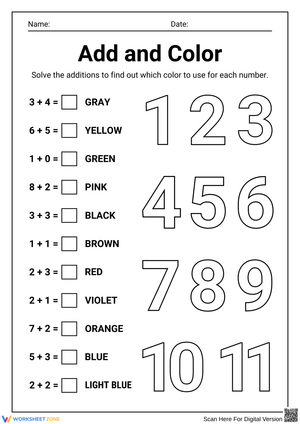
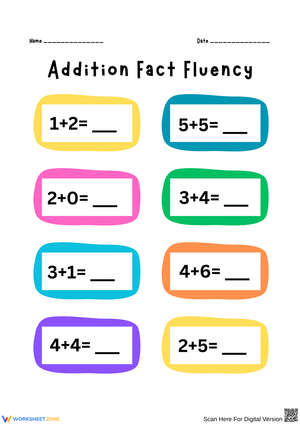
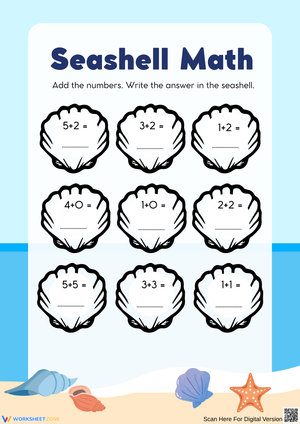
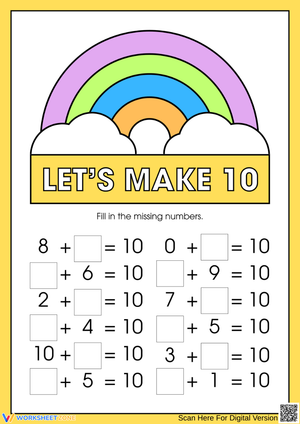
These addition facts pdf worksheets for kindergarten give teachers printable practice spanning the full range from picture-counting to abstract equations, all within the sums-within-10 range that kindergarten actually demands. Each worksheet targets a specific stage in how young learners build number sense — starting with visual groupings and ten-frame problems, moving toward number lines, and finishing with bare number sentences in both horizontal and vertical formats.
What Each Worksheet in the Set Targets
The worksheets address four distinct skill layers, each of which kindergarteners need to move through in sequence.
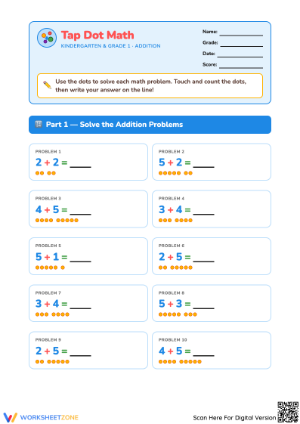
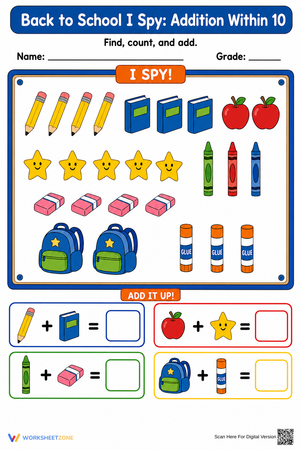
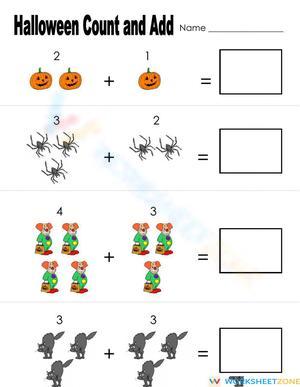
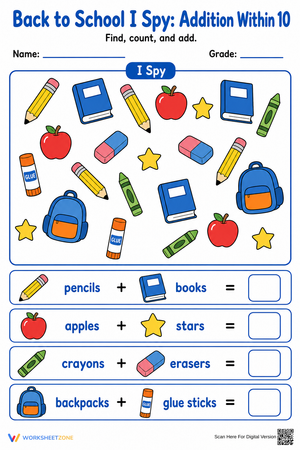
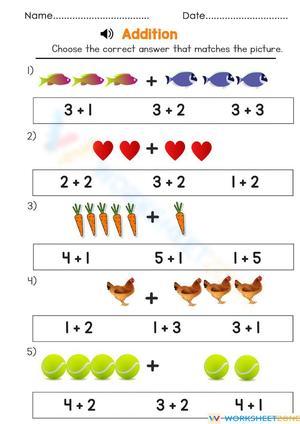
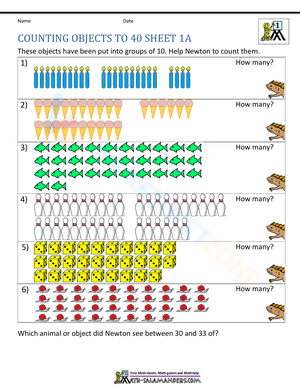
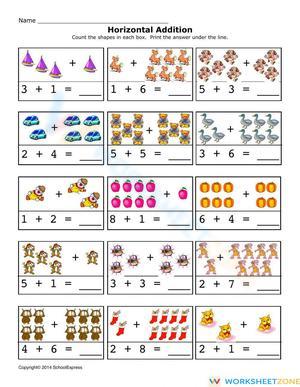
- Visual picture addition: Students count grouped images — apples, bugs, geometric shapes — and write the total. The visual support carries most of the cognitive weight early on, letting students focus on the joining concept before they grapple with symbolic notation.
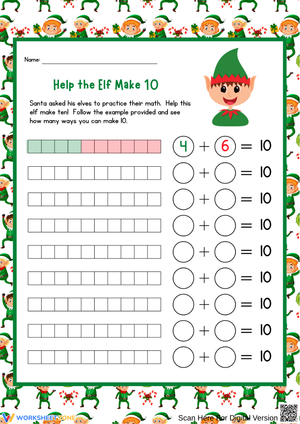
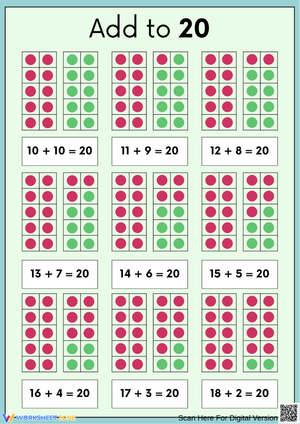
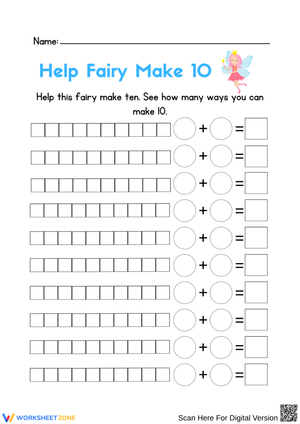
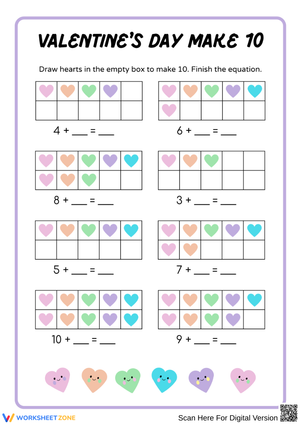
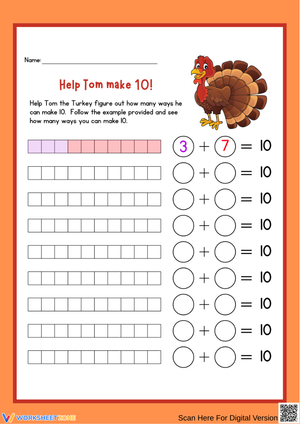
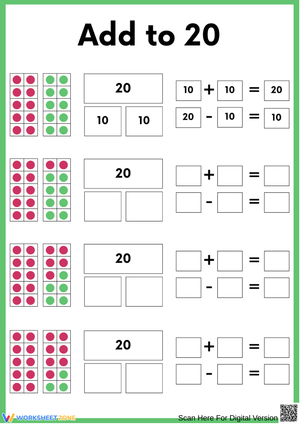
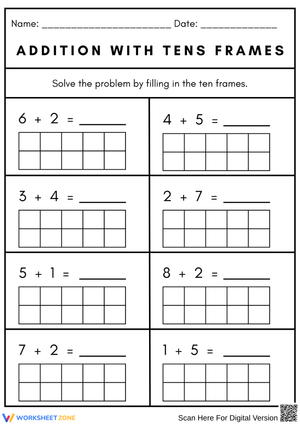
- Ten-frame problems: Dot-filled ten-frames let students see a quantity before naming it. A student who looks at five filled squares on the top row and three on the bottom can recognize eight without touching each dot — that pattern recognition is the foundation of number sense at this age.
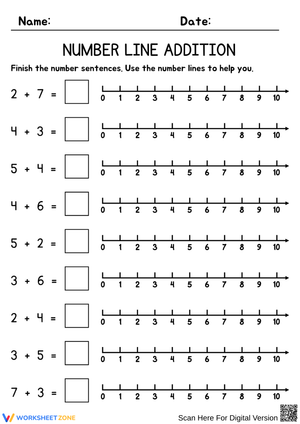
- Number line tasks: Students hop from the larger addend and count forward to find the sum. These worksheets introduce "counting on" as a deliberate, teachable strategy rather than something students discover on their own — or don't.
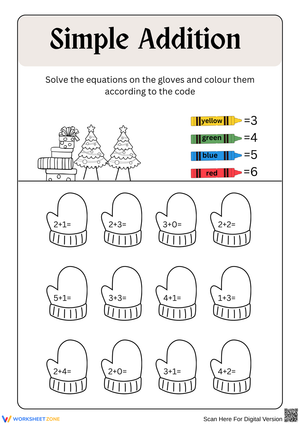
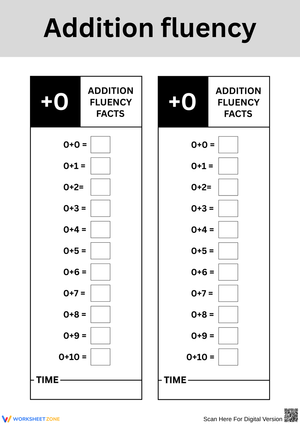
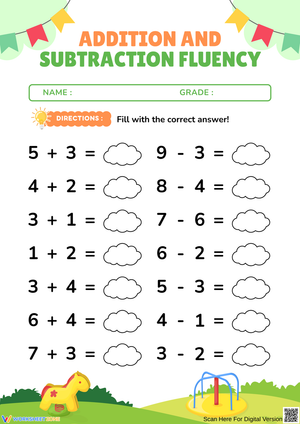
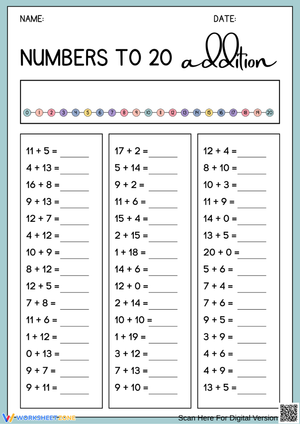
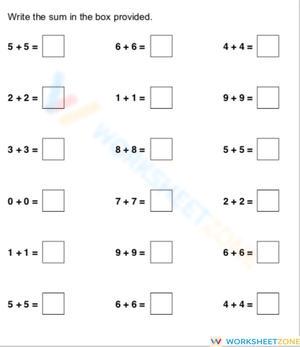
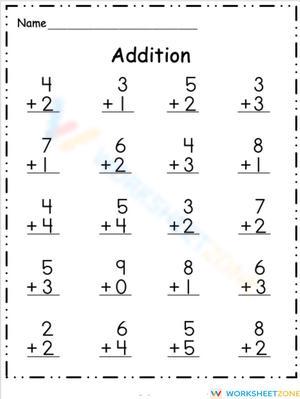
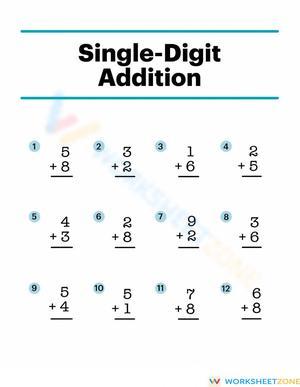
- Abstract equations: Once picture support is removed, students write and solve equations in both horizontal and vertical formats. Both appear in the set because kindergarteners who only ever see 3 + 2 = ___ will sometimes stall on a vertically stacked problem during a district benchmark.
Student Mistakes Worth Watching For Before You Distribute These
The most common early error is conceptual, not careless. When a worksheet shows two groups — four dogs and two cats — some students count only the larger group and write 4. They have not yet understood that addition means joining two groups, not selecting the bigger one. These students need to physically combine sets with counters before attempting anything on paper.
Ten-frame worksheets surface a different error: students count empty cells alongside filled ones. A child who sees a ten-frame with six dots will sometimes write 10, because all ten squares are visible. Catching this during the first ten-frame lesson — before it becomes habitual — is worth pausing whole-class to address.
On number line worksheets, watch for students who start counting from zero rather than from the first addend. If the problem is 3 + 4, they hop zero through four and land on four instead of seven. A pencil circle around the starting number, drawn before they count, fixes this more reliably than repeated verbal instruction.
Standard Alignment
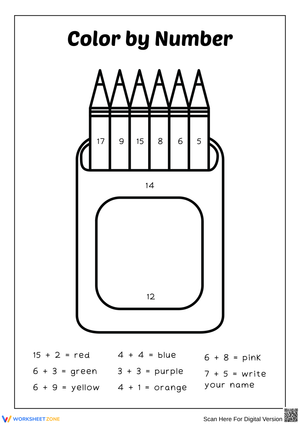
These addition facts pdf worksheets for kindergarten address CCSS.MATH.CONTENT.K.OA.A.1, which requires students to represent addition using objects, drawings, and equations. The picture-based and ten-frame worksheets carry the bulk of this standard. The set also supports K.OA.A.2 — solving addition word problems within 10 — and K.OA.A.5, the fluency standard for sums within 5. In most kindergarten pacing guides, K.OA.A.5 fluency falls in the second semester, so the within-5 worksheets align well to January through March practice, while the within-10 materials extend into April and May.
Working These Worksheets Into Your Weekly Lesson Plans
The most efficient placement is as a daily warm-up rather than a core-lesson replacement. Most kindergarteners finish one worksheet in eight to twelve minutes, which fits cleanly into the transition window between morning meeting and calendar math, or right before a read-aloud. Running one per day Monday through Thursday gives students four spaced practice sessions a week without cutting into direct-instruction time.
Addition facts pdf worksheets for kindergarten also run well as dry-erase center stations. Slide one printed copy per worksheet type into a plastic sleeve, and students rotate through with dry-erase markers. This setup lets you swap seasonal themes — bugs and caterpillars in September, snowflakes in January — without reprinting. For small-group instruction, project the worksheet on the board and work the first two problems together using physical counters that match the printed images. That brief bridge between three-dimensional manipulatives and two-dimensional paper cuts independent-practice confusion noticeably.
Adjusting the Set for Different Learners in the Same Room
Students still at the concrete stage — those who cannot reliably count a group of five without touching each object — do best with picture-heavy within-5 worksheets and physical counters they can place directly on the printed images. This is developmentally on track for early fall in kindergarten, not a sign that a student is falling behind.
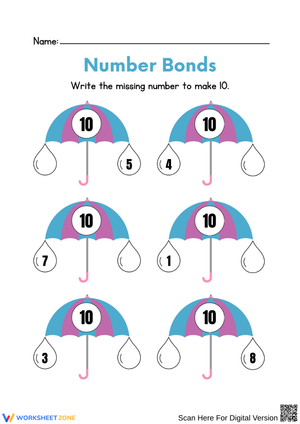
For students who have internalized sums within 5 and are ready to stretch, move them to within-10 equation worksheets and introduce a missing-addend variation: cover one number in the equation with a small sticky note and ask them to determine what's hidden. That one modification shifts a straightforward worksheet into a task requiring genuine reasoning. These addition facts pdf worksheets for kindergarten span enough ground that you rarely need to pull outside materials to keep an advanced kindergartener productively challenged through the year.
Frequently Asked Questions
How long should a kindergartener spend on one worksheet?
Eight to twelve minutes is typical. A student who consistently takes longer than fifteen minutes likely needs more time with physical manipulatives before working independently on paper. A student who finishes in under five minutes deserves a quick accuracy check before you assume mastery — fast work at this age sometimes means they skipped counting entirely.
Can these worksheets serve as formative assessment tools?
They work well for informal formative checks. Collecting one worksheet per student per week and noting error patterns gives you a running picture of where the class stands without the pressure of a formal evaluation. For a fluency check tied to K.OA.A.5, score for both speed and accuracy together — that combination is what the standard actually measures.
When should students stop using picture worksheets and move to abstract equations?
When a student solves picture problems without counting each image individually — when they see three apples and two oranges and write 5 without touching either group — they are ready for abstract equations. This shift happens at different points across a class, anywhere from late fall to early spring in kindergarten, and both worksheet types can run simultaneously in the same room.
Do these work for students with limited fine motor control?
Yes. The writing demand on picture-based and ten-frame worksheets is minimal — students fill in one or two digits, not sentences. For students who find pencil grip tiring, the dry-erase sleeve setup reduces the physical effort of erasing and gives them more repetitions without the friction of starting fresh on a new worksheet each time.













 Interactive Worksheet Maker
 Quiz Maker
 Word Search Maker
 Crossword Puzzle Maker
 Word Scramble Generator
 Sentence Scramble Generator
 Handwriting Worksheet Generator
 Name Tracing Generator
 Fill In The Blank Generator