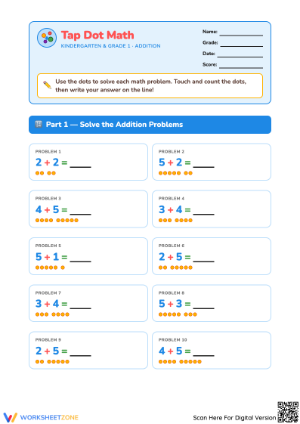
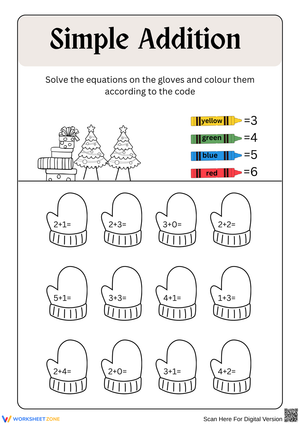
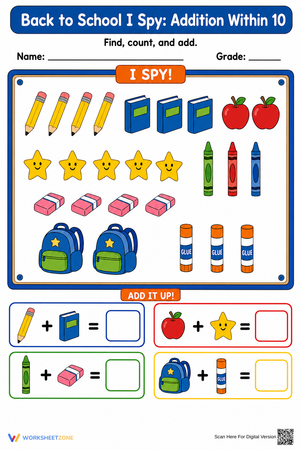
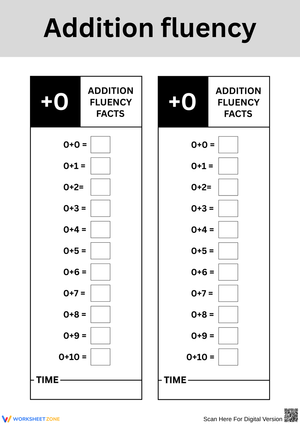
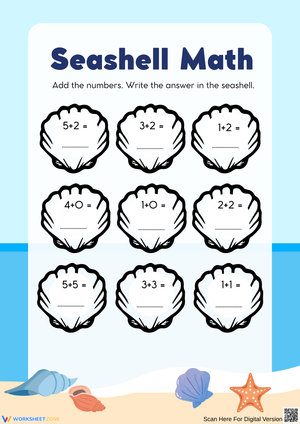
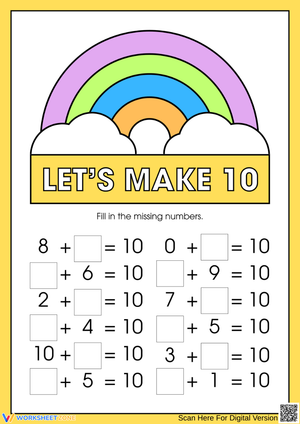
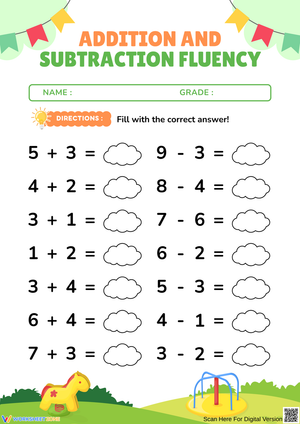
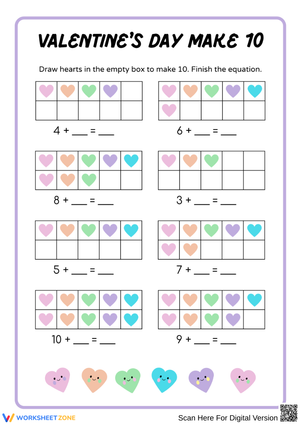
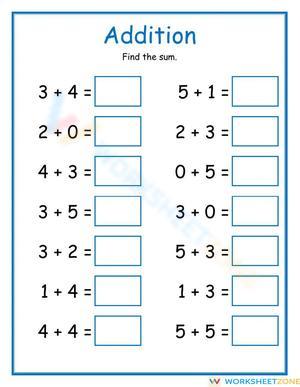
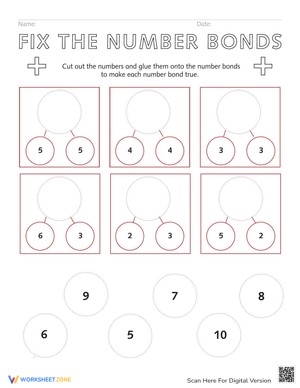
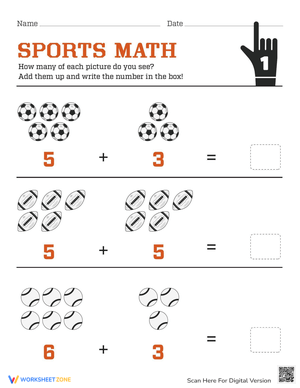
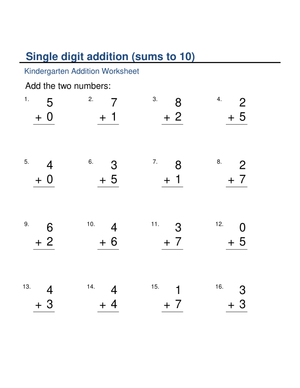
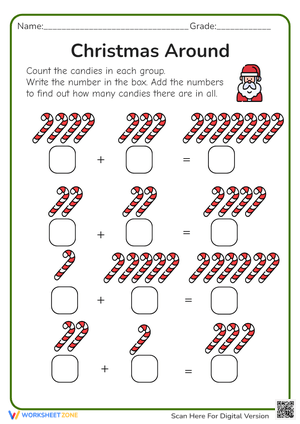
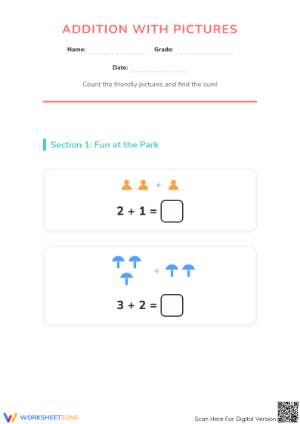
These addition within 10 worksheets for kindergarten give teachers a ready set of practice resources that move students through a transition most curriculum pacing guides underestimate — from counting every object aloud to reading a written equation and producing a correct sum with genuine confidence.
What's Inside the Set
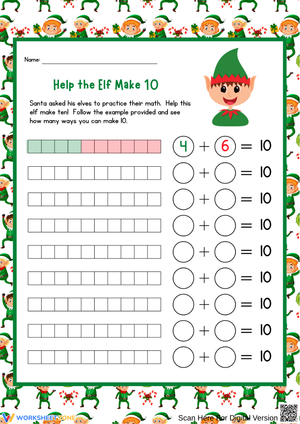
Five distinct problem types appear across the worksheets, each targeting a different piece of early addition understanding:
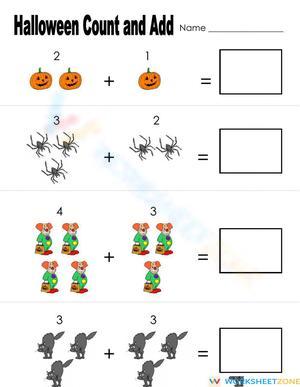
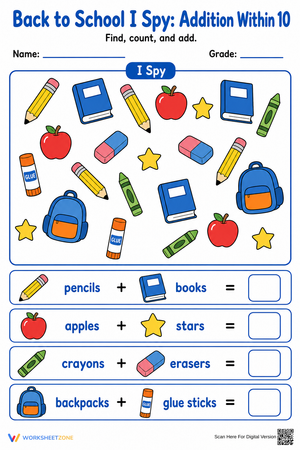
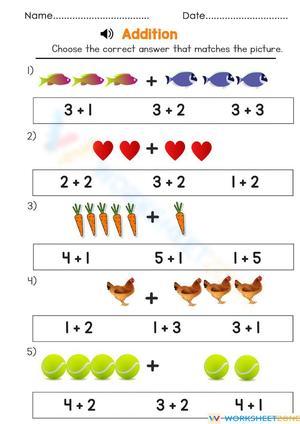
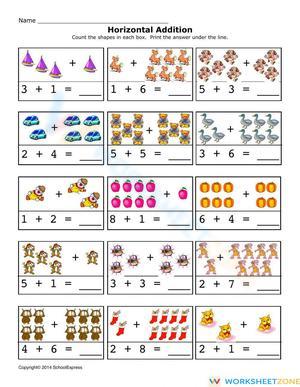
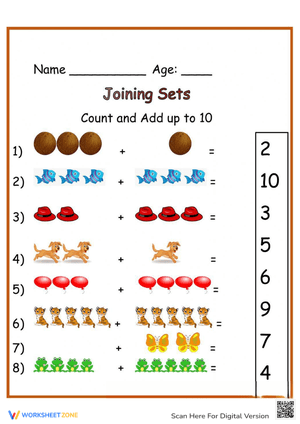
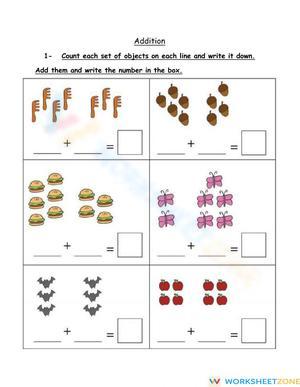
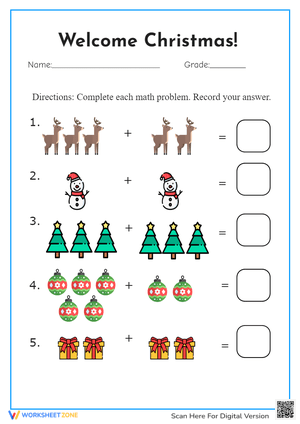
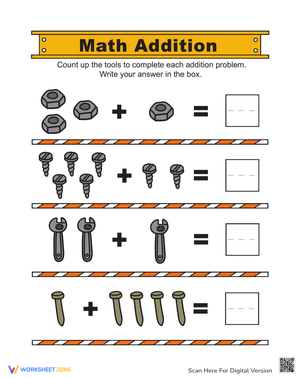
- Picture addition — students count illustrated objects (animals, fruit, classroom items) and write the sum, cementing one-to-one correspondence before abstract notation takes over
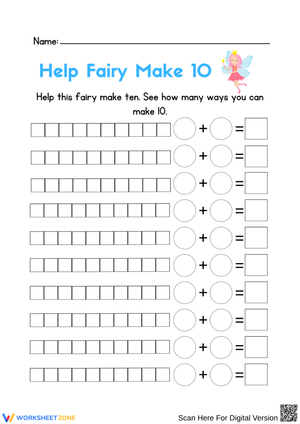
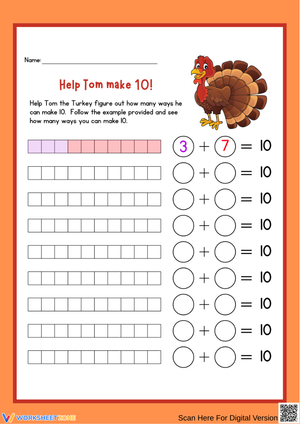
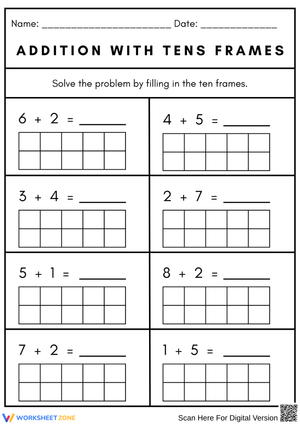
- Ten-frame problems — students fill or read pre-structured frames and record the total, which builds subitizing alongside addition fluency
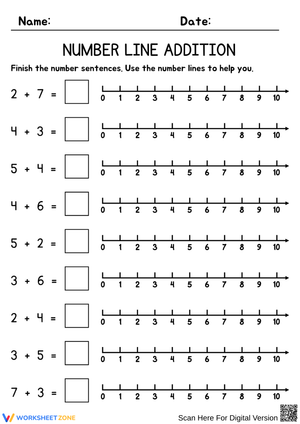
- Number line hops — students mark a starting point and count forward, giving the operation a spatial dimension that helps the concept settle
- Brief word problems — two-sentence contexts naming familiar situations so students see addition as something people do, not just symbols to manipulate
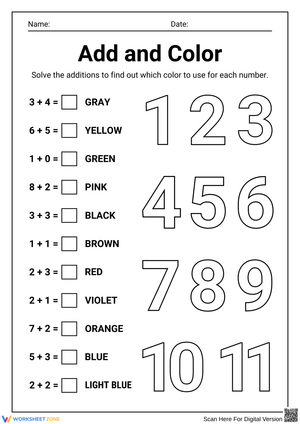
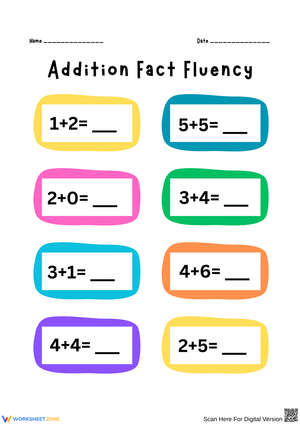
- Mixed equation formats — horizontal and vertical equations appear within the same worksheet so students learn early that rotating numbers doesn't change the sum
The Counting Progression Behind the Practice
Kindergarteners don't reach written addition in one step. The typical path runs from counting all — where a student looking at 4 + 3 counts one, two, three, four... five, six, seven — to counting on, where they hold the 4 in mind, start at five, and count three more. That second move is the leap that predicts fluency, and it doesn't happen on a schedule. Each worksheet places pictures beside numerals deliberately: students can lean on the illustration when they need it and ignore it as their number sense grows. That choice belongs to the student, and giving it to them accelerates the transition more reliably than removing the visual support before they're ready.
How to Build These Worksheets Into Your Lesson Plans
The most effective use of addition within 10 worksheets for kindergarten happens when they serve a focused instructional role rather than a filler one. During small-group time, walk students through the first two problems before releasing them to finish independently — that guided opening takes about eight minutes and generates formative data before the group rotates. Who counted every picture? Who held a number in mind and counted on? Those answers determine what the next small-group lesson covers.
For math centers, slip each worksheet into a dry-erase pocket. Students solve with a marker, compare answers with a partner, wipe the surface clean, and move on. The tactile reset keeps attention high and removes the anxiety that comes from committing a pencil answer that turns out to be wrong.
Monday mornings are a natural slot. A worksheet settled onto desks during morning meeting gives students a clear, low-stakes task while attendance and logistics get sorted. Because the format is predictable, no directions need to be re-explained — students know what to do, which frees attention for the math itself.
One technique that works consistently: when introducing a new worksheet format, place a small cup of thematic manipulatives beside it and ask students to physically build the equation before writing anything. Four counters on the left, three on the right, then count and record. This grounds abstract symbols in something students can touch and nearly eliminates the blank-stare frustration that hits when a student encounters an unfamiliar problem type for the first time.
Mistakes Students Make That These Worksheets Help You Catch
The most persistent error on number line worksheets isn't miscounting — it's treating the starting number as jump number one. A student solving 4 + 3 places their pencil on the 4 and counts "one, two, three," landing on 6 instead of 7. They counted three jumps correctly; they just counted the starting position as a jump. Pointing to the space between 4 and 5 and saying "this is your first jump" fixes it immediately — but expect to make this correction across multiple sessions before it holds.
Ten-frame work reveals a separate issue. Some students fill a frame accurately — five dots in the top row, two in the bottom — then count every dot individually from scratch rather than recognizing the full row as five. That's a subitizing gap, not an addition gap, and it signals a need for quick-recognition practice before pushing further on sums to 10.
Written answers show numeral reversal more often than teachers expect, particularly for 5, 6, and 9. A student who reverses 7 usually knows the sum is seven; they're forming the numeral from memory without a visual reference. Keeping a number strip taped to the corner of the workspace gives them a check without interrupting their thinking mid-problem.
Adapting the Set for a Range of Readiness Levels
For students still working toward fluency with sums within 5, reduce the problem count on each worksheet and choose picture-heavy formats over equation-only ones. Pre-filled ten-frames — where the quantities are already dotted in and students only write the sum — lower the entry point without changing the math. Allowing a student to say the answer aloud while the teacher records it also keeps a fine-motor struggle from masking what the student actually understands about addition.
Students who have already internalized sums to 5 move through addition within 10 worksheets for kindergarten faster than expected. For those learners, missing addend problems (4 + __ = 7) extend the same format in a direction that challenges without requiring an entirely different resource. Asking them to draw their own picture to match a given equation takes about two minutes and reveals whether the abstract sum connects to a quantity they can actually visualize.
For students with strong number sense who finish early, the most useful move is a question rather than another problem: "How do you know your answer is right?" Asking them to explain their reasoning — whether they counted all, counted on, or recognized a pattern — surfaces the thinking that the written answer alone can't show.
Standard Alignment
These addition within 10 worksheets for kindergarten address CCSS.MATH.CONTENT.K.OA.A.2, which asks kindergarteners to solve addition word problems and add within 10 using objects, drawings, or equations. In classroom terms, this standard comes into focus during the first and second quarters, after students have established counting and cardinality, and it deepens in complexity through the year as fluency expectations increase. The word problem format across several worksheets directly serves the "solve... word problems" language of the standard, while the ten-frame and number line formats address the "objects or drawings" pathway the standard explicitly names.
Frequently Asked Questions
What manipulatives pair best with these worksheets?
Two-color counters, connecting cubes, and thematic mini-erasers work well at this age because they fit on a desk and can be placed directly beside the printed equation. The most important quality in a manipulative for kindergarteners is low distraction — a counter shaped like a recognizable character will have a student inventing a storyline within 90 seconds. Plain counters keep attention on the addition.
How do I move a student from counting fingers to using the number line?
Start with a large floor number line where the student can physically walk or jump the problem. Once they understand that adding means moving forward — not backward, not starting over from one — introduce a printed number line at their desk. Have them use a small token rather than a pencil to hop along. Removing one motor challenge from what is already a multi-step process makes a real difference at this age.
How do I know when a student is ready to move from sums within 5 to sums within 10?
Look for two things together: the student solves sums to 5 without touching each picture individually, and they can hold the larger addend in mind and count on from it rather than starting from one. Readiness isn't just accuracy — a student who gets every answer right but counts all the way from scratch every time isn't ready to move up. Efficiency and confidence matter as much as the answer itself.
Can these worksheets work for students who aren't yet writing numerals?
Yes. Students who struggle with numeral formation can use number stamps, stickers, or dot arrays to record answers instead of writing. Another option is to laminate each worksheet and let the student respond with a dry-erase marker — the lower-pressure surface reduces hesitation. What the student uses to record the answer matters less than whether they can produce the correct sum.













 Interactive Worksheet Maker
 Quiz Maker
 Word Search Maker
 Crossword Puzzle Maker
 Word Scramble Generator
 Sentence Scramble Generator
 Handwriting Worksheet Generator
 Name Tracing Generator
 Fill In The Blank Generator