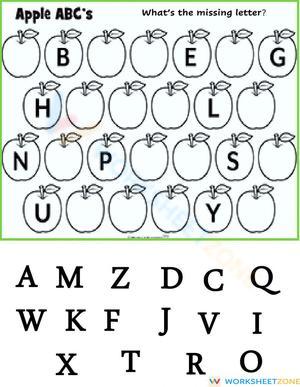
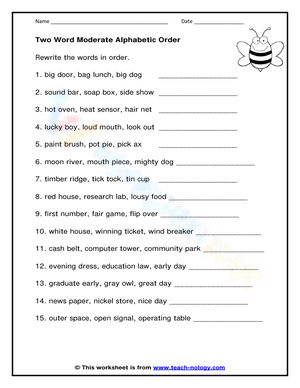
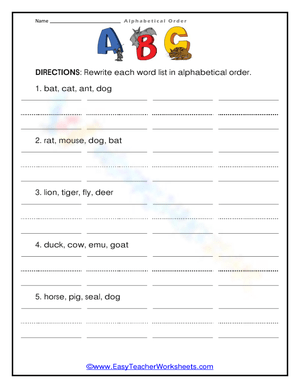
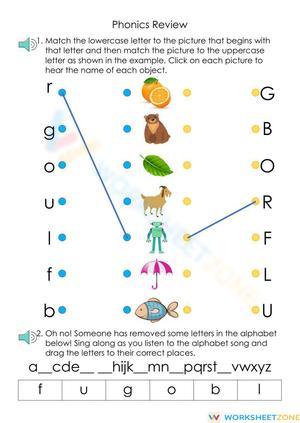
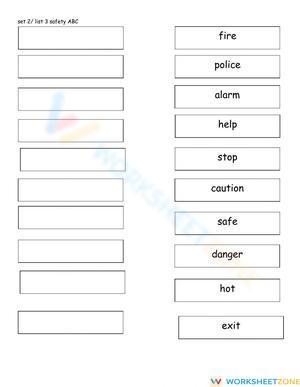
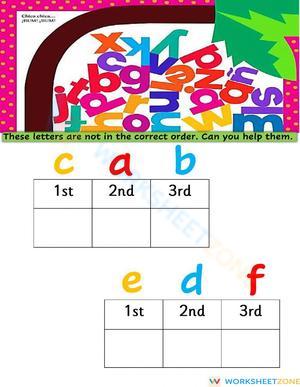
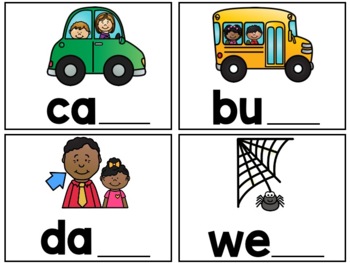
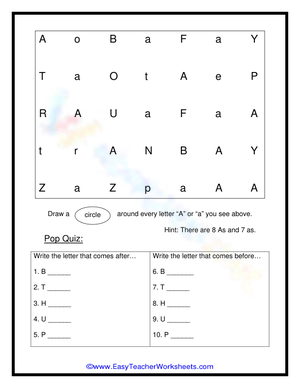
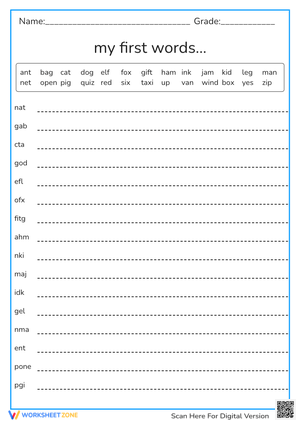
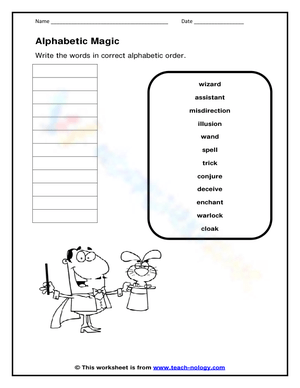
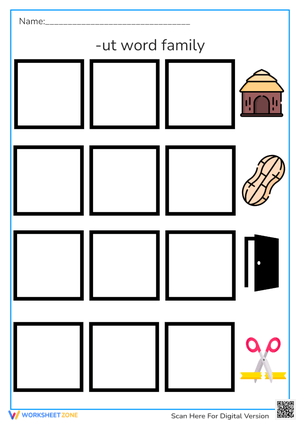
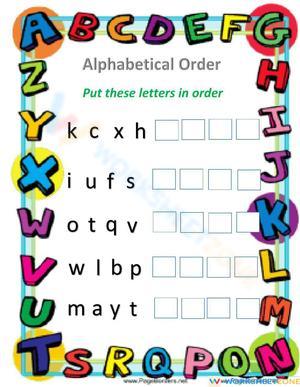
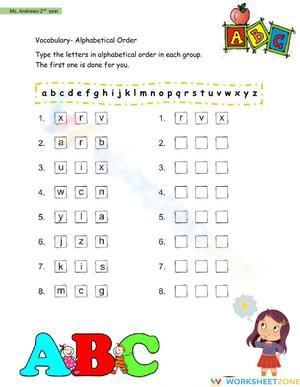
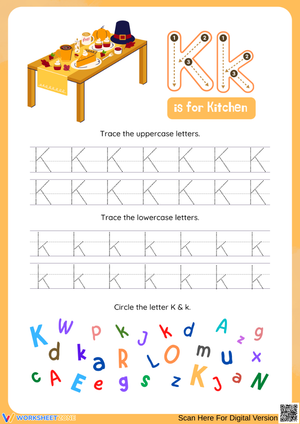
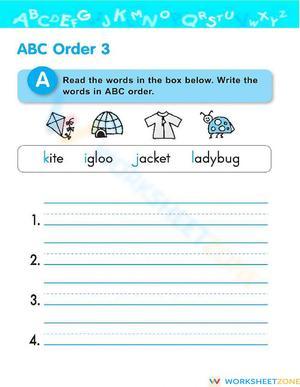
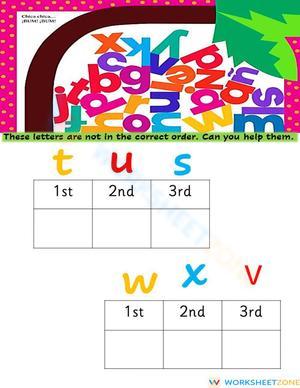
These kindergarten alphabetical order worksheets printable resources give teachers four distinct practice formats — missing letter sequences, cut-and-paste sorting, connect-the-dots letter paths, and first-letter word arranging — each targeting a different stage of how students actually internalize letter sequence. The set spans foundational letter-name recall through early word-level sorting, so teachers can assign the right format at the right moment rather than cycling every student through the same activity.
What Each Worksheet Targets
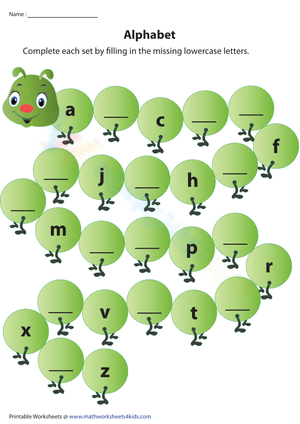
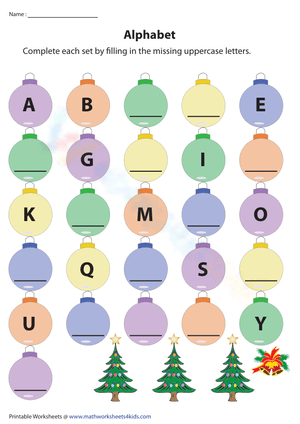
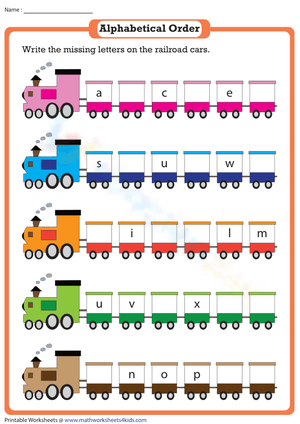
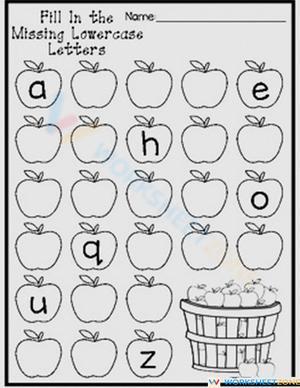
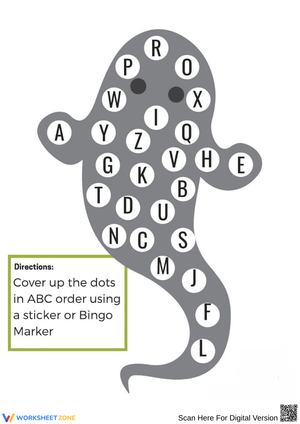
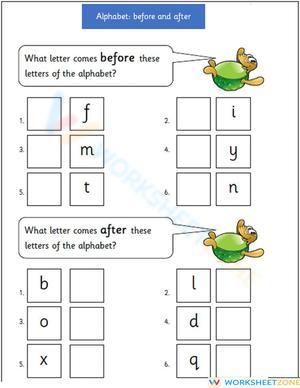
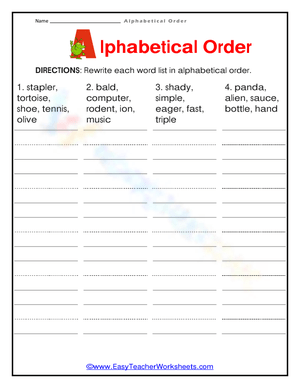
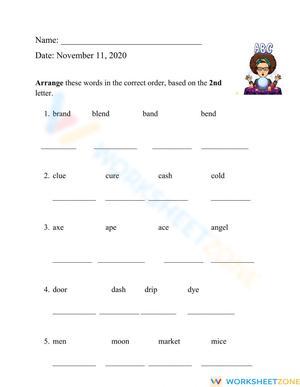
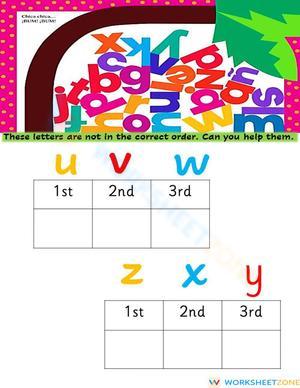
Missing letter exercises are the entry point. Students see partial sequences — A, B, ___, D — and fill in the gap. What looks simple actually tests whether a child has an internalized letter map or is working entirely from a memorized song, and that distinction shapes which next step makes sense. Cut-and-paste worksheets add physical manipulation: students cut scrambled letter tiles and glue them into the correct order. The slowing-down effect of handling and placing the pieces encourages more deliberate decision-making than fill-in-the-blank does. Connect-the-dots worksheets convert letter sequence into a visual reward — students trace from A to Z to reveal a picture, which keeps attention anchored through the middle of the alphabet where focus typically drifts. The final format, first-letter word sorting, moves the work forward: students look at a small set of CVC words or sight words and arrange them alphabetically by initial letter. That's the step where letter knowledge starts functioning like a real reading tool.
Frequent Student Errors Worth Catching Early
The most persistent error isn't random — it lives in the L-M-N-O-P cluster. Students who can sing the full alphabet fluently still freeze when asked what letter follows N in isolation, because they've stored the sequence as sound chunks rather than as discrete, addressable units. On missing letter worksheets, this shows up as confident work through J or K, then a string of blanks or guesses through P before confidence returns around Q. The fix isn't more singing. It's visual tracking with an alphabet strip — students point to each letter as they count forward, which breaks the "elemeno" sound chunk into four distinct symbols they can actually use.
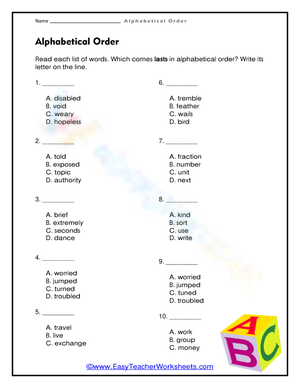
A second error pattern surfaces in first-letter word sorting: students sort by the whole word's feel rather than its initial letter. A student who hears "big" and "bat" close together will sometimes place "big" first because it feels more familiar, not because b-i comes before b-a in sequence. Catching this in kindergarten matters more than it might seem — it's the same mistake that causes problems with dictionaries and indexes two grades later.
Building These Worksheets Into Your Weekly Lesson Plans
Missing letter worksheets work well as morning seat work — students can begin independently the moment they sit down, which gives you time for attendance and morning logistics without the room stalling. Two or three minutes of quiet letter-sequence work is enough to activate focused attention before a read-aloud or phonics lesson. Cut-and-paste and connect-the-dots formats belong in literacy centers. Both are self-contained enough that students work through them without adult support mid-task, which matters when you're pulling a small group.
One technique worth building into center routines: before a student fills in a missing letter or places a cut tile, have them track the desk alphabet strip with both index fingers — left finger on the letter just before the gap, right finger landing on where the answer should go. This two-handed tracking method forces a deliberate visual confirmation instead of an automatic guess, and it cuts sequencing errors noticeably. The kindergarten alphabetical order worksheets printable set pairs especially well with this approach because the rotating formats keep the tracking practice from feeling repetitive across the week.
Standard Alignment
These worksheets address CCSS.ELA-LITERACY.RF.K.1.D, which requires students to recognize and name all upper- and lowercase letters of the alphabet. In classroom terms, that standard sits at the intersection of letter recognition and letter sequence — students need to both identify and place letters correctly. The missing letter and connect-the-dots formats address the foundational end of that standard, while the word sorting worksheets build toward readiness for RF.K.3.A, which asks students to apply the alphabetic principle by connecting letters to sounds. Teachers using these resources in the second semester of kindergarten are often bridging both standards in the same literacy block.
Adjusting the Set for a Range of Learners
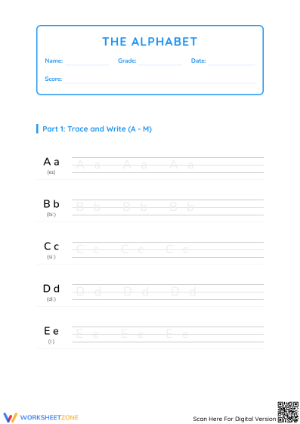
Students who still restart the alphabet song from A every time they need a specific letter benefit most from the missing letter and connect-the-dots worksheets, where the visual sequence is present or partially present throughout the task. For these students, pairing each worksheet with a desk alphabet strip and allowing open reference keeps frustration low — the goal at this stage is accurate sequencing, not unassisted recall from memory. Students who have internalized the full sequence are ready for cut-and-paste sorting and especially for first-letter word sorting, which removes the letter strip and asks them to hold more of the alphabet in working memory simultaneously.
For students who are already well ahead in letter recognition, consider adding a timing element to the cut-and-paste format — students note how quickly they can arrange a scrambled set and try to beat their own time — or extend the word sorting worksheets by asking them to sort words that share the same first letter by their second letter. That extension moves the skill directly toward second-grade dictionary work. The kindergarten alphabetical order worksheets printable resources work across this range because the formats genuinely differ in cognitive demand rather than just surface appearance.
Frequently Asked Questions
When do most kindergarteners have enough letter knowledge to begin sequencing practice?
A reliable benchmark is confident identification of all 26 uppercase letters without hesitation, which typically develops between October and December for students with pre-K exposure. Sequencing practice doesn't need to wait for full mastery, though — partial-sequence exercises covering A through M can run alongside letter recognition work covering N through Z, reinforcing both skills at the same time. Holding off on sequencing until a student knows every letter delays practice that would otherwise accelerate recognition.
Can completed worksheets function as formative assessment?
They work well for that purpose. Completed missing letter worksheets show exactly where automatic recall breaks down — the early letters, the L-M-N-O cluster, or the final stretch from U through Z. Keeping two weeks of morning seat work per student makes error patterns visible quickly. That evidence tells you more about where to intervene than a verbal alphabet recitation does, because it shows the specific point of breakdown, not just whether the student can recite from beginning to end.
How frequently should kindergarteners practice alphabetical order?
Short, daily practice outperforms longer weekly blocks for any material that depends on automatic recall, and letter sequence is exactly that kind of material. One kindergarten alphabetical order worksheets printable exercise per sitting — five minutes, daily — builds retention more reliably than one extended Friday session. Spaced retrieval research supports this pattern clearly. Rotating formats across the week, missing letters on Monday, connect-the-dots on Tuesday, cut-and-paste on Wednesday, keeps engagement steady without adding instructional time to an already full kindergarten day.