


























Views
Downloads
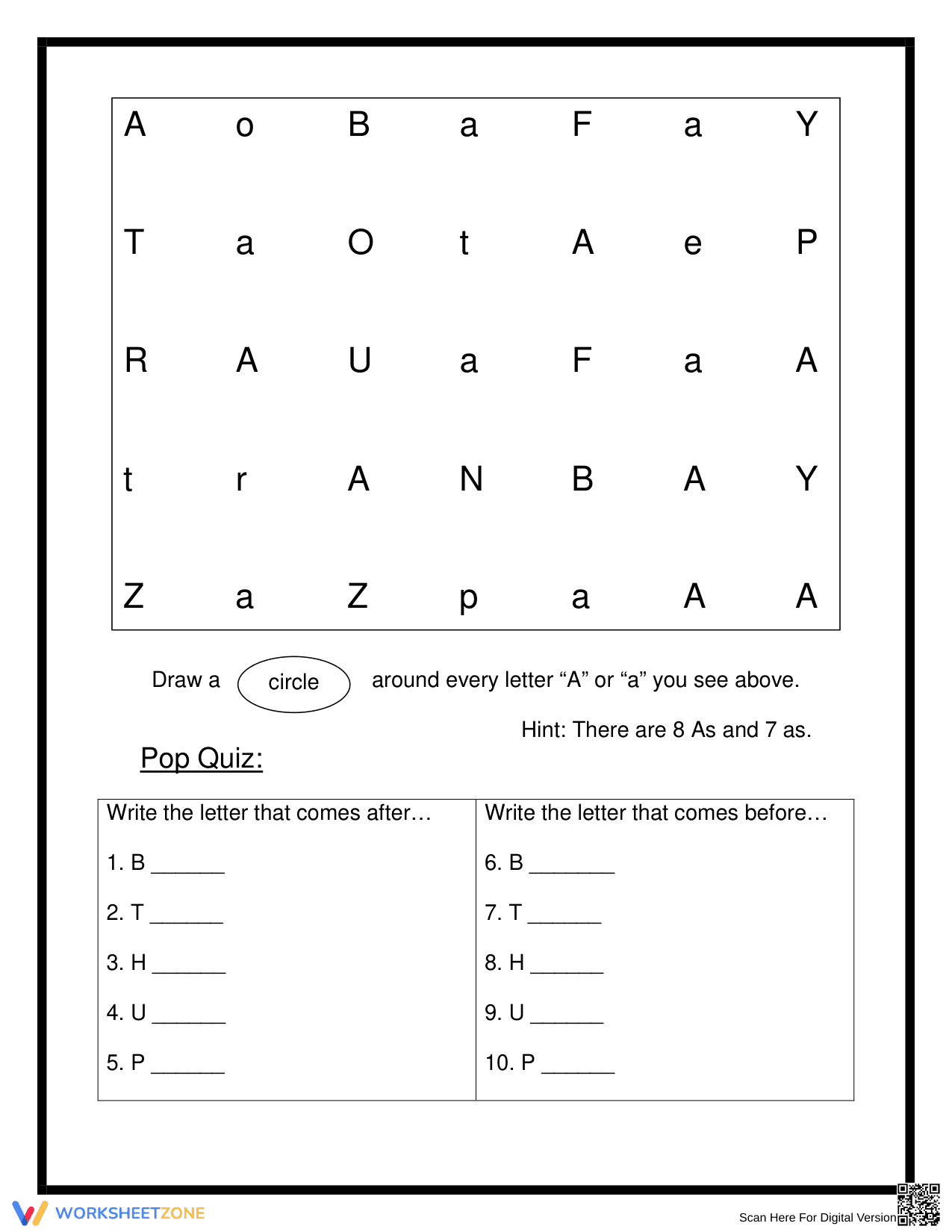

Printable Letter Search & Alphabetical Order Worksheet
Paste this activity's link or code into your existing LMS (Google Classroom, Canvas, Teams, Schoology, Moodle, etc.).
Students can open and work on the activity right away, with no student login required.
You'll still be able to track student progress and results from your teacher account.
This printable Grade K-1 letter search worksheet helps students master letter recognition and alphabetical sequencing through engaging, visual tasks. By identifying uppercase and lowercase versions of the letter A and solving letter-order problems, learners build the foundational literacy skills necessary for reading fluency. It provides an immediate, effective way to assess student mastery of early alphabet concepts.
At a Glance
- Grade: K–1 · Subject: ELA
- Standard:
CCSS.ELA-LITERACY.RF.K.1.D— Recognize and name all upper- and lowercase letters of the alphabet- Skill Focus: Letter Recognition & Alphabetical Order
- Format: 1 page · 25 tasks · Answer key included · PDF
- Best For: Morning work or literacy centers
- Time: 10–15 minutes
What's Inside
This single-page PDF features a comprehensive two-part layout designed for maximum student engagement. The first section contains a high-interest letter search grid where students locate 8 uppercase "A"s and 7 lowercase "a"s. The bottom "Pop Quiz" section provides 10 specific problems requiring students to write the letters that come immediately before or after a given prompt, reinforcing sequence mastery.
Zero-Prep Workflow
Teachers can implement this resource in under two minutes with a three-step process. First, print the copies directly from the PDF. Second, distribute the worksheets during morning work or as a sub-plan activity. Finally, review student work using the included answer key for instant feedback. This streamlined workflow ensures no additional setup is required.
Standards Alignment
The worksheet aligns directly with `CCSS.ELA-LITERACY.RF.K.1.D`, which requires students to recognize and name all upper- and lowercase letters of the alphabet. Additionally, it supports early vocabulary and grammar standards by focusing on the mechanical sequence of the English alphabet. Both standard codes can be copied directly into lesson plans, IEP goals, or district curriculum mapping tools.
How to Use It
Use this worksheet during the "Independent Practice" phase of a literacy lesson to verify individual student letter recognition. It also serves as an excellent formative-assessment tool; teachers should observe whether students struggle more with lowercase recognition or with the conceptual "before/after" sequencing tasks. The activities are designed to be completed independently within a standard 15-minute literacy block or center rotation.
Who It's For
This resource is ideal for Kindergarten and Grade 1 students developing phonics and decoding foundations. It is useful for students needing extra practice with uppercase/lowercase distinction. The clear layout supports learners who benefit from focused visual tasks and pairs naturally with an alphabet anchor chart or a small-group instruction passage.
According to the RAND AIRS 2024 analysis of foundational literacy materials, structured practice in letter recognition is a critical predictor of later reading success. This Grade K-1 worksheet provides the exact type of high-repetition, low-stress engagement that reinforces the CCSS.ELA-LITERACY.RF.K.1.D standard for upper- and lowercase identification. By combining visual search tasks with sequential "before and after" logic, the resource addresses multiple cognitive dimensions of alphabet mastery. Research from the NAEP underscores that early fluency with the English alphabet sequence allows students to transition more quickly from decoding to comprehension. This self-contained, printable resource provides 25 discrete opportunities for students to demonstrate their skill, making it an essential component of any early elementary literacy toolkit. The clear instructions and targeted focus ensure that students remain on task while building the muscle memory required for confident reading and writing.


