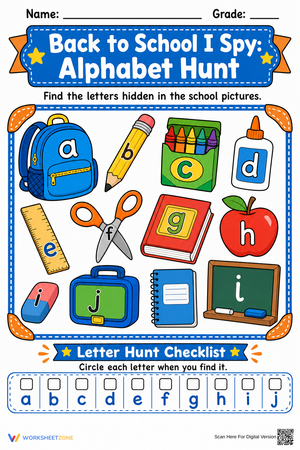
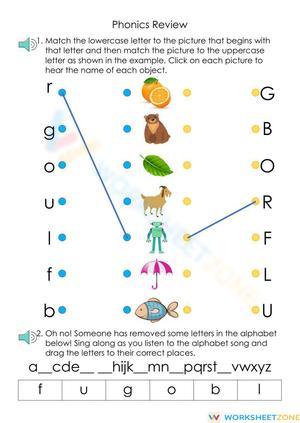
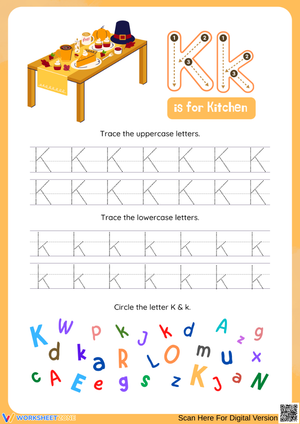
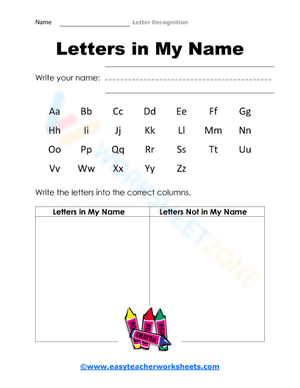
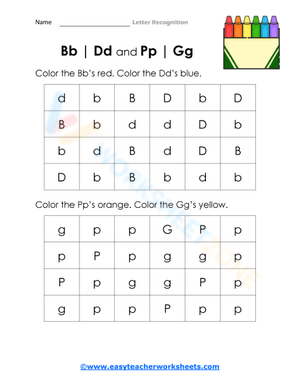
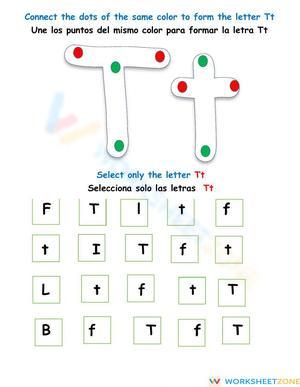
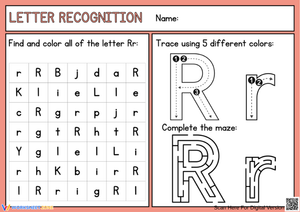
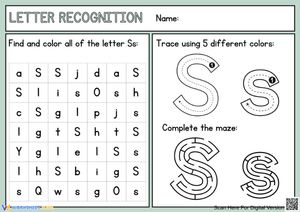
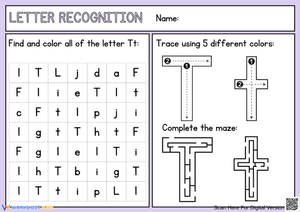
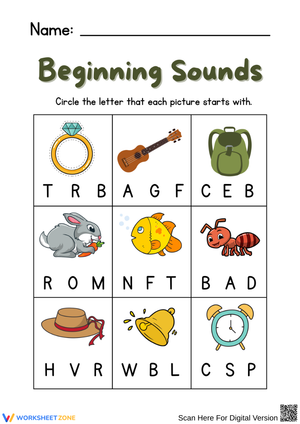
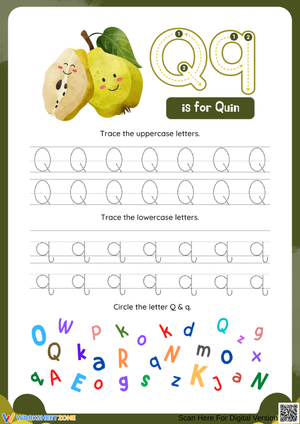
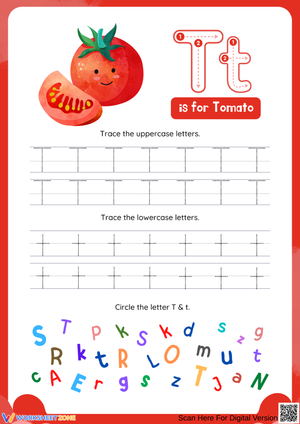
These kindergarten alphabetical order letters worksheets pdf give teachers a no-prep way to build A-to-Z sequence knowledge during the months when most students are still cementing letter names. Each worksheet targets a concrete skill: ordering small groups of letters, identifying what comes before or after a given letter, and filling in missing letters within a short run.
What Each Worksheet Asks Students to Do
At their core, kindergarten alphabetical order letters worksheets pdf focus on letters rather than words — the right scope for five-year-olds who are still consolidating the sequence itself. Asking a kindergartener to alphabetize a list of nouns is a second-grade task assigned to a student who isn't there yet. The set keeps the work at the appropriate level through formats that are short, direct, and built around printed letters:
- Arrange 3 to 5 letters in ABC order along a response line
- Identify which letter comes first in a small mixed group
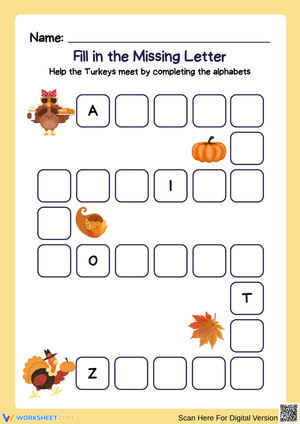
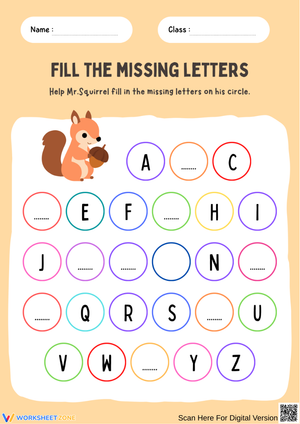
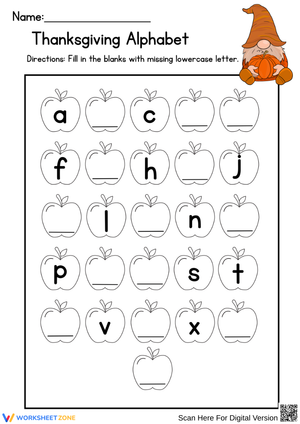
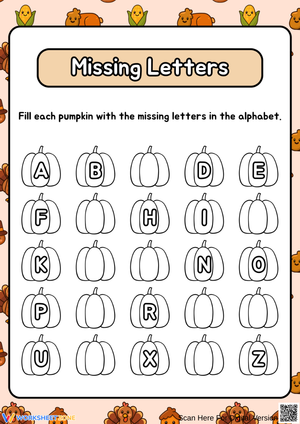
- Write the missing letter before, between, or after two given letters
- Match uppercase and lowercase pairs, then place them in sequence
- Cut and paste letter tiles into the correct A-to-Z order
These task types do more than review the alphabet song. They ask students to apply oral sequence knowledge to printed symbols — a transfer that is a distinct, teachable step. A child who can recite A through Z without hesitation may still pause when three printed letters sit out of order in front of them. That gap is exactly what these worksheets make visible.
Student Errors Worth Catching Before They Stick
The most predictable trouble zone is the middle of the alphabet. Students who locate A and Z instantly — and who know B follows A — will regularly misplace letters in the L-M-N-O-P cluster. Placing N before M is common. So is jumping from L directly to O, skipping M and N entirely. These errors usually reveal that a child has the alphabet memorized as one long chain of sound but hasn't yet learned to navigate smaller sections of it as distinct, manageable chunks.
A second pattern: choosing the most familiar letter as the starting point rather than the earliest one. When asked to order C, A, and B, some students place C first because they feel certain about it, then try to fit the others around it. Once that habit forms, it takes deliberate reteaching to undo. Having students ask "which of these comes closest to the beginning of the alphabet?" — with the classroom alphabet line visible — builds a repeatable strategy rather than a guess-and-check reflex.
Lowercase letter forms add a third complication. Students sorting b, d, p, and q alongside other letters stall because visual discrimination for those four is still developing at this age. Worksheets that use uppercase letters exclusively for the first several weeks give teachers cleaner diagnostic information: when errors appear, they're sequencing errors, not letter-identification errors. That distinction matters when deciding what kind of reteaching to do next.
Where These Worksheets Fit Into the School Day
Morning work is the most natural slot. A short letter-ordering task gives students a calm, independent entry point right after arrival and reviews a skill that benefits directly from daily repetition. Spaced retrieval matters here — five minutes of alphabet-sequence practice most mornings builds durable knowledge more reliably than one extended session per week.
In literacy centers, the most effective sequence is manipulation before paper. Students build the letter order using magnetic letters or alphabet cards, confirm the sequence, then transfer it onto the worksheet. Moving straight to pencil and paper produces copying from the classroom alphabet strip rather than genuine sequencing work. The physical manipulation step is worth keeping even when it adds a small amount of setup time.
For small-group instruction, kindergarten alphabetical order letters worksheets pdf work well as a bridge from teacher modeling to independent practice. The teacher names each letter aloud with the group, asks which one comes first in the alphabet, and models checking the classroom alphabet line explicitly — not as a shortcut but as a strategy students can rely on when they work alone later.
Substitute folders and take-home packets are also practical uses. The directions on each worksheet are clear enough that a parent or a substitute can support the task without prior explanation from the classroom teacher.
Matching These Worksheets to Different Readiness Levels
For students still building basic letter-name knowledge, reduce the set size and anchor the work at the beginning of the alphabet. Starting with A, B, and C — letters most children encounter early through name practice and classroom environmental print — keeps the sequencing task within reach. Add one or two letters at a time as recognition becomes reliable. Asking a student to order five letters they can't yet confidently name converts a sequencing task into a guessing task, which produces neither learning nor useful assessment data.
Students who already recognize all 26 letters and move through the full alphabet with confidence benefit from kindergarten alphabetical order letters worksheets pdf that use mixed uppercase-lowercase sets or sequences drawn from the second half of the alphabet — P through Z — which most classrooms spend less daily time reinforcing. That extension changes the challenge without changing the fundamental skill.
Students who find writing difficult can work with cut-and-paste worksheet formats rather than write-the-letter versions. This keeps the cognitive focus on sequence without also demanding fine motor output, which at this age can be enough of a burden to pull attention entirely away from the ordering task itself.
Standard Alignment
These worksheets connect directly to CCSS.ELA-Literacy.RF.K.1.d, which asks kindergarteners to recognize and name all upper- and lowercase letters of the alphabet. Alphabetical order tasks extend that standard by requiring students to place letters in relational sequence — not just identify each one in isolation but understand where it sits relative to the others. Most teachers introduce structured sequence practice once students can reliably name 15 or more letters, which typically falls in mid-fall. The worksheets fit a November-through-January instructional window in districts that front-load letter recognition work in September and October.
Frequently Asked Questions
What should students already know before starting these worksheets?
Students should be able to name at least some letters and participate in oral alphabet practice with the class. Full mastery of all 26 letters isn't required before starting. What matters more is that students have a handful of anchor letters they recognize with certainty — those are the ones they'll use to reason about where less familiar letters belong in a given set.
How many letters should students order at one time?
Three is the right starting point for most kindergarteners. It's small enough to hold in working memory without requiring a trip to the alphabet line on every step. Once students order three-letter sets reliably, four- and five-letter sets become appropriate. Moving too quickly to longer sets before students are ready produces frustration rather than practice.
How should I handle students who check the alphabet strip on every single letter?
Let them. Using a reference tool while building automatic recall is a legitimate strategy, and in kindergarten it's developmentally expected. The goal is gradual independence, not immediate recall from the first attempt. If a student is copying the full alphabet strip letter by letter without doing any actual comparing, try providing a partial strip — only the section of the alphabet that includes the letters on the current worksheet — so they still have support but have to engage with the comparison themselves.












 Interactive Worksheet Maker
 Quiz Maker
 Word Search Maker
 Crossword Puzzle Maker
 Word Scramble Generator
 Sentence Scramble Generator
 Handwriting Worksheet Generator
 Name Tracing Generator
 Fill In The Blank Generator