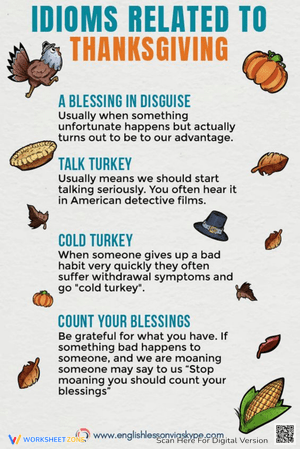
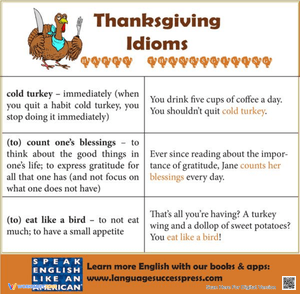
Thanksgiving idioms worksheets give students a seasonal way to explore figurative language, vocabulary, and deeper meaning. Idioms can be tricky because the meaning is not always clear from the individual words. Phrases like “spill the beans,” “full of thanks,” “bring something to the table,” or “a piece of cake” may confuse students if they try to understand them literally. With Thanksgiving-themed practice, learners can connect idioms to familiar holiday ideas such as food, family, gratitude, sharing, and celebration.
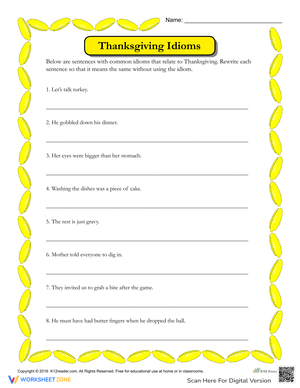
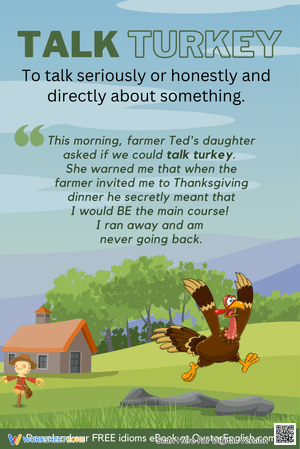
Figurative language becomes easier to understand when students see idioms in context. A worksheet might show a short sentence, a holiday scene, or a mini dialogue and ask students to choose the correct meaning. For example, if someone says, “Preparing the meal was a piece of cake,” students learn that the phrase means the task was easy, not that the person was talking about dessert. These activities help students move beyond memorization and begin using context clues to understand meaning.
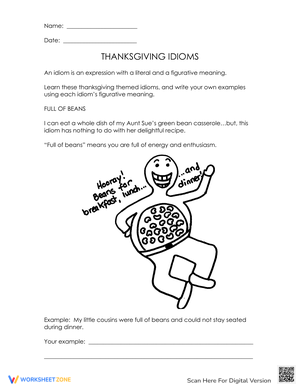
Thanksgiving idioms worksheets can also support writing and speaking skills. Once students understand the meaning of an idiom, they can practice using it in their own sentences, short stories, conversations, or holiday reflections. Teachers can begin by introducing a seasonal word bank from the Thanksgiving words resource guide, then guide students into idioms that connect with those words. This approach helps learners build both literal vocabulary and figurative language awareness in the same lesson.
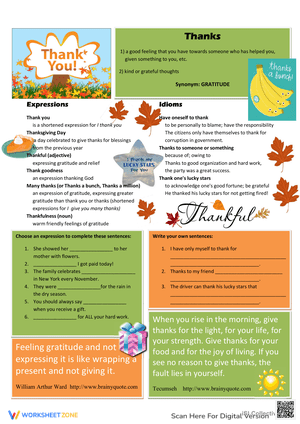
Idioms also pair well with gratitude-based writing. Students can discuss expressions related to kindness, generosity, teamwork, and appreciation, then write about a time someone “went the extra mile” or “brought something to the table.” To make the lesson more meaningful, teachers can use Thanksgiving gratitude worksheets alongside idiom practice. This gives students a chance to connect language learning with personal reflection and social-emotional growth.
Whether used in grammar lessons, literacy centers, homeschool practice, or seasonal review activities, Thanksgiving idioms worksheets help students strengthen reading comprehension, vocabulary, figurative language, and writing confidence. They make abstract language more approachable by tying it to a warm and familiar holiday theme. With guided examples and thoughtful practice, students can learn that idioms are not just confusing phrases; they are creative expressions that make language more colorful and meaningful.
Frequently Asked Questions
Question 1: Why should students practice idioms during Thanksgiving lessons?
Thanksgiving lessons give students a familiar and engaging context for learning idioms. Since the holiday already includes themes like food, family, gratitude, sharing, and celebration, students can connect figurative expressions to ideas they understand. Practicing idioms during a seasonal unit also helps students see how language can be playful and expressive. This makes figurative language less intimidating and easier to remember.
Question 2: What skills do Thanksgiving idioms worksheets help students build?
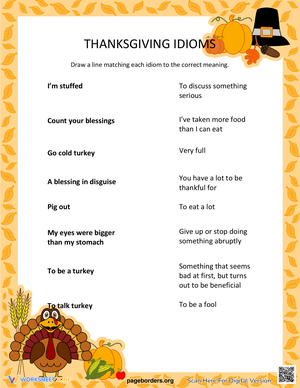
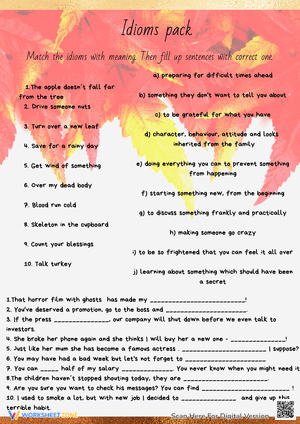
Thanksgiving idioms worksheets help students build reading comprehension, vocabulary knowledge, context clue skills, sentence writing, and figurative language understanding. Students learn that idioms often have meanings that are different from the literal words. By matching idioms to meanings, using them in sentences, and explaining them in context, learners become better prepared to understand stories, conversations, and everyday expressions.
Question 3: How can teachers use Thanksgiving idioms worksheets in class?
Teachers can use these worksheets during grammar lessons, reading groups, writing centers, morning work, small-group instruction, or holiday-themed literacy review. A lesson might begin with a short idiom discussion, followed by examples in sentences. Students can then complete matching, fill-in-the-blank, or sentence-writing activities. To extend the lesson, teachers can ask students to illustrate an idiom literally and then explain its real meaning.
Question 4: How can students use Thanksgiving idioms in writing?
Students can use Thanksgiving idioms to make their writing more expressive and interesting. For example, they might write a story about someone who “saved the day” during Thanksgiving dinner or a reflection about a person who “went the extra mile” to help others. Teachers should encourage students to use idioms only when the meaning fits the sentence. This helps students practice figurative language while keeping their writing clear and purposeful.












 Interactive Worksheet Maker
 Quiz Maker
 Word Search Maker
 Crossword Puzzle Maker
 Word Scramble Generator
 Sentence Scramble Generator
 Handwriting Worksheet Generator
 Name Tracing Generator
 Fill In The Blank Generator




 BACK TOSCHOOL