


























Views
Downloads

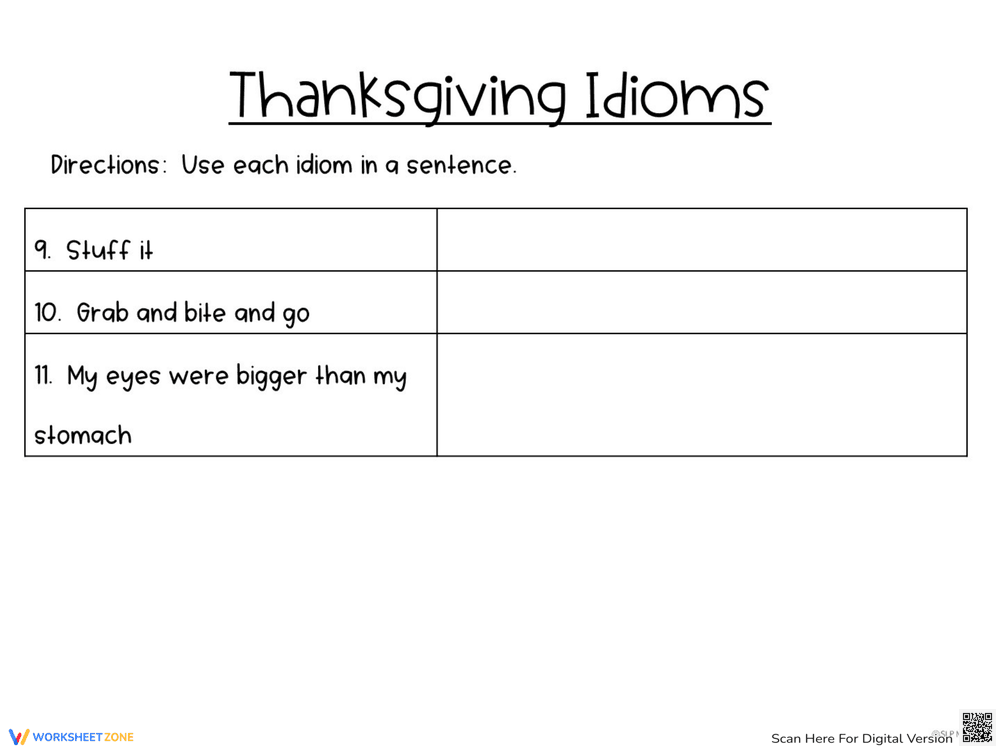

Essential Thanksgiving Idioms Worksheet | Grade 4-6
Paste this activity's link or code into your existing LMS (Google Classroom, Canvas, Teams, Schoology, Moodle, etc.).
Students can open and work on the activity right away, with no student login required.
You'll still be able to track student progress and results from your teacher account.
This Grade 3-6 Thanksgiving idioms worksheet helps students master figurative language by applying 11 holiday expressions in original sentences. By moving beyond literal definitions, learners develop a nuanced understanding of English nuances while celebrating the season. It provides a structured environment for students to demonstrate their grasp of common adages.
At a Glance
At a Glance
- Grade: 4 · Subject: ELA
- Standard:
CCSS.ELA-LITERACY.L.4.5.B— Recognize and explain the meaning of common idioms, adages, and proverbs- Skill Focus: Thanksgiving Idioms & Contextual Usage
- Format: 2 pages · 11 problems · Answer key included · PDF
- Best For: Holiday-themed ELA centers or bell ringers
- Time: 15–20 minutes
What's Inside
This two-page PDF resource features 11 distinct idioms ranging from "count your blessings" to "going cold turkey." Each task provides a clear prompt and ample horizontal line space for students to compose their own sentences. The layout is clean and distraction-free, ensuring that students focus entirely on the linguistic challenge of integrating figurative phrases into grammatically correct structures.
Zero-Prep Workflow
The zero-prep workflow is designed for efficiency during the holiday season. First, print the two-page document. Second, distribute the sheets as a warm-up or independent practice. Third, review the sentences as a whole-class activity to discuss the various contexts. Total prep is under 2 minutes, making it an ideal choice for substitute folders.
Standards Alignment
The primary focus is `CCSS.ELA-LITERACY.L.4.5.B`: "Recognize and explain the meaning of common idioms, adages, and proverbs." This worksheet requires students to go a step further by using the idioms in context, which also supports `CCSS.ELA-LITERACY.L.5.5.B`. Both standard codes can be copied directly into lesson plans, IEP goals, or district curriculum mapping tools.
How to Use It
Use this worksheet as a formative assessment during the week of Thanksgiving to gauge student understanding of non-literal language. It works exceptionally well as a bridge activity between a direct instruction lesson on figurative language and a creative writing project. Teachers should observe whether students use the idioms literally or figuratively to identify those needing additional scaffolding.
Who It's For
This resource is tailored for students in Grades 3 through 6, particularly those who benefit from explicit vocabulary instruction. It is a valuable tool for English Language Learners (ELLs) who often struggle with the cultural nuances of American idioms. Pair this worksheet with a holiday-themed reading passage or an anchor chart displaying idiom definitions for a comprehensive literacy block.
According to research by Fisher & Frey (2014), the gradual release of responsibility in vocabulary acquisition is most effective when students move from recognition to active production. This worksheet facilitates that transition by requiring students to generate original sentences using the standard CCSS.ELA-LITERACY.L.4.5.B. By engaging with 11 specific holiday idioms, students build the linguistic flexibility necessary for high-level reading comprehension. The structured format ensures that learners are not just memorizing definitions but are learning to manipulate language for specific rhetorical effects. This approach aligns with evidence-based practices for middle-grade literacy development, providing the necessary repetition and application required for long-term retention of figurative language concepts. Such targeted practice is essential for closing the achievement gap in verbal reasoning and standardized test performance.


