


























Views
Downloads

Fruit Idioms Guide | Grade 4-6 Essential Worksheet
Paste this activity's link or code into your existing LMS (Google Classroom, Canvas, Teams, Schoology, Moodle, etc.).
Students can open and work on the activity right away, with no student login required.
You'll still be able to track student progress and results from your teacher account.
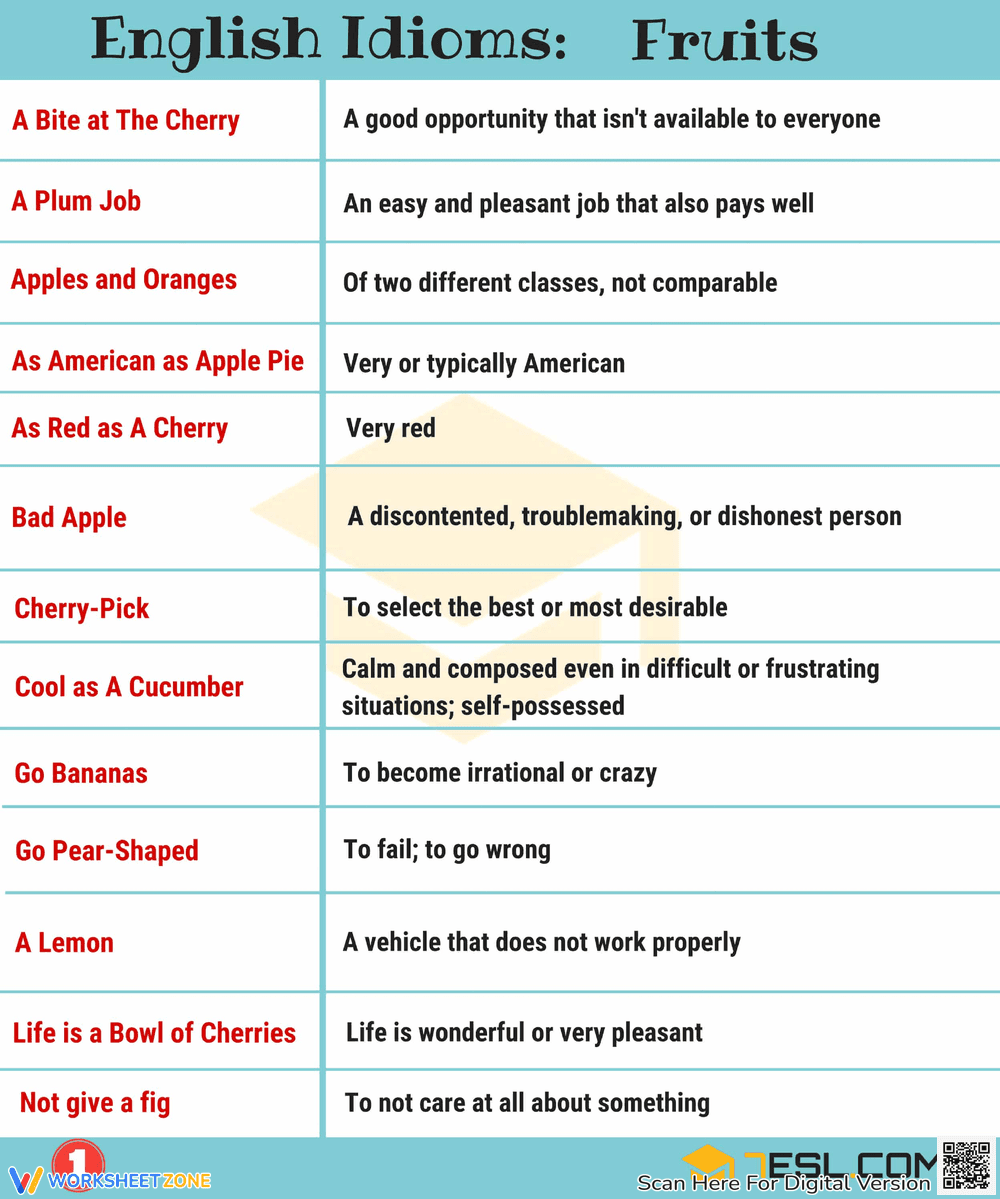
This Grade 4-6 English idioms worksheet provides students with a clear reference for 13 common fruit-based idiomatic expressions. By connecting figurative language to familiar objects like apples and cherries, students improve their reading comprehension and expressive writing. This resource ensures learners can identify and explain non-literal meanings in various contexts.
At a Glance
- Grade: 4-6 · Subject: ELA
- Standard:
CCSS.ELA-LITERACY.L.4.5.B— Recognize and explain the meaning of common idioms and adages- Skill Focus: Figurative Language & Idioms
- Format: 1 page · 13 idioms · Reference Guide included · PDF
- Best For: Vocabulary building and writing support
- Time: 10–15 minutes
This single-page PDF features a structured table containing 13 distinct fruit idioms. Each entry includes the idiom in bold red text paired with a concise, student-friendly definition. From "A Plum Job" to "Cool as a Cucumber," the layout is designed for high readability. The document serves as both a study guide and a desk reference for creative writing assignments or vocabulary journals.
Teachers can implement this resource in under 2 minutes. First, print the required number of copies for your class or upload the PDF to your digital learning platform. Second, distribute the sheet during your figurative language unit to provide immediate scaffolding. Finally, review the definitions as a whole group or use them for a quick "idiom of the day" discussion to reinforce retention. It is an ideal addition to any emergency sub plan folder.
The primary focus is `CCSS.ELA-LITERACY.L.4.5.B`, which requires students to "Recognize and explain the meaning of common idioms, adages, and proverbs." By providing explicit definitions for phrases like "apples and oranges" or "go bananas," this worksheet helps students bridge the gap between literal and figurative interpretation. Both standard codes can be copied directly into lesson plans, IEP goals, or district curriculum mapping tools.
Use this sheet as a formative assessment tool during a writing workshop. Ask students to select two idioms and incorporate them into a short narrative paragraph. Alternatively, use it as a "Search and Find" guide where students look for these expressions in their independent reading books. Completion typically takes 10 to 15 minutes when used as a matching or discussion activity.
This resource is ideal for upper elementary students in Grades 3 through 6, as well as English Language Learners (ELL) who often struggle with the nuances of English figurative language. It pairs naturally with a mentor text or an anchor chart focused on metaphors and similes to provide a comprehensive view of non-literal speech for diverse learners.
According to Fisher & Frey (2014), explicit instruction in figurative language is essential for developing advanced literacy skills, as idioms often appear in complex texts but are rarely explained in context. This worksheet targets CCSS.ELA-LITERACY.L.4.5.B by providing 13 clear examples of fruit-themed idioms, allowing students to move from literal decoding to conceptual understanding. Research indicates that thematic grouping—such as using fruit to categorize expressions—enhances mnemonic retention and helps students categorize vocabulary more effectively. By mastering these 13 specific phrases, learners improve their ability to interpret authorial intent and tone in narrative writing. This resource provides the necessary scaffolding for students to recognize and explain the meaning of common idioms, ensuring they meet grade-level expectations for language mastery and reading comprehension across various genres.


