


























Views
Downloads

Fruit Idioms Worksheet | Essential Grade 4-6 ELA
Paste this activity's link or code into your existing LMS (Google Classroom, Canvas, Teams, Schoology, Moodle, etc.).
Students can open and work on the activity right away, with no student login required.
You'll still be able to track student progress and results from your teacher account.
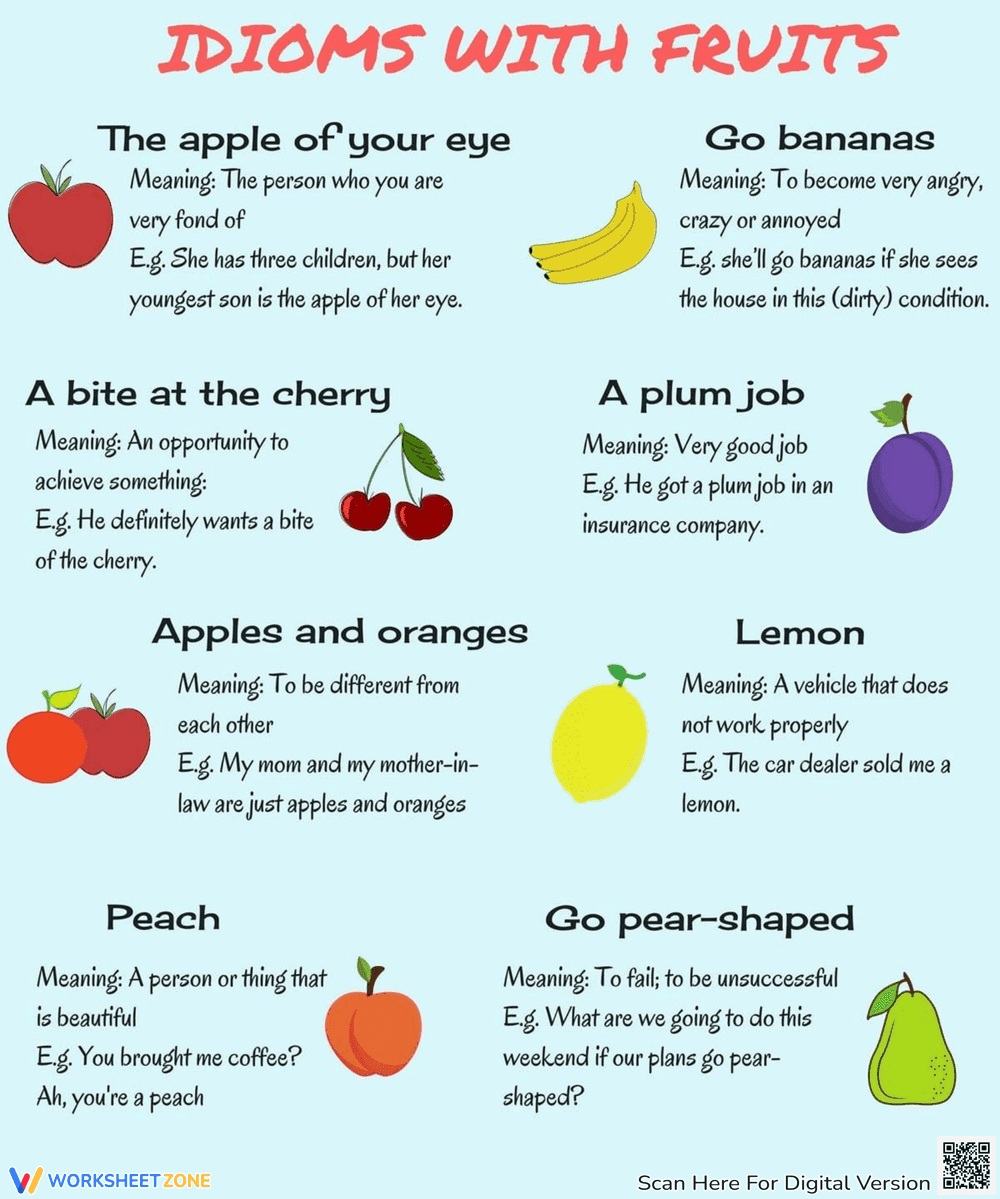
This Grade 4-6 ELA reference worksheet introduces students to the colorful world of figurative language through fruit-themed idioms. By providing clear definitions and contextual examples, the resource helps learners move beyond literal interpretations to master common English expressions. Students will gain the confidence to use these phrases in their own descriptive writing and verbal communication.
At a Glance
- Grade: 4-6 · Subject: ELA
- Standard:
CCSS.ELA-LITERACY.L.4.5.B— Recognize and explain the meaning of common idioms, adages, and proverbs- Skill Focus: Figurative Language (Idioms)
- Format: 1 page · 8 idioms · Reference Sheet · PDF
- Best For: Vocabulary building and figurative language introduction
- Time: 15–20 minutes
What's Inside: This single-page PDF features eight distinct idiomatic expressions, including "the apple of your eye," "go bananas," and "a plum job." Each entry is paired with a vibrant fruit illustration, a concise definition, and a practical example sentence. The layout is designed for high readability, making it an ideal anchor chart or student notebook insert for quick linguistic reference.
Zero-Prep Workflow: This resource is designed for immediate classroom implementation. First, print the single-page PDF (30 seconds). Second, distribute the copies to students or display the digital version on a smartboard (1 minute). Third, review the eight idioms as a whole-class warm-up or use them as a foundation for a creative writing prompt (10 minutes). Total teacher preparation time is under two minutes, making it a reliable choice for sub plans or last-minute vocabulary blocks.
Standards Alignment: This worksheet aligns directly with `CCSS.ELA-LITERACY.L.4.5.B`, which requires students to recognize and explain the meaning of common idioms, adages, and proverbs. It also supports broader language standards regarding word relationships and nuances in word meanings. This standard code can be copied directly into lesson plans, IEP goals, or district curriculum mapping tools to ensure instructional compliance.
How to Use It: Use this worksheet as a bell-ringer activity where students must choose one idiom and draw a literal vs. figurative comparison. Alternatively, use it as a formative assessment tool by asking students to write an original paragraph using at least three of the featured fruit phrases. Completion time typically ranges from 15 to 20 minutes depending on the depth of the follow-up writing task.
Who It's For: This resource is tailored for students in Grades 3 through 6, as well as English Language Learners (ELL) who often struggle with the non-literal nature of idiomatic expressions. It pairs naturally with a lesson on metaphors or a mentor text that utilizes descriptive, informal language to enhance character voice.
According to Fisher & Frey (2014), explicit instruction in figurative language is vital for developing reading comprehension, as idioms often appear in complex texts without immediate context clues. This worksheet addresses that need by isolating 8 specific fruit-based idioms, providing the explicit definitions required for linguistic mastery. By connecting abstract concepts to familiar objects like apples and lemons, the resource lowers the cognitive load for students while reinforcing the CCSS.ELA-LITERACY.L.4.5.B standard. Research from the RAND AIRS 2024 report suggests that visual aids paired with contextual sentences significantly improve retention of non-literal vocabulary in upper elementary learners. This worksheet serves as a foundational tool for building the semantic awareness necessary for academic success in middle school and beyond, ensuring students can interpret nuanced English phrases with ease and accuracy.


