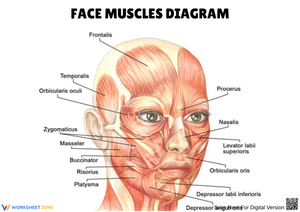
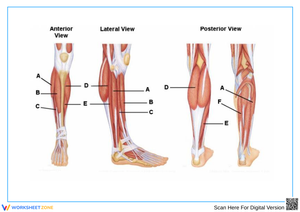
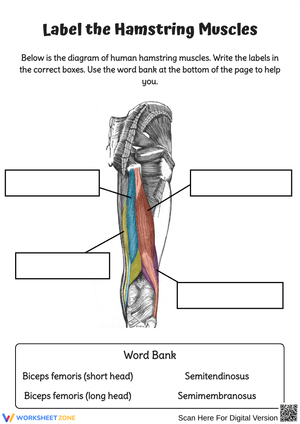
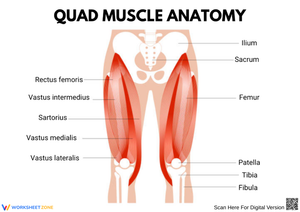
9th grade muscle pdf worksheets give biology and anatomy teachers a ready-made way to move students past rote memorization and toward understanding how the muscular system actually functions. The resources here cover muscle tissue types, major skeletal muscle identification, antagonistic pairs, and the mechanical relationship between muscles, tendons, and bones — the core content of any first high school body systems sequence.
What's Inside the Set
Each worksheet targets a specific slice of muscular system content rather than piling every topic into one task. The range of skills students practice includes:
- Muscle tissue classification: Students distinguish skeletal, smooth, and cardiac muscle by location, appearance, and function — not just by name.
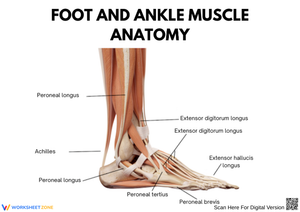
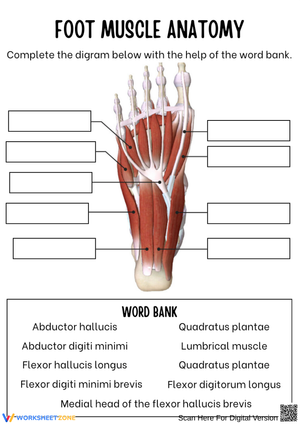
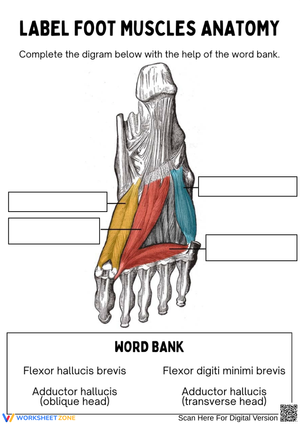
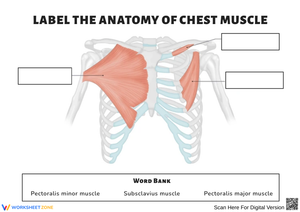
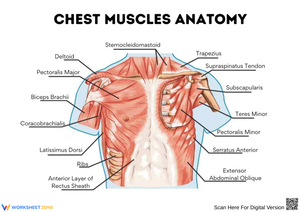
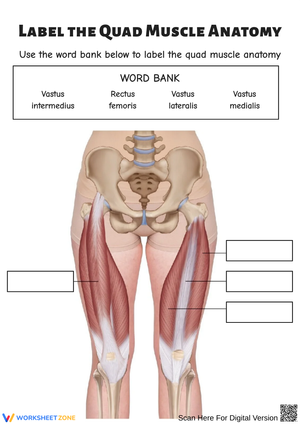
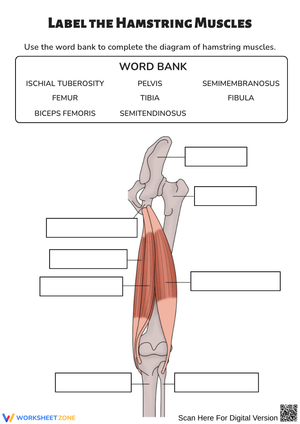
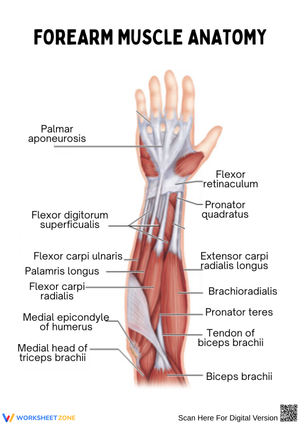
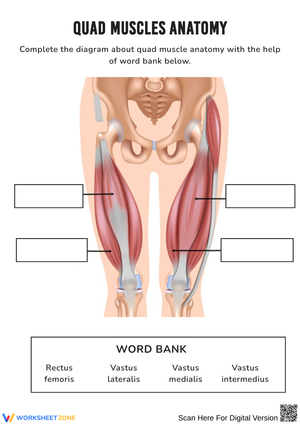
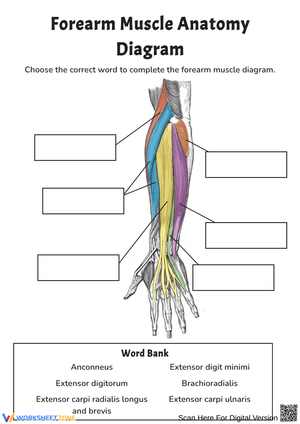
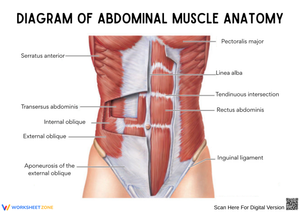
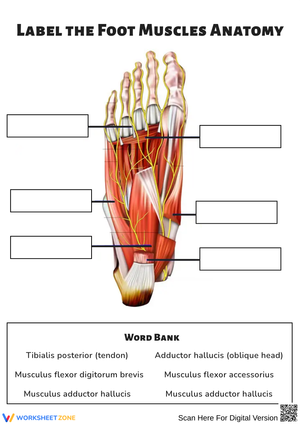
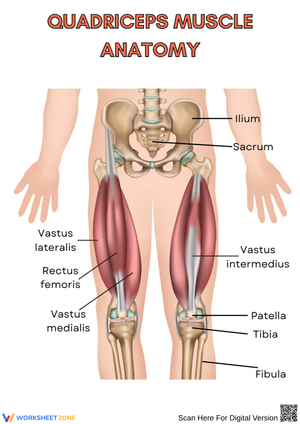
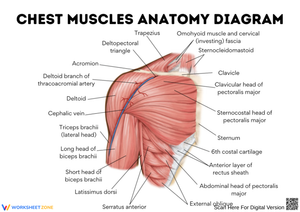
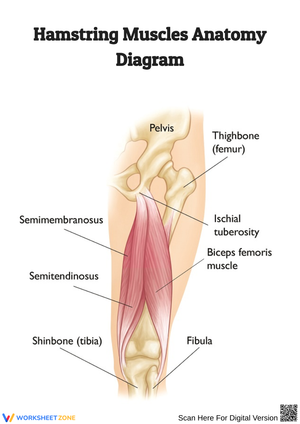
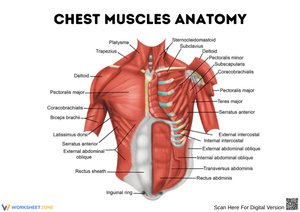
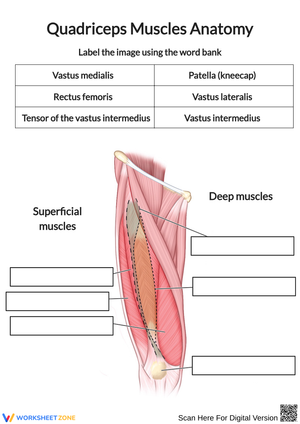
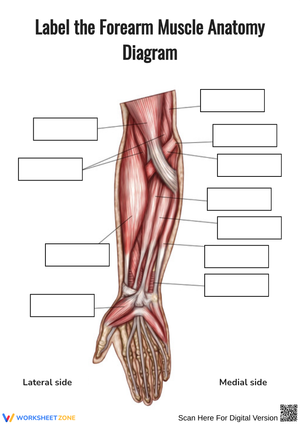
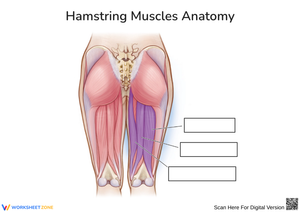
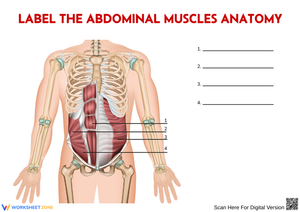
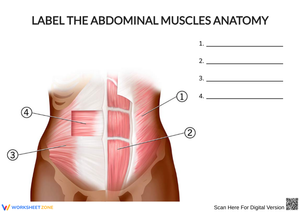
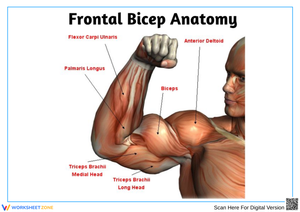
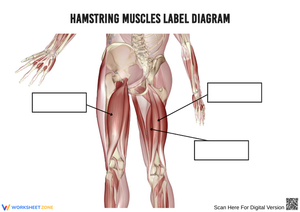
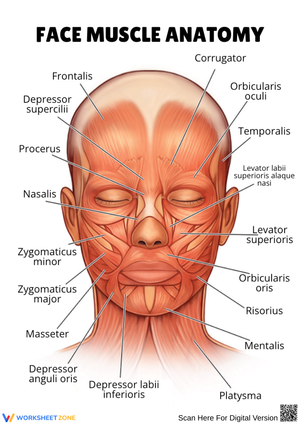
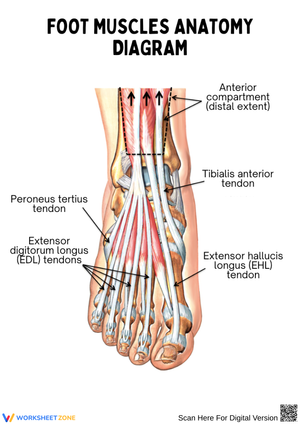
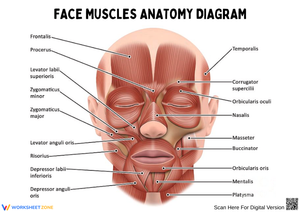
- Skeletal muscle identification: Labeling activities include the biceps, triceps, deltoids, pectorals, quadriceps, hamstrings, gastrocnemius, and gluteal muscles on anterior and posterior body diagrams.
- Antagonistic muscle pairs: Students work through examples — biceps and triceps being the most familiar — to understand that flexion and extension require one muscle to contract while its partner relaxes.
- Tendon function and attachment: Several worksheets ask students to trace the path from muscle to tendon to bone, reinforcing that muscles pull rather than push.
- Voluntary and involuntary control: Short-answer items ask students to sort examples and explain the distinction, directly connecting muscle type to nervous system involvement.
- Muscle function in posture and protection: Beyond locomotion, some worksheets prompt students to think about muscles that hold the body upright or shield internal structures — functions students often overlook when focused only on movement.
The format variety — diagram labeling, vocabulary matching, short reading with comprehension questions, and constructed-response items — means teachers are not locked into a single instructional approach across the entire unit.
Common Misconceptions That Show Up in Student Work
The antagonistic muscle pair concept trips up more students than the vocabulary does. Students who can correctly name the biceps and triceps will still write that both muscles "work together to bend the arm" — they hear "antagonistic" and treat it as a synonym for "cooperative" rather than understanding that extension requires the triceps to contract while the biceps relaxes. Having students annotate a movement sequence on a diagram, rather than label static positions, surfaces this confusion quickly and gives teachers a clear moment to correct it before the assessment.
The voluntary versus involuntary distinction creates a specific error around cardiac muscle. Many students mark cardiac muscle as voluntary because they associate awareness — feeling a heartbeat accelerate during exercise — with conscious control. A short-answer prompt that asks students to distinguish between perceiving a muscle's action and directing it tends to expose this reasoning right away. One or two targeted questions here do more corrective work than restating the definition.
On labeling diagrams, students frequently write "trapezius" where the deltoid belongs on an anterior view because both muscles are visible near the shoulder. Diagrams that include a clear anatomical position reference and distinguish anterior from posterior views reduce this swap more reliably than definitions alone.
How to Build These Worksheets Into a Body Systems Unit
The most efficient sequencing starts with a labeling worksheet at the unit's opening — not primarily to test prior knowledge of muscle names, but to reveal what body orientation language students already control (anterior, posterior, proximal, distal). That information tells a teacher how much instructional time needs to go toward spatial vocabulary before muscle content can land.
Mid-unit, a matching or reading-based worksheet works well as a 10 to 15 minute independent task immediately after direct instruction on muscle tissue types. Students process new content on their own while the teacher circulates and spots confusion before it becomes fixed. Placing the antagonistic pairs worksheet at this stage — after students have seen the biceps and triceps demonstrated in context — consistently produces stronger work than assigning it at the start of the unit cold.
Near the end of the muscle unit, a short-response worksheet that asks students to describe a specific movement using a named muscle pair and a bone shifts vocabulary knowledge into applied thinking. One effective prompt: explain what happens in the quadriceps and hamstrings when a person stands up from a chair. Students who only memorized terms struggle with this. Students who actually understand how muscles coordinate handle it confidently. These 9th grade muscle pdf worksheets are built so that the task type naturally increases in cognitive demand as the unit progresses, without requiring teachers to redesign the sequence on their own.
Adjusting the Set for a Range of Learners
9th grade muscle pdf worksheets work across a wider ability range than most anatomy resources because the format variety lets teachers make targeted assignments rather than uniform ones. Students who are still building basic science vocabulary benefit most from the labeling and matching worksheets, where the structure keeps the cognitive load manageable and early success is achievable. Those worksheets also give emerging English language learners a visual anchor — the diagram — to attach vocabulary to before they encounter the same terms in running text or written explanations.
Students ready for more analytical work get the most out of short-response and constructed-response items. Asking those students to compare the structural features of smooth and skeletal muscle — rather than simply identify them — pushes the same content into higher-order territory without requiring a separate worksheet. Teachers who want to differentiate without preparing parallel assignments can give the same worksheet to the whole class and vary the task: students who need more support complete the labeling section, while students who are ready complete the labeling section and the short-answer extension below it.
Standard Alignment
These worksheets align to NGSS HS-LS1-2, which asks students to develop and use a model to illustrate the hierarchical organization of interacting systems that provide specific functions within multicellular organisms. The muscular system is one of the most teachable entry points into this standard at the high school level: students can trace from individual muscle cells to muscle tissue to the organ level, then see those organs functioning as part of the body system that produces movement, maintains posture, and generates heat. Worksheets that ask students to connect tissue type to whole-body movement address the hierarchical-organization requirement in a form concrete enough for 9th graders to engage with directly.
Many state biology and health science standards also address body systems at this grade band under life science strands, and the content here — muscle types, voluntary versus involuntary control, muscle-bone-tendon interaction — maps to those frameworks without modification.
Frequently Asked Questions
What topics should a 9th grade muscle worksheet cover?
At minimum, introductory muscular system content for 9th grade should include the three muscle tissue types, the major skeletal muscles visible on a body diagram, how muscles create movement by pulling on bones through tendons, and the voluntary versus involuntary distinction. Antagonistic muscle pairs are also worth including because they connect structure to function in a way students tend to retain — understanding that one muscle contracts while its partner relaxes is more durable than memorizing a list of muscle names.
Can these work in a biology class that isn't a dedicated anatomy course?
Yes. The worksheets are written at an introductory level that fits standard high school biology as well as anatomy or health science courses. In a biology class, the muscle tissue content reinforces cell and tissue organization — it is the same hierarchical thinking the course addresses elsewhere. In a health science class, the same worksheet connects to posture, injury prevention, and exercise physiology without requiring a separate resource.
How do these worksheets hold up for absent students or substitute coverage?
Because each worksheet is self-contained, absent students can complete missed work from a printed copy without needing explanations beyond what appears on the worksheet itself. The directions are written to be followed independently, which also makes them reliable for substitute days. These 9th grade muscle pdf worksheets are easy to hand out with brief verbal instructions, and a class can work through them productively without the substitute knowing anatomy.
Are diagram-labeling worksheets actually useful, or do students just copy from a textbook?
Labeling tasks lose their instructional value when students copy from an adjacent, open textbook with no processing required. The more effective design omits a word bank positioned directly beside each blank — students either retrieve the terms from memory or work from a word bank that includes decoys. When students have to select the right answer rather than transcribe it, the labeling task builds recall. When they simply copy, it builds handwriting.