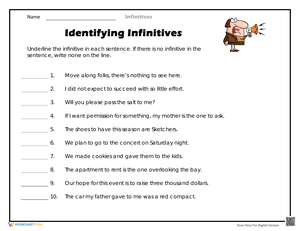
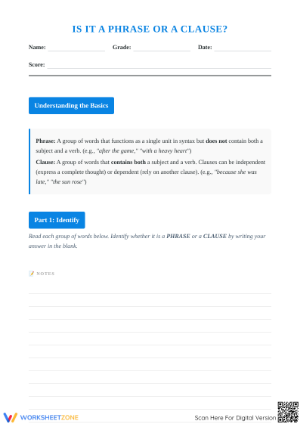
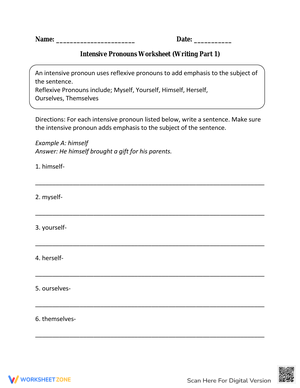
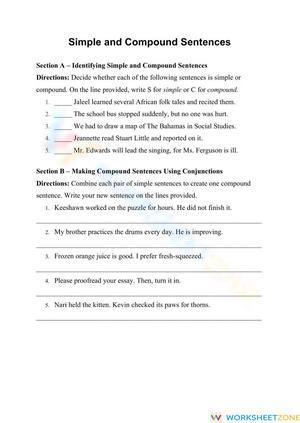
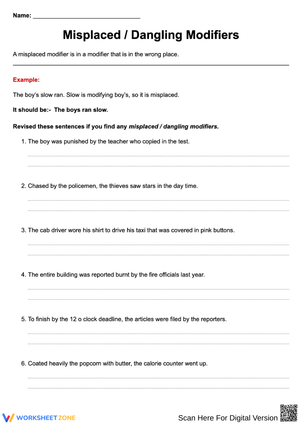
9th grade grammar and mechanics printable worksheets give freshman ELA teachers targeted, ready-to-use practice on the specific conventions that separate strong high school writing from the habits students carried in from middle school. Each worksheet isolates a single skill — parallel structure, advanced punctuation, clause combining, modifier placement — so teachers can assign exactly what their students need at the right moment in instruction. The set covers the L.9-10 Language strand without straying into the kind of decontextualized drill that freshmen tune out by October.
The Specific Skills Each Worksheet Targets
The skills here reflect what ninth-grade writing actually demands, not an inventory of every grammar topic that could conceivably appear in a high school classroom. The heaviest concentration falls on the areas where freshman essays most visibly break down.
- Parallel structure — students align items in a series, pairs joined by coordinating conjunctions, and correlative constructions so each element follows the same grammatical form
- Advanced punctuation — semicolons linking independent clauses, colons introducing lists or explanations, and dashes marking interruption or emphasis; each function gets dedicated practice rather than a single overview exercise
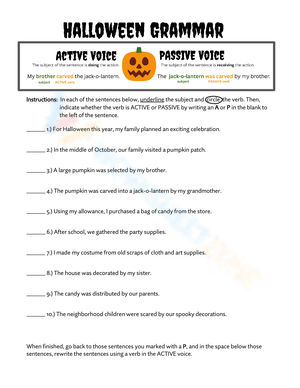
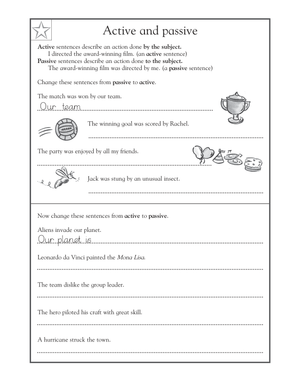
- Active and passive voice — students identify passive constructions, evaluate whether the passive is justified in context, and rewrite the ones that weaken directness
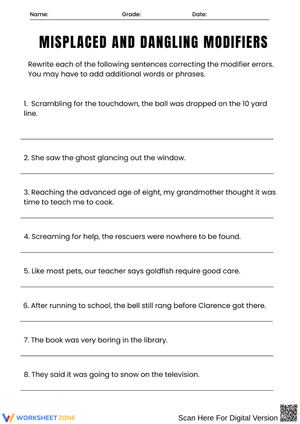
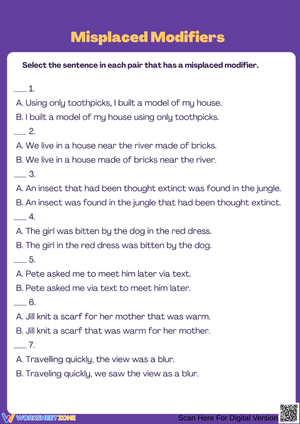
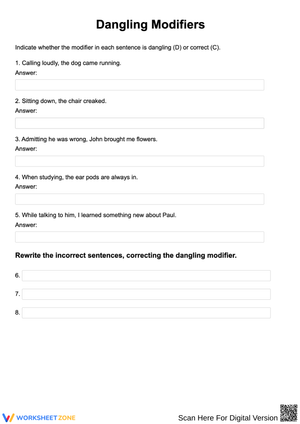
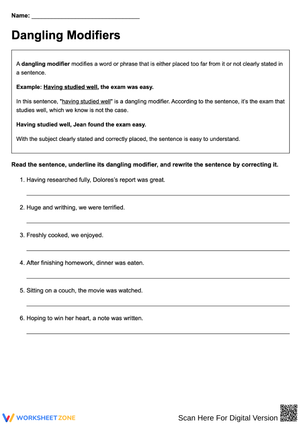
- Dangling and misplaced modifiers — students locate the modifier, identify what it illogically modifies, and revise until the intended meaning is unambiguous
- Sentence combining with subordinate clauses — students merge short, choppy sentences by selecting the appropriate subordinating conjunction or relative pronoun, which directly addresses the fragmented quality that characterizes a lot of early freshman writing
- Run-ons and comma splices — students diagnose the error type and then choose among multiple correction strategies rather than defaulting to a period every time
Errors That Surface in Freshman Writing
The mistakes ninth graders make with grammar and mechanics are predictable once you have read enough of their essays. Understanding the pattern behind an error helps correction stick better than circling it in red and moving on.
Parallel structure breaks down most often inside thesis statements. A student who handles a series correctly in a sentence-level exercise will still write "The novel explores themes of identity, what it means to belong, and how society judges outsiders" in a body paragraph opener. The error is conceptual: the student can apply the rule in isolation but loses track of it under the cognitive pressure of composing. Worksheets that embed parallel structure errors inside thesis-like sentences — rather than simple three-word series — address this gap directly.
The semicolon/colon distinction produces consistent confusion even after instruction. Students who learn that a semicolon connects two related thoughts will use it before a list — "The essay requires three things; a clear thesis, supporting evidence, and a conclusion" — because "related" doesn't clearly distinguish connection from introduction. Several worksheets in the set place semicolons and colons in direct contrast, requiring students to make the choice rather than practice one rule at a time in isolation.
Passive voice errors run in the opposite direction from what most teachers expect. Freshmen who have been told their writing sounds informal often reach for passive constructions deliberately, because passive feels more formal to them. "The theme of injustice is explored by the author through the character's actions" gets written on purpose. Naming this pattern explicitly — and showing why it still weakens the argument — lands better than a generic "use active voice" note in the margin.
Fitting These Worksheets Into Your Weekly Lesson Plans
The most reliable entry point is the bell-ringer slot. Handing out a modifier or parallel structure worksheet as students settle in gives the first five minutes a clear purpose and surfaces the day's grammar concept before formal instruction begins. Running through the answers together functions as a built-in mini-lesson: one or two student errors, discussed briefly in front of the class, often accomplish more than a ten-minute lecture on the rule.
The stronger long-term move is pairing each worksheet directly with the essay draft students are currently writing. After students complete a semicolon worksheet, require them to find at least one place in their own draft where a semicolon could replace a weak coordinating conjunction. That bridge from isolated practice to authentic writing is where retention actually happens — without it, mechanics knowledge tends to sit in its own compartment and rarely transfers to original composition. 9th grade grammar and mechanics printable worksheets work best when they serve as a bridge to real drafts rather than as exercises that get filed away once corrected.
Peer review stations are another consistent use. Before students exchange rough drafts, they rotate through short worksheet exercises focused on the conventions they are about to evaluate — a run-on and comma splice exercise before a revision pass focused on sentence-level errors, for example. The brief practice primes their editorial attention in a way that a checklist alone does not. These worksheets also hold up as reliable sub plans: the instructions are self-contained, the format is familiar to students, and the work is genuinely productive.
Standard Alignment
The worksheets in this set target L.9-10.1 and L.9-10.2 from the Common Core State Standards for English Language Arts. L.9-10.1 addresses command of standard English grammar and usage, including parallel structure and applying various phrase and clause types for meaning and style. L.9-10.2 covers capitalization, punctuation, and spelling, with specific attention to semicolons, colons, and dashes. Both standards signal the same instructional shift: the expectation is no longer identification of grammatical structures but control of them as rhetorical tools. That shift is what the set is built around. 9th grade grammar and mechanics printable worksheets aligned to these standards give teachers a direct line from daily practice to the language conventions assessed across high school writing tasks and standardized ELA tests.
Adjusting the Set for Mixed-Level Classes
Freshmen arrive in September with a wide spread of mechanics knowledge. Some students — often those who wrote extensively in middle school — have already internalized parallel structure at the sentence level and need the challenge moved up to paragraph-level application. Others are still uncertain where a comma belongs at all. Running the same worksheet with the same expectations across both groups wastes time for one and overwhelms the other.
For students who need more support, the most effective adjustment is adding a brief worked example at the top of the exercise — one completed item with a short note explaining the reasoning — and walking through two or three items as a class before releasing students to work independently. Simply cutting the item count without that guided first pass leaves conceptual gaps that don't close on their own.
For students working above grade level, the correction exercises translate naturally into generative tasks. Instead of fixing a broken parallel structure, students write three original sentences using the construction in different contexts. The semicolon and colon worksheets extend well into a paragraph revision task where students deliberately introduce advanced punctuation into a provided passage that contains only simple sentences. That kind of constraint-based writing builds real control over mechanics rather than recognition of errors someone else made.
Frequently Asked Questions
Do these worksheets work with students who did not receive strong grammar instruction in middle school?
Yes, though teachers should plan for a few extra minutes on the first pass through each new concept. The exercises include clear examples before the practice items begin, and the sequence within each worksheet moves from more straightforward cases to more complex ones. For students with significant gaps, working through the first few items as a class before students continue independently makes the solo practice more productive and reduces frustration.
How is punctuation covered across the set?
Punctuation gets substantial coverage. Semicolons and colons are treated separately first and then compared in a single exercise that requires students to choose between them. Dashes get their own worksheet that distinguishes parenthetical dashes from interruption dashes — a distinction most freshman grammar units skip. Comma usage in complex and compound-complex sentences appears across multiple exercises rather than in one standalone review. The depth goes well beyond a single introductory lesson.
Can these be used alongside test preparation without disrupting regular writing instruction?
The mechanics covered in this set appear directly on standardized ELA assessments — parallel structure, modifier placement, and punctuation errors show up consistently in sentence-correction and revision tasks at the high school level. Because each exercise asks students to identify and correct errors rather than simply answer multiple-choice questions about rules, the practice transfers more readily to the constructed-response and revision tasks found on state assessments. 9th grade grammar and mechanics printable worksheets used consistently through a semester build the kind of automatic error recognition that timed test conditions require, without turning regular class time into rote test prep.
Are answer keys included with each worksheet?
Yes. Each worksheet comes with a full answer key. For revision items — rewriting a passive construction, correcting a misplaced modifier, or revising a parallel structure error — the key provides a sample correction alongside a brief explanation of the reasoning. That makes the worksheets practical for homework assignments without requiring teachers to re-explain every answer the following day.












 Interactive Worksheet Maker
 Quiz Maker
 Word Search Maker
 Crossword Puzzle Maker
 Word Scramble Generator
 Sentence Scramble Generator
 Handwriting Worksheet Generator
 Name Tracing Generator
 Fill In The Blank Generator