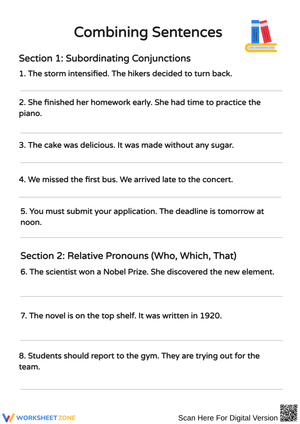
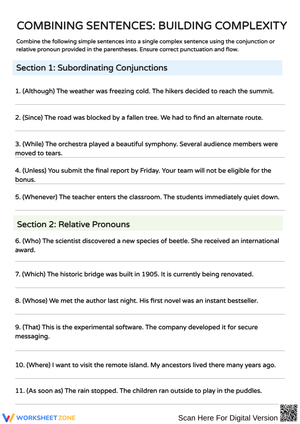
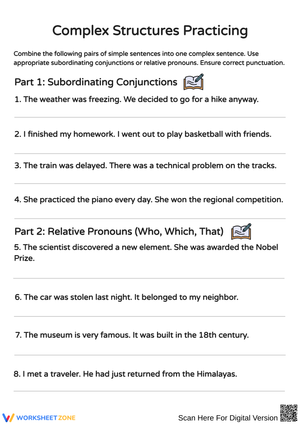
9th grade sentence structure printable worksheets fill the gap that appears between middle school grammar habits and high school writing expectations — a gap most teachers spot immediately in first-draft essays, where short declarative sentences string together and technically convey meaning but don't yet sound like high school prose. This set targets the specific skills that create that gap: the four sentence types, clause and phrase identification, sentence combining, and the error patterns that surface most reliably in student writing at this level.
What's Inside the Set
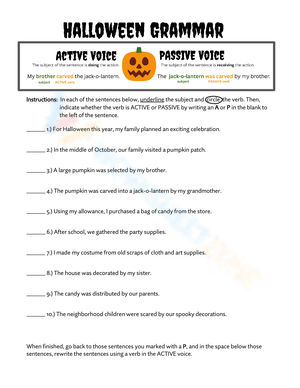
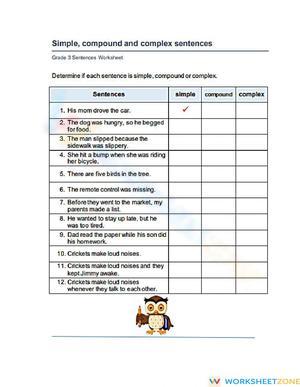
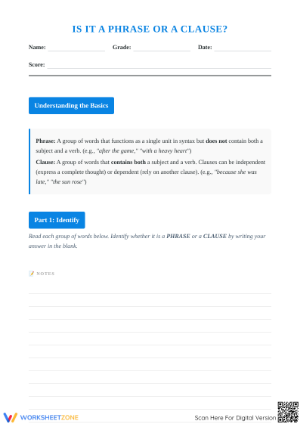
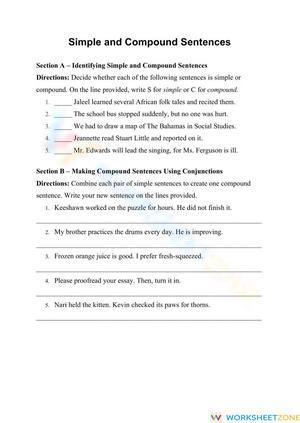
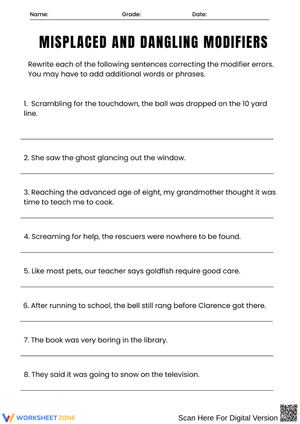
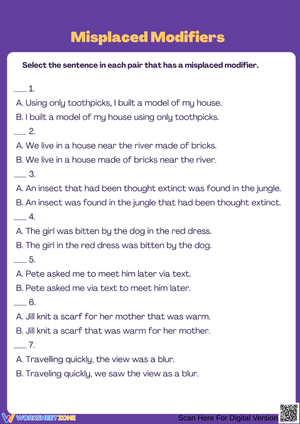
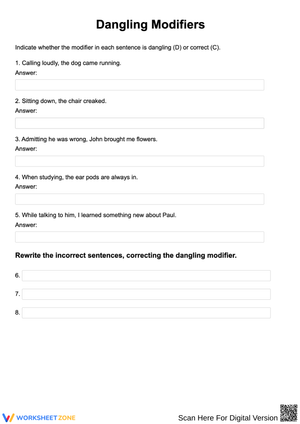
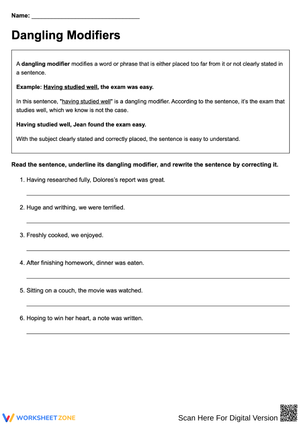
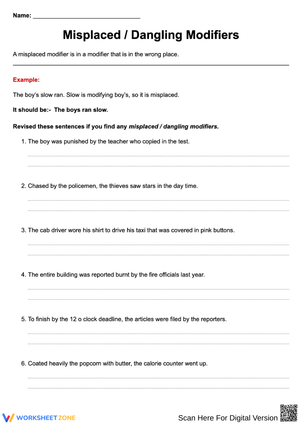
Each worksheet isolates one aspect of sentence structure rather than covering everything at once. The set moves through simple, compound, complex, and compound-complex sentences, asking students to identify each type, label its components, and then construct original examples. Several worksheets focus specifically on clauses — distinguishing dependent from independent, identifying relative and adverbial clauses, and recognizing where a missing subject or verb turns a clause into a fragment. Separate worksheets target sentence combining: students receive three or four short declarative sentences and must merge them into a single, grammatically sound construction using subordinating conjunctions, relative pronouns, or coordinating conjunctions. A final group functions as error correction exercises, presenting students with run-ons, comma splices, dangling modifiers, and misplaced phrases to identify and rewrite.
The sentence combining exercises deserve particular attention because they ask students to make editorial decisions rather than just identify terms. A student given "The storm arrived. The power went out. We had been warned for days." has to choose what belongs in the independent clause, what gets subordinated, and which conjunction best captures the relationship between the ideas. That kind of thinking transfers directly into the revision process.
Error Patterns That Recur in 9th Grade Writing
The comma splice is the most persistent error at this level, and it persists for a real reason: students who learned that "a comma signals a pause" apply that logic and write sentences like "She finished the chapter, she couldn't put the book down." They hear a pause in their heads — the comma feels right. The error correction worksheets surface this exact pattern repeatedly, then show students three distinct repair strategies: add a coordinating conjunction, swap in a semicolon, or rewrite with a subordinating conjunction that clarifies the relationship between clauses. Teaching multiple fixes matters because students who learn only one tend to apply it mechanically rather than making a deliberate stylistic choice.
Dangling modifiers produce a different kind of confusion. "Running to reach the bus, the door slammed shut" is the kind of sentence a student will insist makes perfect sense because they know what they meant. The worksheets address this by asking students to identify who or what each opening phrase describes, then check whether that subject appears immediately after the comma. Once students apply this test a few times on the worksheet, they begin catching their own modifier errors in actual essays — which is the transfer moment these exercises are built toward.
Fragments at this level look more sophisticated than the ones 5th graders write, which makes them harder to flag. When a student writes "Although the evidence was compelling." as a standalone sentence, they've used a subordinating conjunction correctly — they just didn't finish the thought. The worksheets help students see that how a clause begins signals what must come after it. A sentence that opens with "although" is grammatically committed to providing an independent clause, and no amount of confident punctuation changes that.
Three Ways to Work These Exercises Into Your Instructional Week
Bell ringers are the most efficient format for this kind of skill work. Putting one sentence on the board at the start of class and asking students to identify its type, label its clauses, or rewrite a comma splice takes eight minutes at most and keeps the concepts active without eating into writing time. After a month of this, most students can label a compound-complex sentence faster than they could at the start of a formal grammar unit. The 9th grade sentence structure printable worksheets in this set work well in that rotation — one worksheet assigned Monday as the week's bell ringer source, a different worksheet on Thursday for independent practice.
The stronger application is pairing error correction worksheets directly with students' own drafts. After a first-round essay submission, hand back papers alongside the comma splice or run-on worksheet. Students work through the correction strategies on the worksheet examples, then immediately apply the same strategies to their own writing. The connection between isolated practice and real prose is what makes grammar transfer. Without that link, students treat the worksheet as its own task and stop thinking about it the moment they move on.
A third approach is mentor text modeling: find one sentence in a class novel or short story that uses a structure students have just practiced, put it on the board, ask students to label its parts, then have them write an original sentence that follows the same grammatical shape. These imitation sentences are a low-stakes way to get students experimenting with structures they might avoid in a formal essay because the form feels unfamiliar. When a student successfully constructs a compound-complex sentence by mimicking a line from a published writer, the structure stops feeling like a grammar exercise and starts feeling like a tool.
Making These Worksheets Work for Students at Different Starting Points
Students who enter 9th grade still uncertain about subjects and verbs need to start with identification tasks before attempting construction. The clause identification worksheets serve this purpose — students circle the subject, underline the verb, and mark whether the clause stands alone as a sentence. For these students, pairing 9th grade sentence structure printable worksheets with a short reference list of common subordinating conjunctions (because, although, since, unless, whereas) gives them something concrete to check against instead of relying on their ear alone, which at this stage is not yet reliable.
Students who already write clean compound sentences are ready to work on precision through constraint-based tasks. Rather than "write a compound-complex sentence about anything," give them a restriction — use "whereas" as the subordinating conjunction, or place the dependent clause at the beginning of the sentence. Constraints force attention to the structure itself rather than letting content drive the shape. The sentences that result are also worth discussing as a class because students make different choices under the same constraint, and talking through why produces more useful grammar conversation than correcting errors does.
Standard Alignment
These worksheets align to CCSS.ELA-LITERACY.L.9-10.1.B, which requires students to use various types of phrases and clauses to convey specific meanings and add variety and interest to their writing. In classroom terms, this standard is not confined to grammar units — it shows up in every essay rubric that scores for "sentence fluency" or "syntactic control." The 9th grade sentence structure printable worksheets in this set address L.9-10.1.B as an ongoing instructional thread rather than a unit-specific lesson that gets shelved once the grammar test is over.
Frequently Asked Questions
Do these worksheets work for students who are still unsure about the difference between a phrase and a clause?
Yes. Several worksheets in the set begin with clause identification tasks — students circle the subject, underline the verb, and determine whether what they've found can stand on its own as a sentence. For classes where many students enter with this gap, starting with those exercises before moving to compound or complex sentence construction gives them the foundation they need to understand why the sentence types work the way they do.
Are the error correction exercises formatted as identify-only, or do students also rewrite?
Students both identify the error type and rewrite the sentence. Most error correction items have more than one acceptable correction, which is intentional — asking students to try two different fixes before settling on one builds flexibility rather than mechanical habit. Teachers who use these as class discussion starters often find that comparing student rewrites generates more useful conversation than going over a single answer key.
Can these worksheets double as diagnostic tools at the start of the year?
The clause identification and sentence-type worksheets work well as pre-assessments. A student who can consistently label independent and dependent clauses is in a different instructional place than one who cannot, and these worksheets surface that distinction quickly. The error correction worksheets serve as a reliable formative check after direct instruction — a student who can identify and fix comma splices on the worksheet is usually ready to apply that skill in their own drafts.
What grade levels can use these worksheets beyond 9th grade?
The sentence type and clause identification exercises work as solid review for 10th and 11th graders who still produce run-on sentences and fragments in formal writing. They also serve as catch-up support for advanced 8th graders whose teachers want to introduce high school sentence expectations before the transition year. The error correction worksheets in particular have a long shelf life because comma splices and dangling modifiers don't disappear after one unit — they keep showing up in student writing across grade levels.












 Interactive Worksheet Maker
 Quiz Maker
 Word Search Maker
 Crossword Puzzle Maker
 Word Scramble Generator
 Sentence Scramble Generator
 Handwriting Worksheet Generator
 Name Tracing Generator
 Fill In The Blank Generator