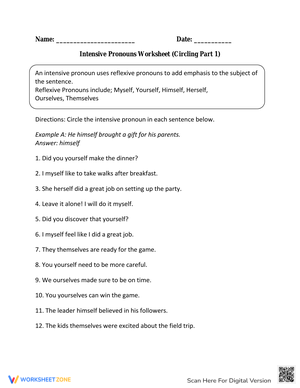
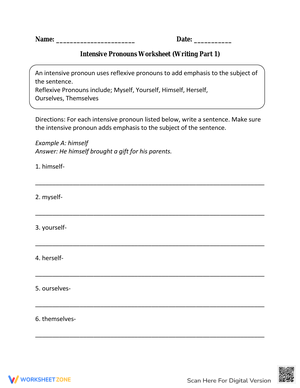
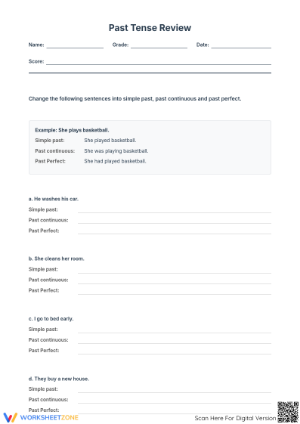
These 9th grade parts of speech worksheets resources move past identification drills and into the territory ninth graders actually need: treating grammar as a deliberate writing tool. By the time students reach high school, most can name the eight parts of speech — what they struggle with is applying that knowledge when they revise a vague sentence, choose between who and whom, or explain why a participial phrase reads differently depending on where it sits. Each worksheet pairs recognition tasks with revision work, so students practice both reading grammar and deploying it.
What the Set Covers
At the 9th-grade level, parts of speech instruction shifts in emphasis rather than starting over. Students are not re-learning what a noun is — they are learning what a relative pronoun does to sentence structure, or how a misplaced conjunctive adverb produces a comma splice in an otherwise solid paragraph. The worksheets address:
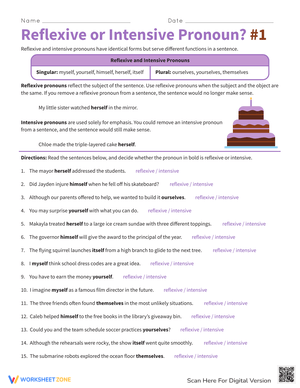
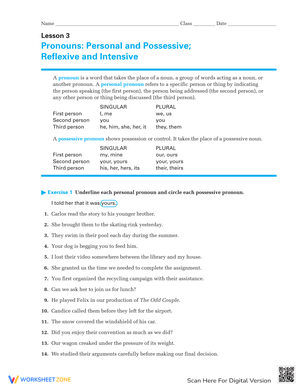
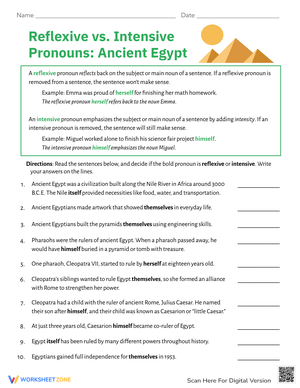
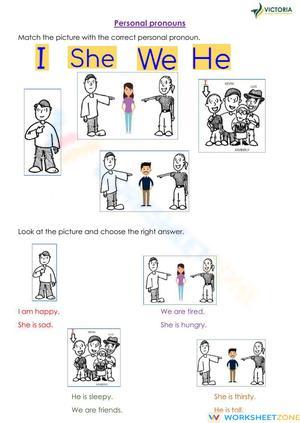
- Nouns and pronouns: abstract and collective nouns, pronoun-antecedent agreement in complex sentences, and relative pronouns — who, whom, whose, which, and that — in both restrictive and nonrestrictive clauses
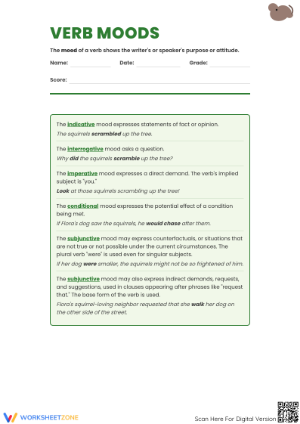
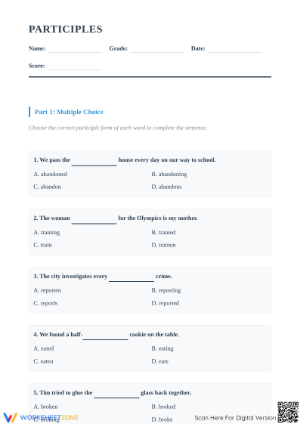
- Verbals: gerunds, participles, and infinitives, with exercises requiring students to identify grammatical function rather than just form — distinguishing a gerund used as a subject from a participial phrase used as an adjective
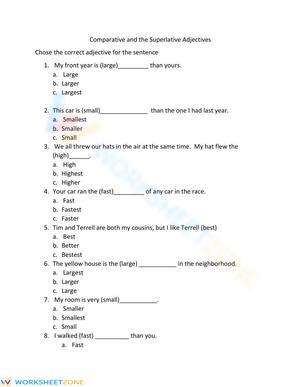
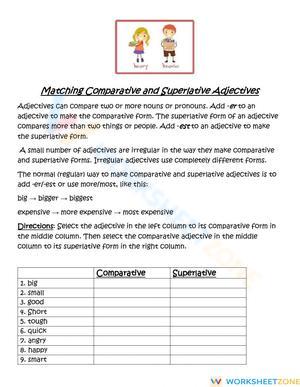
- Adjectives and adverbs: precise modification, comparative and superlative forms, and recognizing the difference between adjectival and adverbial roles in academic prose
- Conjunctions: coordinating, subordinating, and correlative forms, plus conjunctive adverbs such as however, therefore, and consequently, with correct punctuation modeled for each category
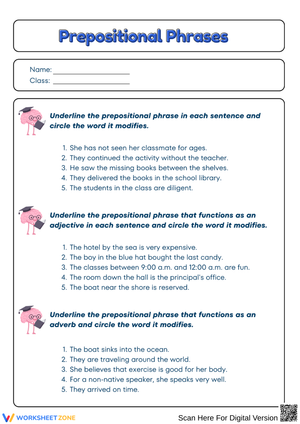
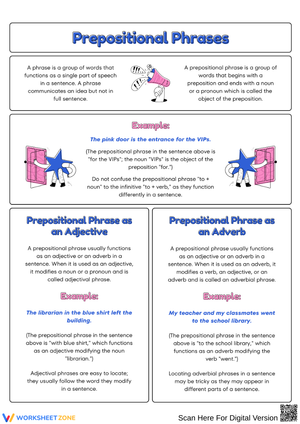
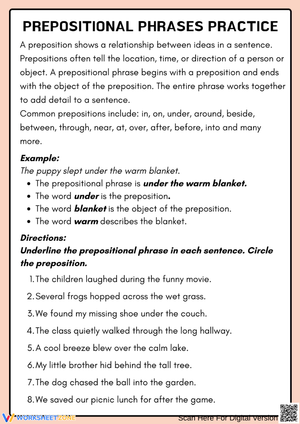
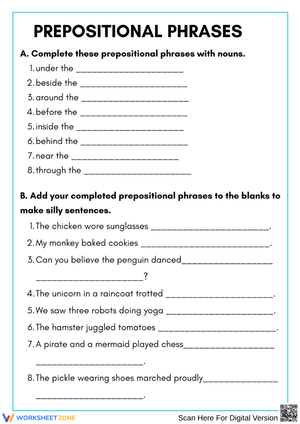
- Prepositions and prepositional phrases: how these function as modifiers and contribute to sentence-level meaning rather than just appearing at the end of a sentence
The more demanding exercises go beyond labeling. Students rewrite sentences to correct errors, transform structures using a targeted part of speech, or explain in writing why a specific grammatical choice affects meaning or tone.
Student Error Patterns Worth Catching Early
The most persistent error at this level involves conjunctive adverbs. Students learn that however signals contrast, so they use it — but then punctuate it like a coordinating conjunction: I studied for the test, however I still failed. That comma splice appears constantly in 9th-grade essays, often because students were never explicitly taught that a conjunctive adverb between two independent clauses requires a semicolon before it, not a comma. Repeated targeted practice with this specific construction is one of the clearest benefits of the set.
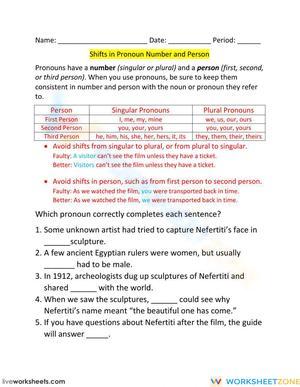
Pronoun-antecedent agreement in complex sentences catches even strong writers off guard. A student who handles basic agreement correctly will still write "The committee made their decision before it was announced" without noticing that the pronoun reference is unstable. Vague pronoun reference — particularly sentences that open with "In the article, it says..." or "They claim that..." without a named antecedent — is the other pattern that shows up consistently in early drafts. The revision exercises in the worksheets flag both constructions directly.
Verbals generate consistent confusion between gerunds and present participles. Running is my hobby and The running water flooded the basement use the same word form, but many ninth graders treat them as interchangeable and miss the functional distinction entirely. Exercises that require students to identify what role a verbal is playing — not just circle the word — surface this gap quickly and give teachers something concrete to address before it shows up in formal writing.
Building These Worksheets Into Your Lesson Sequence
These worksheets hold up best when attached to a writing unit rather than treated as isolated grammar lessons. Before a literary analysis essay, a worksheet on relative pronouns — who versus whom, restrictive versus nonrestrictive clauses — gives students precise grammatical vocabulary for writing about characters and authors. It also gives the teacher a usable formative check before drafts come in.
The bell-ringer model works well here. Five minutes at the start of class — three sentences to analyze or correct, then a brief whole-class discussion of anything contested — keeps grammar visible without cutting into reading or writing time. The Friday before a revision cycle, assigning a 9th grade parts of speech worksheets exercise focused on verbals gives students a concrete lens for Monday's peer review. They arrive looking for participial phrases in a partner's draft instead of just hunting for spelling errors.
At the start of the school year, a short review set functions as a diagnostic. When students rewrite sentences rather than fill in multiple-choice answers, patterns emerge clearly: who has internalized pronoun case, who is still generating comma splices, who needs more time with verbal phrases before the first timed writing. That information shapes the first six weeks of grammar instruction in ways a traditional pre-test cannot.
Standard Alignment
These 9th grade parts of speech worksheets resources address CCSS L.9-10.1, which requires students to demonstrate command of standard English grammar and usage when writing and speaking. The standard specifically names phrase types — noun, verb, adjectival, adverbial, participial, prepositional, and absolute — and clause types, including independent, dependent, noun, relative, and adverbial. Teachers rarely address these categories in one standalone unit; they surface throughout literary analysis, argument writing, and narrative all year long. The worksheets reinforce them at the sentence level so that writing instruction does not have to stop for grammar repair mid-unit.
Adjusting the Set for Different Skill Levels
Students arriving from rigorous middle school writing programs often already distinguish gerunds from participles and handle pronoun case with confidence. For them, the higher-level revision tasks — rewriting a passage to deploy a specific verbal construction, or explaining in a sentence how a conjunctive adverb changes the logical relationship between two clauses — offer genuine challenge without being busywork.
Students who struggled with grammar through middle school need a different entry point. Working through identification exercises before revision exercises, concentrating on one part of speech across several sessions rather than cycling through all of them at once, and providing a short reference list of the specific conjunctive adverbs or relative pronouns being practiced that week all reduce working memory demands without lowering content expectations. Small-group work with the 9th grade parts of speech worksheets exercises also allows a teacher to address individual error patterns directly before those patterns become fixed habits in formal writing.
Frequently Asked Questions
Do these worksheets come with answer keys?
Yes, each worksheet includes a key. At the 9th-grade level, answer keys are most useful for peer-correction activities — students mark a classmate's work, then discuss any item where they disagreed with the key. That conversation tends to surface deeper understanding than silent self-checking, and it gives the teacher a quick read on which items caused the most confusion across the class.
How do these exercises address CCSS L.9-10.1 specifically?
The exercises target the phrase and clause categories named in the standard directly. Participial phrases, prepositional phrases, relative clauses, adverbial clauses, and noun clauses all appear across the set. Students do not only identify these structures — they also use them in revision tasks, which reflects what the standard actually demands: command of grammar in writing, not just recognition on a test.
Can these be used in AP Language and Composition or honors sections?
The verbal and clause exercises work well for AP Language prep. Students analyzing rhetorical strategies in nonfiction need to recognize when a writer front-loads an adverbial clause for emphasis or uses a series of noun absolutes to build a catalog effect. These worksheets build that structural vocabulary. For standard 9th-grade sections, the same exercises are most effective in the second and third quarters, after students have built a working foundation earlier in the year.
What about students who finish early?
The revision exercises include extension questions that ask students to justify their grammatical choices in a sentence — not just correct the construction, but explain what the correction does to meaning. Beyond that, students who finish quickly can be asked to locate the same grammatical structure in a current news article or assigned reading and bring the example to the next class. That search task reliably takes longer than students expect, and it moves grammar practice into a reading context where the skill actually matters.












 Interactive Worksheet Maker
 Quiz Maker
 Word Search Maker
 Crossword Puzzle Maker
 Word Scramble Generator
 Sentence Scramble Generator
 Handwriting Worksheet Generator
 Name Tracing Generator
 Fill In The Blank Generator