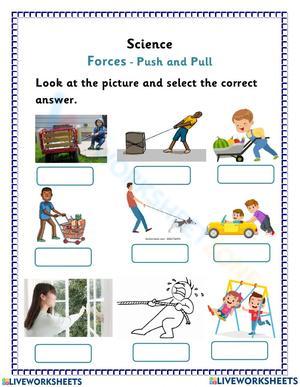
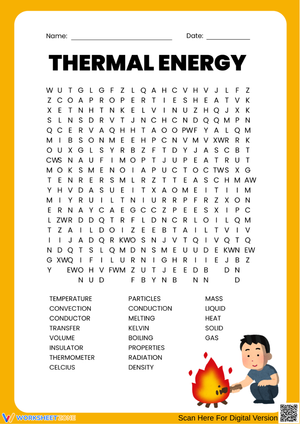
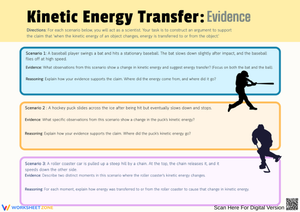
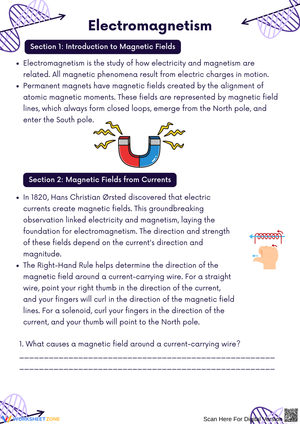
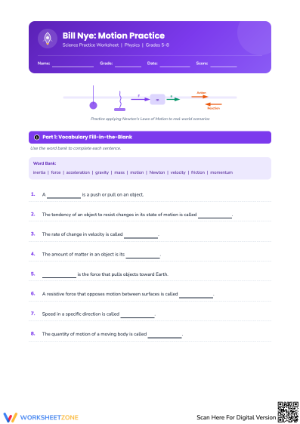
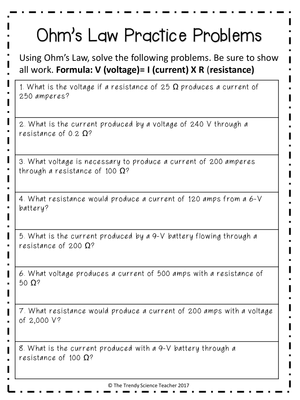
These physics worksheets for 8th grade give teachers direct access to targeted physical science practice without extra prep time. The set covers the major topic clusters that appear in most middle school physical science courses — forces and motion, Newton's laws, energy, circuits, magnetism, and waves — and every file downloads as a print-ready PDF.
The Specific Topics These Worksheets Target
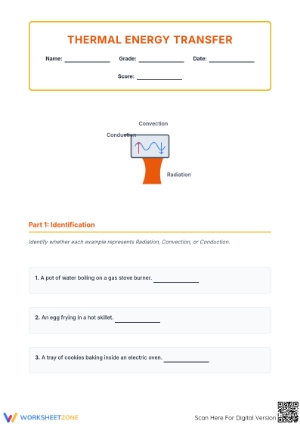
Eighth grade physical science typically embeds physics content inside a broader course that also addresses chemistry. The physics strand — the part these worksheets address — clusters around five topic areas teachers return to repeatedly because they appear in labs, written explanations, and unit assessments throughout the year.
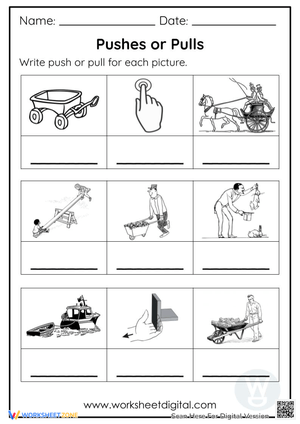
- Force and motion: identifying balanced and unbalanced forces, interpreting force diagrams, and tracing cause-and-effect relationships between force and acceleration
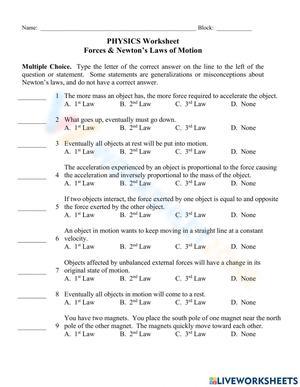
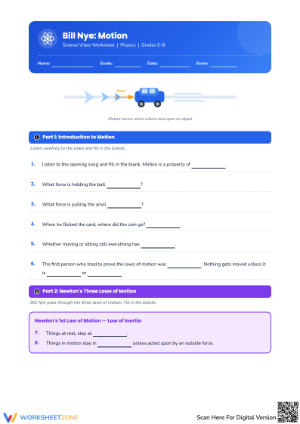
- Newton's three laws: applying each law to real-world scenarios, distinguishing inertia from net force, and analyzing action-reaction pairs in familiar contexts
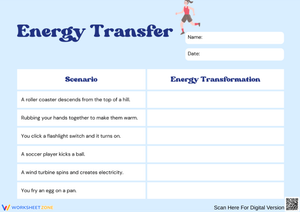
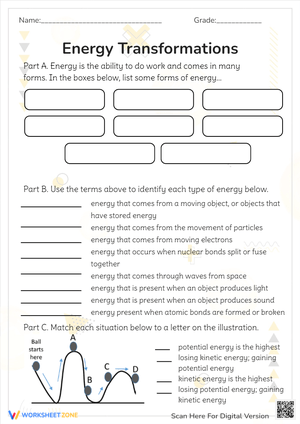
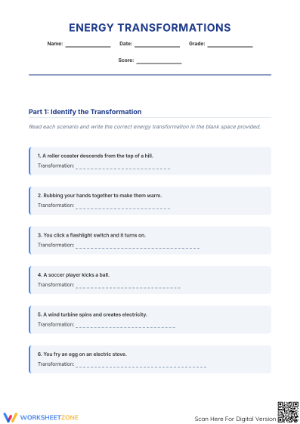
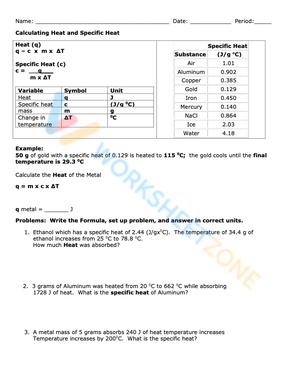
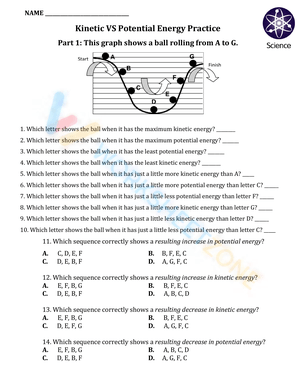
- Energy: comparing kinetic and gravitational potential energy, tracing transformations through a system, and explaining where energy goes when it isn't directly observable
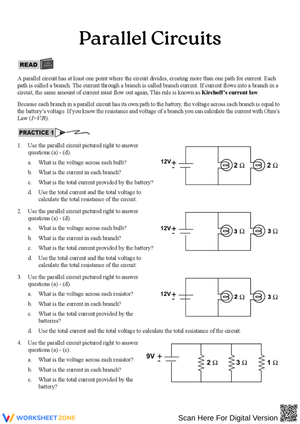
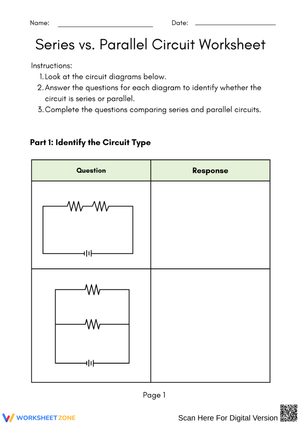
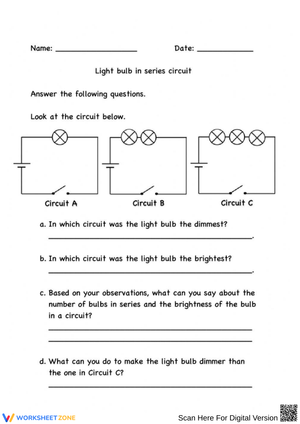
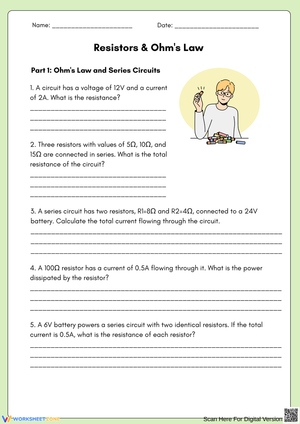
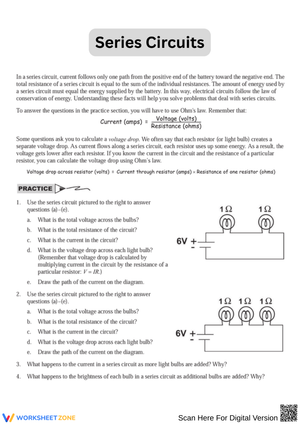
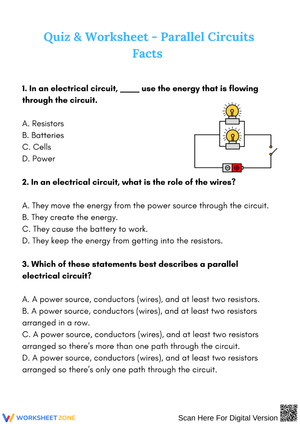
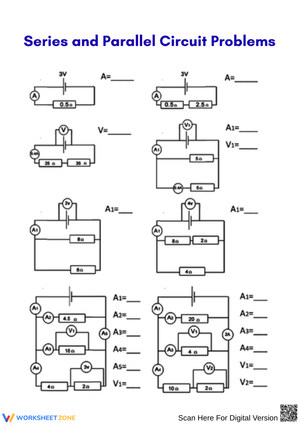
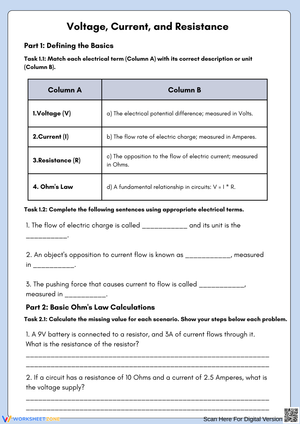
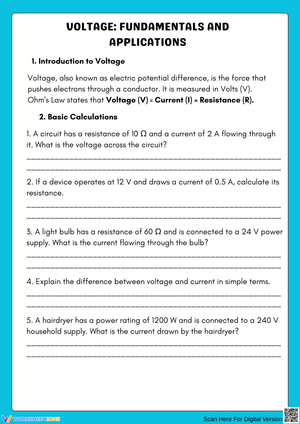
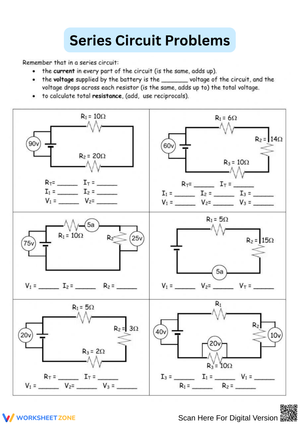
- Electricity and circuits: describing current flow, differentiating series and parallel arrangements, and explaining how resistance changes circuit behavior
- Waves: identifying amplitude, wavelength, and frequency, and connecting those properties to the energy a wave carries
Each worksheet targets one concept or a closely connected cluster of ideas. That focused scope is a practical requirement for physics worksheets for 8th grade that are going to earn their place in a fast-paced course — teachers need to match a printable to a lesson objective on the same day, not sort through a mixed-topic assignment looking for the right items.
Mistakes Students Make That These Worksheets Help You Catch
Several 8th grade physics misconceptions sit just below the surface and only show up when students have to write out their reasoning rather than select an answer. Newton's third law is the clearest example. After instruction, most students can recite "equal and opposite reaction," but when asked to analyze a collision between a truck and a bicycle, the majority still argue the truck exerts more force — because mass feels like it should determine force output. A worksheet that asks students to draw and label force arrows on both objects in that collision, then explain in writing why both arrows are the same length, confronts that intuition directly rather than letting verbal recall substitute for understanding.
Energy vocabulary creates a parallel problem. Students who correctly identify a ball at the top of a ramp as having gravitational potential energy will often describe that same ball at the bottom as having "stored energy" — carrying the first label into the second situation. Worksheets that ask students to name the energy type at each stage of a transformation sequence, not just at the starting or ending point, reveal whether vocabulary is attached to the concept or just to the original example from the lesson.
In circuit work, students consistently blur current and voltage. They know "electricity comes from the battery" but can't say whether what flows through the wire is the same thing as what the battery provides. A focused worksheet that asks students to predict what changes when voltage increases, then what changes when resistance increases, separates those two ideas more efficiently than re-explanation alone.
Standard Alignment
The worksheets align primarily to three NGSS middle school physical science disciplinary core idea bundles. MS-PS2 (Motion and Stability: Forces and Interactions) governs the force, motion, and Newton's laws worksheets — specifically performance expectations MS-PS2-1 and MS-PS2-2, which ask students to apply Newton's third law to real systems and use mathematical representations to describe force-mass relationships. MS-PS3 (Energy) covers the kinetic energy, potential energy, and transformation worksheets, connecting to MS-PS3-1, MS-PS3-2, and MS-PS3-5. MS-PS4 (Waves) aligns with MS-PS4-1, which expects students to use mathematical representations of wavelength, frequency, and amplitude.
In classroom terms, these standards distinguish between qualitative understanding and quantitative reasoning. Most worksheets in this set work at the qualitative level — describing relationships, explaining outcomes, comparing scenarios — which positions them as concept-building tools before students encounter the calculation-based problem sets and performance tasks those standards eventually require. Students who can articulate why a faster-moving object has more kinetic energy move through the math relationships more fluently afterward.
Fitting These Worksheets Into Your Unit Sequence
The most reliable routine is pairing one worksheet with a narrow learning target right after direct instruction. If students just finished a Newton's first law lesson, one worksheet can ask them to identify inertia in three different scenarios, explain what changes when forces become unbalanced, and rewrite an incorrect explanation from a fictional student. That task runs 10 to 15 minutes — long enough to generate useful formative data, short enough to complete before the period ends.
Small-group reteach is where a focused printable earns its place most clearly. After a warm-up check, pull students who are still conflating weight and mass, or who reverse the kinetic-to-potential energy label without noticing. The reteach group works through one worksheet while you model the first item aloud; students complete the remaining items with immediate feedback. Meanwhile, the rest of the class moves to extension work or lab analysis. That split is harder to manage when the reteach tool is a multi-topic worksheet requiring students to navigate to specific sections mid-task — a problem a focused, single-concept printable avoids entirely.
Teachers who use physics worksheets for 8th grade as homework assignments find that short, focused printables outperform longer mixed-topic packets for closing the feedback loop. Students complete a 6-to-8-item worksheet at home; teachers scan the responses the next morning and know within a few minutes which concepts need another day. The data loop stays tight enough to act on while it still shapes that week's planning.
Adjusting These Worksheets for a Range of Learners
For students who need more processing time or stronger concept footing, the most effective adjustment is reducing item count while preserving the level of thinking required. Dropping from 10 items to 6 — removing straightforward recall questions and keeping the ones that ask students to explain a relationship or compare two situations — gives struggling learners time to reason through each item rather than rushing. Identifying one completed item as a worked example before independent work begins also removes the "I don't know how to start" barrier, which is often the actual obstacle rather than the physics content itself.
For students ready for a greater challenge, two extension tasks work without requiring separate materials. Ask them to generate their own example that illustrates the same concept and justify why it qualifies — a student who can do that with Newton's third law understands the principle beyond the examples from class. Alternatively, present an intentionally incorrect student response and ask them to identify the flaw and correct it. Both tasks keep the same physics content but shift the cognitive demand toward evaluation rather than recognition.
Students whose first language isn't English benefit from worksheets that include labeled diagrams — force arrows, energy bar charts, circuit drawings — because the visual context carries meaning independently of the surrounding text. Walking through key physics terms before the class begins and allowing students to annotate diagrams in their first language before writing English responses reduces the language load without reducing the conceptual demand.
Frequently Asked Questions
What grade level are these worksheets built for?
The set targets 8th grade physical science, where most middle school physics instruction is concentrated in both NGSS-aligned and traditional course sequences. Vocabulary and question complexity are calibrated for middle school rather than high school physics, which means students can work through most items independently without needing teacher direction on every prompt.
Do these work for state science assessment preparation?
Yes, particularly for NGSS-aligned assessments that test forces, energy transfer, and wave behavior. These worksheets build the written explanation skills those assessments require — students practice stating claims, applying vocabulary to unfamiliar situations, and tracing cause-to-effect relationships. That said, physics worksheets for 8th grade work best as one component of a broader test-prep approach that also includes data interpretation, diagram analysis, and lab-based reasoning tasks.
How do these fit into a physical science course that also covers chemistry?
They fit by design. The physics strand in an integrated physical science course typically runs as its own unit sequence, and teachers can pull individual worksheets to match the active physics topic without disrupting broader course pacing. Because each worksheet stays focused on a specific concept, it's straightforward to assign one on force diagrams during a motion unit and save the energy transformation worksheets for later in the semester when that strand comes up.
Are these appropriate for bell work?
Yes. A practical approach is to project one or two items from a worksheet as a warm-up prompt, then distribute the full worksheet once the opening discussion wraps up. That structure gives the teacher an informal read on where students stand before independent practice begins, which makes the transition faster and more focused than handing out a cold printable with no lead-in.












 Interactive Worksheet Maker
 Quiz Maker
 Word Search Maker
 Crossword Puzzle Maker
 Word Scramble Generator
 Sentence Scramble Generator
 Handwriting Worksheet Generator
 Name Tracing Generator
 Fill In The Blank Generator