


























1 / 2
0
Views
0
Downloads

0.0
0
Save
0 Likes
Share
Lunar Phases Drag-and-Drop Diagram Worksheet
0 Views
0 Downloads
Paste this activity's link or code into your existing LMS (Google Classroom, Canvas, Teams, Schoology, Moodle, etc.).
Students can open and work on the activity right away, with no student login required.
You'll still be able to track student progress and results from your teacher account.
Information
Description
What It Is:
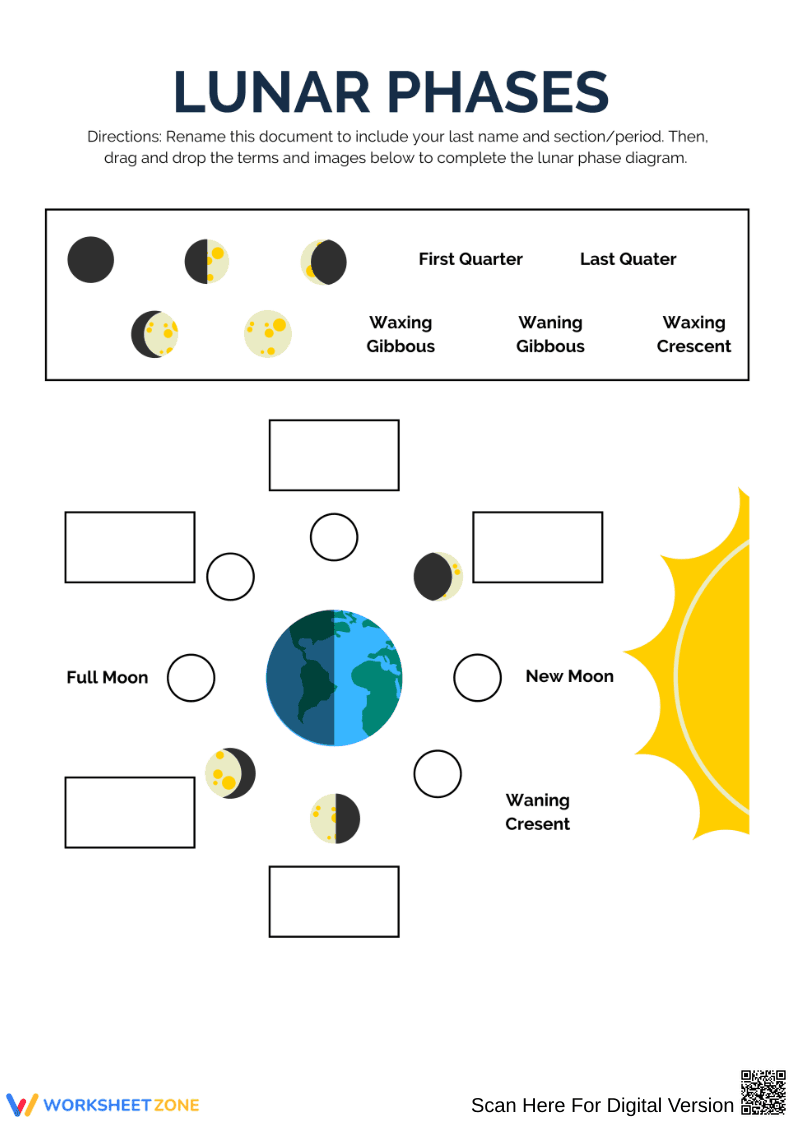
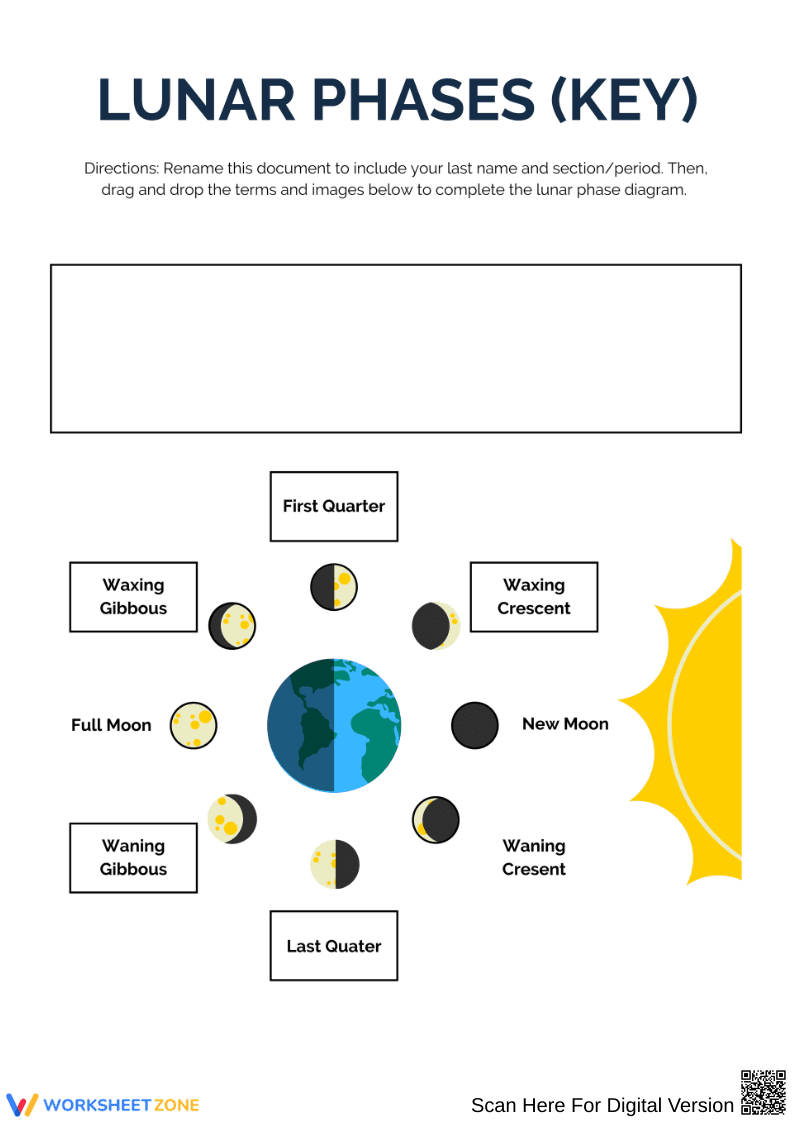
A visual lunar phases worksheet where students complete the moon phase diagram by dragging and dropping the correct labels and moon images into place. The worksheet covers all major moon phases, including new moon, full moon, waxing crescent, waning crescent, first quarter, last quarter, waxing gibbous, and waning gibbous.
Why Use It:
This hands-on matching activity helps students clearly understand the sequence of the lunar cycle and how the Moon’s appearance changes as it orbits Earth. The drag-and-drop format encourages active learning, improves memorization, and supports visual learners who benefit from simplified diagrams and pattern recognition.
How to Use It:
• Review each moon phase with students before beginning the activity.
• Have students drag each phase label and moon image to the correct box in the diagram.
• Use as a digital assignment, classroom station activity, or assessment review.
• Extend learning by asking students to explain why each phase appears the way it does.
Grade Suitability:
Best suited for Grades 4–8.
• Ideal for upper-elementary and middle-school students learning the lunar cycle.
• Supports both Earth Science units and biology foundations involving celestial patterns.
Target Users:
Science teachers, homeschool educators, tutors, and students studying the moon phases and lunar cycle through interactive activities.
A visual lunar phases worksheet where students complete the moon phase diagram by dragging and dropping the correct labels and moon images into place. The worksheet covers all major moon phases, including new moon, full moon, waxing crescent, waning crescent, first quarter, last quarter, waxing gibbous, and waning gibbous.
Why Use It:
This hands-on matching activity helps students clearly understand the sequence of the lunar cycle and how the Moon’s appearance changes as it orbits Earth. The drag-and-drop format encourages active learning, improves memorization, and supports visual learners who benefit from simplified diagrams and pattern recognition.
How to Use It:
• Review each moon phase with students before beginning the activity.
• Have students drag each phase label and moon image to the correct box in the diagram.
• Use as a digital assignment, classroom station activity, or assessment review.
• Extend learning by asking students to explain why each phase appears the way it does.
Grade Suitability:
Best suited for Grades 4–8.
• Ideal for upper-elementary and middle-school students learning the lunar cycle.
• Supports both Earth Science units and biology foundations involving celestial patterns.
Target Users:
Science teachers, homeschool educators, tutors, and students studying the moon phases and lunar cycle through interactive activities.


