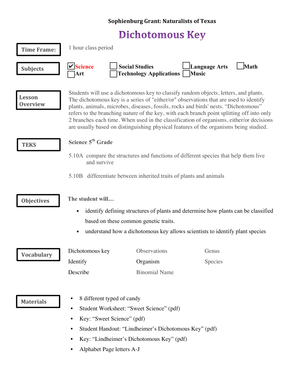
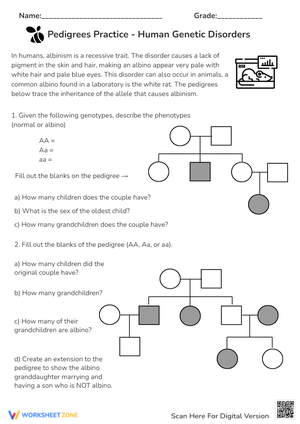
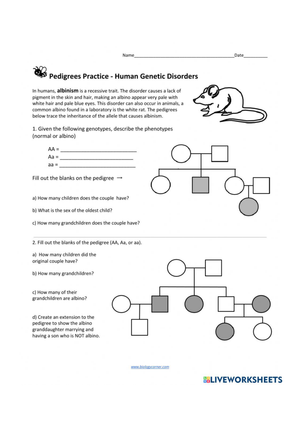
Teachers who search for others science printable worksheets for 7th grade are dealing with a specific problem: the grade 7 science course rarely stays inside a single strand for long. Life science, physical science, and Earth and space science rotate through the same school year in most districts, and no narrow resource covers that range without gaps. This set gives teachers standalone, targeted practice across all three strands — each worksheet built around one clearly defined concept so students know exactly what they are being asked to do before they pick up a pencil.
The Specific Skills These Worksheets Build
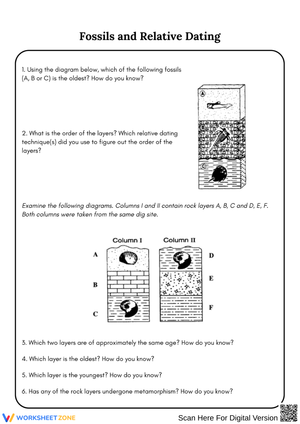
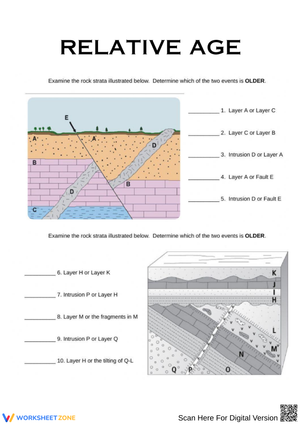
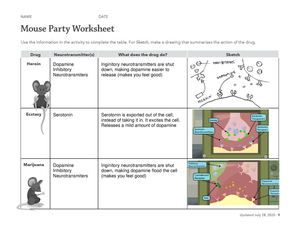
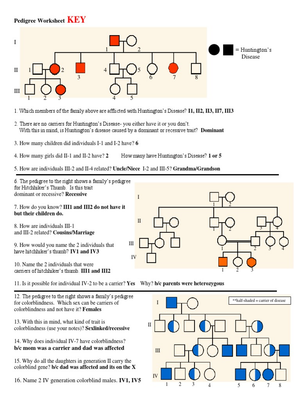
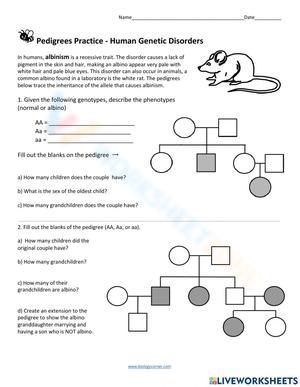
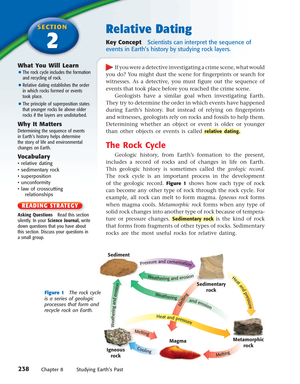
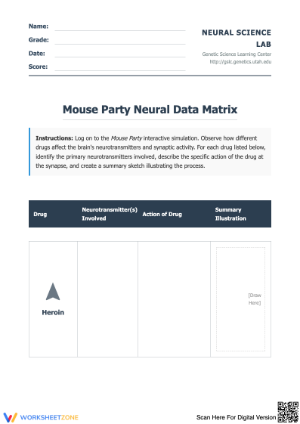
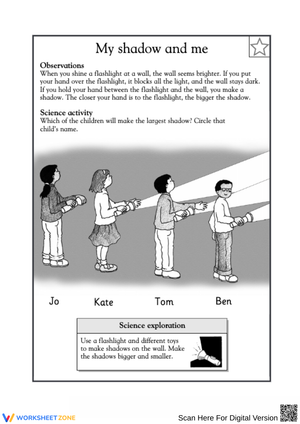
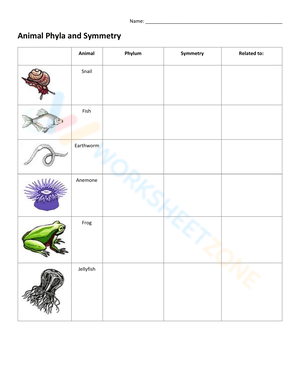
Life science worksheets ask students to label cell structures, trace energy flow through a food web, identify body system functions by matching organs to their roles, or explain how an organism's traits connect to its environment. Physical science worksheets cover matter and its properties, forces and motion, chemical versus physical change, and energy transfer — asking students to sort examples into categories, read a short data table, or explain a scenario in one or two sentences. Earth and space science worksheets address the rock cycle, plate movement, weather and climate patterns, the water cycle, and Moon phases.
The format inside each worksheet is chosen to match what the topic actually demands. A Moon phases worksheet has students annotate a diagram with correct labels and draw sequence arrows showing the lunar cycle. A forces worksheet presents a motion scenario and asks students to determine the direction of net force and predict what happens next. A cell comparison worksheet asks students to explain the function of two organelles and describe what would happen to the cell if one failed — moving beyond definition recall into functional reasoning. That kind of variety across the set means students practice the analytical habits that carry across all three strands, not just isolated vocabulary terms.
Student Mistakes Teachers Should Anticipate and Address
Error patterns in grade 7 science cluster differently by strand, and knowing them ahead of time lets teachers intervene before a misconception calcifies. In physical science, students routinely classify dissolving sugar in water as a chemical change because the solid "disappears" — they apply the logic of visible transformation instead of reasoning about molecular structure. Burning and dissolving land in the same mental category for many students until they work through examples that force them to distinguish what actually changed at the particle level, not just at the surface level of appearance.
In life science, food web errors are consistent: students draw arrows from prey to predator, reversing the direction of energy flow, because the arrow reads intuitively as "eaten by" rather than "energy transfers to." In Earth science, weathering and erosion get merged — students define each term correctly in isolation but describe material transport when asked to explain weathering, which shows the process distinction hasn't become a working concept yet. Each worksheet in this set places the precise vocabulary inside a scenario students have to reason through, rather than asking them to repeat a definition, and that's where those confused mental models surface and become correctable before the unit test.
Building These Worksheets Into Your Lesson Plans
Three slots in the school week absorb these worksheets without displacing anything that already works. The first 8 minutes of class — before whole-group instruction begins — is the most consistent one. Each worksheet addresses a single concept, which means students start working without needing a lengthy teacher-led introduction first. That matters especially on Monday mornings, when reviewing last Thursday's lesson as a warm-up is faster and lower-stakes than a cold recall quiz.
Reteach days are the second natural slot. After a unit assessment reveals a shared misconception, pulling one targeted worksheet per error is faster than rebuilding a full lesson from scratch. The third reliable slot is substitute plans. Worksheets with clear, self-contained directions and familiar question formats — matching, labeling, short answer — hold up in a classroom without the regular teacher in a way that open-ended tasks usually don't. A substitute doesn't need to understand plate tectonics to manage a class working through a structured diagram worksheet on it.
A pairing strategy worth keeping in regular rotation: assign one content worksheet alongside one process-skill worksheet from the same topic area. If students complete an ecosystems content review, follow it with a short data-table reading worksheet using an ecosystem scenario. That pairing shows two separate things — whether a student understands the biology and whether the student can navigate the data format that question will appear in on a standardized assessment. Teachers who regularly use others science printable worksheets for 7th grade across all three strands build a sorted, on-demand library that makes both planned instruction and last-minute adjustments far less stressful.
Standard Alignment
These worksheets connect to Next Generation Science Standards at the middle school level. Life science worksheets address MS-LS1 (From Molecules to Organisms: Structures and Processes) and MS-LS2 (Ecosystems: Interactions, Energy, and Dynamics). Physical science worksheets target MS-PS1 (Matter and Its Interactions) and MS-PS2 (Motion and Stability: Forces and Interactions). Earth and space science worksheets align to MS-ESS1 (Earth's Place in the Universe) and MS-ESS2 (Earth's Systems).
In most NGSS-aligned districts, these performance expectations span grades 6 through 8, with grade 7 commonly carrying the bulk of life science and physical science instruction. The worksheets also connect to NGSS Science and Engineering Practices — specifically SEP 4 (Analyzing and Interpreting Data) when students work with diagrams and data tables, and SEP 6 (Constructing Explanations) when they write short responses using evidence drawn from the worksheet content. Teachers in states with their own standards frameworks will find that the core content — matter, energy, cells, ecosystems, Earth systems — appears in nearly every grade 7 science sequence regardless of label.
Adjusting the Set for Mixed-Ability Classrooms
For students who need more support, the most effective adjustment isn't simplifying the science — it's reducing the item count on a given worksheet and front-loading two or three key vocabulary terms before class starts, not during it. Preteaching during the worksheet itself splits attention at exactly the wrong moment. A brief vocabulary preview on the board before students pick up a pencil makes the content accessible without changing the grade-level expectations of the task.
For students who move quickly, the same worksheet becomes a launching point rather than a ceiling. A constructed-response prompt added at the bottom — Write a claim-evidence-reasoning statement using the diagram above as your evidence source — adds meaningful cognitive demand without requiring a separate resource entirely. Mixed-ability pairs also work well with these worksheets: two students share one and take turns explaining their reasoning aloud before writing. That structure surfaces thinking that written responses sometimes hide, especially in students who understand the concept but struggle to get it onto paper.
The strand variety in others science printable worksheets for 7th grade makes them especially useful for spaced retrieval across a quarter — a brief rock cycle worksheet in week four and a short energy transfer worksheet in week seven reinforce earlier content without consuming a full class period. Done consistently, that kind of low-stakes repetition strengthens retention in ways that a single concentrated review session rarely does.
Frequently Asked Questions
Do these worksheets align to NGSS or state-level science standards?
They connect directly to NGSS middle school performance expectations across all three strands, as described in the alignment section above. Most state frameworks that follow an NGSS-based structure overlap substantially in content, though teachers in states with distinct adopted standards should cross-check specific codes. The core concepts — matter, cells, ecosystems, Earth systems, forces — appear in virtually every state's grade 7 sequence under one label or another.
Can these be used for 6th or 8th grade intervention or review?
Yes, selectively. Worksheets covering cell structure, properties of matter, and Earth systems address foundational concepts that bridge grade levels in NGSS-based sequences. Teachers have used them successfully for 8th grade review of earlier material and for 6th grade preview or extension when students are ready for it. Each worksheet stands on its own, so selection by concept rather than by grade label is straightforward.
What specifically makes these worksheets work as substitute plans?
The combination of self-contained directions, familiar question formats, and single-concept focus means students complete meaningful science work without needing a substitute to explain the science background. That's the practical test for a reliable sub-plan worksheet — it runs without the teacher in the room, and the work students produce is still worth reviewing when you return.
Is it practical to use only a few selected worksheets rather than the whole set?
That's actually the most common way teachers use others science printable worksheets for 7th grade — printing one or two that match the current unit rather than working through the set in any fixed order. There's no sequence dependency between the worksheets. Selecting by topic, by strand, or by error pattern is the approach that makes the most sense given how differently grade 7 pacing looks from one district to the next.












 Interactive Worksheet Maker
 Quiz Maker
 Word Search Maker
 Crossword Puzzle Maker
 Word Scramble Generator
 Sentence Scramble Generator
 Handwriting Worksheet Generator
 Name Tracing Generator
 Fill In The Blank Generator