6th Grade Matter and Change printable worksheets
These 6th grade matter and change printable worksheets resources cover the full conceptual arc of a typical matter unit — observable properties, states of matter and particle arrangement, phase changes, mixtures and solutions, and the distinction between physical and chemical changes. Each worksheet gives students focused practice with one or two connected ideas rather than covering everything at once, which keeps the cognitive load manageable and makes it easier to pinpoint exactly where understanding breaks down. The tasks move through identification and classification before asking students to write short evidence-based explanations, so the set works whether you're introducing a concept or closing out a sub-unit.
The Skills Each Worksheet Targets
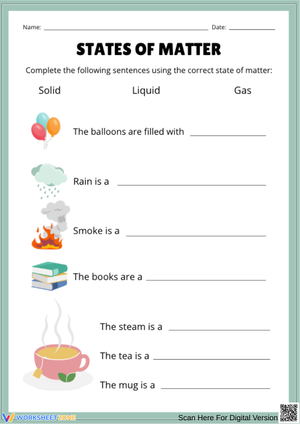
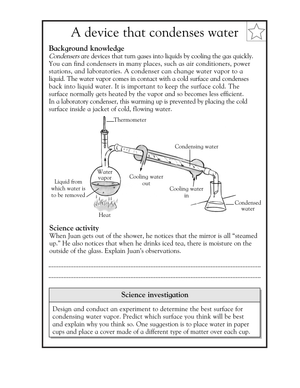
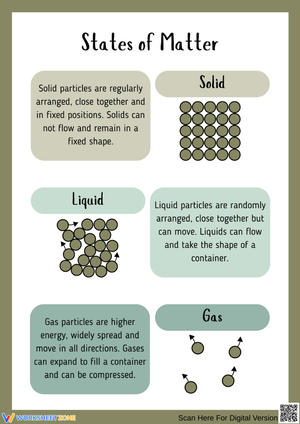
The coverage mirrors the sequence most 6th grade science teachers follow. Early worksheets ask students to identify and compare observable and measurable properties using familiar examples — color, texture, mass, volume, density, solubility. Later worksheets shift into particle-level thinking: how particles are arranged and moving differently in solids, liquids, and gases, and what happens to that arrangement during phase changes like melting, evaporation, and condensation.
- Observable and measurable properties: color, texture, mass, volume, density, and solubility
- States of matter: identifying solids, liquids, and gases; comparing particle spacing and movement in each state
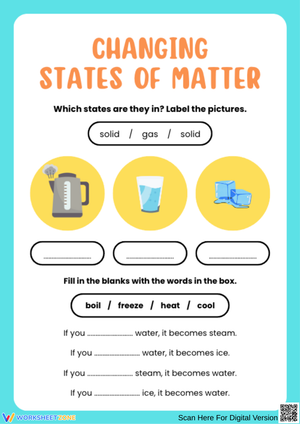
- Phase changes: melting, freezing, evaporation, condensation, and sublimation — including what stays the same when state changes
- Mixtures and solutions: classifying combinations of substances and recognizing that no new substance forms
- Physical changes: changes to size, shape, or state that leave the substance's identity intact
- Chemical changes: reactions that produce one or more new substances, supported by observable evidence
- Evidence of chemical change: gas production, temperature change, color change, odor, and precipitate formation
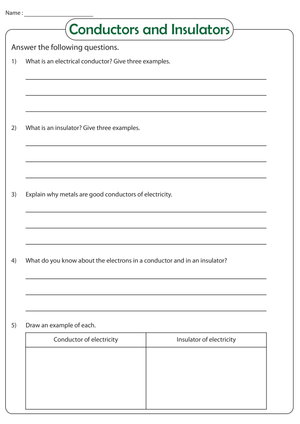
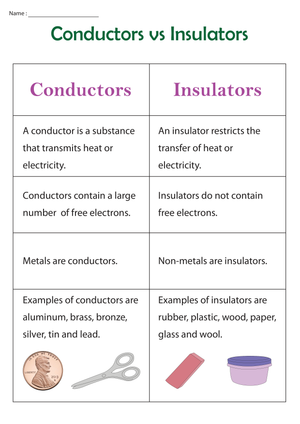
The later worksheets in the set ask students to evaluate real-world scenarios — dissolving salt in water, rusting iron, burning wood, bending a wire — and justify their classification with specific evidence from the scenario. Those constructed response items push well beyond vocabulary recall into the reasoning that shows up on unit assessments and standardized science tests alike.
Mistakes Students Make That These Worksheets Help You Catch
The physical-versus-chemical change distinction generates the most persistent errors in this unit, and the underlying pattern is almost always the same: students classify changes based on how dramatic they look, not on whether a new substance formed. A student who correctly labels melting ice as a physical change will often mark burning wood as physical too, because — as they'll write in their explanation — "it just got smaller and turned to ash," which they read as a change in appearance rather than evidence that an entirely different substance appeared. The worksheets surface this by pairing dramatic physical changes alongside subtle chemical ones, so students can't use visual intensity as a shortcut.
Dissolving is the other consistent trouble spot. Most 6th graders watch salt disappear into water and reason that the salt was destroyed — and "something got destroyed" sounds like a chemical change to them. Very few students spontaneously explain that the salt particles are still present, just dispersed. Worksheets that ask students to describe what happened to the particles during dissolving, rather than simply classify the event, catch this gap before it calcifies into a unit-long misconception.
A third predictable error: once students learn the signs of chemical change — color change, temperature change, gas production — they apply the list too rigidly. Students mark ice melting in warm water as a chemical change because the temperature dropped. The worksheets address this directly by including examples that display one or more signs without actually being chemical changes, forcing students to evaluate the full picture rather than matching a single observation to a checklist. These are the error patterns that 6th grade matter and change printable worksheets tasks surface most consistently — and catching them during practice, rather than on the unit test, is exactly what formative work is for.
How to Fit These Worksheets Into Your Weekly Planning
Most matter units run three to four weeks, and these worksheets spread naturally across that span. The 10 minutes after a density lab or a states-of-matter demonstration is a natural moment for a quick classification task that connects what students just observed to the vocabulary they're still building. On Mondays, a short retrieval worksheet that touches two or three concepts from the previous week serves well as a warm-up before introducing new content — the kind of low-stakes recall that strengthens retention without requiring a full review lesson.
The 6th grade matter and change printable worksheets format also fits station rotations well. A sort-and-classify worksheet at one station, a particle diagram task at another, and a short written explanation at a third lets a teacher confer with a small group while the rest of the class works independently. Because each worksheet is self-contained, there's no setup overhead moving from station to station.
For intervention, teachers can pull a single targeted worksheet — one focused only on identifying evidence of chemical change, for instance — and work through it with a small group during the last 15 minutes of a period. The answer key makes homework practical too, since families can check work and flag items for follow-up without needing to know the science themselves.
Standard Alignment
The core content in this set aligns directly with NGSS MS-PS1-2, which asks students to analyze and interpret data on the properties of substances before and after interactions to determine whether a chemical reaction has occurred. In classroom terms, that standard is exactly the physical-versus-chemical change distinction that 6th graders consistently find most difficult — and it requires evidence-based reasoning, not category memorization. Phase change and states of matter worksheets connect to MS-PS1-4, which expects students to use particle-level models to explain macroscopic observations. A student who can explain why water's temperature changes when it evaporates, framed at the particle level, is meeting that standard. These worksheets build that reasoning explicitly rather than leaving it as a discussion-only outcome.
Adjusting the Set for Different Learner Readiness Levels
The vocabulary load in this unit is real — density, solubility, precipitate, sublimation, particle arrangement — and for students who are still building academic language, encountering all of those terms in a written task can stall comprehension before the science reasoning even starts. The simplest adjustment is adding a word bank directly on the worksheet for students who need it, or providing a two-column reference card with the term and a brief plain-language description. Letting every student decide whether to use the card removes the stigma and keeps the task moving.
Students who need more support with reading tend to do better starting with the diagram-labeling and sort-and-classify worksheets rather than the paragraph-scenario ones. A visual particle diagram paired with a fill-in-the-blank response gives those students a chance to show science understanding without the task turning into a reading comprehension test. For students who need a stronger challenge, the same worksheets can be extended by removing answer choices and requiring full written justification — instead of selecting "chemical change," they explain what new substance formed and what observable evidence supports that conclusion. The 6th grade matter and change printable worksheets set includes enough task variety that both adjustments are realistic without creating a separate version for each worksheet.
Frequently Asked Questions
How do these worksheets handle the physical-versus-chemical change distinction, since that's where students struggle most?
Each worksheet targeting that concept includes real-world examples where students classify the change and then cite specific evidence from the scenario. The set deliberately includes tricky cases — events that display common signs of chemical change but aren't chemical changes — so students have to reason from the full picture rather than check a single observation against a list. Answer key notes for those edge cases give teachers discussion-ready language for the harder examples.
Do the worksheets include particle-level diagrams for states of matter?
Yes. Several worksheets ask students to interpret or label particle arrangement diagrams for solids, liquids, and gases and to connect those diagrams to macroscopic observations like definite shape or the ability to flow. That particle-level reasoning is what MS-PS1-4 specifically requires, and most 6th graders need structured practice with it before they can apply it independently in writing or discussion.
Can I use these in any order, or do students need to complete earlier worksheets before later ones make sense?
Each worksheet stands alone. A teacher who introduces chemical changes before phase changes can pull those worksheets first without any gap in context. The set does not assume that students have completed earlier worksheets in sequence — each task reviews its own key vocabulary within the instructions, and the rest builds from your classroom instruction rather than from a fixed order within the set.
Are answer keys included, and do they explain the reasoning behind tricky items?
Yes, and that matters for this content specifically. Physical versus chemical change has enough edge cases — dissolving, color change from a physical process, temperature shift during a phase change — that an answer key with brief reasoning notes helps teachers anticipate student questions and turn those harder items into genuine class discussion rather than just marking them wrong.
Clear All