


























1 / 2
0
Views
0
Downloads

0.0
0
Save
0 Likes
Share
Momentum, Impulse, and Momentum Change Worksheet
0 Views
0 Downloads
Paste this activity's link or code into your existing LMS (Google Classroom, Canvas, Teams, Schoology, Moodle, etc.).
Students can open and work on the activity right away, with no student login required.
You'll still be able to track student progress and results from your teacher account.
Information
Description
What It Is:
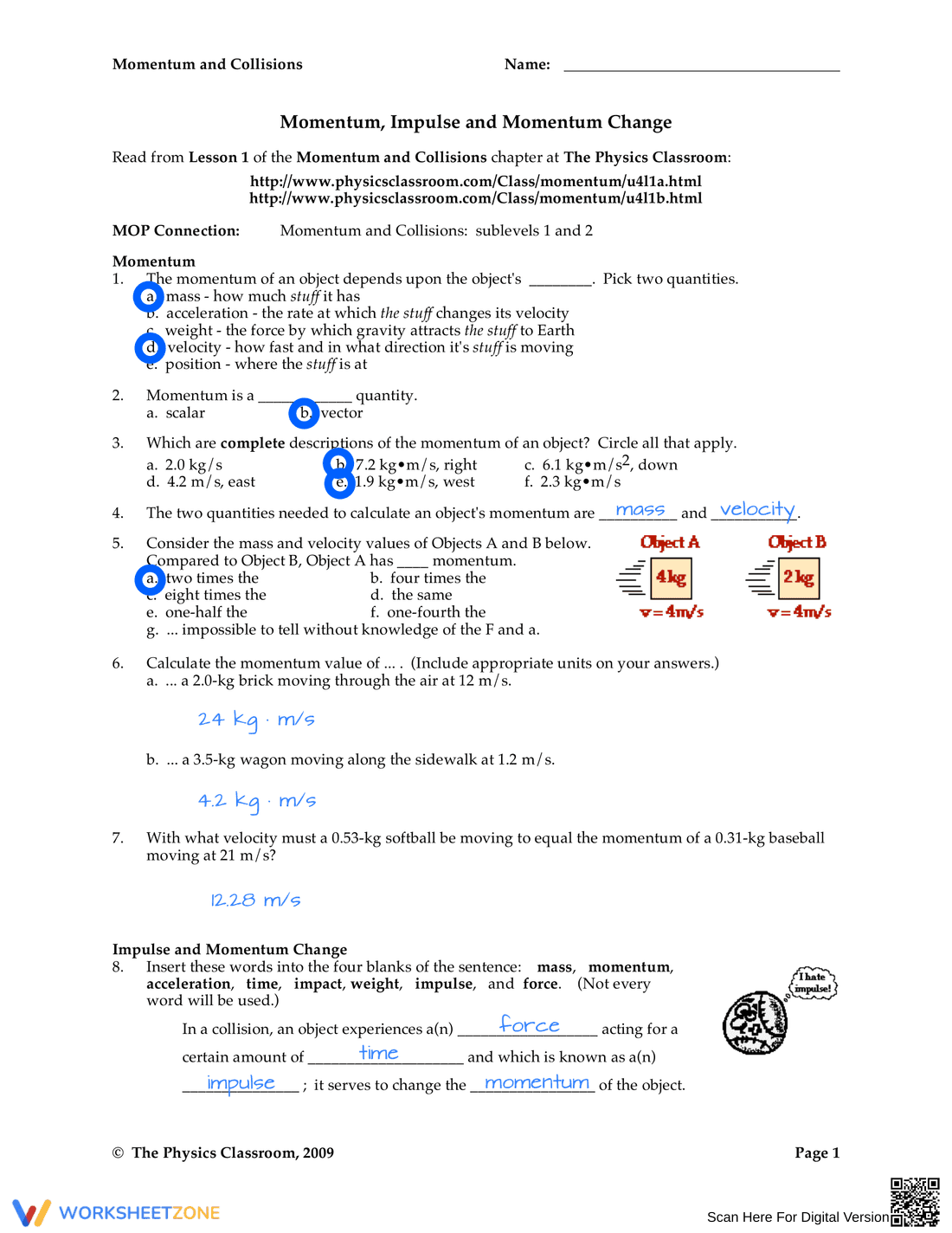
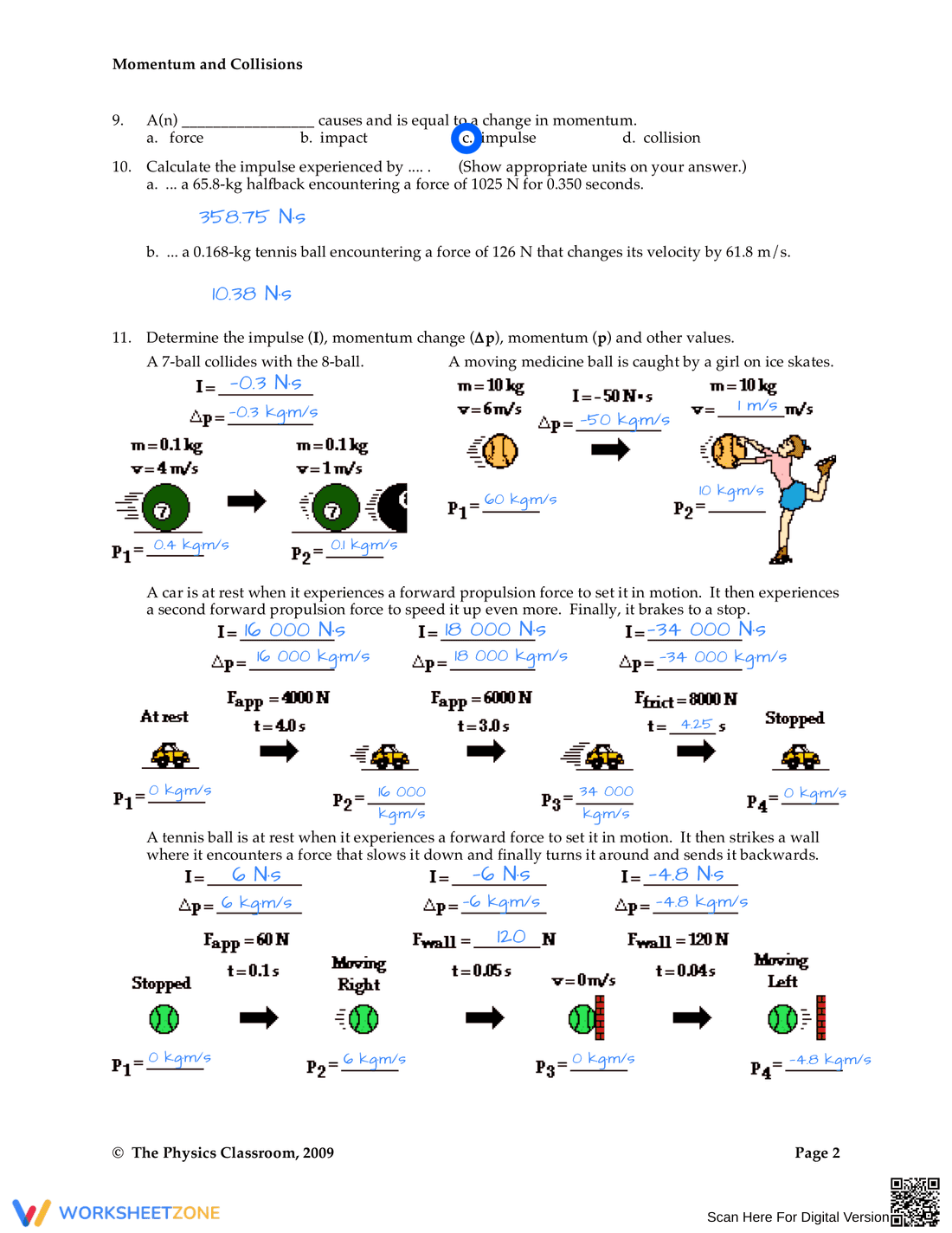
This is a physics worksheet focusing on momentum, impulse, and momentum change. It includes questions asking to define momentum, identify its vector nature, calculate momentum given mass and velocity, compare momentum of objects with different mass and velocity, and apply the impulse-momentum theorem. The worksheet also has fill-in-the-blank questions related to impulse and momentum change.
Grade Level Suitability:
This worksheet is suitable for high school physics, specifically grades 9-12. The concepts of momentum, impulse, and their relationship require an understanding of basic physics principles and algebra.
Why Use It:
This worksheet reinforces understanding of momentum and impulse concepts. It helps students practice calculating momentum, comparing momentum values, and applying the impulse-momentum theorem to solve problems. It also improves vocabulary related to these topics.
How to Use It:
Students should read the related lesson and then answer the questions. They need to define terms, select correct descriptions, calculate momentum using provided values, compare the momentum of different objects, and fill in the blanks to complete sentences about impulse and momentum change. Units must be included in calculations.
Target Users:
The target users are high school physics students learning about momentum, impulse, and collisions. It can also be used for review or as a homework assignment to reinforce learning.
This is a physics worksheet focusing on momentum, impulse, and momentum change. It includes questions asking to define momentum, identify its vector nature, calculate momentum given mass and velocity, compare momentum of objects with different mass and velocity, and apply the impulse-momentum theorem. The worksheet also has fill-in-the-blank questions related to impulse and momentum change.
Grade Level Suitability:
This worksheet is suitable for high school physics, specifically grades 9-12. The concepts of momentum, impulse, and their relationship require an understanding of basic physics principles and algebra.
Why Use It:
This worksheet reinforces understanding of momentum and impulse concepts. It helps students practice calculating momentum, comparing momentum values, and applying the impulse-momentum theorem to solve problems. It also improves vocabulary related to these topics.
How to Use It:
Students should read the related lesson and then answer the questions. They need to define terms, select correct descriptions, calculate momentum using provided values, compare the momentum of different objects, and fill in the blanks to complete sentences about impulse and momentum change. Units must be included in calculations.
Target Users:
The target users are high school physics students learning about momentum, impulse, and collisions. It can also be used for review or as a homework assignment to reinforce learning.


