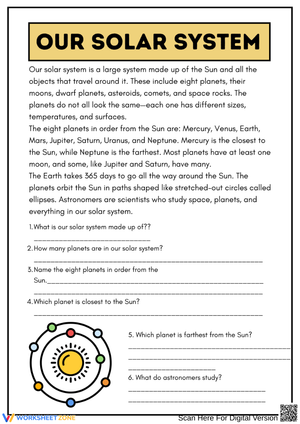
These 6th grade space and the solar system printable worksheets close a specific gap that opens in middle school science: students arrive able to recite the planets in order, but they struggle to explain what keeps a moon in orbit, why Jupiter's year lasts so much longer than Earth's, or why every classroom diagram of the solar system has been silently distorting distance. The set gives teachers focused, immediately usable practice that targets that reasoning work directly.
The Specific Skills These Worksheets Target
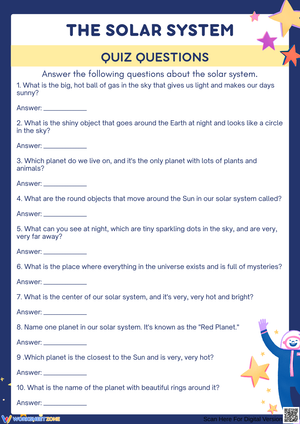
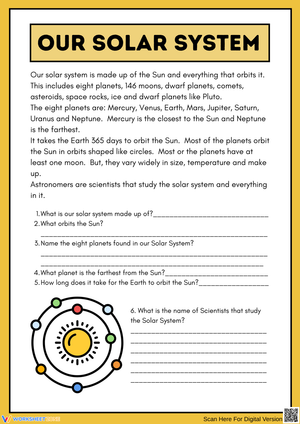
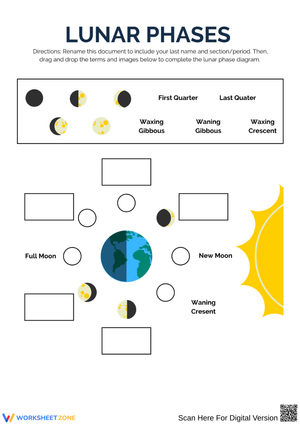
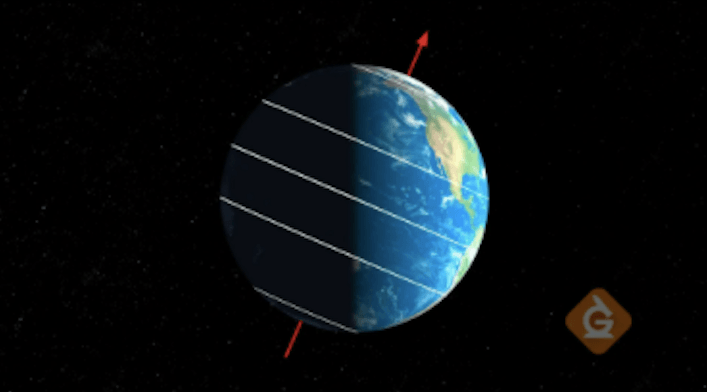
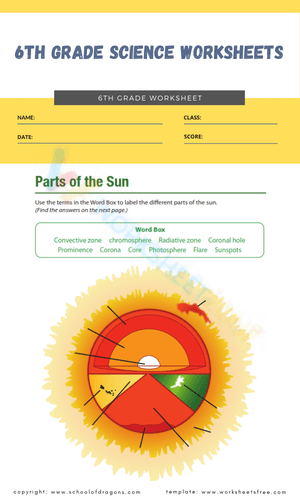
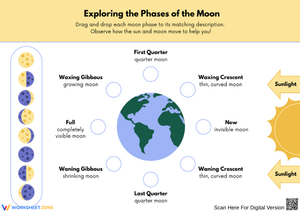
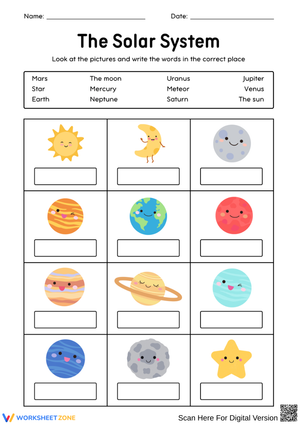
The worksheets cover the vocabulary and conceptual work sixth graders need before they can reason about space rather than just name things. Labeling tasks require students to identify the Sun, planets, dwarf planets, asteroids, and comets in context — distinguishing each category based on observable characteristics, not just position on a list. Diagram interpretation is a consistent demand: students mark rotation direction, trace orbital paths, and identify what a model represents accurately versus what it simplifies.
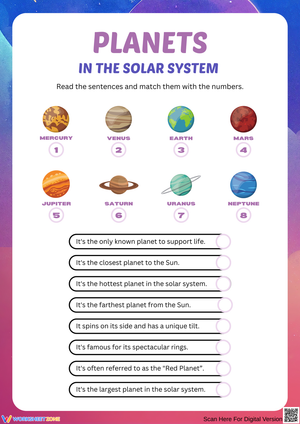
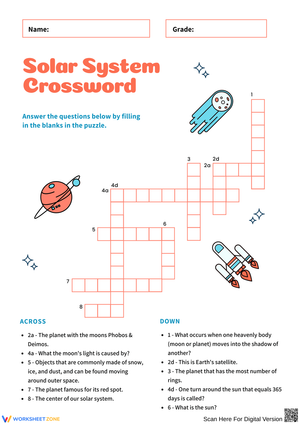
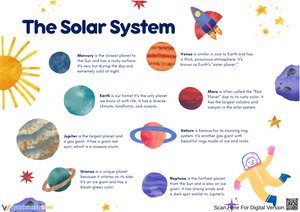
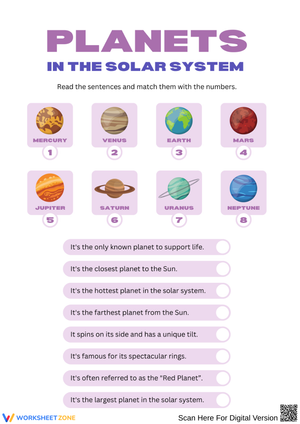
Several worksheets focus on comparing inner and outer planets. Rather than filling in isolated facts, students identify patterns — rocky versus gas-rich composition, proximity to the Sun, differences in moon counts, differences in day length — across multiple objects at once. Motion vocabulary gets dedicated practice: rotation, revolution, axis, and orbital period each appear in diagram-supported exercises where students must explain the concept, not just match a word to a definition.
- Sorting tasks where students classify solar system objects with written justification
- Short constructed-response questions tied to gravity and orbital motion
- Model-analysis tasks where students explain what a diagram distorts and why
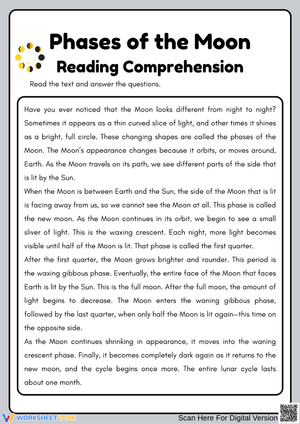
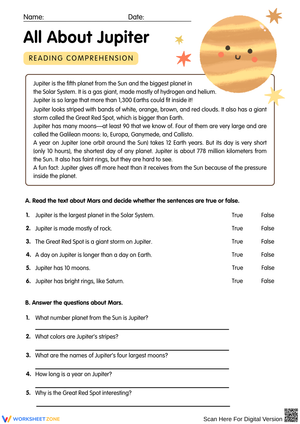
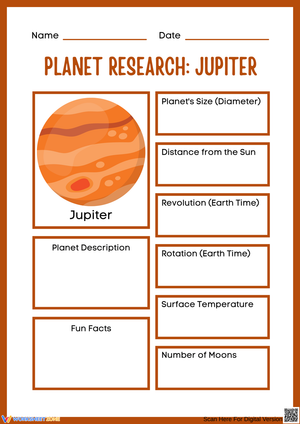
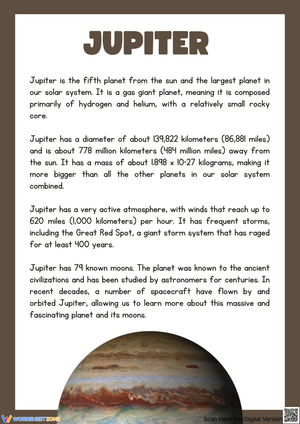
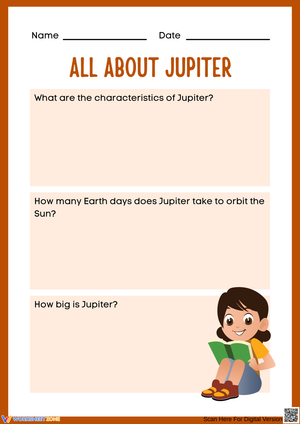
- Reading passages on specific planets or solar system bodies followed by evidence-based comprehension questions
Student Misconceptions Worth Catching Early
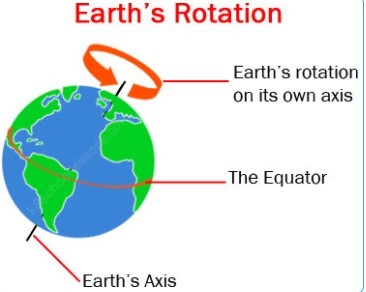
The errors that surface most reliably when students work through 6th grade space and the solar system printable worksheets tend to cluster around three ideas. First: the rotation-revolution confusion. Students can produce correct definitions on a vocabulary quiz and still write on an exit ticket that "a year is how long the Earth spins." The worksheets addressing this distinction pair a diagram-annotation step — mark the spin direction for rotation, trace the path around the Sun for revolution — with a short written explanation. That two-part sequence separates students who recognize the terms from those who can actually apply them to a model.
Scale is the second persistent problem. Students have internalized a mental image of planets arranged in a tidy, evenly spaced line, because that is what most classroom posters and textbook diagrams show. When they encounter a data table with actual orbital distances, many are genuinely surprised that the gap between Saturn and Uranus dwarfs everything in the inner solar system combined. Worksheets targeting model limits ask students to interpret simple distance ratios and then explain — in writing — why a to-scale solar system model would not fit on a classroom wall, or even on a football field.
A third error pattern shows up in constructed responses: students attribute differences in gravity to planet size rather than mass, producing answers like "Mars has weaker gravity because it is smaller than Earth." Short explanation questions in the set bring this confusion to the surface before a unit test, while there is still time to address it through reteaching.
Building These Worksheets Into Your Weekly Lesson Flow
The 6th grade space and the solar system printable worksheets in this set work best when matched to a specific instructional moment rather than handed out as general review. Early in the unit, a vocabulary-matching or basic-labeling worksheet runs in about 5 minutes at the start of class — it surfaces prior knowledge without requiring a full lecture first. Mid-unit, comparison charts and reading-response worksheets fit naturally into 15-minute station rotations, giving different groups different entry points into the same content while the teacher circulates and listens for lingering confusion.
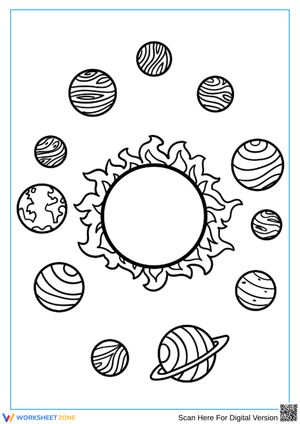
One structural approach worth building into a unit: use the same solar system diagram across several different worksheets. Students who see the same image used first for labeling, then for a comparison task, then for a short explanation question stop spending attention on decoding the layout and focus instead on the science question in front of them. That familiarity also makes growth visible — students who needed the word bank in week one rarely reach for it by week three.
For sub plans, the diagram-based worksheets with word banks are the most reliable choices because directions are self-explanatory and the visual provides enough context for students to work without clarification. On review days before an assessment, pulling three or four short worksheets into a targeted packet gives students the chance to move at their own pace, flag questions for class discussion, and still finish within a single period — which tends to work better than one broad review task that leaves fast finishers idle.
Standard Alignment
These worksheets support NGSS MS-ESS1-1 and MS-ESS1-2, which ask middle school students to develop and use models to explain patterns in the solar system — including Earth's motion, the positions of solar system objects, and cyclic phenomena such as seasons and day-night cycles. At the 6th grade level, those standards are typically introduced through model-based instruction before students are expected to generate written explanations independently. The diagram and short-response worksheets fit between those two phases: after the class has built or examined a model together, and before formal summative assessment. That placement supports a gradual transfer of explanation responsibility from teacher-led discussion to student-generated writing.
Adjusting the Set for Students at Different Readiness Levels
The most practical approach for a mixed-ability class is keeping the diagram the same and varying the written task. Every student works from the same solar system image; one group labels with a word bank, a second writes comparison statements without that support, and a third explains what the model fails to represent and why that limitation matters scientifically. The visual entry point stays consistent while the reasoning demand shifts.
For students who need additional support, reducing the question count on a worksheet — removing two or three items rather than replacing the task entirely — keeps the work connected to grade-level content without overwhelming students who slow down on text-heavy material. For students who finish early, the scale and model-limit worksheets are natural extensions: asking a student to estimate whether a true-scale solar system would fit inside the school gymnasium pushes the thinking well past what a standard labeling task demands, without requiring a separate resource. Answer keys formatted with clear numbering and predictable response types also help here — worksheets that are easy to scan make it faster to spot who needs a follow-up conversation before the next lesson.
Frequently Asked Questions
What topics do these worksheets cover?
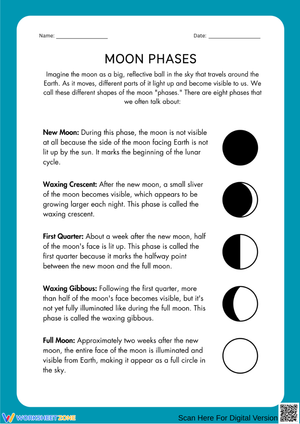
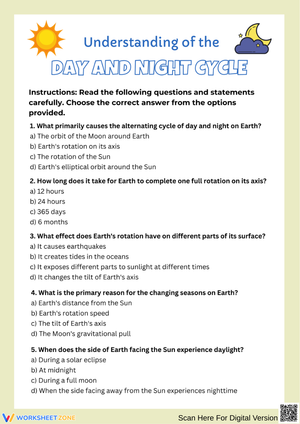
The set addresses solar system structure and object classification, comparisons between inner and outer planets, rotation and revolution, gravity and orbital motion, day-night cycles, the limits of solar system models, and core unit vocabulary. Reading passages with evidence-based comprehension questions appear across several worksheets as well.
At what point in a unit do these work best?
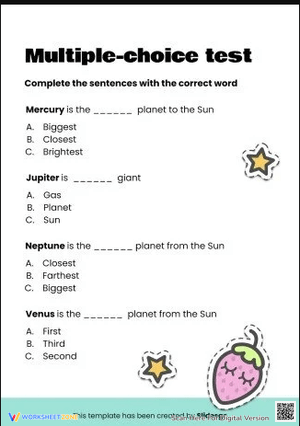
It depends on the worksheet. Labeling and vocabulary worksheets fit early in the unit, before students are expected to explain ideas in writing. Comparison charts and constructed-response worksheets are more effective mid-unit or during review, after students have encountered concepts through direct instruction or model-building. Pulling from 6th grade space and the solar system printable worksheets selectively — rather than working through the set in any fixed order — gives teachers the flexibility to match each task to where students actually are in their understanding.
Can students complete these independently for make-up work?
The diagram-based worksheets with word banks and clear written directions work well as independent make-up tasks. The constructed-response worksheets are better assigned after a student has rejoined class instruction, since those questions draw on model-based discussions and observations that an absent student may have missed.
Do these align to NGSS?
Yes. The skills across the set align directly to MS-ESS1-1 and MS-ESS1-2. Both standards center on pattern recognition and model use — which is exactly what the diagram-interpretation and short-explanation tasks ask students to practice across the unit.












 Interactive Worksheet Maker
 Quiz Maker
 Word Search Maker
 Crossword Puzzle Maker
 Word Scramble Generator
 Sentence Scramble Generator
 Handwriting Worksheet Generator
 Name Tracing Generator
 Fill In The Blank Generator