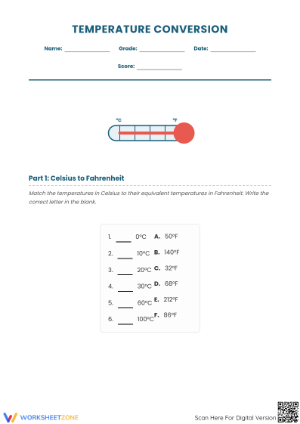
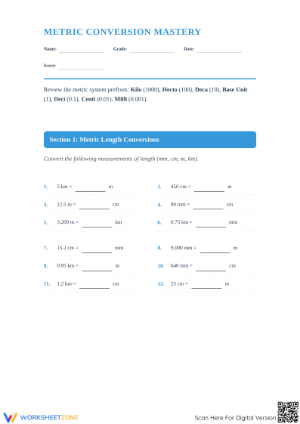
These measurement worksheets for 6th grade give teachers a ready collection of printable practice resources covering unit conversions, area of polygons, volume, surface area, and real-world word problems — all print-ready with answer keys included. The set spans the major measurement strands in 6th grade math, so teachers can pull exactly what a class needs rather than working around irrelevant content.
What Each Worksheet in the Set Covers
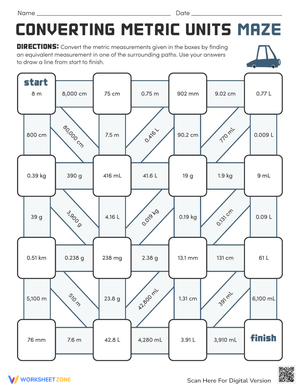
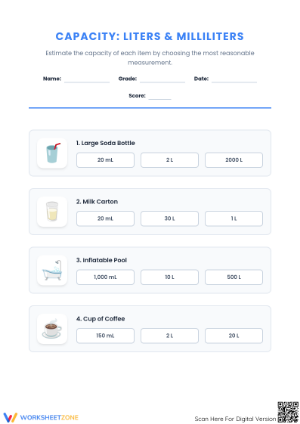
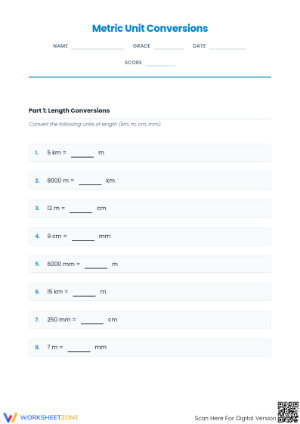
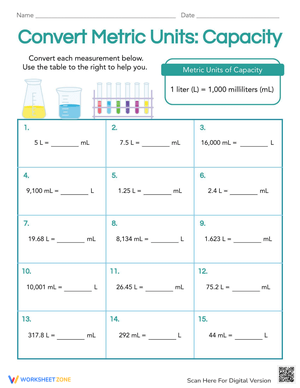
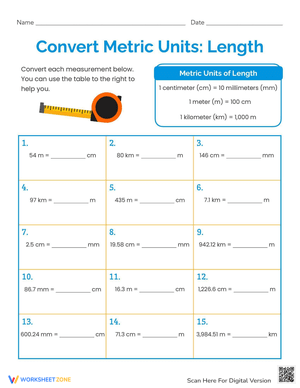
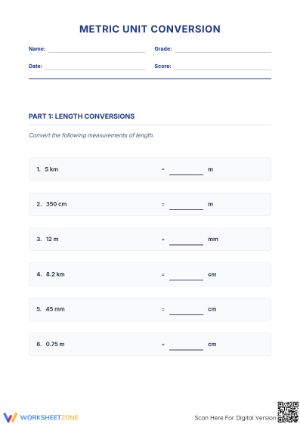
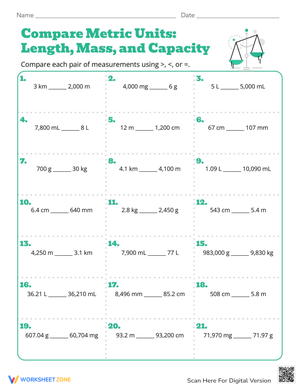
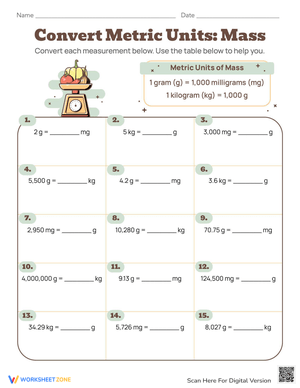
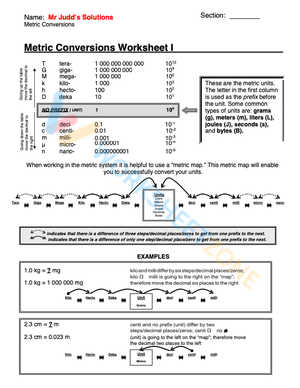
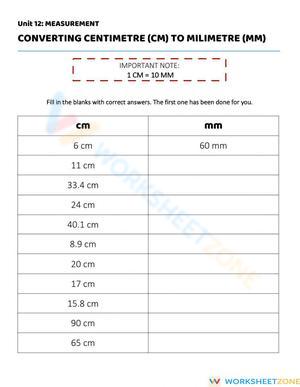
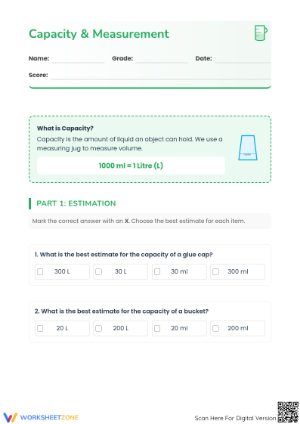
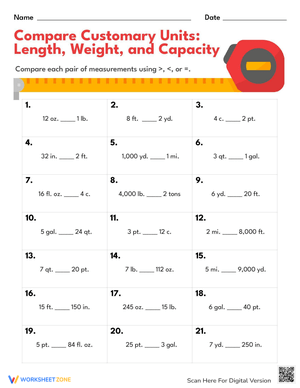
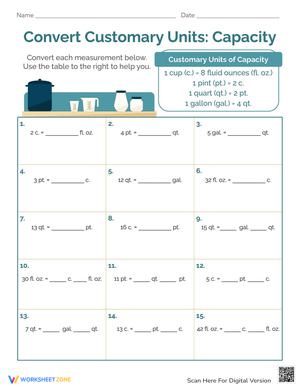
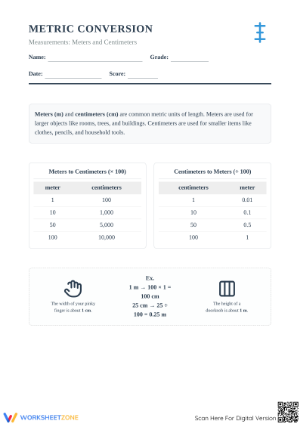
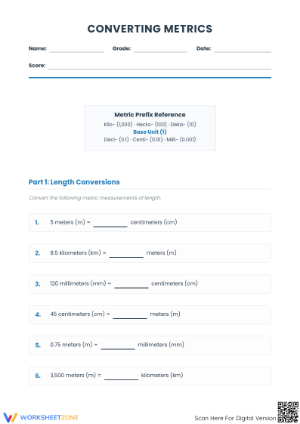
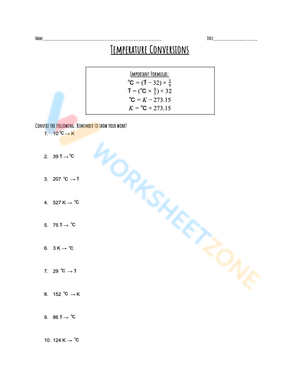
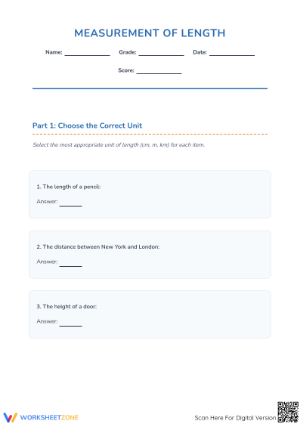
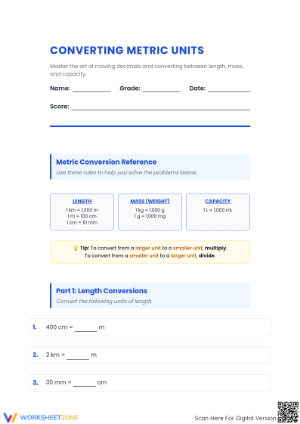
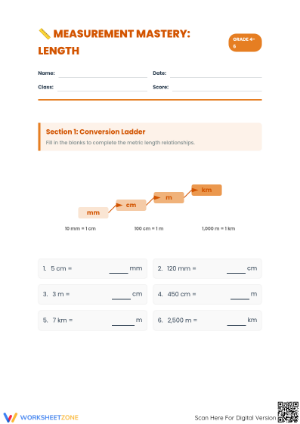
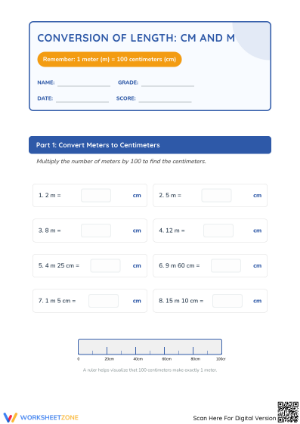
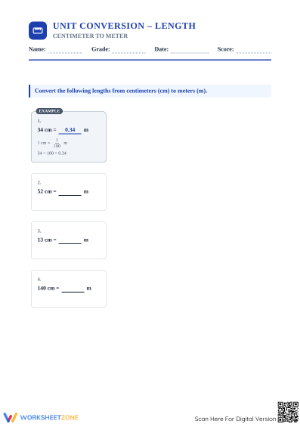
Conversion practice is the biggest single need at this grade level. The conversion worksheets address both customary and metric units — length, capacity, and mass — and they include problems that run in both directions: converting to smaller units and converting to larger units. That bidirectional structure matters because students who have only practiced converting to smaller units tend to apply multiplication automatically, even when the problem requires division. The worksheets make the direction decision an explicit step rather than leaving it buried in a fill-in routine.
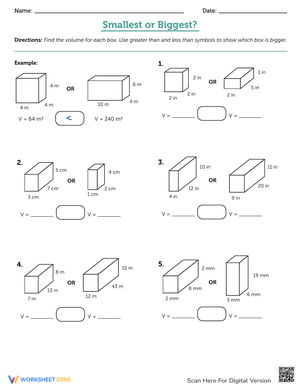
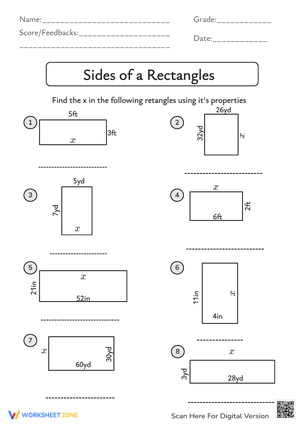
Area worksheets begin with rectangles and triangles, then extend to composite figures. Each worksheet includes labeled diagrams with at least one missing dimension that students calculate before applying a formula, which keeps the geometry from collapsing into pure arithmetic. Volume worksheets start with unit-cube counting before introducing V = lwh, preserving the conceptual meaning of the formula rather than treating it as a procedure to memorize. Surface area worksheets pair nets with assembled figures — students who can follow a net but lose track of faces when looking at a drawn prism need that visual connection made explicit, and these worksheets do it directly.
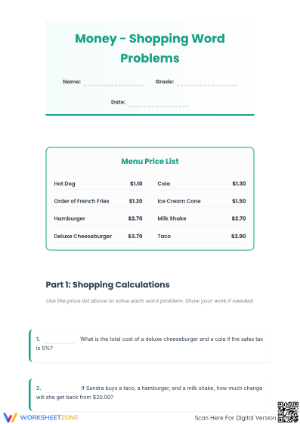
Word problems are distributed throughout the set rather than collected at the end. Contexts include container capacity, room dimensions, distance problems, and material estimation tasks — the kind of situations where students must choose a measurement concept, select a formula, and check whether the answer makes sense in context.
Where 6th Graders Predictably Go Wrong
The most reliable conversion error is applying the conversion factor in the wrong direction. A student who can recite "there are 1,000 meters in a kilometer" will still write 3,500 ÷ 1,000 when converting 3,500 meters to kilometers — which happens to be correct — and then write 3.5 ÷ 1,000 when converting 3.5 kilometers to meters, arriving at 0.0035 instead of 3,500. The error is not forgetting the relationship; it is treating division as the default operation regardless of which direction the conversion runs. Problems that pair both directions within the same worksheet force students to make that decision on every item, which surfaces the confusion before it hardens into habit.
With composite area figures, a large share of students add all the outer edge lengths instead of decomposing the shape and summing the interior areas. The result is an answer reached through addition — the right operation for perimeter — applied to an area question. These worksheets include interior partition lines drawn into composite figures, but some students ignore those lines entirely and need a direct conversation about decomposition before they can work independently.
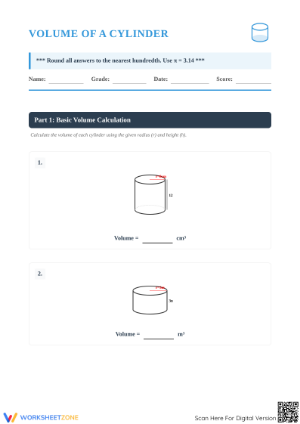
Volume and surface area produce a persistent formula mix-up. Students apply V = lwh when a question asks for surface area, or they sum the six face areas when a question asks for volume. This is especially common when both topics appear in the same unit and feel like parallel procedures. The word problems in this set ask students to write what they are finding — volume or surface area — before recording any numbers, which moves that distinction from implied to explicit and reduces the mix-up considerably.
Fitting These Worksheets Into Your Planning Routine
The focused-skill structure makes it straightforward to match a worksheet to what the class actually needs. After direct instruction on area of triangles, assign the corresponding area worksheet for independent practice while circulating — the problems move from straightforward labeled diagrams to figures with missing dimensions, so it becomes clear quickly where students stall. For bell work, three or four conversion problems at the start of a lesson on ratio reasoning serve double duty: conversions and ratio reasoning share the same underlying multiplicative structure, so that 10-minute warm-up does real preparatory work rather than just filling time.
Some specific situations where these resources hold up well: small-group intervention, where the answer key lets you check a student's first three problems in under a minute and redirect before they repeat the same error across the full set; sub plans, where the included examples and clear directions allow students to work without a teacher present; and Friday review blocks, when a mixed word-problem worksheet covering conversions, area, and volume simultaneously serves as a low-stakes check before the weekend. Keeping printed sets of measurement worksheets for 6th grade organized by skill area — one folder for conversions, one for area, one for volume and surface area, one for word problems — means responding to an exit ticket result takes seconds rather than a search through a drawer.
Standard Alignment
Conversion worksheets address CCSS 6.RP.A.3d, which asks students to use ratio reasoning to convert measurement units. That standard belongs to the Ratios and Proportional Relationships domain, so conversion practice builds ratio fluency at the same time it builds measurement skill — useful overlap during a unit where instructional time is limited. Assigning a conversion worksheet early in the 6.RP.A.3 sequence gives students a familiar context (units they already recognize) for a new way of thinking (ratio tables and scaling), which makes the ratio structure easier to see.
The geometry measurement worksheets align to CCSS 6.G.A.1 (area of triangles, quadrilaterals, and polygons), 6.G.A.2 (volume of right rectangular prisms), and 6.G.A.4 (surface area using nets). These standards typically appear in the second half of the school year, after ratio and expression work. A first area worksheet that includes both rectangle and triangle area problems side by side helps students see b × h ÷ 2 as an extension of what they already know rather than a separate formula — which lowers the cognitive load on the first day of 6.G.A.1 instruction.
Working the Set Across Different Learner Levels
For students who need more structured support, the entry point is the identification step, not the computation. On conversion worksheets, have them write the conversion relationship first (1 km = 1,000 m), identify the direction, and only then substitute numbers. Letting them keep a unit reference chart visible until the relationships become automatic produces faster gains than drilling without one. On area worksheets, have them label the base and height on the diagram and write the formula before substituting values — that three-step sequence reduces the number of decisions students carry in working memory at once.
Students ready for more challenge get the most out of multi-step word problems and items involving missing dimensions, where finding the missing value requires reversing the formula. Ask them to write a sentence explaining why their answer is reasonable — "I know this can't be right because 2 square meters is smaller than the surface of the table in the problem" — before moving on. That habit of evaluating reasonableness shows up directly on 6th grade assessments. These measurement worksheets for 6th grade support that extension naturally because the word problem contexts have enough real-world grounding for students to evaluate whether an answer makes sense rather than just record it.
Frequently Asked Questions
What measurement topics appear most often on 6th grade assessments?
Unit conversions, area of triangles and polygons, and volume of rectangular prisms are the most common. Surface area using nets also appears regularly. Assessment items at this grade typically present multi-step problems rather than isolated procedures, so practice that connects conversion and geometry reasoning — rather than treating them as entirely separate skills — is worth building into a regular rotation throughout the year.
Do these worksheets cover both customary and metric units?
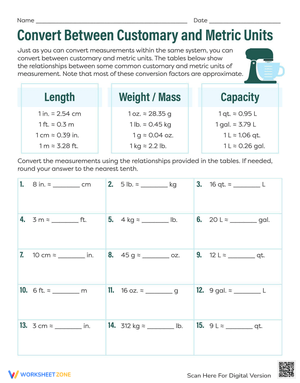
Yes. The conversion worksheets address both systems. Some worksheets focus on one system at a time, which is useful when students are first sorting out metric prefixes or customary capacity units. Others mix both, which matches how many assessment items are written and prepares students to shift between unit types without a heads-up in advance.
Can I use these worksheets for intervention without creating separate materials?
The skill-focused structure makes intervention practical without extra prep. Pull the conversion worksheet for a student who keeps inverting the operation, or the area worksheet for a student conflating perimeter and area. The answer keys let you check the first few problems quickly and give targeted feedback before the student works through the rest incorrectly. Adjusting how you use the existing worksheets — reference chart visible, formula written before computing, one problem at a time — handles most support needs without building anything new.
How do these worksheets hold up for homework assignments?
Focused skill worksheets work well for homework after a lesson where students have already practiced in class. Short conversion or area practice reinforces the day's instruction without overwhelming students who need processing time. Word problem worksheets are better reserved for class time or math centers, where students can ask questions when a context is unclear or a multi-step problem stalls them mid-way through.
Are these resources suitable for both support groups and advanced students in the same period?
The measurement worksheets for 6th grade in this collection work across ability levels because the skill focus stays consistent while the problem complexity increases within each worksheet. Students working on foundational procedures handle the early items; students ready for extension move into the multi-step problems and open-ended word problems at the back of each set. The answer keys keep you free to circulate rather than anchored at one group.













 Interactive Worksheet Maker
 Quiz Maker
 Word Search Maker
 Crossword Puzzle Maker
 Word Scramble Generator
 Sentence Scramble Generator
 Handwriting Worksheet Generator
 Name Tracing Generator
 Fill In The Blank Generator