




























Views
Downloads
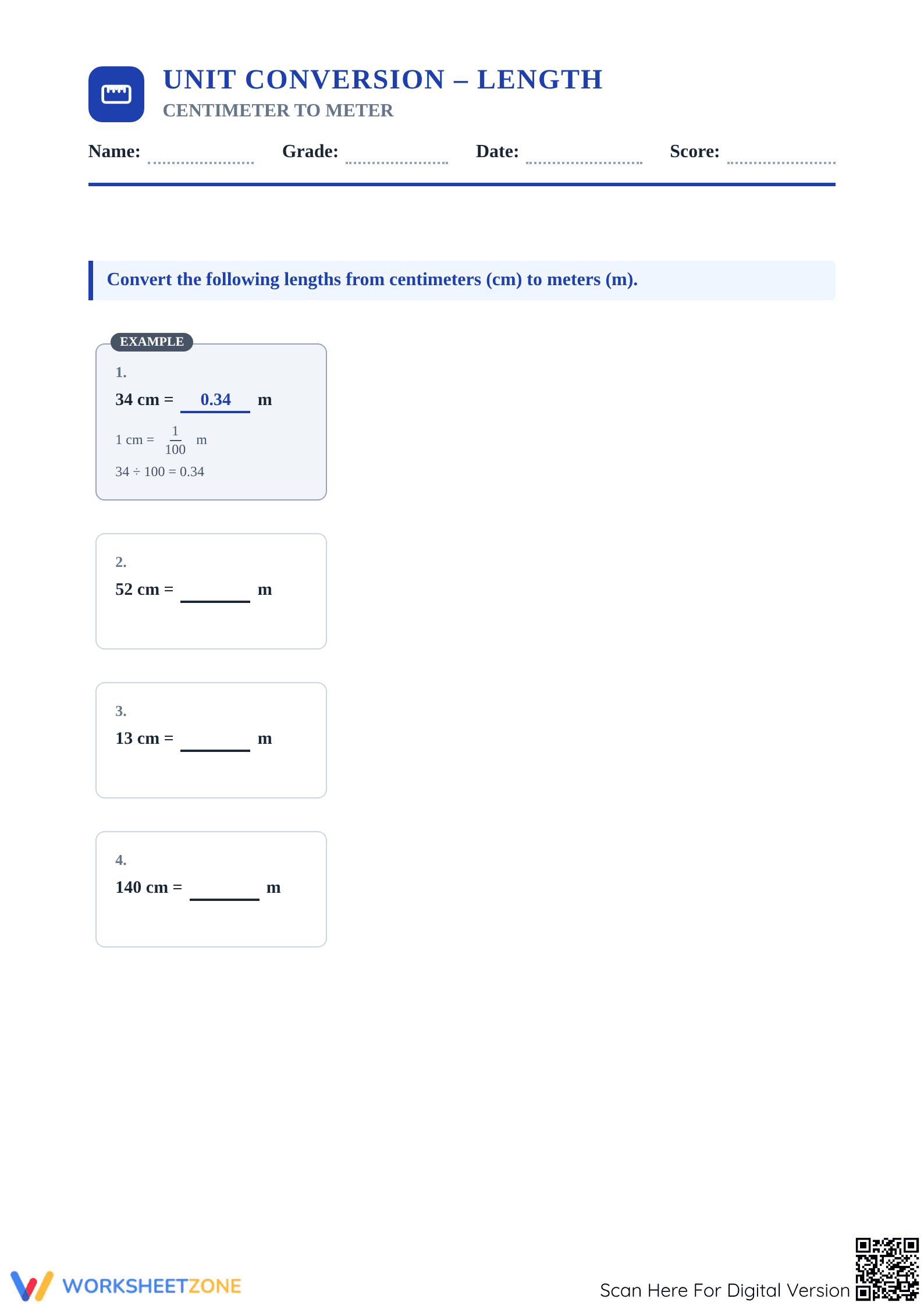
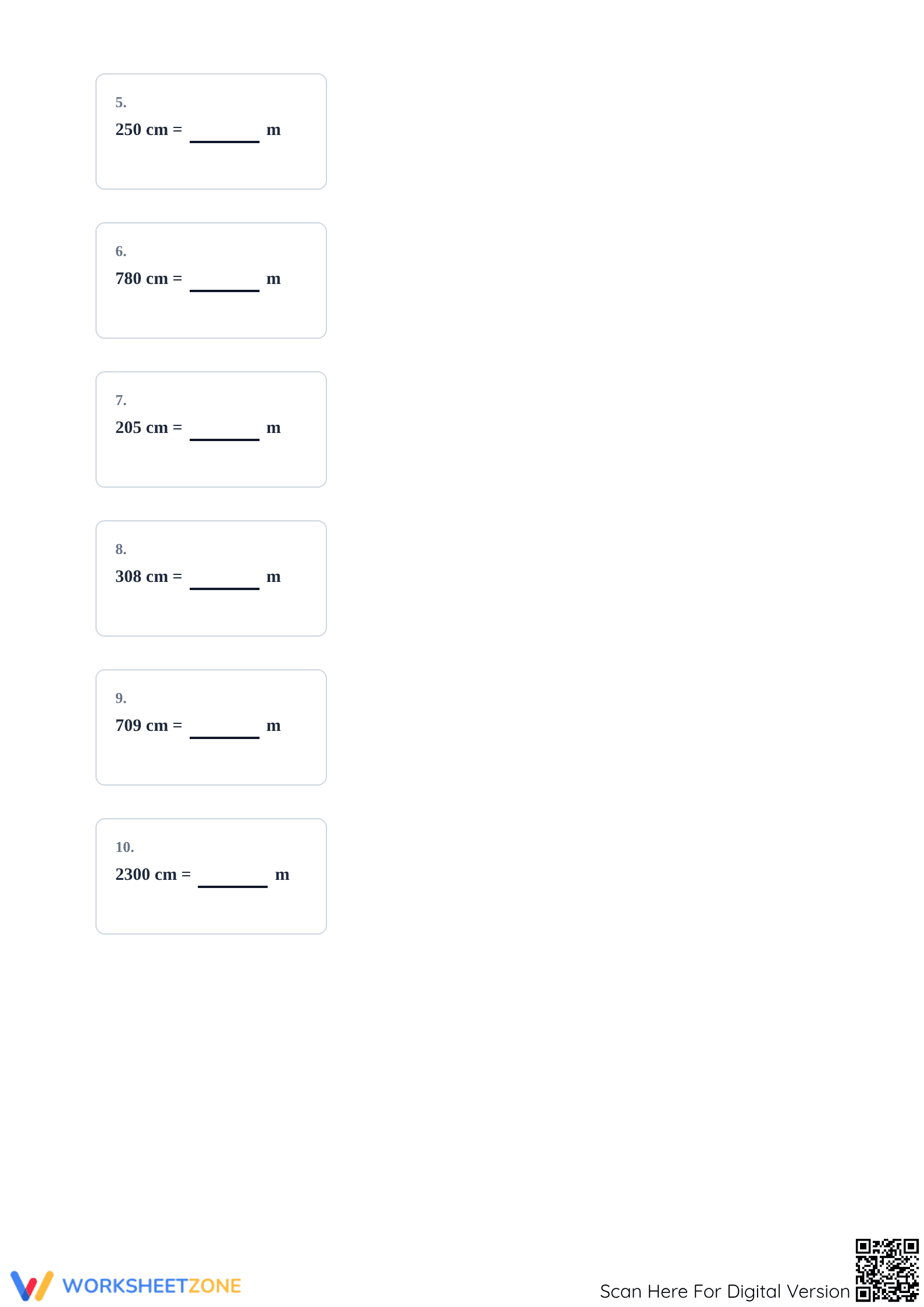
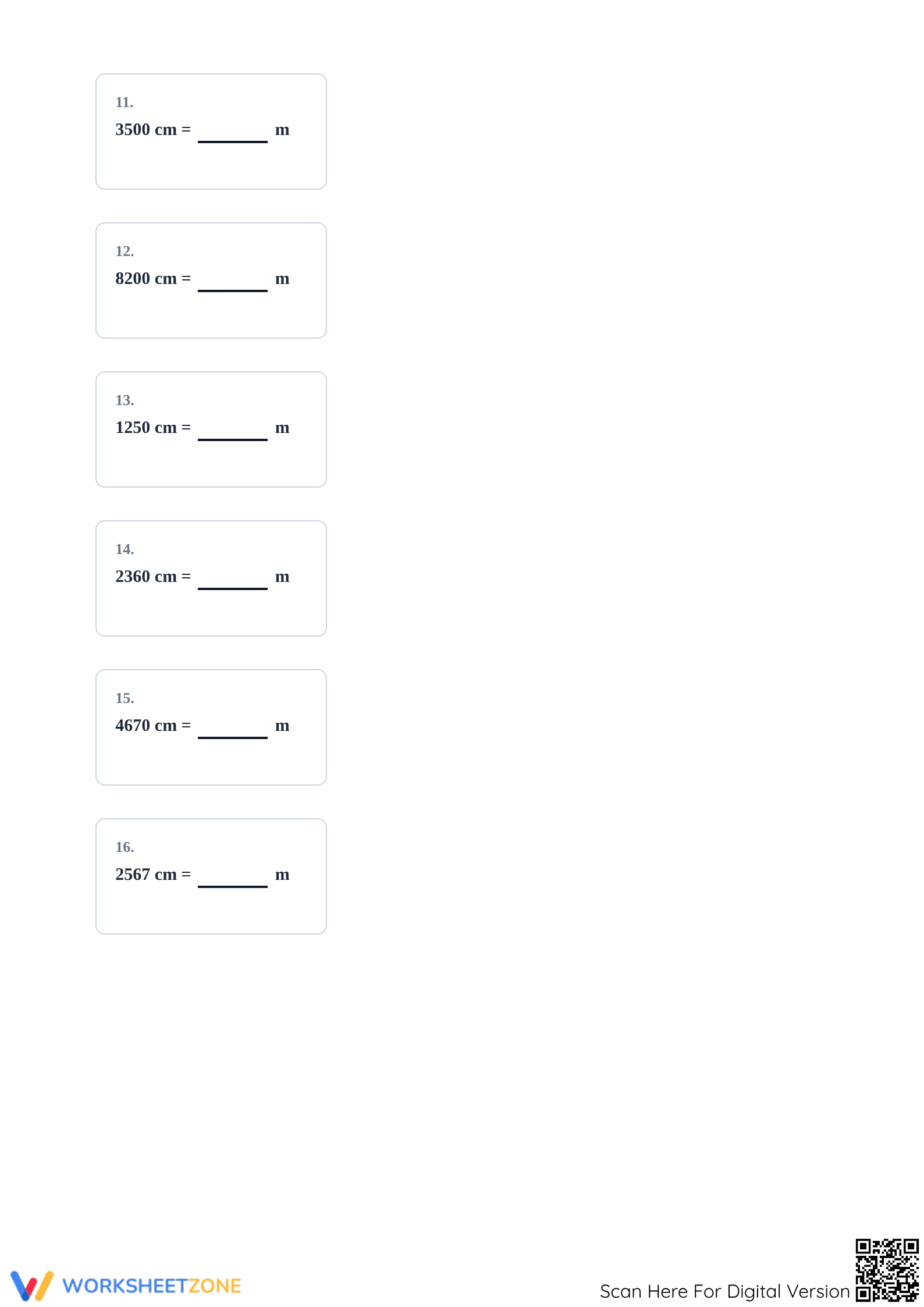
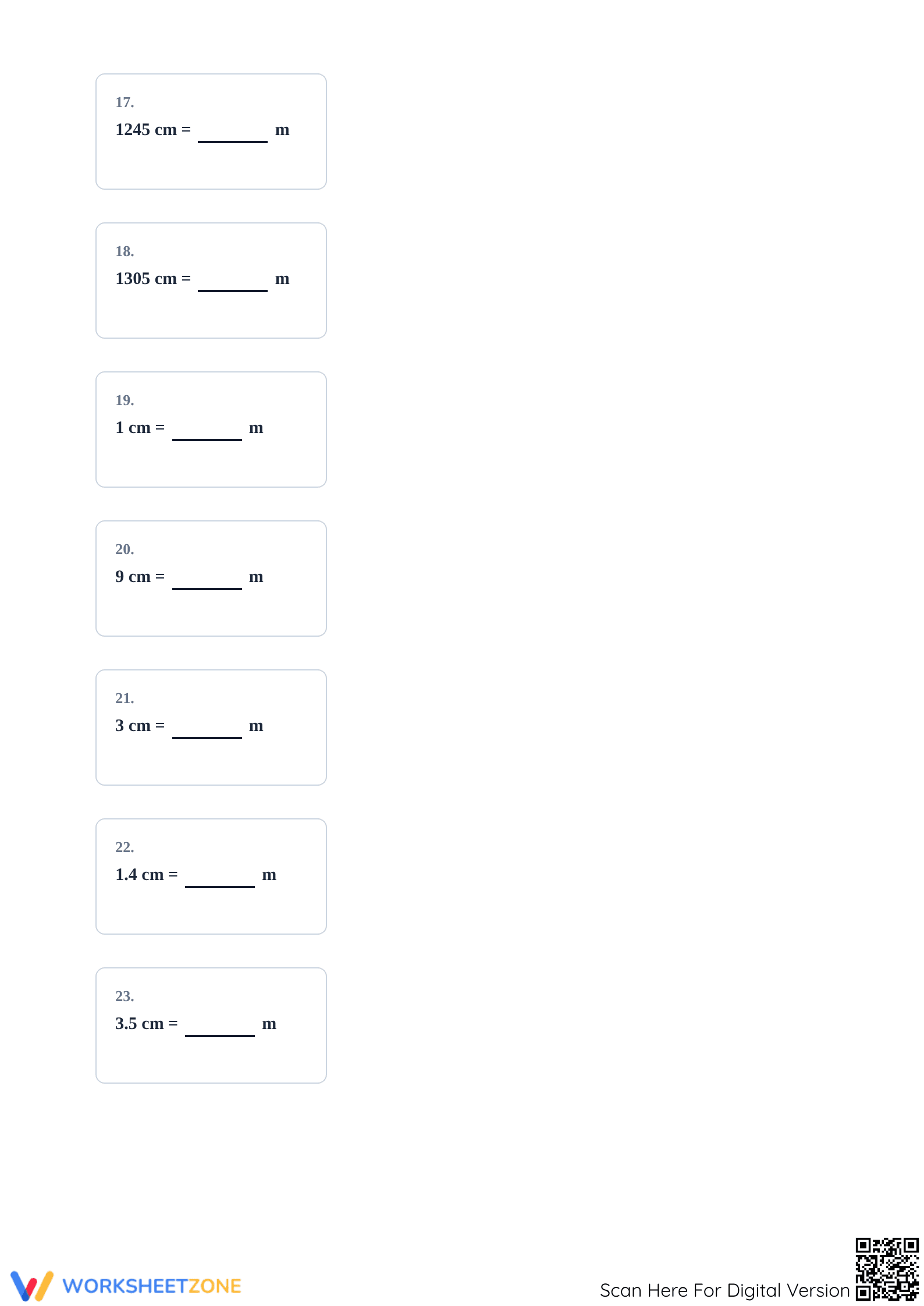


Printable Centimeters to Meters Worksheet | Grade 6-10

Paste this activity's link or code into your existing LMS (Google Classroom, Canvas, Teams, Schoology, Moodle, etc.).
Students can open and work on the activity right away, with no student login required.
You'll still be able to track student progress and results from your teacher account.
Mastering Length Conversions
This comprehensive metric conversion worksheet empowers middle and high school students to master the transition from centimeters to meters. By providing structured practice with length units, this resource ensures learners develop the fluency required for scientific calculations and real-world measurement applications. Students will gain confidence in shifting decimal points and understanding the base-ten nature of the metric system.
At a Glance
- Grade: 6–10 · Subject: Math · Measurement
- Standard:
CCSS.MATH.CONTENT.6.RP.A.3.D— Use ratio reasoning to convert and transform measurement units appropriately- Skill Focus: Centimeter to Meter Conversion
- Format: 5 pages · 24 problems · Answer key included · PDF
- Best For: Homework, bell-ringers, and remediation
- Time: 20–30 minutes
What's Inside
This 5-page PDF contains 24 total conversion tasks, beginning with a clear, worked example on the first page to model the required steps. The layout provides ample white space for students to show their work, whether they choose to use division by 100 or decimal-shifting strategies. A complete, five-page answer key is included, allowing for rapid grading or student self-correction during independent study.
Zero-Prep Workflow
This resource is designed for immediate classroom implementation with minimal teacher effort. Simply print the document in less than thirty seconds and distribute it directly to your students. Because the worksheet includes a self-explanatory example and clear instructions, teacher setup is nonexistent. You can review the completed work in under two minutes using the provided answer key, making this an ideal sub-plan or emergency lesson resource.
Standards Alignment
The primary standard addressed is `CCSS.MATH.CONTENT.6.RP.A.3.D`, which requires students to use ratio reasoning to convert measurement units and manipulate units appropriately. This worksheet also supports foundational mastery of `CCSS.MATH.CONTENT.5.MD.A.1` by requiring multi-step conversion logic. Both standard codes can be copied directly into lesson plans, IEP goals, or district curriculum mapping tools to ensure instructional coherence and compliance.
How to Use It
Deploy this worksheet as a formative assessment immediately after a direct instruction lesson on metric prefixes to gauge student understanding of the "centi" and "milli" scales. Alternatively, use specific pages as targeted exit tickets during the measurement unit. Teachers should observe whether students are correctly placing the decimal point in whole-number conversions versus decimal inputs, as this identifies common misconceptions regarding place value.
Who It's For
This resource is tailored for students in grades 6 through 10 who are refining their mathematical fluency or preparing for laboratory-based science courses. It serves as an excellent differentiation tool for learners requiring extra repetitions of length conversions or as a review for older students before starting physics or chemistry units. It pairs naturally with a metric ruler anchor chart or a mnemonic guide for metric prefixes.
According to the EdReports 2024 analysis, instructional materials that provide high-volume, focused practice on single-skill conversions are essential for building the cognitive automaticity required for higher-order mathematical modeling. This worksheet focuses on the specific relationship between centimeters and meters, aligning with research that suggests isolating variables helps students internalize the decimal-based structure of the metric system without cognitive overload. By solving 24 varied tasks, students move from guided recognition to independent mastery of length transformations. This alignment with `CCSS.MATH.CONTENT.6.RP.A.3.D` ensures that students are not merely memorizing steps but are instead applying ratio reasoning to physical quantities. Educational experts emphasize that consistent exposure to these fundamental skills reduces errors in complex science and engineering problems where unit consistency is paramount. This resource provides the necessary scaffolding to bridge the gap between basic arithmetic and professional-grade measurement precision.


