These 6th grade nonfiction worksheets give ELA teachers a targeted set of informational reading tasks built around skills that actually appear in grade-level instruction — central idea, textual evidence, text structure, author's purpose, and vocabulary in context. Each worksheet pairs a substantive passage with text-dependent questions that send students back into the text rather than letting them coast on prior knowledge. Passages span science, history, biography, and current-issue topics, which gives the set enough variety to match different curriculum units or fill gaps in independent reading practice.
The Specific Skills Each Worksheet Targets
Grade 6 informational reading demands a narrow and high-stakes set of skills. Students at this level are expected to read closely enough to explain not just what a text says, but how it develops an idea and why certain word choices matter. Each worksheet focuses on one or two of those skills — not a survey of everything — so that both practice and assessment stay clear.
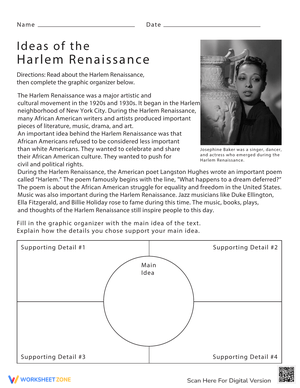
- Central idea and supporting details: Students identify the main point of the passage and explain how specific details reinforce it. The task requires more than underlining a topic sentence — students write a central idea statement in their own words.
- Textual evidence: Students locate a relevant quotation or paraphrase, then explain in a complete sentence why that evidence supports a claim. The two-part structure forces both retrieval and reasoning.
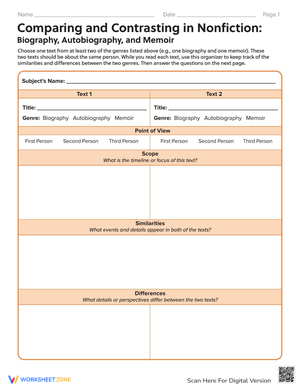
- Text structure: Students identify whether the author used cause and effect, problem and solution, compare and contrast, or sequence — and explain how recognizing that pattern helps them understand the passage's argument.
- Author's purpose: Students determine whether the author aimed to inform, persuade, or explain, then point to specific choices in the text that reveal that purpose.
- Vocabulary in context: Students read a sentence containing a domain-specific or academic word, consider surrounding context clues, and write a meaning in their own words — not a dictionary definition.
- Summarizing: Students condense the passage to three to five key ideas without adding opinion or repeating the same detail twice.
Keeping each worksheet focused on one or two skills means teachers can actually use the responses to make instructional decisions. When an entire class misses the same question type, that pattern points directly to the next day's mini-lesson topic.
Mistakes Students Make on Nonfiction Tasks — and Why They Matter
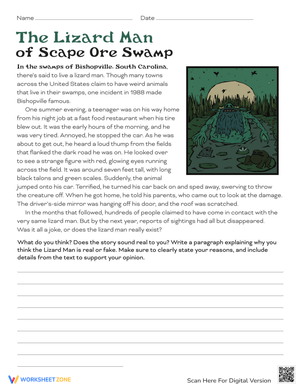
The most common central idea error at sixth grade is anchoring to the first sentence of the passage and treating it as the main point — even when the actual central idea requires synthesis across the whole text. A student can read a passage about the water cycle carefully, then write "This text is about water" as the central idea, because they have never been pushed to distinguish a topic from an argument. That's not confusion — that's a missing concept, and it shows up in virtually every class at this level.
Evidence selection is the other consistent failure point. Students who find a relevant sentence will copy it verbatim and stop there, skipping the explanation of why the evidence is meaningful. The response looks complete — quote and claim are both present — but the reasoning that connects them is missing entirely. Each worksheet in this set addresses that by requiring a two-step written response: cite the text, then explain the connection in the student's own words. That format makes it obvious, to both teacher and student, when the second step is absent.
Vocabulary in context generates a third pattern worth watching: students who ignore surrounding sentences and guess from their knowledge of the root word. A student who knows that "migrate" relates to movement will write "to move" for a nuanced sentence about economic migration — technically not wrong, but far less precise than what the question requires. Passages here include enough context around key terms that students who actually read the neighboring sentences will consistently arrive at a more specific and accurate answer.
Fitting These Worksheets Into Your Weekly Lesson Plans
These 6th grade nonfiction worksheets work well in multiple lesson slots without requiring heavy setup. The most reliable use is as independent practice immediately after a direct-instruction mini-lesson: teach the target skill briefly, then let students apply it to a fresh passage on their own. That sequence is more effective than teaching and assessing with the same passage students already annotated as a class — the new text reveals whether the skill transferred, or whether students were pattern-matching to the discussion.
- Bell ringers: Assign the first two paragraphs of a passage and one text-structure question. Students work for eight minutes while attendance is taken, then review together before the lesson begins.
- Small-group reteach: Pull four to six students who missed a skill on a recent formative check. Read the passage in sections aloud, answer one question at a time, and discuss before anyone writes.
- Reading stations: One station pairs a worksheet with colored pencils — students mark causes in one color, effects in another, before answering the questions. The annotation step slows down impulsive readers productively.
- Friday review: Collect a full worksheet at the end of the week. Sort responses into three piles — strong evidence use, partial evidence use, no evidence — and those piles become the groupings for Monday's small-group work.
- Sub plans: Familiar question formats and clear written directions mean students can work independently. Two or three worksheets in a packet rarely require additional explanation beyond what's already on the page.
Adjusting Each Worksheet for Students at Different Reading Levels
The most practical differentiation move is keeping the same passage for the whole class while adjusting the question set. Students who are reading below grade level handle the same informational text — same language, same complexity — but answer questions that require a clear single-step response: identify the central idea, or find the sentence where the author states the problem. Students who are reading at or above grade level extend into analysis: explain how the text structure develops the central idea, or compare the author's framing with a perspective students already know from a previous unit. Shared text, different cognitive demand.
A few other adjustments that preserve access without lowering the work:
- Before students read, briefly define three to four domain-specific words — not every unfamiliar term, just the ones that would block comprehension of key sentences.
- For multilingual learners, add a stop-and-check after each passage section: one sentence describing what just happened in the text. This breaks the stamina demand into smaller intervals without changing the reading itself.
- Offer sentence starters only for evidence-based written responses, not for identification tasks. Students who have a model for "The author states ___ which shows that ___" can direct their effort toward finding and explaining evidence rather than generating the format from scratch.
- Let students talk through an answer with a partner before writing. The conversation often reveals exactly where the breakdown is — comprehension, language production, or confidence — which guides the teacher's follow-up during the check-in.
These 6th grade nonfiction worksheets use a consistent layout across the set, which makes differentiation less disruptive. Every student sees the same heading structure and question format, even when the specific tasks differ by level. Students who receive additional support are not working from a visually different document.
Standard Alignment
These worksheets align directly to three anchor standards from the Common Core State Standards for English Language Arts at the sixth-grade level:
- CCSS.ELA-LITERACY.RI.6.1 — Students cite textual evidence to support analysis of what a text says explicitly and what can be inferred from it. Every worksheet that asks students to explain their reasoning or support a claim with a quotation addresses this standard.
- CCSS.ELA-LITERACY.RI.6.2 — Students determine the central idea of a text and how it is conveyed through particular details, then provide a summary that is distinct from personal opinion. Central idea worksheets in this set target this standard directly, and the two-part response format — state the idea, then explain which details develop it — maps directly to the standard's language.
- CCSS.ELA-LITERACY.RI.6.5 — Students analyze how a particular sentence, paragraph, or section fits into the overall structure of a text and contributes to the development of ideas. Text structure worksheets connect here and typically appear in units where students read longer nonfiction — scientific articles, historical narratives, argumentative essays — and need practice identifying structural patterns before they begin writing their own.
In most grade 6 ELA pacing guides, these three standards appear in the first and second quarter, when informational reading units are front-loaded before argument writing takes over in the second half of the year. That timing makes this set especially useful as a first-quarter practice tool, when teachers are establishing the close reading habits that carry through the rest of the year.
Frequently Asked Questions
Can these worksheets be used in intervention or resource room settings?
Yes. The focused skill design — one or two targets per worksheet rather than a survey of comprehension tasks — works well in intervention settings where teachers need to address specific gaps without overwhelming students. A resource room teacher can work through the evidence-based response questions one at a time, modeling each step before the student attempts it independently. The consistent format also reduces the cognitive overhead of figuring out what a new worksheet is asking.
How long does a typical worksheet take to complete?
Most sixth graders finish a full passage and question set in 20 to 35 minutes, depending on reading stamina and the depth of written response required. Bell-ringer uses — where only the opening section of a passage is assigned — typically run 8 to 12 minutes. Teachers using these in a 40-minute block usually build in five minutes at the end to review at least one written response together before the period closes.
Are the passages appropriate for students reading below grade level?
The passages are written at a grade 6 text complexity level, which is intentional. Students who read below grade level still need consistent exposure to grade-appropriate informational text — reducing the text's complexity removes the very thing they need practice with. The adjustment for those students comes through question design, teacher support, and the structured response prompts described in the differentiation section, not by replacing the passage with something easier.
What should teachers preview before printing a full class set?
Print one or two worksheets first to check that the layout fits your printer margins and that the question format matches your current instructional focus. Teachers who are using a 6th grade nonfiction worksheets set for the first time often find it useful to work through the questions themselves before distributing — this surfaces vocabulary that may need pre-teaching and helps anticipate where students are likely to get stuck, particularly on the evidence-explanation step.












 Interactive Worksheet Maker
 Quiz Maker
 Word Search Maker
 Crossword Puzzle Maker
 Word Scramble Generator
 Sentence Scramble Generator
 Handwriting Worksheet Generator
 Name Tracing Generator
 Fill In The Blank Generator