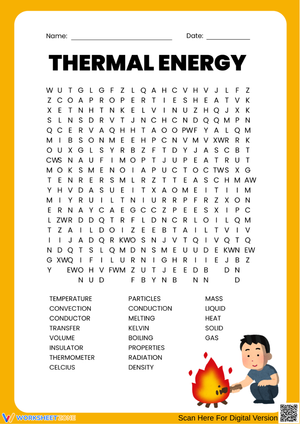
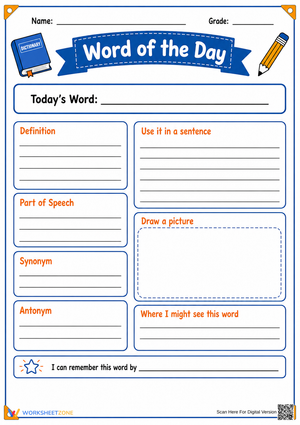
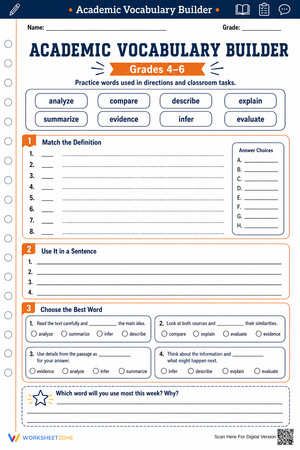
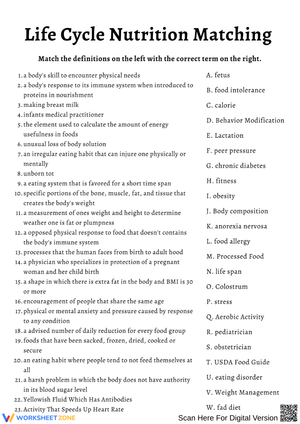
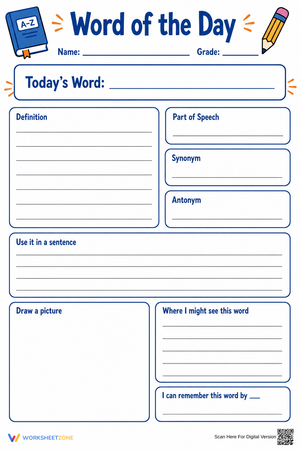
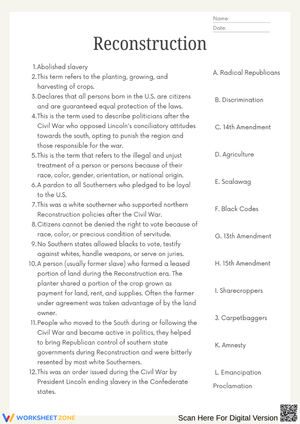
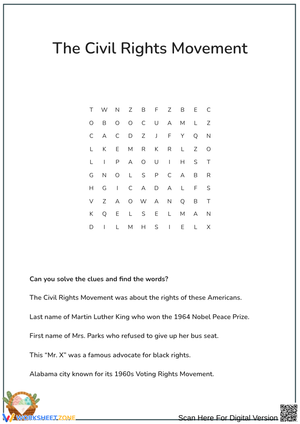
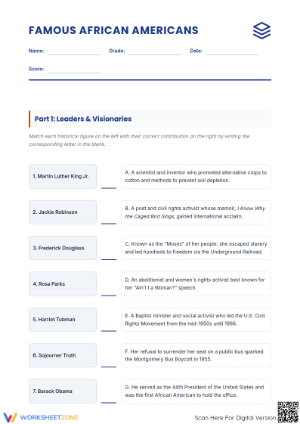
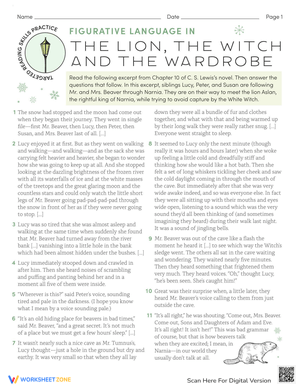
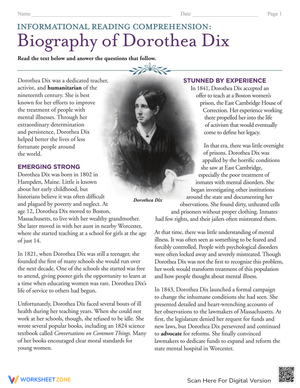
Sixth grade students are expected to figure out meaning from context, break down unfamiliar words using roots and affixes, and apply general academic vocabulary across every subject they take. Vocabulary worksheets that only ask students to match a word to a definition miss most of what the grade-6 standards actually require. A stronger set of worksheets moves students through several related skills in the same unit: reading a sentence for clues, recognizing a Latin or Greek root, and then using the word correctly in their own writing.
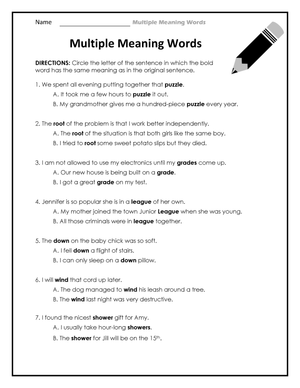
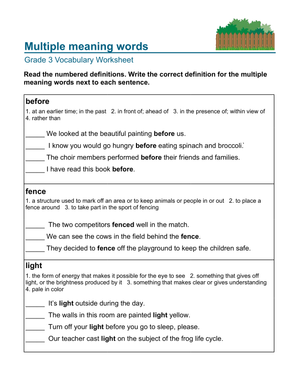
CCSS.ELA-LITERACY.L.6.4 specifically requires students to determine or clarify the meaning of unknown and multiple-meaning words using context, common Greek and Latin affixes and roots, and reference materials. That single standard covers three distinct strategies, which is why a single worksheet rarely does the job. Teachers get better results when they build a short sequence of worksheets that isolates each strategy first, then combines them in a culminating task.
Context Clues: The First Line of Attack for Unknown Words
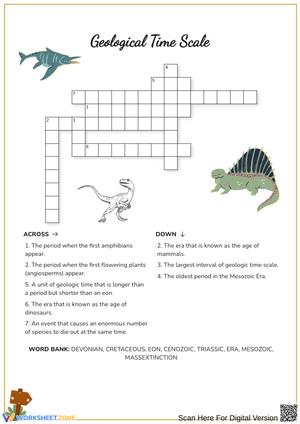
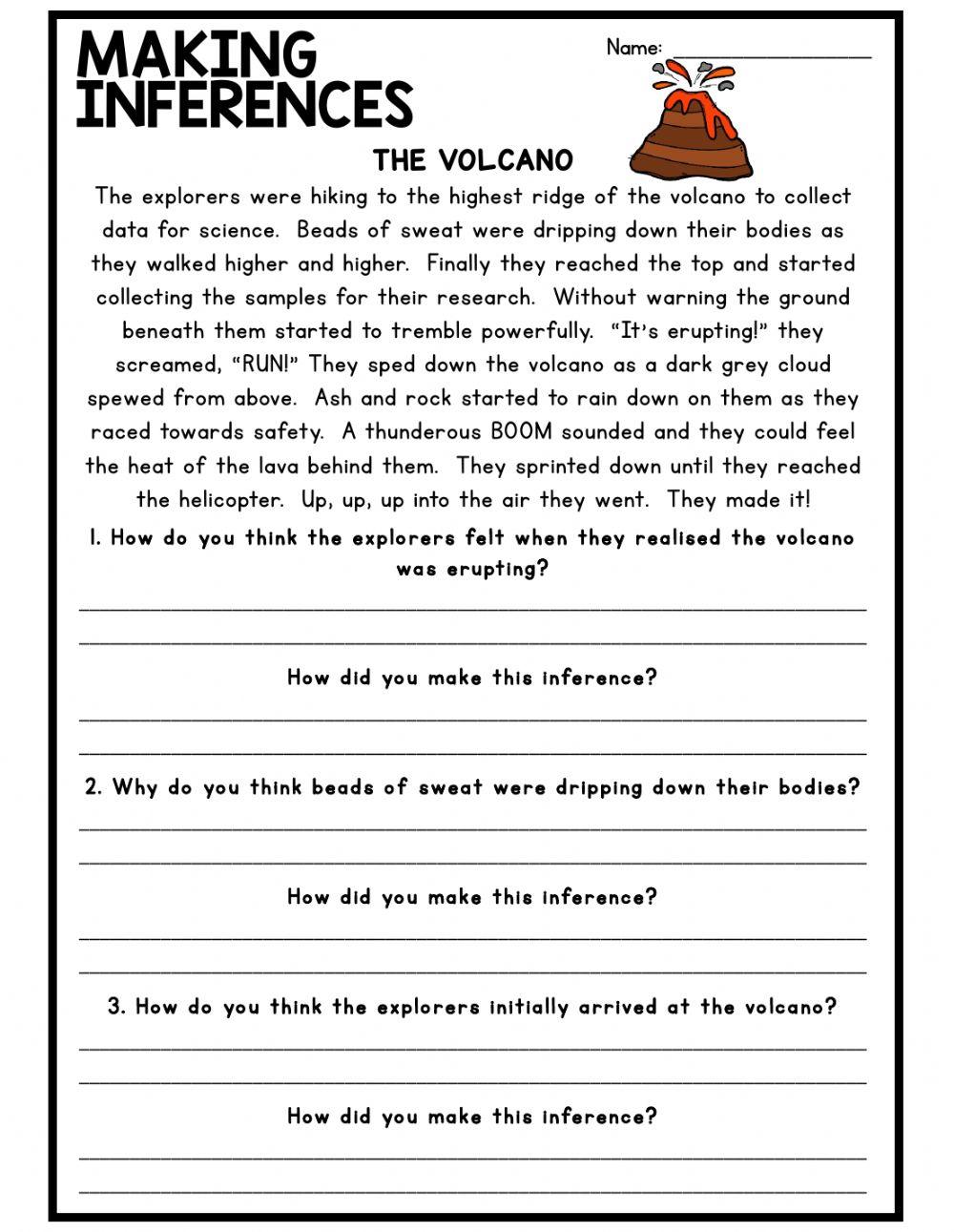
Context-clue worksheets remain one of the most requested resources for grade 6 because they train a habit students will use for the rest of their reading lives. Effective worksheets present a target word inside two or three sentences of surrounding text, then ask students to identify the specific words or phrases that hint at meaning. Rather than asking students to simply select the correct definition from a list, stronger worksheets ask them to underline the clue and explain their reasoning in a sentence. This forces active reading instead of guessing.
When you choose or build context-clue worksheets for 6th graders, look for passages pulled from science and social studies content rather than only narrative fiction. Students at this age are reading more informational text, and the vocabulary demands are different. A worksheet that pairs a science passage about ecosystems with unfamiliar terms like adaptation or symbiotic gives students authentic practice while also reinforcing content-area learning.
Greek and Latin Roots: Teaching Word Parts as a System
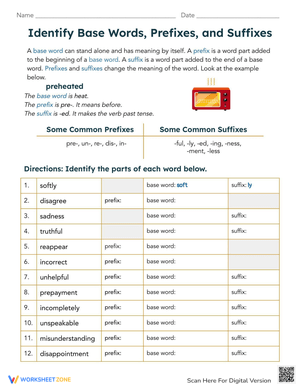
Root-word worksheets work best when they are organized by family rather than presented as a random list. Common sixth grade roots include audi- (to hear), bene- (good), dict- (to say), and struct- (to build). A well-designed worksheet groups four or five related roots together, gives students two or three example words per root, and asks them to generate one additional word using the same root before moving to a matching or fill-in-the-blank exercise.
One classroom-tested approach is to have students build a running roots chart across several weeks rather than treating each worksheet as a standalone assignment. Students add new words to the chart every time they encounter a root in an independent reading book, a science article, or a vocabulary worksheet. This transforms the worksheet from a one-time exercise into an ongoing reference tool, which supports transfer to authentic reading far more than isolated drill sheets.
Teaching Nuance, Connotation, and Figurative Language
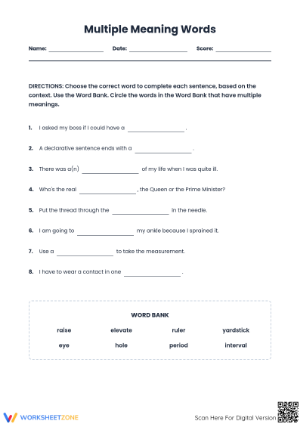
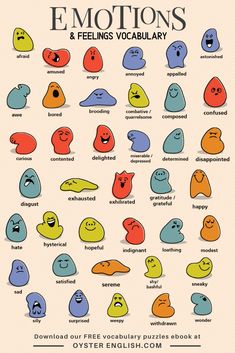
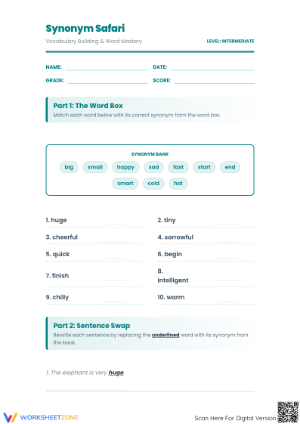
CCSS.ELA-LITERACY.L.6.5 asks students to understand figurative language, word relationships, and the nuances in word meanings. This is where many vocabulary worksheets fall short, because nuance is harder to test with a simple matching format. Worksheets that work well here ask students to rank near-synonyms on a scale, such as ordering thrilled, happy, and content from most to least intense, or to explain the difference in connotation between slender and skinny.
Figurative language practice should include idioms, similes, and metaphors pulled from grade-appropriate texts, with a follow-up question asking students to explain what the phrase means literally versus what the author intended. Worksheets that only ask students to identify a simile without explaining its effect on meaning do not fully address the standard.
Academic and Domain-Specific Vocabulary Across Subjects
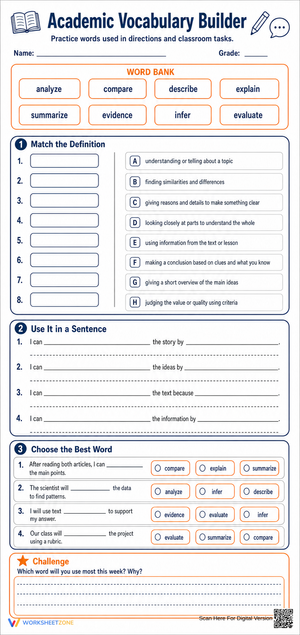
CCSS.ELA-LITERACY.L.6.6 requires students to acquire and accurately use grade-appropriate general academic and domain-specific words and phrases. This standard extends vocabulary instruction beyond the ELA classroom. Words like analyze, evidence, and hypothesis show up in science and social studies as often as in reading class, and sixth graders benefit from worksheets that explicitly connect a word across two subject areas.
A practical worksheet format for this standard presents a target academic word, its definition, and two sentence frames: one from an ELA context and one from a science or history context. Students complete both sentences, which reinforces that the word is not tied to a single subject. Curriculum leads coordinating across departments often find this cross-subject reinforcement is what finally moves academic vocabulary from short-term memorization into long-term use.
Classroom Implementation
For whole-class instruction, a manageable rhythm is one context-clue worksheet, one root-word worksheet, and one nuance or academic vocabulary worksheet each week, with a short formative check on Friday. This spreads the three related standards across the week without overloading any single lesson.
For small-group intervention, narrow the focus. Students who struggle with root recognition benefit from repeated exposure to the same four or five roots across several sessions rather than a new root family every day. Keep intervention worksheets shorter, ten to twelve items instead of twenty, so struggling readers can complete a full worksheet and feel a sense of accomplishment.
Independent reading time is another underused opportunity. Ask students to record one unfamiliar word from their independent book each week on an exit slip, then use those student-generated words as the basis for a follow-up context-clue or root worksheet the next week. This keeps vocabulary instruction connected to what students are actually reading rather than existing only on a worksheet page.
Frequently Asked Questions
1. What vocabulary skills should 6th graders master by the end of the year?
By the end of sixth grade, students should be able to use context clues to determine word meaning, recognize common Greek and Latin roots and affixes, distinguish nuances between related words, understand figurative language, and accurately use grade-appropriate academic and domain-specific vocabulary across subjects.
2. How can teachers use worksheets to teach Greek and Latin roots effectively?
Group roots by family instead of presenting them randomly, provide several example words per root, and ask students to generate a new word using the same root. Pairing root worksheets with a running class chart that students add to over several weeks strengthens retention and transfer to independent reading.
3. What is the difference between L.6.4, L.6.5, and L.6.6 vocabulary standards?
L.6.4 focuses on determining word meaning through context, roots, and reference materials. L.6.5 addresses figurative language and nuances between related words. L.6.6 requires students to acquire and accurately use general academic and domain-specific vocabulary across subject areas.
4. How often should 6th grade vocabulary worksheets be used for review versus assessment?
A weekly cycle works well for most classrooms: two or three worksheets for instruction and practice, followed by a short formative check. Spacing review across several weeks, rather than relying on one large test, gives a clearer picture of which students need continued support on each standard.












 Interactive Worksheet Maker
 Quiz Maker
 Word Search Maker
 Crossword Puzzle Maker
 Word Scramble Generator
 Sentence Scramble Generator
 Handwriting Worksheet Generator
 Name Tracing Generator
 Fill In The Blank Generator