




























Views
Downloads
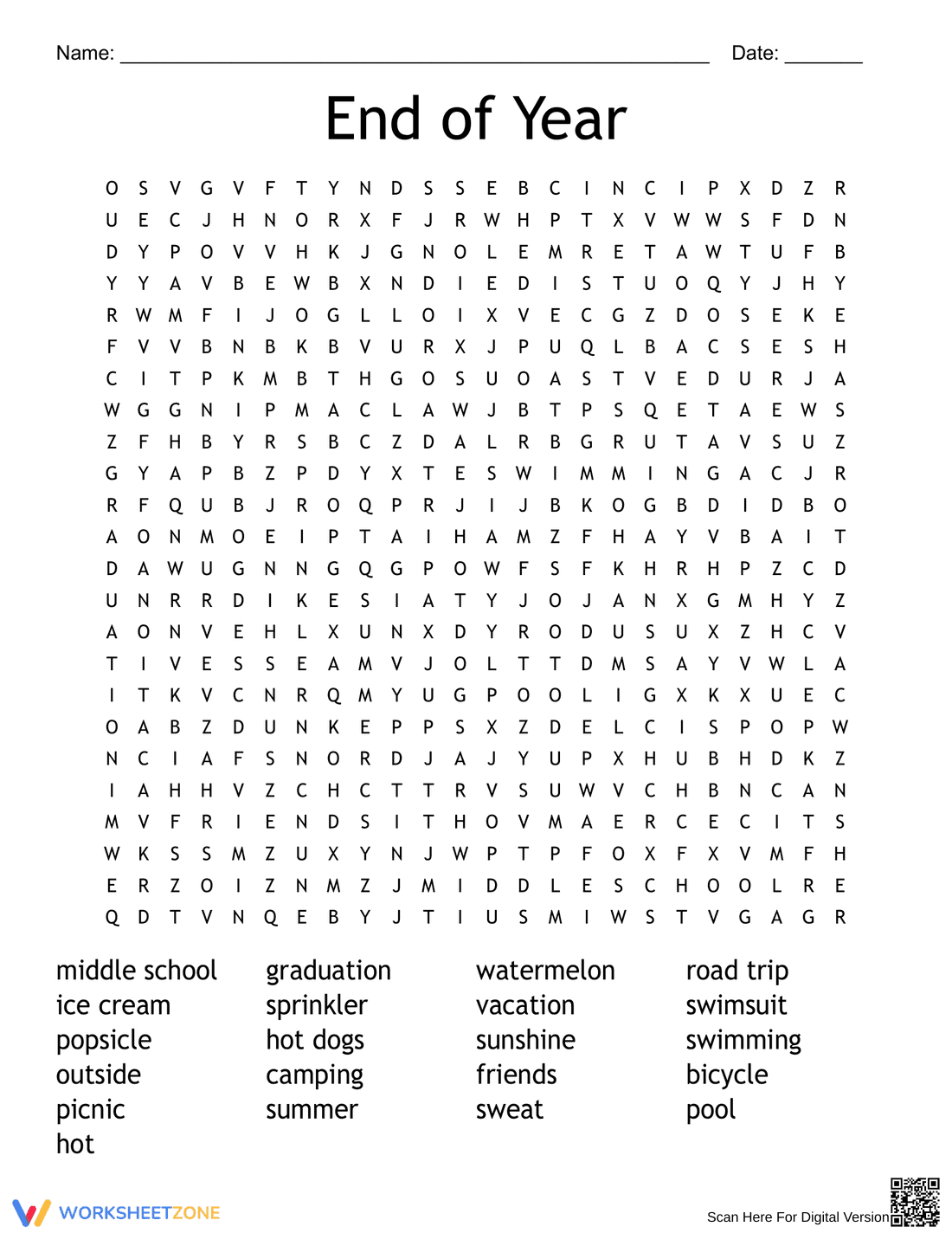

Grade 3 End of Year Vocabulary — Printable Word Search

Paste this activity's link or code into your existing LMS (Google Classroom, Canvas, Teams, Schoology, Moodle, etc.).
Students can open and work on the activity right away, with no student login required.
You'll still be able to track student progress and results from your teacher account.
This seasonal vocabulary worksheet reinforces word recognition and spelling skills for upper elementary students transitioning to summer. Students identify and locate twenty-one thematic terms related to seasonal transitions, milestones, and outdoor activities. This activity strengthens visual scanning, orthographic mapping, and contextual word association during the final weeks of the school year.
At a Glance
- Grade: Grade 3 · Subject: English Language Arts
- Standard:
CCSS.ELA-LITERACY.L.3.6— Acquire and use grade-appropriate conversational, general academic, and domain-specific words- Skill Focus: Spelling recognition and seasonal vocabulary
- Format: 1 page · 21 words · No answer key · PDF
- Best For: End of year morning work
- Time: 15–20 minutes
This single-page activity features a large grid containing twenty-one hidden vocabulary words. The word bank includes terms like graduation, vacation, middle school, and watermelon, which reflect common summer themes and student milestones. The clean layout provides clear uppercase lettering to support visual tracking and reduce cognitive fatigue during independent work sessions.
Zero-Prep Workflow
This resource requires less than two minutes of total teacher preparation. First, print the single-page PDF document for your class. Second, distribute the sheets directly to students along with highlighters or pencils. Third, review the completed puzzles as a whole group or have students self-check their progress. This straightforward layout makes it an ideal option for emergency sub plans, transition periods, or quiet morning work.
Standards Alignment
This activity aligns directly with the primary standard `CCSS.ELA-LITERACY.L.3.6`, which requires students to acquire and use grade-appropriate conversational, general academic, and domain-specific words and phrases. By identifying terms associated with seasonal changes and school milestones, students solidify their mental orthographic representations. Both standard codes can be copied directly into lesson plans, IEP goals, or district curriculum mapping tools.
How to Use It
Use this worksheet during the final week of school as a transition activity between core academic blocks. Alternatively, assign it as a quiet independent task during classroom clean-up periods. To gather formative assessment data, observe which students struggle with visual tracking or letter sequencing as they search for words. Most students will complete the puzzle within fifteen to twenty minutes.
Who It's For
This worksheet is designed for third through seventh-grade students who need a engaging vocabulary review. It offers natural differentiation for English language learners by pairing written words with familiar seasonal concepts. Pair this activity with a short creative writing prompt where students use five of the search terms to describe their upcoming summer plans.
According to research by Fisher & Frey (2014) on vocabulary acquisition, structured word play and puzzle-based activities support orthographic mapping by forcing students to focus on letter sequences and spelling patterns. This worksheet targets standard CCSS.ELA-LITERACY.L.3.6 by reinforcing twenty-one thematic vocabulary words associated with seasonal transitions. By engaging in visual search tasks, students build cognitive familiarity with word structures, which aids in long-term lexical retrieval. The simple, distraction-free format ensures that students focus entirely on the linguistic patterns without unnecessary cognitive load. This makes the resource an effective tool for maintaining academic engagement during low-structure school days, ensuring that vocabulary practice remains purposeful and aligned to core literacy expectations even during seasonal transitions. Teachers can confidently integrate this puzzle to support word recognition skills across multiple elementary grade levels.


