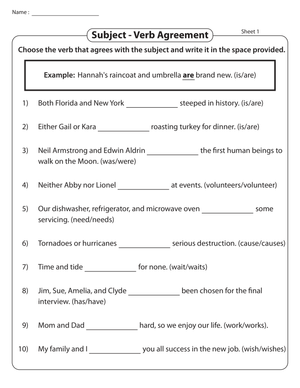
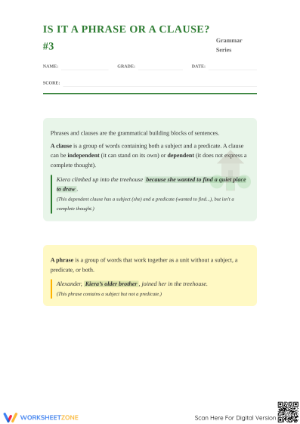
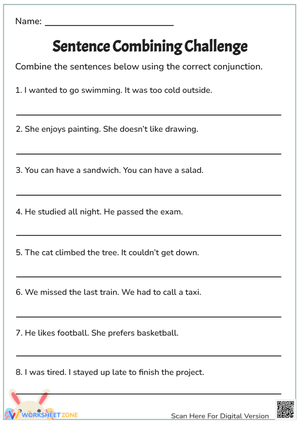
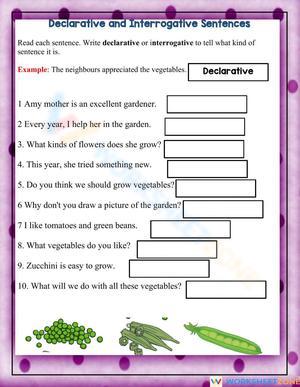
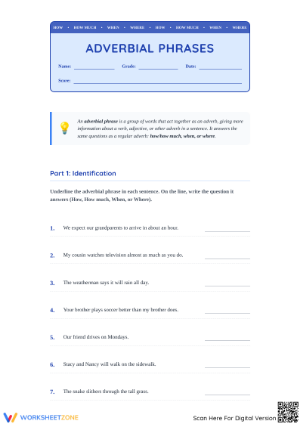
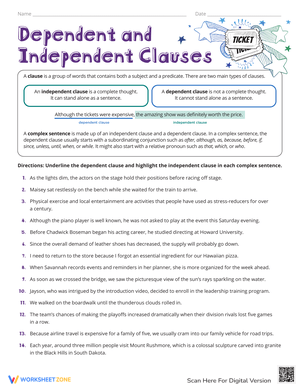
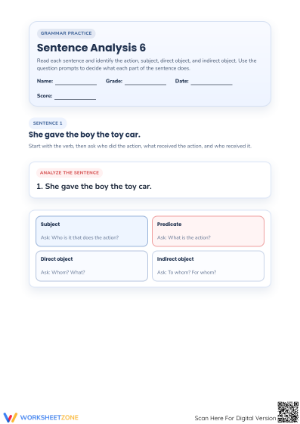
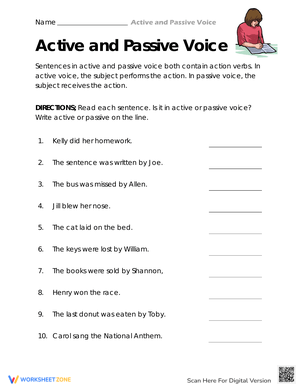
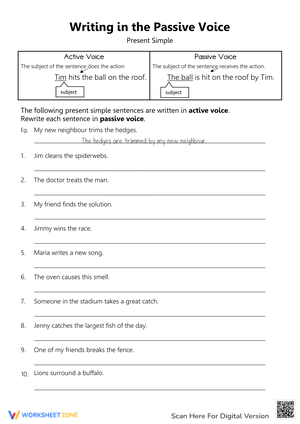
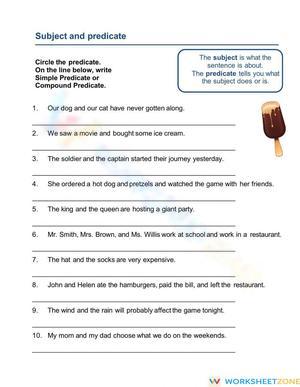
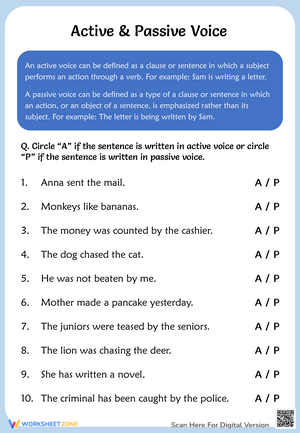
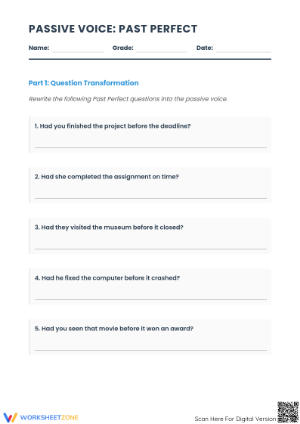
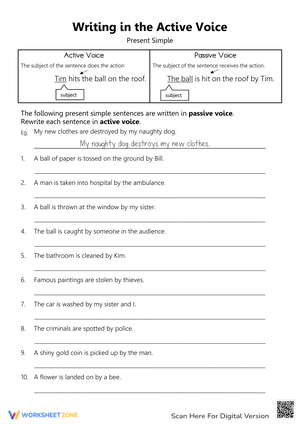
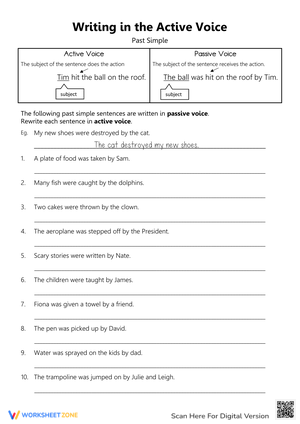
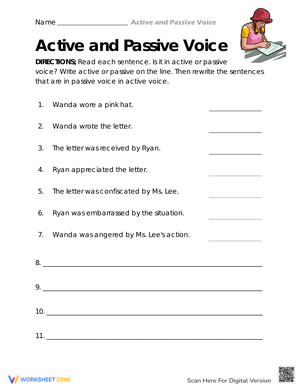
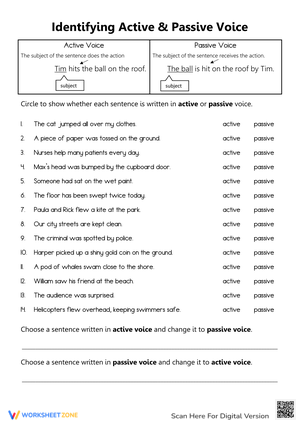
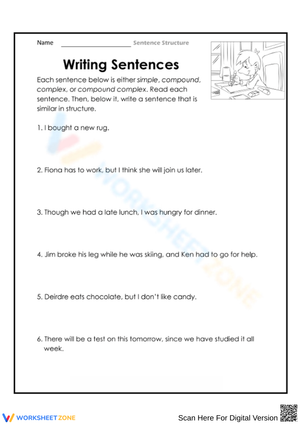
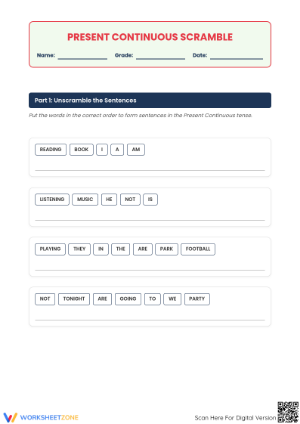
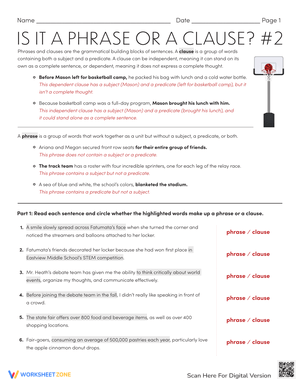
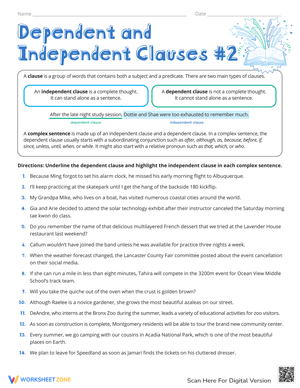
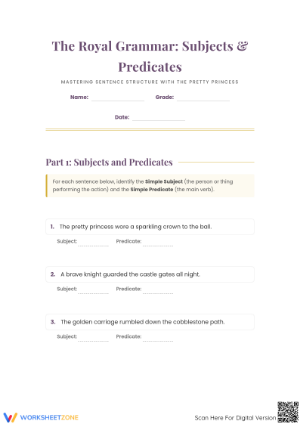
These sentence structure worksheets for 6th grade give teachers a ready-to-print set targeting the patterns that collapse most often in middle school writing — not in fill-in-the-blank exercises divorced from real prose, but in the actual decisions students face when drafting reading responses and multi-paragraph arguments. The resources cover fragments, run-ons, comma splices, simple and compound and complex sentences, phrases and clauses, and sentence combining, with each worksheet holding a narrow enough focus that teachers can use it as a quick follow-up to a mini-lesson rather than a multi-day grammar unit.
Skills and Tasks in Each Worksheet
The set stays close to the cluster of skills that appear week after week in sixth-grade ELA, rather than racing through every syntax term the standards mention. At this grade, students write across multiple genres, and the sentence-level errors they produce differ by genre. Fragments cluster in informational writing, where students drop the subject trying to sound formal. Run-ons appear in narrative, where the pace of storytelling pulls ideas forward without punctuation to stop them. The skills in each worksheet address that full range.
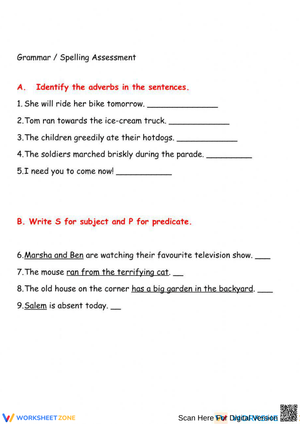
- Complete sentences and fragments: Students read a group of words, determine whether it has both a subject and predicate, and rewrite fragments as complete sentences rather than simply labeling them.
- Run-ons and comma splices: Students mark where one independent clause ends, then choose the correct fix — period, semicolon, or coordinating conjunction — rather than applying random punctuation.
- Simple, compound, and complex sentences: Students classify and write all three types. These are the structures they use in every assignment at this grade, so the practice has direct payoff.
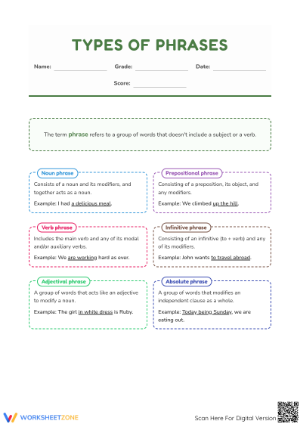
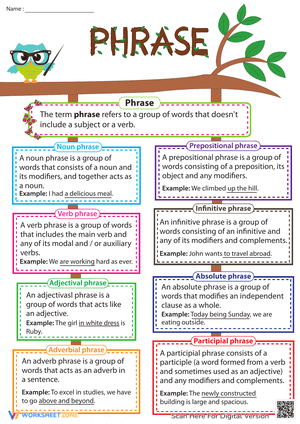
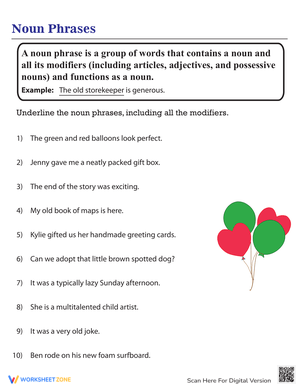
- Phrases and clauses: Students distinguish dependent from independent clauses and explain in writing why a dependent clause cannot stand alone.
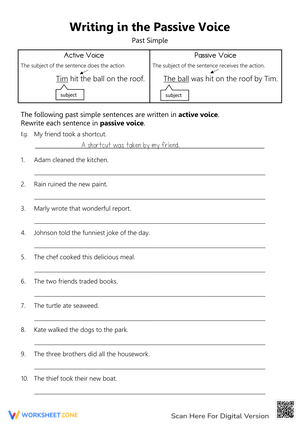
- Sentence combining: Students take two or three short, choppy sentences and rewrite them as a single sentence — the revision skill that transfers most directly into actual drafting work.
- Compound-complex sentences: Included as an extension for students who have already demonstrated control of the three core types, not as an early introduction that crowds out the fundamentals.
Sentence combining deserves particular attention because it asks students to make a structural decision, not just recognize a pattern. When a student combines "The dog was tired. It had run all day. It still followed her home." into a sentence with a dependent clause and a compound predicate, that move mirrors what strong revision looks like in a real writing conference.
Where Sentence Errors Surface in Sixth-Grade Writing
The dependent-clause fragment is the hardest error to get students to see. A sentence like "Although the documentary was three hours long." reads as completely fine to most sixth graders. It begins with a capital letter, ends with a period, and contains a subject and a verb. What it lacks — an independent clause to complete the thought — stays invisible until students have encountered enough examples to build a reliable internal test. Each worksheet develops that pattern recognition by presenting mixed sets of complete sentences and convincing fragments side by side, not in obvious labeled pairs.
Comma splices follow a predictable development arc. Students who have just learned that compound sentences use a comma before a coordinating conjunction will start placing commas between any two ideas that feel related — "We finished the project, it was not very good." They absorbed the lesson that connections involve commas but have not yet sorted out that a comma alone cannot join two independent clauses. A handful of targeted correction items — actual repair practice, not a second round of explanation — resolves that confusion faster than re-teaching the rule in whole class.
When and How to Pull These Into Your Instruction
The strongest placement for each worksheet is the same day as the mini-lesson it matches. When students learn to distinguish independent from dependent clauses on Monday, the worksheet follows that afternoon — students are still holding the example sentences from instruction, so the practice deepens what just happened rather than asking them to retrieve cold knowledge two days later. That same-day pairing is where these resources produce the fastest gains in accuracy.
For the Tuesday or Wednesday reteach group — the students whose Monday exit tickets showed real confusion — pull a single, narrow worksheet and work through it aloud. Students explain their answers before writing them down. Fifteen focused minutes with a small group justifying their reasoning beats a re-assigned full worksheet every time. The sentence structure worksheets for 6th grade also hold up as sub-plan materials when the task is self-contained: identification and sentence-repair work functions without live teacher explanation, while open-ended combining tasks generally need some teacher presence to stay productive.
Bell work is another reliable slot. A five-item fragment-or-run-on warm-up at the start of a writing day takes less than five minutes, pulls students into sentence-level thinking before they draft anything, and gives the teacher a quick visual sweep of who answered confidently and who hesitated on items three through five.
Standard Alignment
The primary anchor is CCSS.ELA-LITERACY.L.6.3a, which requires sixth-grade students to vary sentence patterns for meaning, reader interest, and style. That standard is sometimes treated as a stylistic note added to an otherwise finished draft, but it carries a prerequisite: students cannot vary sentence patterns on purpose unless they can already recognize what each pattern is and understand why a fragment fails. The identification and correction work in each worksheet builds the structural knowledge that standard assumes. The CCSS Language Progressive Skills document also makes clear that sentence-level command accumulates across grade bands — sixth-grade teachers are reinforcing what grades 4 and 5 introduced and preparing students for the structural complexity expected in grades 7 and 8. That context shapes planning: these worksheets belong in the first half of the year, not saved as a late-year grammar review block.
Stretching and Narrowing the Work for Different Learners
Students who are still shaky on what a complete sentence sounds like benefit from adding a read-aloud step before they write anything. They read each item out loud and listen for whether the thought feels finished. That auditory check catches errors that visual scanning skips, and it slows the work down in a way that produces more careful responses rather than rushed marks. These students also gain more from correction tasks than from classification alone — rewriting a fragment as a complete sentence draws more on working memory and produces stronger retention than circling an answer choice.
Students who have moved past the three core sentence types gain more when the combining tasks connect directly to their own writing. After completing a worksheet, they find two sentences in their current draft and combine them into a structure different from the one they originally wrote — one that serves the meaning better. The sentence structure worksheets for 6th grade include enough variation in task type that teachers can assign different sections to different groups without building separate materials. One group repairs fragments; another combines sentences pulled from their own drafts. Both are working on sentence structure without doing identical tasks.
Frequently Asked Questions
What is the best order for introducing these skills?
Start with complete sentences and fragments, because students need a reliable definition of what a sentence is before any other concept holds. Move next to run-ons and comma splices, then to sentence types — simple, compound, complex — then to phrases and clauses, and finally to sentence combining as the culminating skill that draws the others together. Compound-complex structures work best as extension work after the three core types are solid in both identification and student writing.
Can these work as formative checks without being graded?
Collecting four or five items at the end of independent practice — not a full worksheet — gives enough data to plan the next day's grouping. The sentence structure worksheets for 6th grade include enough items per skill that a short sample still gives a clear picture of who has the pattern and who needs another round. Teachers who use this approach often mark items with a check or question mark rather than a score, which keeps the feedback instructional rather than evaluative.
What should I do when a student identifies fragments correctly on the worksheet but still writes them in drafts?
Skip the identification tasks and move straight to correction and combining work. The gap is a transfer problem, not a recognition problem. After the student corrects a fragment on the worksheet, ask them to open their notebook, find one incomplete sentence from yesterday's writing, and fix it before the class period ends. That immediate application step — from worksheet to live writing — closes the transfer gap more reliably than additional identification practice does.












 Interactive Worksheet Maker
 Quiz Maker
 Word Search Maker
 Crossword Puzzle Maker
 Word Scramble Generator
 Sentence Scramble Generator
 Handwriting Worksheet Generator
 Name Tracing Generator
 Fill In The Blank Generator