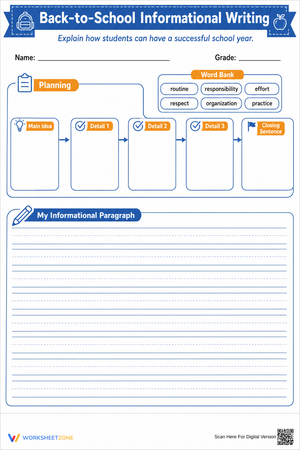
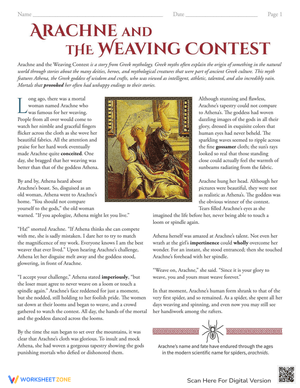
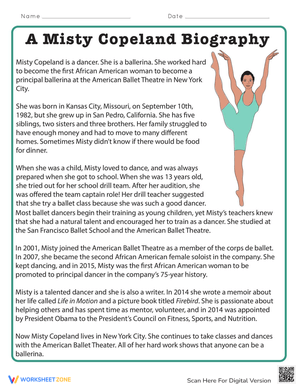
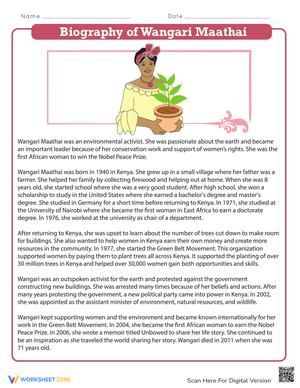
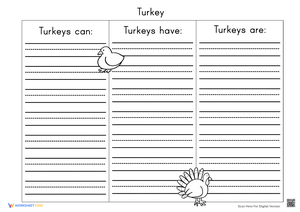
These informational writing worksheets for 5th grade give teachers a built-in sequence from brainstorming through final publication — printed, labeled, and ready to use without additional setup. Each worksheet covers a distinct writing move: narrowing a topic, sorting evidence into categories, drafting organized paragraphs, revising for clarity, and producing a polished final piece. The staged approach matters because fifth graders are expected to produce multi-paragraph explanation with grouped details, precise word choice, and a logical conclusion — not just a collection of facts under a heading.
What Each Worksheet Builds
The set targets the full range of skills that fifth grade explanatory writing demands, starting at topic selection and ending at final publication. Students who narrow a topic before they draft produce noticeably stronger writing — the child who wants to write about "animals" needs to arrive at something writeable, like "how monarch butterflies navigate during migration," before a single paragraph will hold together. From there, each worksheet moves the work forward in a specific direction.
- Topic-narrowing and brainstorming — students move from a broad subject to a focused angle that can actually be explained in the space they have
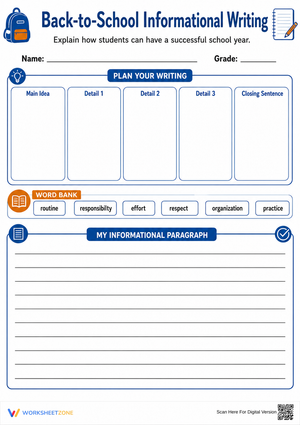
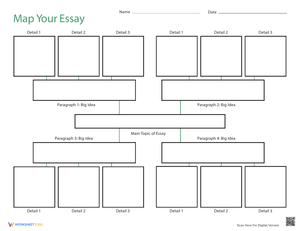
- Graphic organizers for grouping evidence — facts get sorted into labeled categories rather than poured into a single column
- Introduction frames — students name the topic and preview the main sections before drafting body paragraphs
- Body paragraph drafting worksheets — each with space for a topic sentence, supporting details, an example or definition, and a wrap-up sentence
- Transition-word practice — students choose and place connecting language that fits the relationship between ideas, not just "also" and "then" at the start of every sentence
- Revision and editing checklists — targeting elaboration, word choice, and conventions as separate passes
- Final draft worksheets — clean layouts where students write polished work suitable for display or portfolio
Where These Worksheets Fit in the Instructional Day
During a mini-lesson, a teacher can model one section of an organizer on the document camera and release students to finish the rest independently — the labels and prompts on each worksheet carry the task without continuous teacher direction. Writing center rotations work well with this set: a group plans on Monday, drafts on Tuesday and Wednesday, revises on Thursday, and publishes on Friday, with each student's completed worksheets keeping the work organized across the week. That kind of spread is practical in classrooms where writing time competes with reading blocks and content-area instruction.
The informational writing worksheets for 5th grade in this set also travel well as homework and substitute plans. Because the task directions appear at the top of each worksheet and students already know the writing routine from regular workshop time, a sub doesn't need to explain a new format. In test-prep contexts, the planning and drafting worksheets train a specific habit: move quickly from a prompt to an organized response. That rehearsal is more targeted than practicing additional prompts alone, because it builds the move — organize before you draft — not just the product.
Common Errors in Student Work Teachers Should Anticipate
The most consistent problem in fifth grade informational writing is the knowledge dump. A student who genuinely knows a lot about a topic — volcanoes, the civil rights movement, the water cycle — will write three body paragraphs that each cover everything rather than sorting information into distinct sections. The organizer worksheets make that problem visible before it becomes a drafting problem. If a student's three categories all list the same types of facts, that's the planning conference to have, not after two notebook pages of writing that need to be reorganized from scratch.
The second pattern that shows up consistently is the thin paragraph: a topic sentence, one fact, a closing sentence. Students believe they've completed a paragraph because it has three sentences — and formally they have — but the fifth grade standard asks for developed explanation, not a fact dressed in paragraph shape. The drafting worksheets push back on this by requiring students to add an example or definition before closing each section. That single structural prompt produces fuller paragraphs more reliably than telling students to "add more detail" with a blank page in front of them.
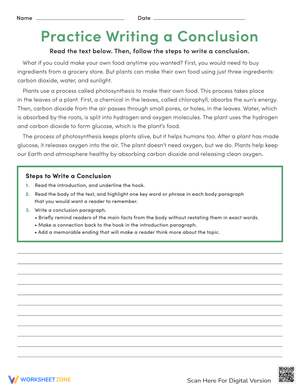
Conclusions are a third trouble spot. Left without a frame, most fifth graders write "In conclusion, [topic] is very interesting" and consider the piece done. The revision checklist addresses this directly by asking students to reread their introduction and then write something in the conclusion that wasn't there at the opening — a broader implication, a call to think further, or a reflection on why the information matters. That constraint produces conclusions that actually close the piece rather than echo it.
Standard Alignment
These worksheets align with CCSS.ELA-LITERACY.W.5.2, which asks fifth graders to introduce a topic clearly, group related information in sections, develop ideas with facts and examples, use linking words and phrases, and provide a concluding statement. That five-part expectation maps directly onto the worksheet sequence — each worksheet handles one of those moves — which makes lesson planning specific: when students struggle with body paragraphs, assign the drafting worksheet; when conclusions are thin, pull the revision checklist. The set also addresses W.5.5, which calls for planning, revising, and editing as distinct stages, since each worksheet treats those as separate tasks rather than bundling them into a single rushed pass at the end of a writing session.
Adjusting the Set for Different Readiness Levels
The informational writing worksheets for 5th grade in this set work across readiness levels because the degree of built-in direction can be reduced or increased without changing the topic or the standard being practiced. For students who need more structure, the paragraph frame — with labeled slots for topic sentence, supporting details, and wrap-up — keeps writing moving without a blank-page stall. For students ready to work more independently, the same drafting task can be assigned on a less structured worksheet that provides section labels only, leaving all internal paragraph decisions to the writer.
Cross-curricular writing assignments open up additional differentiation options. A science unit on ecosystems can use the same organizer as a writing workshop piece, but students bring different levels of content knowledge to the table. Those with deeper background can incorporate domain-specific vocabulary in every section; those still building content knowledge can focus on grouping and organization while vocabulary develops through separate instruction. Because the format stays consistent, students aren't learning a new task structure — they're applying a familiar one to new content, which keeps the cognitive load on the writing rather than the directions.
Frequently Asked Questions
What makes these worksheets useful for science and social studies writing, not just ELA?
Informational writing shows up across every content area — explaining a life cycle in science, summarizing causes of a historical event in social studies, describing how a system works in any subject. Because the organizer and drafting formats stay consistent across the set, students carry the familiar structure into content-area writing without relearning the task. A social studies teacher can pull the same graphic organizer a student already knows from writing workshop, and the student's energy goes toward the content rather than figuring out the format.
How many sessions does it take to work through the full set?
That depends on instructional context. In a dedicated writing workshop unit, a class might spend two sessions on planning and organizing, three or four on drafting and revision, and one session on publishing. In shorter intervention blocks or content-area assignments, individual worksheets can be used in isolation — just the organizer, or just the revision checklist — without running the full sequence. Nothing in the set requires other worksheets to be completed first.
Are these worksheets suitable for students working below grade level in writing?
The informational writing worksheets for 5th grade in this set are often most useful for exactly those students. The planning and organizing worksheets remove the blank-page problem by giving students a visible structure for where each piece of information belongs. A student who freezes when asked to "just write" will often start on a graphic organizer worksheet because the task is concrete: find the category, write the fact. Moving from a completed organizer into a paragraph frame is a much smaller step than producing a draft from nothing.
Can these worksheets be sent home without additional teacher explanation?
Planning and revision worksheets travel home well — the checklist format and labeled sections make the task clear without a teacher present. Drafting worksheets benefit from at least one in-class introduction first, so students understand what each section expects. The most practical approach is to walk through a drafting worksheet together in class once, then assign a similar one for homework once students know the routine.












 Interactive Worksheet Maker
 Quiz Maker
 Word Search Maker
 Crossword Puzzle Maker
 Word Scramble Generator
 Sentence Scramble Generator
 Handwriting Worksheet Generator
 Name Tracing Generator
 Fill In The Blank Generator