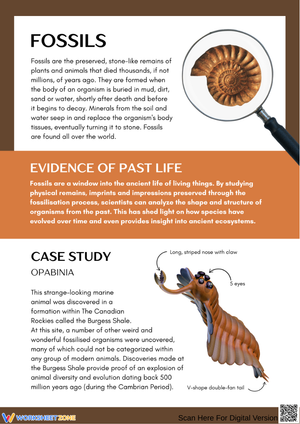
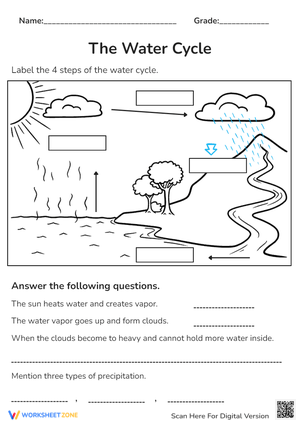
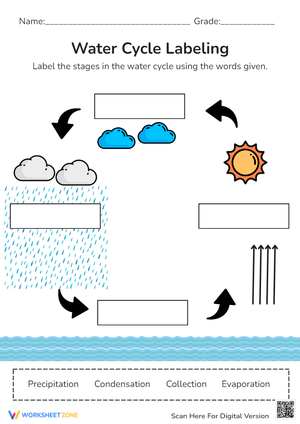
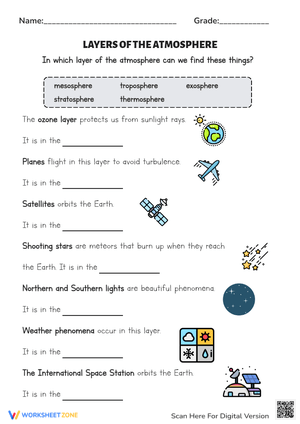
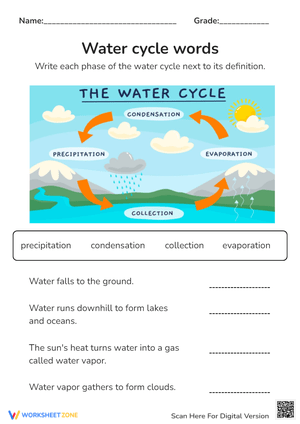
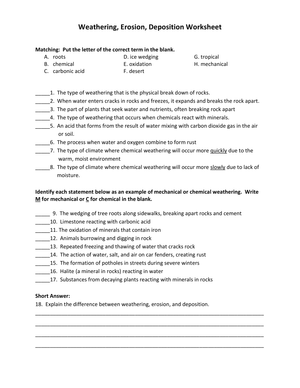
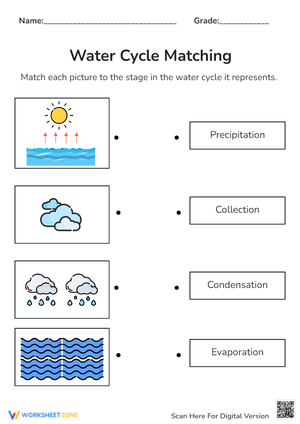
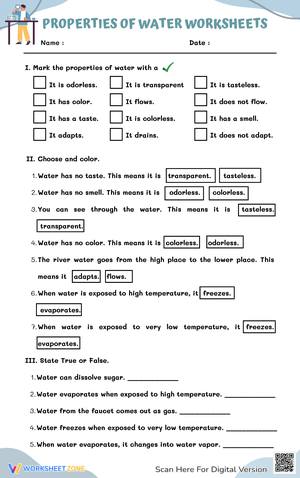
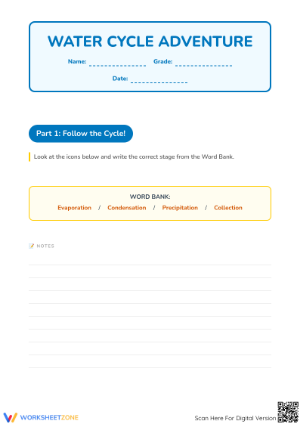
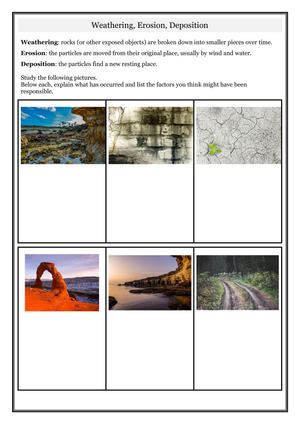
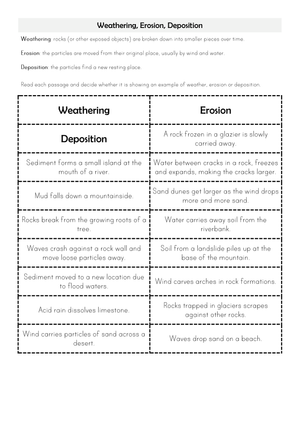
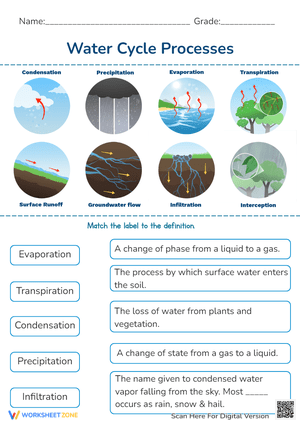
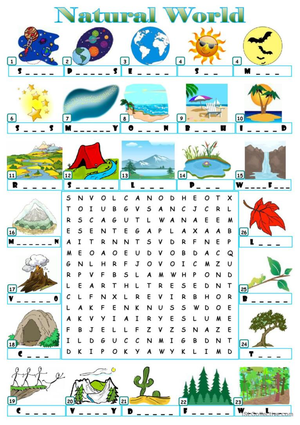
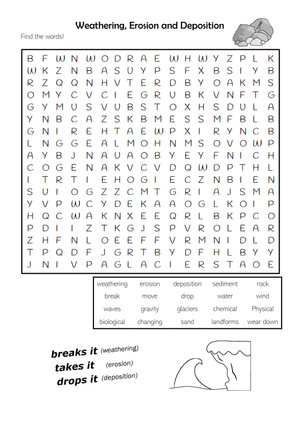
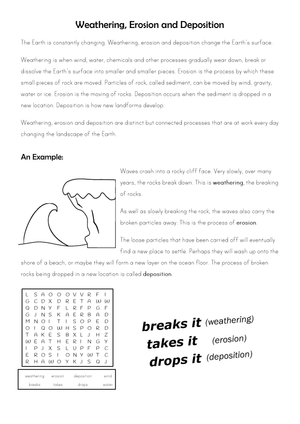
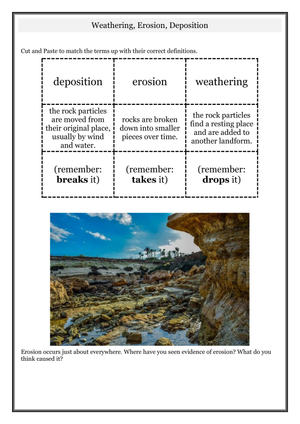
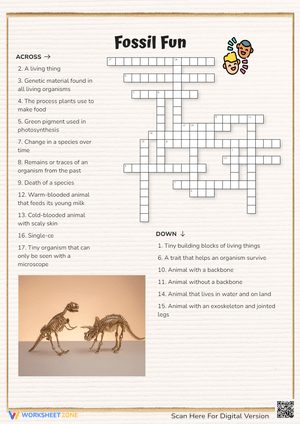
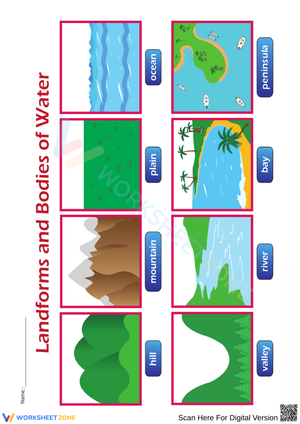
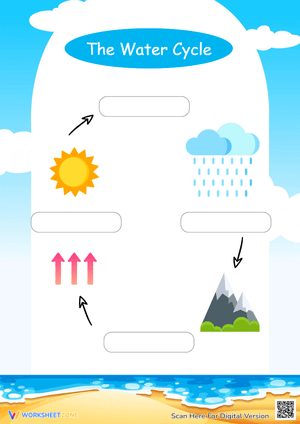
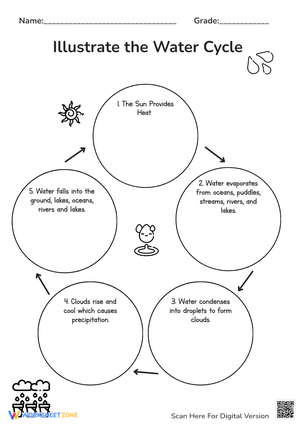
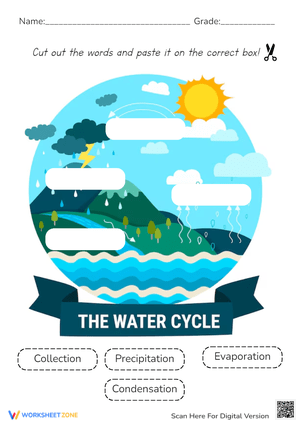
These 4th grade environment worksheets resources give science teachers standalone practice activities built around the topics that define most upper-elementary environment units — ecosystems, natural resources, pollution, food chains, and human impact on the land. Each worksheet is a self-contained task that prints cleanly and asks students to do something concrete: label a habitat diagram, sort resources into renewable and nonrenewable categories, classify types of pollution, or explain a cause-and-effect relationship in a local ecosystem. Several worksheets also pair a short informational passage with science-specific comprehension questions, letting students work with informational text during the science block without drawing from separate literacy time.
Skills These Worksheets Build Across the Unit
The set covers six content areas, rotating through different task formats so the same concept returns in a new mode — first as a labeling task, later in a written explanation, and eventually embedded inside a reading-based question.
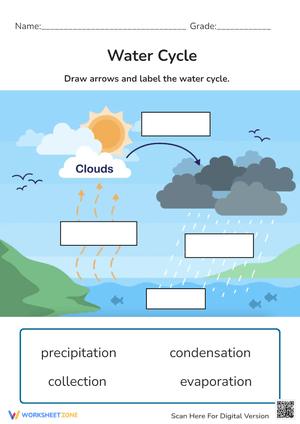
- Ecosystems and habitats: Students label the living and nonliving components of a habitat diagram and explain what the environment provides — food, water, shelter, and space. The biotic and abiotic distinction appears early in most Grade 4 programs, and a labeling task introduces the vocabulary before students are asked to apply it in writing.
- Food chains and food webs: Students trace energy flow by placing producers, consumers, and decomposers in correct sequence. Separate worksheets address linear chains and more complex webs, including tasks that ask students to predict what changes when one organism is removed from the system.
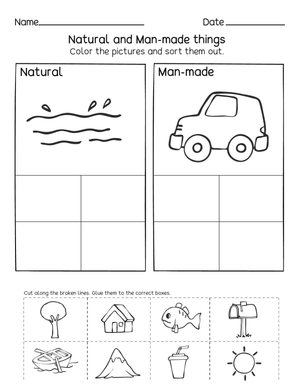
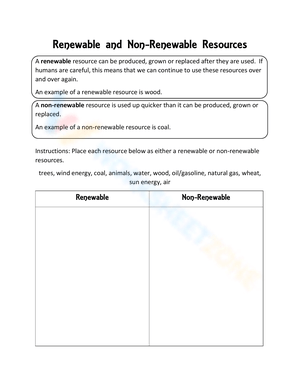
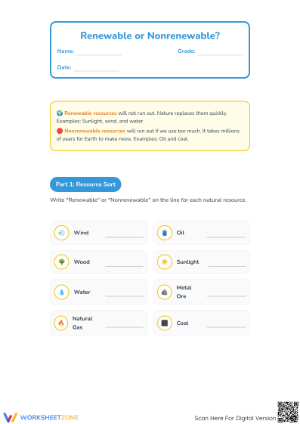
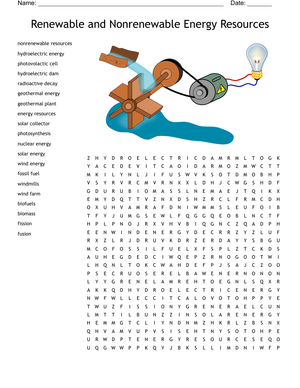
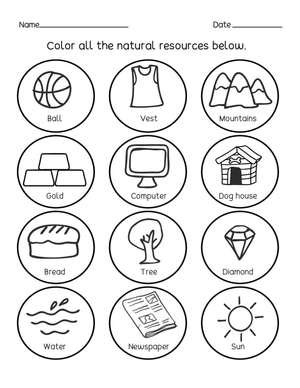
- Natural resources: Students sort renewable and nonrenewable resources and connect specific examples to familiar products — wood to furniture, coal to electricity, wind to energy generation. The sorting format surfaces student thinking before a class discussion, making misconceptions visible before they get reinforced.
- Pollution: Students classify air, water, and land pollution using realistic scenarios — vehicle exhaust, agricultural runoff, landfill overflow — rather than abstract definitions pulled from a glossary.
- Conservation and recycling: Students evaluate specific actions, decide which ones reduce waste or protect resources, and write a brief explanation of their reasoning. These short written responses provide reliable formative data on where student understanding is solid and where it needs reinforcement.
- Human impact: Students examine how daily choices affect shared environments and identify solutions that communities use to address local problems, connecting classroom concepts to real-world decision-making.
Task formats rotate between labeling diagrams, vocabulary matching, cut-and-sort activities, short reading passages with follow-up questions, and written explanation prompts. That rotation prevents the attention drift that sets in when one format runs unchanged through an entire unit.
Error Patterns to Spot Before Students Work Independently
The most persistent confusion in this unit sits at the boundary between food chains and food webs. Students who correctly draw a linear chain — grass to grasshopper to frog to hawk — will still write that "only the hawk is affected" when asked what happens if the frog population crashes. They understand the direction of energy flow; they haven't yet grasped that most organisms in a real web have multiple feeding connections. The worksheets that ask students to predict cascading effects after removing one organism are where this gap shows up most clearly, and addressing it before students work independently saves significant reteaching time.
The natural resources worksheets surface a separate, equally predictable error. Students sort sunlight and water as renewable without hesitation, but soil produces inconsistent answers. Because they've heard "natural resources" used broadly in classroom conversations, many students assume natural equals renewable — without thinking about replenishment time. A short whole-class question before the worksheet begins ("Could new topsoil form within a human lifetime?") consistently reduces this error in written responses, surfacing the misconception as a teachable moment before it gets recorded on the task.
A third pattern: decomposers get classified as consumers. Students who handle producers and primary consumers without difficulty will put fungi or bacteria in the consumer column because they "eat" dead material. The distinction matters for food web accuracy, and it warrants a brief, direct teaching moment before students encounter decomposer questions on their own.
Where These Worksheets Fit in a Week of Science Instruction
Sorting and labeling tasks work best immediately after a lesson, not the following day. Students can accurately sort pollution examples or place organisms on a food chain while the discussion is still recent. Waiting until the next morning adds a retrieval demand that shifts the task from structured practice to memory testing — a different skill, and a harder one for students still building familiarity with a concept.
The short reading worksheets hold up better as next-day review. Students who read about habitat loss or recycling strategies the morning after a lesson arrive at the text with enough context to work through unfamiliar vocabulary and still answer follow-up questions accurately.
Sub days are where this set earns its keep. The labeling and sorting worksheets require no setup explanation from a substitute — the directions are on the worksheet, and each task is visually clear. Building a substitute folder around two or three worksheets from the set means students work independently and the teacher returns to written work worth reviewing.
The last 8 to 10 minutes of a science block — when a whole-group activity wraps up ahead of schedule — is another natural fit. A vocabulary matching worksheet from this 4th grade environment worksheets collection fills that time without introducing new content right before students move to a different subject.
Standard Alignment
The NGSS performance expectations most directly relevant to this content area are 4-ESS3-1 and 4-ESS3-2. The first asks students to obtain and combine information to describe how energy and fuels are derived from natural resources and how their uses affect the environment — the natural resources and pollution classification worksheets address this directly, giving students structured practice with sorting and cause-and-effect analysis before those ideas appear in a formal assessment. The second asks students to generate and compare solutions to reduce the impacts of natural Earth processes on humans — the conservation worksheets connect here by requiring students to evaluate specific actions and explain their choices in writing, not simply list examples.
The ecosystems and food chain content draws on Disciplinary Core Idea LS2.B (Cycles of Matter and Energy Transfer in Ecosystems), which builds across multiple grade bands toward more complex food web analysis in 5th grade and beyond. At 4th grade, students are solidifying the producer-consumer-decomposer framework, which is why the food chain and food web worksheets focus on identification and prediction rather than quantitative energy transfer. Distributing a 4th grade environment worksheets set across the full unit — rather than pulling the resources only at the end — gives students spaced practice with these standards over several weeks.
Adjusting Tasks for Students at Different Points in Understanding
Students who need more support benefit most from the worksheets that include a word bank, visual diagram labels, or a structured answer frame. A food chain worksheet with organism names already provided — asking students only to sequence and connect them correctly — removes the recall demand and lets students focus on the relationship between organisms. Place a labeled diagram reference nearby and most students who typically struggle with independent work complete the task without repeated interruptions.
For students ready for a greater challenge, remove the word bank and replace identification prompts with open-ended explanation tasks. A prompt asking students to describe what would happen to the producers in a habitat if the primary consumer population collapsed requires systems thinking rather than labeling. Students who finish a sorting or matching worksheet early can extend their written response — "explain your reasoning" or "give a real-world example from your community" generates far more substantive work than a separate enrichment task would, and it requires no additional prep from the teacher.
Frequently Asked Questions
Do these worksheets work as independent practice, or do students need direct instruction first?
Most work best after instruction rather than before it. Labeling and sorting tasks run more smoothly once students have encountered the vocabulary in context — through a discussion, a read-aloud, or a hands-on investigation. The short reading passage worksheets are more forgiving because the text carries the content, but a brief vocabulary preview still improves accuracy on the follow-up questions.
How long does a typical worksheet take to complete?
Most students finish in 12 to 18 minutes depending on task type. Vocabulary matching and labeling run closer to 10 to 12 minutes. Written explanation tasks run longer — sometimes 18 to 20 minutes for students who need time to formulate a response. Knowing those ranges helps with planning: a matching worksheet fits a warm-up slot, while a reading-and-response worksheet fits a center rotation or a focused independent work period.
Can these worksheets be used alongside different science curricula, or are they specific to one textbook?
The topics in this set — ecosystems, natural resources, pollution, conservation, human impact — appear in virtually every Grade 4 science program regardless of textbook publisher. The worksheets address concepts rather than specific chapters, so they pair with district-adopted materials without conflict. Teachers who add a 4th grade environment worksheets set to an existing curriculum find that the additional practice on vocabulary and cause-and-effect reasoning carries over into stronger performance on unit assessments, even when the assessment format differs from the worksheet tasks.
Are answer keys included?
Yes. Answer keys make the set easier to use with instructional aides, parent volunteers, and substitute teachers. They also allow students to self-check after a practice task, which produces better retention than receiving a score without reviewing the correct responses.












 Interactive Worksheet Maker
 Quiz Maker
 Word Search Maker
 Crossword Puzzle Maker
 Word Scramble Generator
 Sentence Scramble Generator
 Handwriting Worksheet Generator
 Name Tracing Generator
 Fill In The Blank Generator