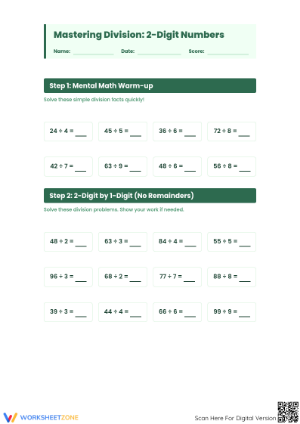
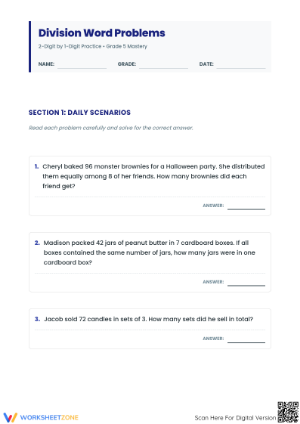
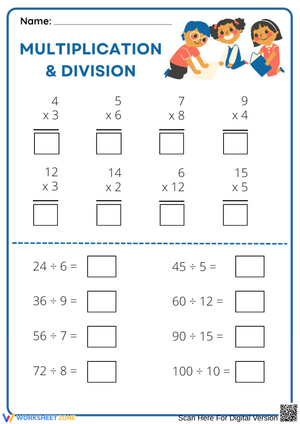
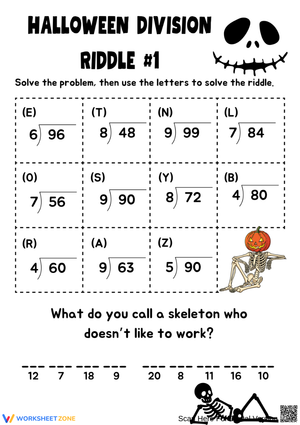
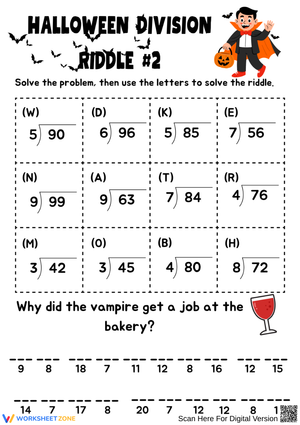
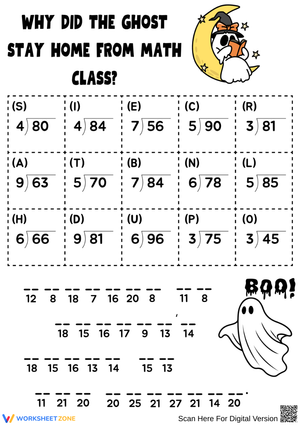
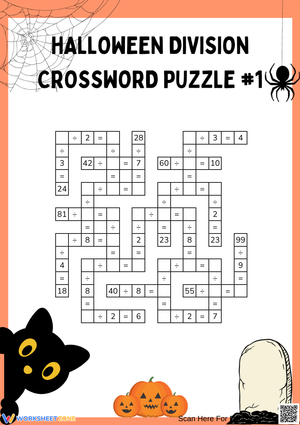
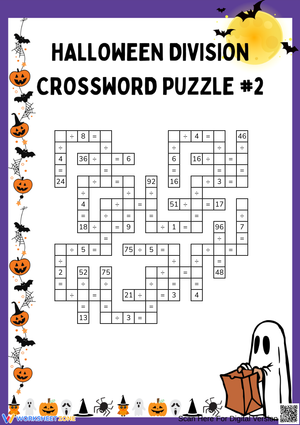
Students in grade 4 often begin division with confidence, then slow down when the numbers become larger. A problem like 42 ÷ 6 may feel familiar, but 86 ÷ 2 or 97 ÷ 4 requires more careful thinking. 2 digit division worksheets for grade 4 help students practice this transition in a clear and steady way. They give learners the chance to divide tens and ones, apply multiplication facts, subtract accurately, and understand what to do when a problem has a remainder.
One helpful way to approach 2-digit division is to begin with meaning before method. Students should understand that division can mean sharing equally or making equal groups. For example, 72 ÷ 8 can mean sharing 72 pencils among 8 students, while 65 ÷ 5 can mean placing 65 objects into 5 equal groups. Once students can picture the situation, the written division steps become easier to follow. Teachers can use division math activities to introduce hands-on models before students move into written practice.
Remainders are often the part that causes confusion. Some students expect every division problem to divide evenly, so they may feel unsure when there is a number left over. Worksheets that include both exact division and division with remainders help students compare the two situations. A problem like 84 ÷ 4 shows equal grouping with no leftover amount, while 83 ÷ 4 shows that 3 remains. For targeted support, division with remainders worksheets can help students practice interpreting leftover values more clearly.
Good 2-digit division practice should also train students to check their thinking. After solving, learners can multiply the quotient by the divisor to see whether the answer matches the original number. If there is a remainder, they add it after multiplying. This habit builds accuracy and helps students see the strong connection between multiplication and division. It also encourages students to slow down, review their work, and catch small mistakes before moving on.
By practicing 2-digit division regularly, grade 4 students build the foundation they need for larger division problems, fractions, decimals, and multi-step word problems. The goal is not only to finish a page of problems, but to understand how division works, why each step matters, and how to explain the answer. With clear examples, visual support, and consistent practice, students can become more independent and confident with division.
Frequently Asked Questions
Question 1: What skills do 2 digit division worksheets for grade 4 help students build?
These worksheets help students build division fluency, place value understanding, multiplication recall, subtraction accuracy, estimation, and problem-solving skills. Students learn how to divide two-digit numbers by one-digit numbers and decide whether the answer is exact or includes a remainder. These skills are important because they prepare students for long division, larger numbers, fractions, and more advanced math problems.
Question 2: Why do 4th graders need practice with 2-digit division?
Fourth graders need practice with 2-digit division because it is a key step between basic division facts and multi-digit long division. Students must learn to organize their work, apply known multiplication facts, and understand how numbers can be split into equal groups. Without enough practice at this stage, larger division problems can feel overwhelming. Strong 2-digit division skills make future math topics much easier to handle.
Question 3: How can teachers make 2-digit division easier for students?
Teachers can make 2-digit division easier by starting with visual models, real-world examples, and guided practice. Counters, drawings, arrays, place-value charts, and number lines can help students see how division works before they solve written equations. It is also helpful to begin with problems that divide evenly, then gradually introduce remainders. Short practice sessions with clear feedback usually work better than long assignments with too many problems at once.
Question 4: How should students handle remainders in 2-digit division?
Students should understand that a remainder is the amount left over after making equal groups. For example, in 74 ÷ 6, students can make 12 equal groups of 6, with 2 left over. The answer is 12 remainder 2. In word problems, students should also think about what the remainder means. Sometimes it stays as a leftover amount, and sometimes the situation may require rounding up or explaining the remainder in words.













 Interactive Worksheet Maker
 Quiz Maker
 Word Search Maker
 Crossword Puzzle Maker
 Word Scramble Generator
 Sentence Scramble Generator
 Handwriting Worksheet Generator
 Name Tracing Generator
 Fill In The Blank Generator