Division math activities are essential tools for helping students understand the concept of division in a fun and interactive way. By using hands-on games, puzzles, and collaborative exercises, teachers can turn abstract division lessons into meaningful experiences.
These activities support diverse learning styles, build fluency, and encourage critical thinking. So, let’s dive into a list of engaging fun and interactive activities that will energize your classroom and make division click for your students!
15 Fun Division Math Activities for the Classroom
Below are multiple division math ideas that will help your students master division through play, collaboration, and movement:
1. Division Bingo
Division Bingo turns traditional review into a fun, fast-paced game that helps students practice solving division problems.
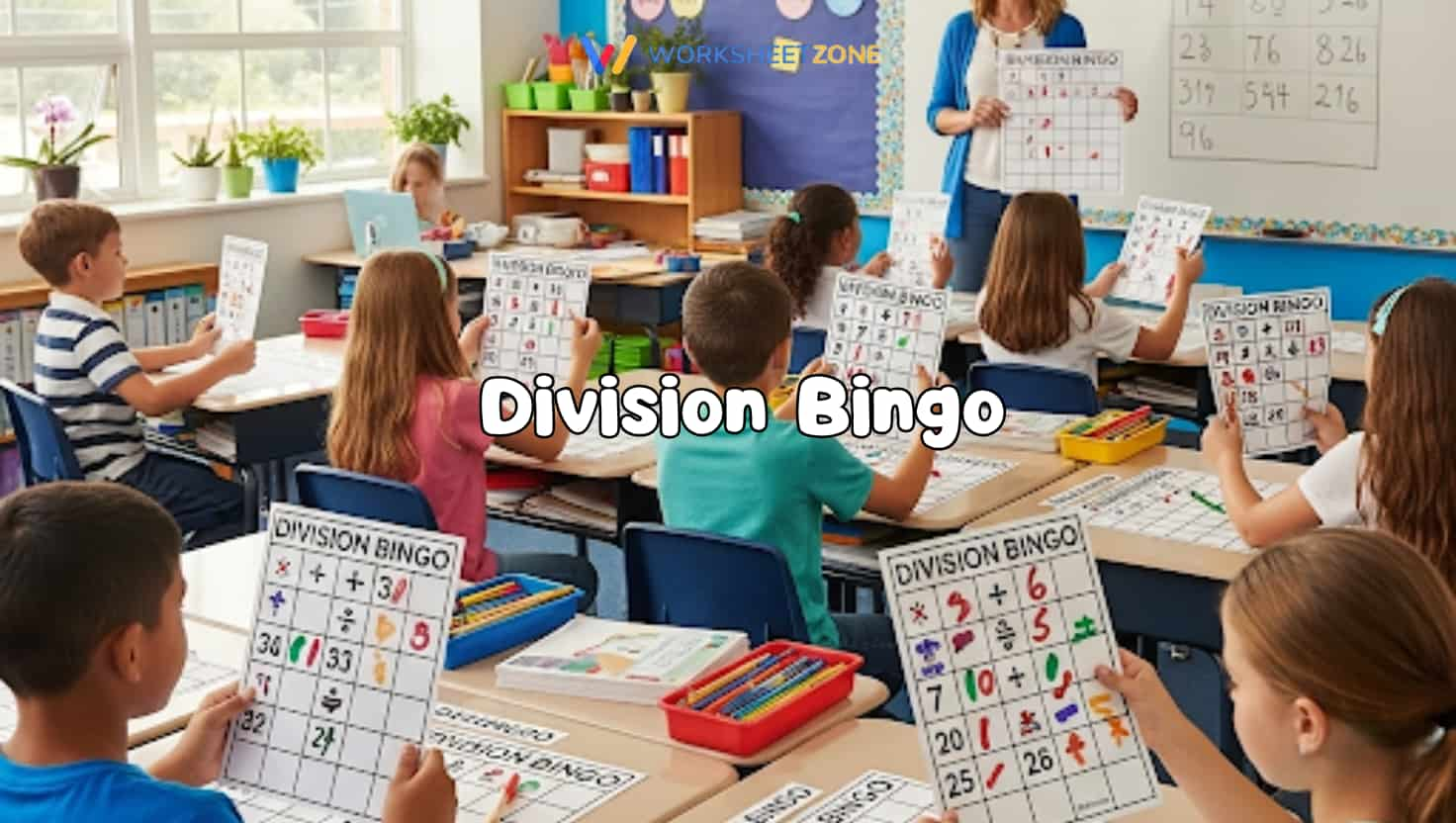
The competitive format keeps everyone engaged while reinforcing quick recall of math facts. This activity is especially effective for group practice and works great as a warm-up or end-of-day review.
Materials Needed:
- Bingo cards with division problems
- Chips or counters
- A list of division answers to call out
- Small prizes (optional)
How to Do:
- Create or print Bingo cards that feature division problems in each square.
- Call out division answers (e.g., “4”), and students search for a matching division equation on their cards (e.g., “12 ÷ 3”).
- Students mark the correct problems using counters.
- The first player to get five in a row (horizontally, vertically, or diagonally) shouts “Bingo!”
- Pause the game to review all marked problems as a class, reinforcing accuracy and understanding.
2. Division War
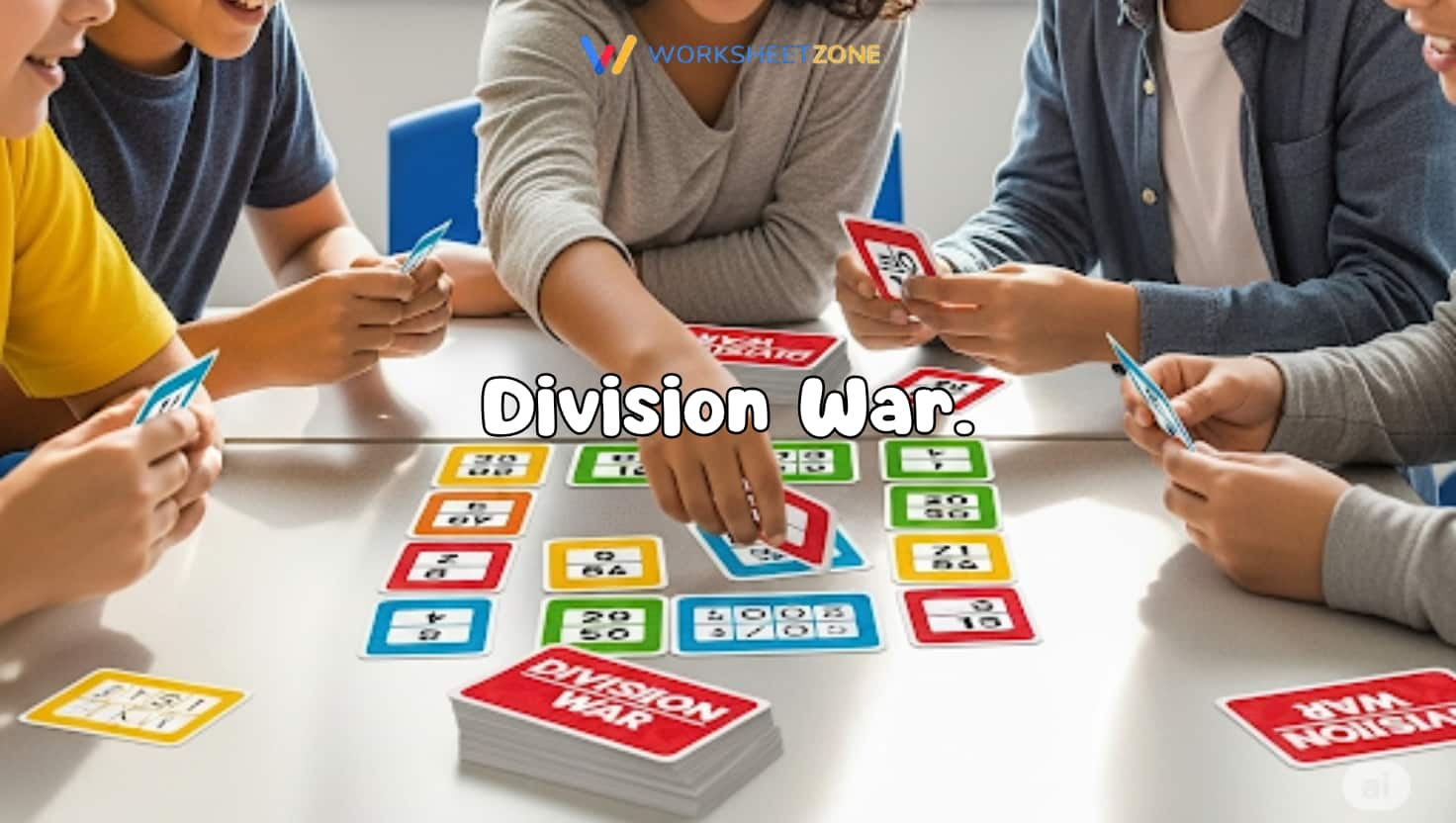
Division War is an engagin activity that helps students compare and solve division problems quickly.
It encourages mental math and strategic thinking, as students must solve division facts before determining who wins each round. It’s a simple yet powerful way to build fluency with division.
Materials Needed:
- Decks of playing cards (remove face cards)
- Scratch paper (optional)
How to Do:
- Pair up students and give each pair a shuffled deck of number cards.
- Each player draws two cards per round and creates a division equation: larger ÷ smaller.
- Both students solve their division problems mentally or with scratch paper.
- The student with the higher quotient wins the round and collects all the cards.
- Play continues until one player holds all the cards or time runs out.
- Encourage students to explain their reasoning when there’s a tie or unclear result.
3. Division Array Building
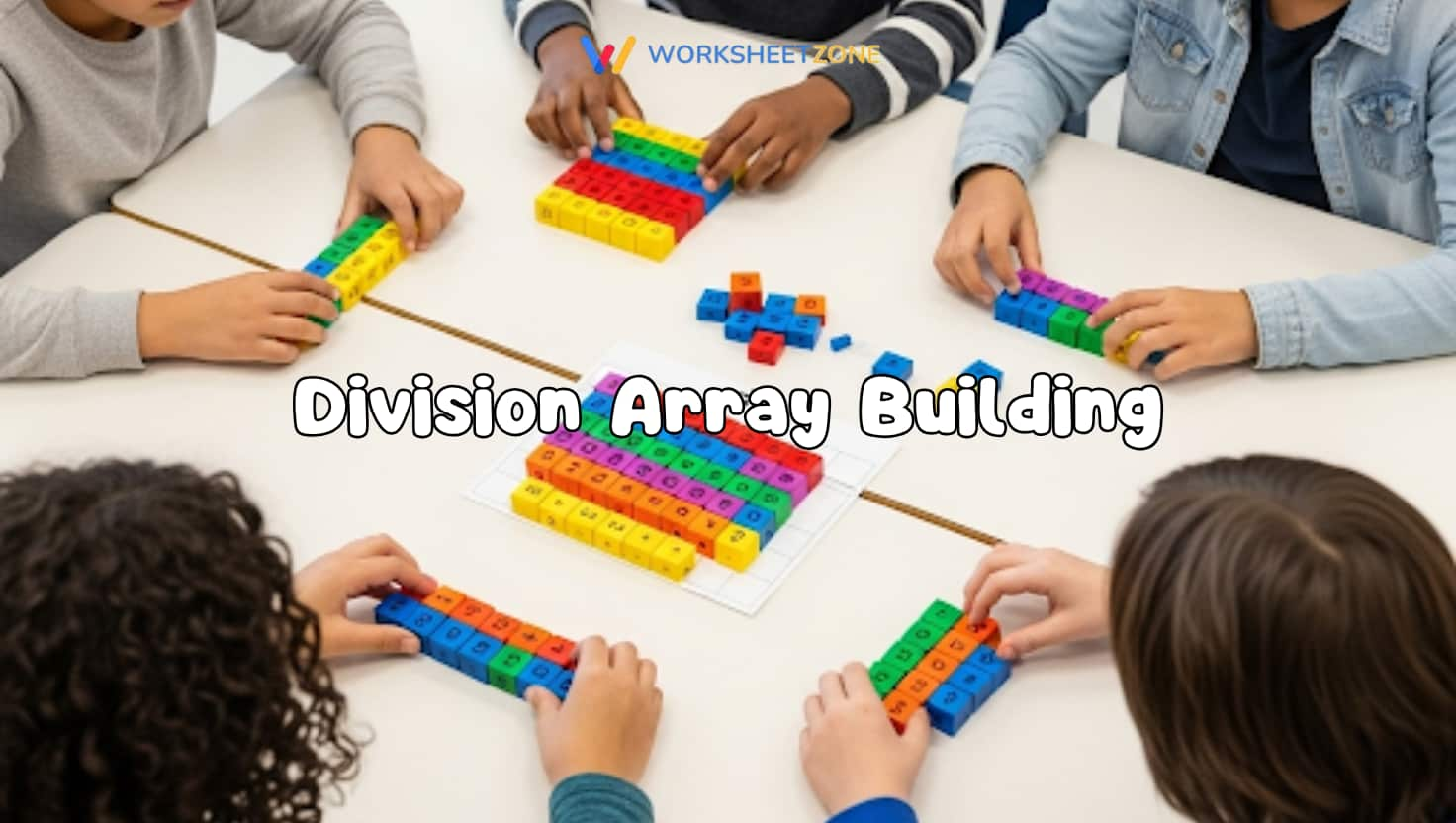
This hands-on division activity uses manipulatives to help students visualize how division works. By building arrays, students see the relationship between division and multiplication and strengthen their understanding of grouping and remainders.
Materials Needed:
- Counters, cubes, or small objects
- Grid paper or whiteboards
How to Do:
- Give students a number (e.g., 12) and have them use counters to build arrays on grid paper or whiteboards.
- Ask them to organize the counters into equal rows and identify how many groups and how many in each group.
- Guide students to write the matching division equation (e.g., 12 ÷ 3 = 4) and relate it to a multiplication fact.
- Repeat with new numbers, including ones that leave remainders, to deepen understanding of grouping and leftover values.
4. Division Scoot
Division Scoot is a high-energy classroom game that gets students moving while solving a series of division problems. It’s a great way to reinforce division math activities in a kinesthetic format and keeps students focused through movement.

Materials Needed:
- Task cards with division problems
- Scoot answer sheets
- Pencils
How to Do:
- Place one division task card on each desk and give every student a Scoot answer sheet and pencil.
- Have students start at their own desk, solve the problem, and record their answer in the corresponding numbered box.
- After a set time (e.g., 30–60 seconds), call out “Scoot!” to signal students to move to the next desk and solve the next problem.
- Continue until all students return to their original seats, then review the answers as a class and discuss any challenging problems.
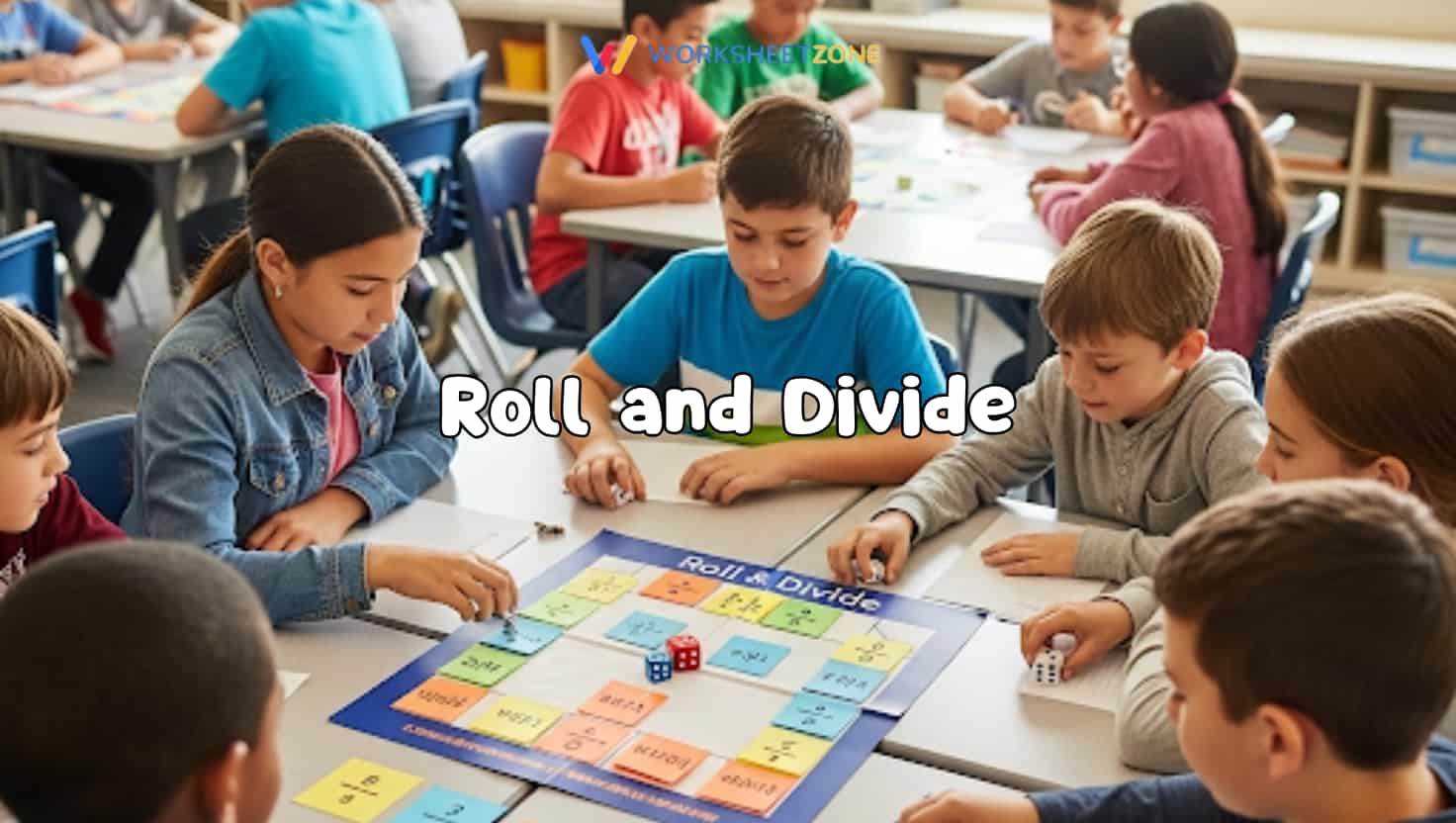
5. Roll and Divide
Students love games with dice, and this one challenges them to roll numbers and create division problems to solve. It’s quick to set up, perfect for pairs, and helps reinforce division facts in a playful setting.
Materials Needed:
- Dice (2 or more per student)
- Paper and pencils
How to Do:
- Each student or pair rolls two dice; the larger number becomes the dividend, the smaller the divisor.
- Students write the division equation (e.g., 6 ÷ 2) on their paper and solve it.
- If the division is exact, they earn a point; if not, discuss the remainder or roll again.
- Keep score to encourage friendly competition or set a goal for how many problems they can solve in a set time.
6. Division Puzzles
Division puzzles are great math activities to challenge students’ logic and reinforce problem-solving. Each puzzle requires students to match division problems with their correct quotients, promoting fluency and accuracy through critical thinking.

Materials Needed:
- Printed puzzles or cut-out cards
- Envelopes or small bags
How to Do:
- Prepare puzzle sets by printing division problems and their corresponding quotients on separate pieces or puzzle shapes.
- Mix the pieces and place them in envelopes or bags for each student or small group.
- Have students match each division equation to the correct answer, either by laying out cards or completing triangle puzzles.
- Use the activity as a math center, fast finisher task, or small group challenge to build both fluency and logic skills.
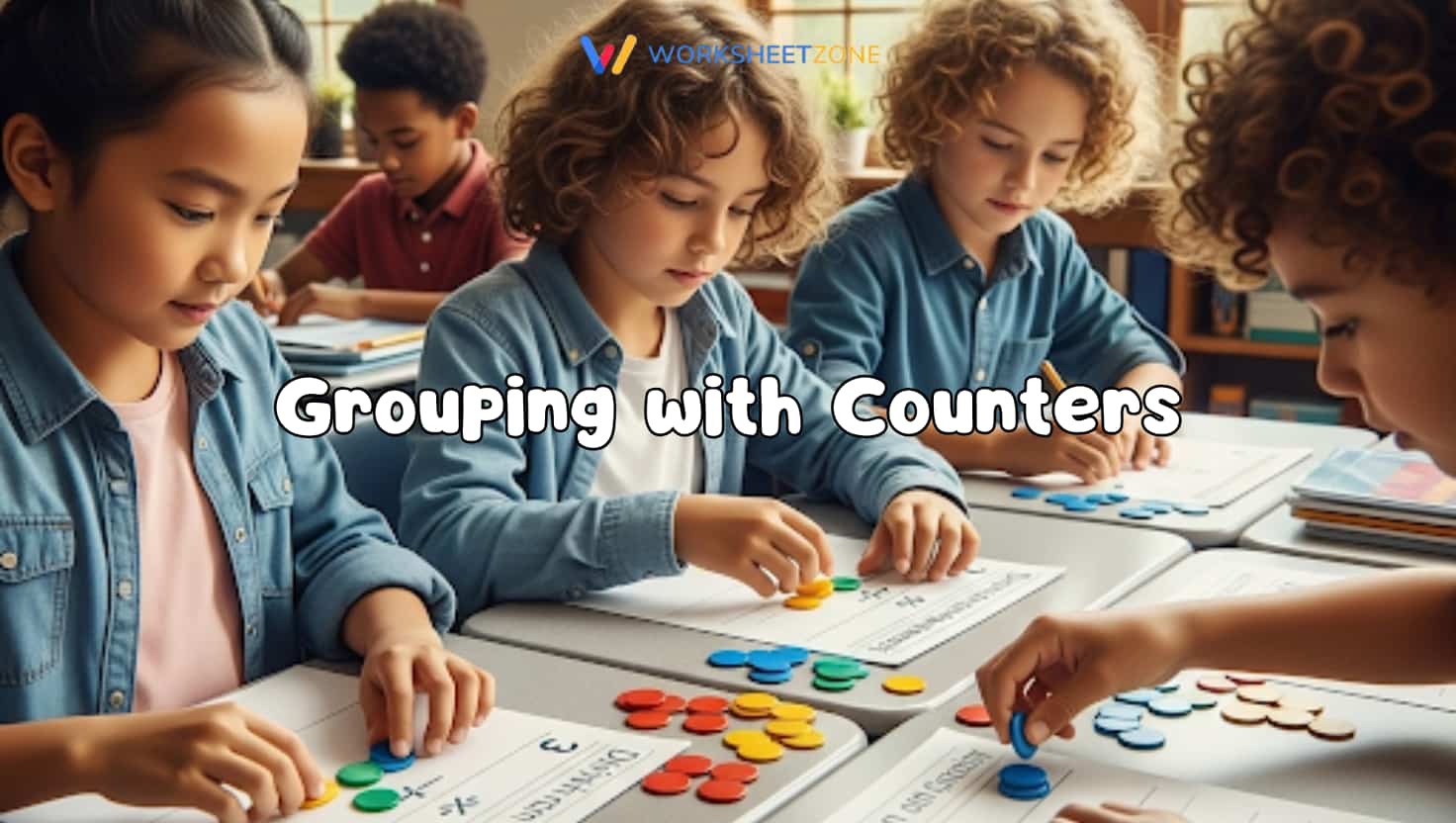
7. Grouping with Counters
This foundational activity helps younger students grasp the core idea of division—making equal groups. Using counters provides a visual and tactile way to show how division works, making it perfect for early learners.
Materials Needed:
- Counters or small objects
- Bowls or trays
- Division problem cards
How to Do:
- Present students with a division equation (e.g., 15 ÷ 3) and provide enough counters to represent the dividend.
- Ask them to physically place the counters into equal groups using bowls or trays to show the division.
- Once grouped, have students count how many objects are in each group and confirm equal distribution.
- Guide them to say or write the matching division sentence and discuss any leftover counters if applicable.
8. Division Scavenger Hunt
Make division practice active and exciting with a scavenger hunt around the classroom. Students solve division problems to unlock clues and find the next challenge, turning learning into a mini-adventure.

Materials Needed:
- Task cards with division problems
- Clue sheets or hidden “next steps”
- Pencils
How to Do:
- Place task cards with division problems at various locations around the classroom, each numbered or coded.
- Students begin with the first card; solving the division problem gives them a clue (e.g., “Go to the bookshelf”) for where to find the next.
- Continue the process until they complete all the problems and reach the final destination.
- Reward students with a small prize or positive note for completing the hunt and reviewing the answers together.
9. Division Match-Up
This is among the most simple yet effective math activities where students match division problems with their answers. It can be played solo, in pairs, or as a timed challenge, and is great for reinforcing division facts in a quick and visual way.

Materials Needed:
- Cards with division problems
- Cards with answers
- Timer (optional)
How to Do:
- Spread out all division problem cards and answer cards on a table, either face-up for easy matching or face-down for a memory challenge.
- Students work alone or in pairs to find and match each division problem with its correct quotient.
- To increase excitement, use a timer and challenge students to complete matches before time runs out.
- After matching, review all pairs as a class to reinforce correct answers and clear up misunderstandings.
10. Division Board Game
Create your own classroom board game to review division concepts. Students roll dice, move pieces, and solve division problems to advance, turning learning into a strategic and exciting experience.

Materials Needed:
- Game board
- Dice
- Player pieces
- Division question cards
How to Do:
- Players take turns rolling the dice and moving their pieces forward on the game board according to the roll.
- When landing on a space, the player draws a division question card and attempts to solve it.
- If the answer is correct, the player stays on that space; if incorrect, they move back one or two spaces as a penalty.
- The first player to reach the end of the board wins the game, encouraging friendly competition and division practice.
11. Clip Card Division
Clip cards are a self-checking and tactile way for students to practice division independently. They choose the correct quotient by clipping it with a clothespin, helping build confidence through hands-on learning.

Materials Needed:
- Printed clip cards with division problems and answer choices
- Clothespins
How to Do:
- Give each student a set of clip cards featuring division problems paired with multiple-choice answers.
- Students read the division problem aloud and decide which answer is correct.
- Using a clothespin, they clip it onto the chosen answer on the card.
- Students can self-check their work by flipping the card to see the correct answer marked with an answer key or color-coded dot.
12. Division Relay Race
Turn review time into a classroom competition with this active relay race. Students solve division problems as quickly as possible, adding excitement and energy to your division math activities.

Materials Needed:
- Task cards with division problems
- Whiteboards or paper
- Markers or pencils
How to Do:
- Divide the class into equal teams and assign a starting point for each team.
- One student from each team runs to a designated station to pick up a division task card.
- The student solves the problem on a whiteboard or paper, then runs back to tag the next teammate.
- The relay continues until all problems are solved correctly; the first team to finish wins.
13. Mystery Pictures – Division Edition
Combining division practice with coloring, this activity reveals a hidden picture when students solve problems correctly. It’s quiet, focused, and a great independent or early-finisher task.

Materials Needed:
- Division mystery picture worksheets
- Crayons or markers
How to Do:
- Distribute mystery picture worksheets featuring grids with division problems in each section.
- Students solve each division problem to find the correct answer that corresponds to a specific color.
- Using crayons or markers, they color each section of the grid according to the answer key.
- When completed, a hidden image appears; review answers as a class to ensure accuracy.
14. Division Flip Book
A division flip book helps students create their own visual reference tool. It’s perfect for reviewing key concepts, showing different strategies, and encouraging ownership of learning.

Materials Needed:
- Paper
- Scissors and staplers
- Markers or pens
How to Do:
- Provide students with sheets of paper divided into sections, each representing a different division concept like equal groups or remainders.
- Students write and solve example division problems on each section, adding drawings or visuals to illustrate the concept.
- Once completed, help students cut out and assemble the pages into a flip book using staples or binding.
- Encourage students to keep their flip books in folders for easy reference and ongoing review throughout the school year.
15. Digital Division Practice
Incorporating technology into your division lessons can boost engagement and support differentiated learning. Digital tools like Boom Cards, Google Slides, or online games offer interactive, self-paced division math activities.

Materials Needed:
- Devices (laptops or tablets)
- Internet connection
- Access to online division resources
How to Do:
- Assign interactive digital division activities through your learning management system (LMS) or share links to online games and practice platforms.
- Allow students to complete tasks independently or collaborate in pairs using laptops or tablets.
- Monitor student progress through built-in tracking tools and offer timely feedback to support learning.
- Use these digital activities as classroom centers, homework assignments, or engaging tasks for fast finishers.
Final Thoughts
Incorporating division math activities into your classroom routine can transform how students view and understand division. By using games, visuals, and collaborative tasks, you make learning both effective and enjoyable.
Want to take the next step? Check out these free division worksheets from Worksheetzone to give your students even more hands-on practice. They’re perfect for centers, homework, or quick skill refreshers—print and use them today!