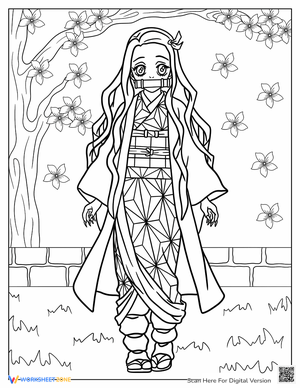
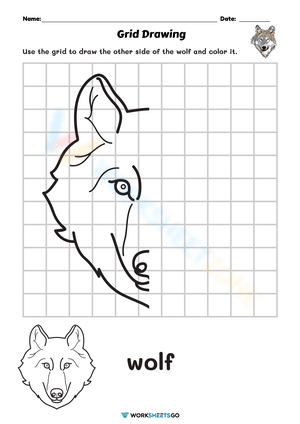
These art worksheets printable for 4th grade give teachers a ready set of focused exercises targeting the specific visual skills nine- and ten-year-olds are developmentally prepared to tackle — observation-based drawing, color relationships, value and shading, and the foundational vocabulary of the Elements of Art. At this grade, students are actively moving away from symbolic drawing toward spatially aware representation, and they need direct, structured practice before applying new techniques in studio work with paint, clay, or mixed media. Each worksheet addresses a discrete skill so teachers can use them as pre-studio preparation, targeted reinforcement, or productive independent work.
The Specific Skills Targeted Across the Set
The worksheets organize around the seven Elements of Art — line, shape, color, value, form, texture, and space. Each worksheet isolates one element so students work deeply rather than skim across all seven at once. A texture worksheet has students practice cross-hatching, stippling, and contour hatching to render the surface difference between smooth stone and rough bark — not just label the terms, but actually produce the marks. A space and form worksheet introduces one-point perspective and asks students to shade a cube or cylinder with a consistent light source marked on the sheet, so the shading decision is guided rather than guessed.
Color theory gets dedicated attention across several worksheets in the set. Students move well past primary and secondary colors in fourth grade; the work here covers tertiary colors, tints and shades produced by adding white or black to a hue, and complementary pairings. One worksheet uses a structured grid where students record what happens when they mix a specific hue with increasing amounts of white — a low-stakes way to build muscle memory for color mixing before students touch a palette and expensive watercolor paper.
Art History Pairings That Hold Up in Real Lessons
Several worksheets pair short biography reading with style-based drawing exercises. The Georgia O'Keeffe worksheet includes a brief passage about her macro-floral paintings, then asks students to zoom in on a natural object — a leaf, a shell, a flower head — and draw it large enough that the image bleeds past the paper's edge. That compositional constraint forces a different way of seeing the object rather than just copying it whole. The Faith Ringgold worksheet introduces story quilts and narrative art using a bordered template where students plan a central memory image surrounded by a decorative frame, mirroring the structure of Tar Beach without requiring students to have any prior quilting knowledge.
For Van Gogh, the focus is mark-making rather than color. Students practice building up expressive, directional strokes using oil pastels or crayons, matching the energy of his sky in The Starry Night without attempting to replicate the full composition. These exercises teach students that artistic style reflects deliberate choices — not a mysterious talent some students arrive with and others don't.
How to Build These Worksheets Into Your Lesson Plans
Art worksheets printable for 4th grade slot into several reliable spots in the weekly schedule. The 8 to 10 minutes at the start of class — while students settle, attendance gets taken, and supplies are distributed — absorbs a single-element drawing exercise naturally. A texture or line exercise gives students something purposeful the moment they sit down rather than waiting through the transition. Before a watercolor project, a color-mixing worksheet done in colored pencils the previous day cuts down confusion and material waste once students pick up a brush.
Substitute days are where a well-organized binder of these worksheets earns its place immediately. The strongest sub-day options require only a pencil and colored pencils — grid drawing exercises, directed observational drawing of a common object, and art history reading passages with a brief drawn or written response. No clay, no paint, no setup. Clear worksheet titles and straightforward written directions mean the substitute does not need art knowledge to run the period successfully.
Frequent Student Errors Worth Watching For in This Set
The most predictable error on perspective worksheets is placing the vanishing point dead center on the horizon line every single time, regardless of the composition. Students do this because center placement feels safe and produces a recognizable result. But that habit prevents students from understanding that perspective is spatial logic, not a formula. Asking students to produce three quick thumbnail sketches with the vanishing point in different horizontal positions — left, center, right — before starting the main worksheet breaks the pattern early and generates real discussion about how placement changes the viewer's experience.
On color theory worksheets, the tint-and-shade grid surfaces a different misunderstanding: many students add gray rather than black when trying to darken a hue, producing a muddy version of the color instead of a true shade. The grid format makes this visible because results sit directly beside each other for comparison. That adjacency becomes the teachable moment — the worksheet doesn't just confirm completion, it produces evidence of thinking the teacher can act on during a quick whole-class debrief before moving into studio work.
Differentiating the Set Across Ability Levels
For students who move quickly through technical exercises, the texture and shading worksheets extend naturally: instead of filling a predetermined set of shapes, those students create their own composition and apply multiple techniques across regions of their own design. The constraint of the guided format works well for students who stall without structure — a partially drawn cube with a marked light source removes the compositional decision entirely, so the student focuses on the shading logic rather than what to draw.
English language learners benefit from the art history worksheets because the short biographical reading passages provide context that supports the vocabulary in the drawing prompt. When students have just read about O'Keeffe's close-up perspective and viewed a reproduction of her work, the drawing instruction reads clearly without requiring fluent command of written English. The visual model on each worksheet carries the instruction independently of the text, which is a meaningful advantage in mixed-language classrooms.
Standard Alignment
These resources support the National Visual Arts Standards published by the National Art Education Association, specifically the Creating anchor standards (VA:Cr1, VA:Cr2) and the Responding standards (VA:Re7, VA:Re8). VA:Cr1 and VA:Cr2 address artistic process — generating ideas, refining technique, and making intentional decisions — and art worksheets printable for 4th grade address these directly when students practice shading, perspective, and color mixing as preparation for studio application. VA:Re7 and VA:Re8 ask students to analyze artworks and connect visual choices to meaning, which the art history worksheets address through guided observation and short written or drawn responses paired with a reproduction. Most state frameworks that derive from the National Standards include fourth-grade benchmarks with explicit attention to the Elements and Principles of Art, placing this set within expected instructional scope for that grade band.
Frequently Asked Questions
What art skills should fourth graders be developing?
Fourth graders are ready to use the Elements of Art in an intentional, applied way — not just naming them but using them to make visual decisions. That means creating value scales, mixing intermediate and complementary color schemes, using overlapping and scale to suggest spatial depth, and beginning to observe objects analytically rather than drawing from symbol or memory. The shift from "I'll draw what I think a hand looks like" to "I'll look at my hand and draw the shapes I actually see" is a landmark in fourth-grade visual development, and the observational drawing exercises in the set address it directly.
How do these worksheets work alongside studio projects?
Most effectively as pre-studio preparation or as independent work during studio time. Before a painting unit, a color-mixing or value exercise done in colored pencils gives students the conceptual groundwork without consuming project materials. During studio time, the set works well for early finishers — a student who completes a painting before the period ends can work through a shading or perspective exercise rather than sitting idle or pulling focus from classmates who are still working. Neither use requires additional teacher instruction once the worksheet is in hand.
What materials do students need to complete these worksheets?
Most worksheets require only pencils and colored pencils, with a few exercises suited to oil pastels or crayons for texture and mark-making practice. No specialty art supplies are needed. That makes the set practical for general education classrooms and for any day when managing additional materials — paint, water containers, brushes — is not realistic.
Do these work in classrooms without a dedicated art teacher?
Yes. The directions on each worksheet are self-explanatory, and the exercises are self-contained. Students do not need prior instruction beyond what appears on the worksheet itself. For art worksheets printable for 4th grade used in a general education setting, the cross-curricular worksheets — grid drawing, botanical illustration, symmetry exercises — are particularly accessible because they connect directly to math and science content the classroom teacher already covers, making the connection between the arts and core subjects visible to students and straightforward for the teacher to introduce.