


























Views
Downloads
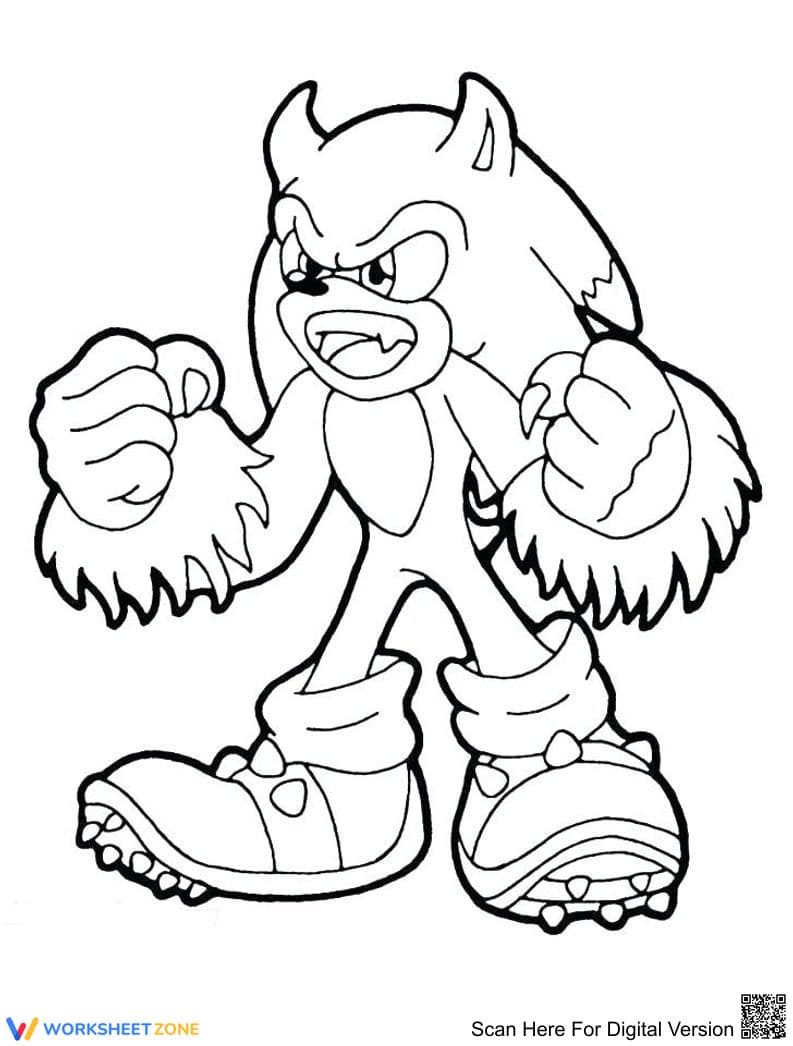

Printable Werehog Sonic Coloring Page for Grade 3-4
Paste this activity's link or code into your existing LMS (Google Classroom, Canvas, Teams, Schoology, Moodle, etc.).
Students can open and work on the activity right away, with no student login required.
You'll still be able to track student progress and results from your teacher account.
This printable Werehog Sonic coloring page engages Grade 3 and Grade 4 students in fine motor practice and creative writing. Students color the detailed character illustration and use the visual cues to write descriptive narratives. This activity builds artistic expression and vocabulary development.
At a Glance
- Grade: Grade 3 · Subject: Fine Art & ELA
- Standard:
CCSS.ELA-LITERACY.W.3.3— Write narratives using descriptive details and clear event sequences- Skill Focus: Fine motor control and character description
- Format: 1 page · 1 task · Answer key not applicable · PDF
- Best For: Morning work, early finishers, or writing prompts
- Time: 15–30 minutes
This resource contains 1 high-quality coloring page featuring the Werehog form of Sonic the Hedgehog. The illustration displays bold outlines and intricate details, including fur textures and spiked shoes, which challenge students' precision. The clean layout provides ample space around the character, allowing teachers to add custom writing prompts or vocabulary lists directly onto the printed sheet.
This zero-prep activity integrates into your daily schedule in 3 simple steps. First, print the single-page PDF, which takes less than 1 minute of preparation. Second, distribute the sheet to your class during transitions or morning routines. Third, review the completed artwork or read student descriptions aloud to share creative interpretations. This workflow requires under 2 minutes of total teacher setup, making it an ideal sub plan or sudden schedule filler.
Standards Alignment
This activity aligns with the primary standard CCSS.ELA-LITERACY.W.3.3, which requires students to write narratives using descriptive details. By coloring the character's fierce expression and dynamic pose, students gather visual evidence to support their descriptive writing tasks. Both standard codes can be copied directly into lesson plans, IEP goals, or district curriculum mapping tools.
How to Use It
Use this worksheet during direct instruction transitions or as an extension activity after a reading lesson. For a formative assessment, observe how students describe the character's emotions based on their color choices and line work. The activity typically takes 15 to 30 minutes to complete, depending on whether you include a writing extension.
Who It's For
This worksheet is designed for third and fourth-grade students who benefit from art-integrated learning. It supports English language learners by providing visual anchors for vocabulary acquisition. Pair this coloring page with a short character trait anchor chart or a descriptive writing mini-lesson to maximize student engagement.
Integrating creative arts with writing tasks significantly improves student engagement and retention in elementary classrooms. According to the Fisher & Frey (2014) framework for gradual release of responsibility, visual aids like this coloring sheet serve as excellent scaffolds for descriptive language development. When students interact with familiar characters, they demonstrate higher motivation to write and express complex ideas. This 1-page resource supports fine motor coordination while addressing core literacy standards. By connecting artistic expression with standard alignment, educators can assess comprehension and vocabulary in a low-stakes format. This worksheet aligns with CCSS.ELA-LITERACY.W.3.3 to ensure that creative activities remain grounded in academic expectations. Use this tool to bridge the gap between visual arts and structured writing practice in your classroom.


