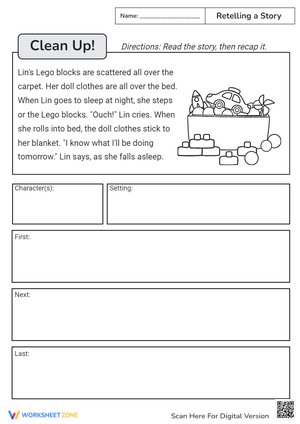
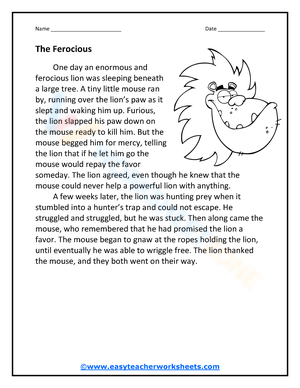
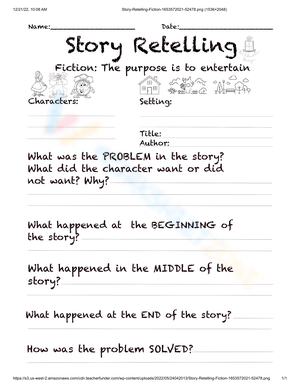
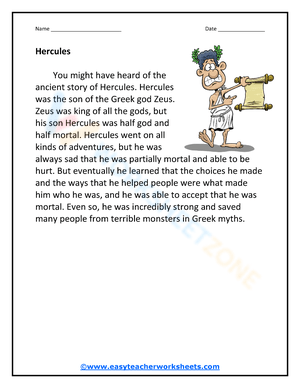
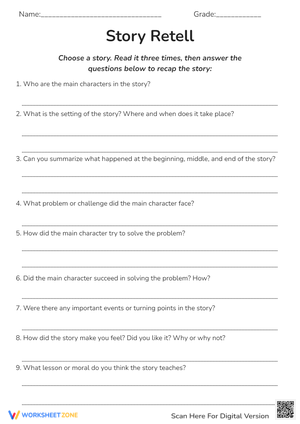
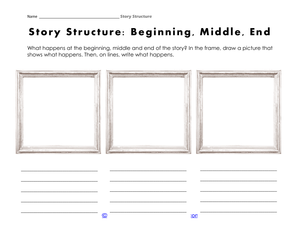
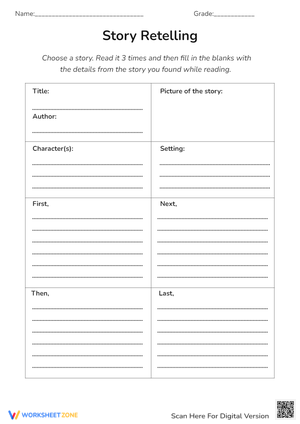
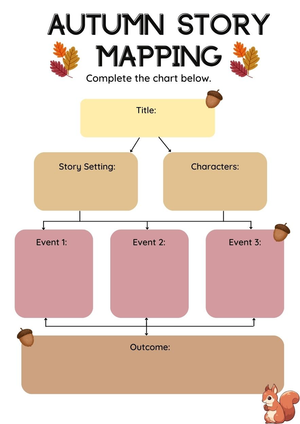
Story elements printable worksheets for 4th grade give teachers a reliable way to move comprehension from spoken discussion into written, reviewable thinking. Fourth grade is the year when reading expectations shift in a real and specific way: students are no longer asked simply to name a character or circle where the story takes place — they're expected to explain how a character's response to conflict reveals a trait, how the setting shapes the mood of a scene, and how the theme is supported by evidence from the text rather than stated as a vague opinion. These resources make that analytical work visible on paper, which is what teachers need when they're trying to see inside a student's head after a read-aloud or independent reading block.
What Each Worksheet Asks Students to Do
The set covers five skill areas — character, setting, plot, problem and solution, and theme — with each getting its own focused worksheet rather than being combined onto a single catch-all story map. Students who need more practice with theme rarely struggle with identifying the setting, and conflating those two needs wastes practice time for everyone in the room.
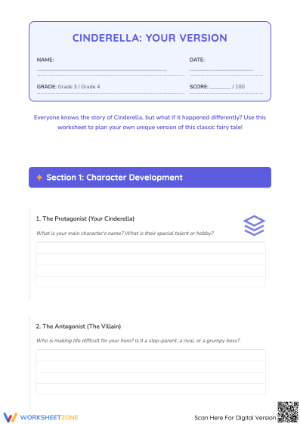
Character worksheets ask students to identify specific traits, trace what motivates a character's choices, and mark places in the passage where the character shifts. A student can underline "she handed the last piece of bread to the younger child" and label it as evidence of generosity — that kind of active annotation keeps analysis grounded in the text's actual language rather than vague summarizing.
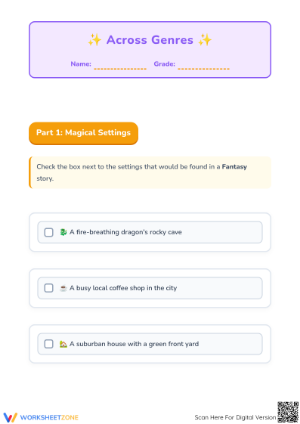
Setting worksheets move past the recall level. Alongside the "where and when" questions, the prompts push students to consider how the setting creates mood or limits a character's options. One effective prompt type asks: what would change about this scene if the setting were different? That question makes students treat setting as an active force in the story rather than decoration.
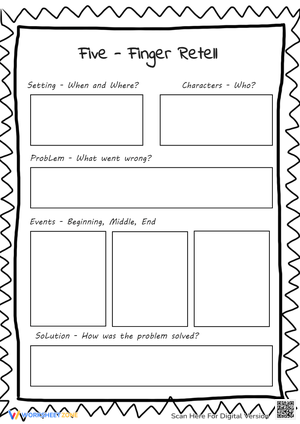
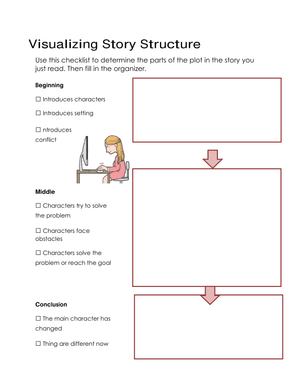
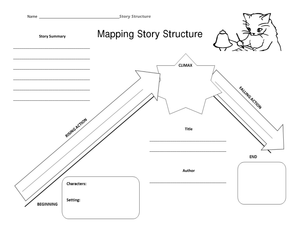
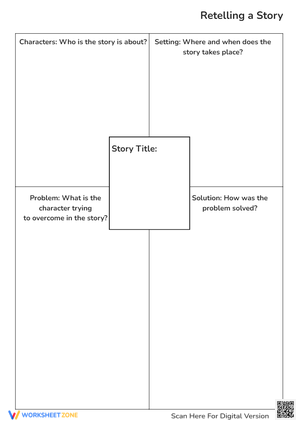
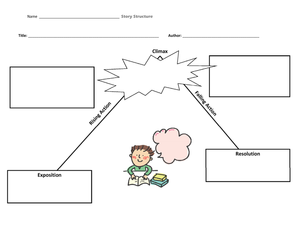
Plot worksheets treat cause-and-effect and sequencing as separate tasks — because students often place five events in correct order while still not understanding why one caused the next. Problem and solution worksheets ask students to name the central conflict, trace the steps toward resolution, and briefly evaluate whether the ending fully resolved it. Those two worksheet types work best when taught in sequence rather than assigned on the same day.
Theme gets its own worksheet because it demands a different kind of thinking. Students state the lesson as a generalized idea — something that could apply beyond the specific story — and then cite at least two supporting details from the text. That two-part structure keeps theme work from sliding into plot retelling or unsupported opinion writing.
Frequent Student Errors These Worksheets Help You Catch
Theme produces the most consistent errors at this grade level, and the pattern is specific: students describe the plot ending rather than extracting a message. A student who writes "the theme is that the dog found its way home" is restating what happened, not identifying what the story suggests about loyalty or perseverance. The theme worksheets interrupt this habit by asking students to restate the lesson as something that could apply to a completely different story — that step forces them out of plot summary mode in a way that a single-question prompt never does.
Setting analysis surfaces a second persistent error. When asked how the setting affects the events, most students simply re-describe it: "It was a cold winter and there was a lot of snow." They treat it as a recall question rather than an analytical one. Prompts that ask "how would this event change in a different setting?" make the analytical expectation explicit and harder to sidestep.
In character work, students frequently confuse traits with actions. "Helpful" is a trait; "she stayed after school to tutor her classmate" is the action that proves the trait. When students list actions in the "character traits" column, it usually signals they haven't internalized the distinction yet. The character worksheets keep these two categories in separate columns — visually distinct — until students can reliably tell them apart without that support.
How to Work These Worksheets Into Your Week
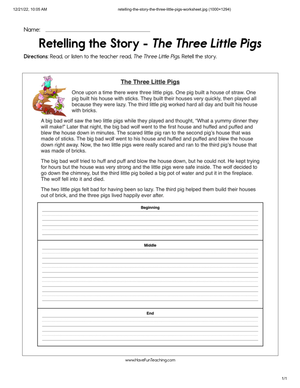
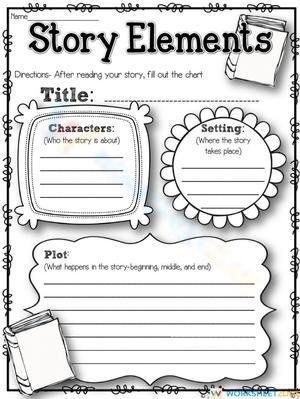
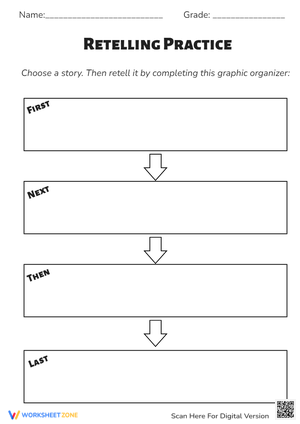
The most effective approach to story elements printable worksheets for 4th grade is a weeklong sequence anchored to a single text rather than five isolated exercises. Day one: students read a short passage and complete a broad elements worksheet — character, setting, conflict, and a plot overview. Day two: a character-focused worksheet requiring evidence-based trait analysis with no single-word answers accepted. Day three: a plot worksheet working through cause-and-effect and sequence as separate tasks. Day four: the theme worksheet, saved deliberately for later in the week after students know the text well enough to reason about its message. Day five: a written response prompt asking students to connect two elements — for example, how the setting shapes the central conflict.
This sequence works in whole-group instruction, small guided reading groups, and literacy station rotations. It also solves a problem many teachers recognize: when story element practice is isolated ("today we're doing character, tomorrow we're doing setting"), students practice the parts but never develop a sense of how those parts work together. The weeklong structure builds that understanding without requiring a new lesson plan each day.
For sub plans and intervention binders, the plot-sequencing and problem-and-solution worksheets are the most reliable standalone choices. The task is immediately clear, and the organizer gives students enough direction to work independently without a teacher circulating.
Standard Alignment
Three Reading: Literature standards from the Common Core State Standards anchor this set at Grade 4:
- RL.4.1 — Referring to details and examples in a text when explaining what the text says explicitly and when drawing inferences. Every worksheet in the set includes an evidence prompt — a quote line, evidence box, or "prove it with details" instruction — so this standard stays active throughout the practice rather than appearing only on assessment days.
- RL.4.2 — Determining a theme of a story, drama, or poem from details in the text and summarizing the text. This maps directly to the theme worksheets and the end-of-week written response format.
- RL.4.3 — Describing in depth a character, setting, or event, drawing on specific details in the text. This is the central standard driving the character and setting worksheets across the set.
In practical lesson-planning terms, story elements printable worksheets for 4th grade fit inside the literature instruction block rather than pulling time away from it. A 45-minute ELA period holds 15 minutes of shared reading or read-aloud, 20 minutes of independent worksheet practice, and a 5-minute whole-group debrief on one or two student answers — without restructuring the schedule.
Adapting the Set for a Range of Learners
For students who need more support, the most efficient adjustment is to partially pre-fill the graphic organizer before distributing. Writing in the first plot event, or supplying the character's name alongside one sample trait, reduces the friction of confronting a fully empty organizer and lets students direct their energy toward the actual analytical work — finding the next event, locating evidence for the second trait. This adjustment matters most on the theme worksheet, where students who need more support often freeze when asked to produce a generalized lesson with no starting point at all.
Students who are ready for more challenge can skip the graphic organizer and write directly to the response prompt at the bottom of each worksheet. That prompt — typically asking students to connect two elements or evaluate a character's decision — requires the same analysis but without the step-by-step organizer to lean on. For those students, the organizer becomes optional review rather than required practice.
For English language learners, adding a bilingual vocabulary bank alongside two sentence frames for the response prompt gives language access without reducing the analytical demand of the task. The worksheet itself stays the same; what changes is the language entry point.
Frequently Asked Questions
What story elements are fourth graders expected to analyze, not just identify?
At Grade 4, students move from naming elements to explaining how they function. That means describing how a character's traits connect to their choices, explaining how the setting influences mood and plot, and supporting an identified theme with specific text details. Naming the elements is the starting point, not the finish line.
Can these worksheets be used with any fiction passage, or do they require specific texts?
They work with any narrative text, which makes them useful across the whole year. Teachers pair them with class read-aloud novels, anthology excerpts, independent reading books, and short story collections. The organizer prompts are open enough to apply to any fiction passage without modification.
How do teachers handle students who finish well before the rest of the class?
Most teachers who regularly use story elements printable worksheets for 4th grade keep a written extension ready: a follow-up prompt asking students to make a text-to-text connection using the element they just analyzed. That keeps early finishers in the same analytical mode rather than shifting them to an unrelated task — and the written responses those students produce are often useful data for planning small-group work.
Do the worksheets include graphic organizers, written response prompts, or both?
Both. Graphic organizer worksheets work best for initial skill practice and for students who are still building fluency with each element. Written response worksheets ask students to synthesize — explaining, for example, how character motivation connects to theme or how the setting shapes the central conflict. Teachers typically use the organizer worksheets first and move to the written response worksheets once students can name and support the elements reliably on their own.












 Interactive Worksheet Maker
 Quiz Maker
 Word Search Maker
 Crossword Puzzle Maker
 Word Scramble Generator
 Sentence Scramble Generator
 Handwriting Worksheet Generator
 Name Tracing Generator
 Fill In The Blank Generator