


























Views
Downloads
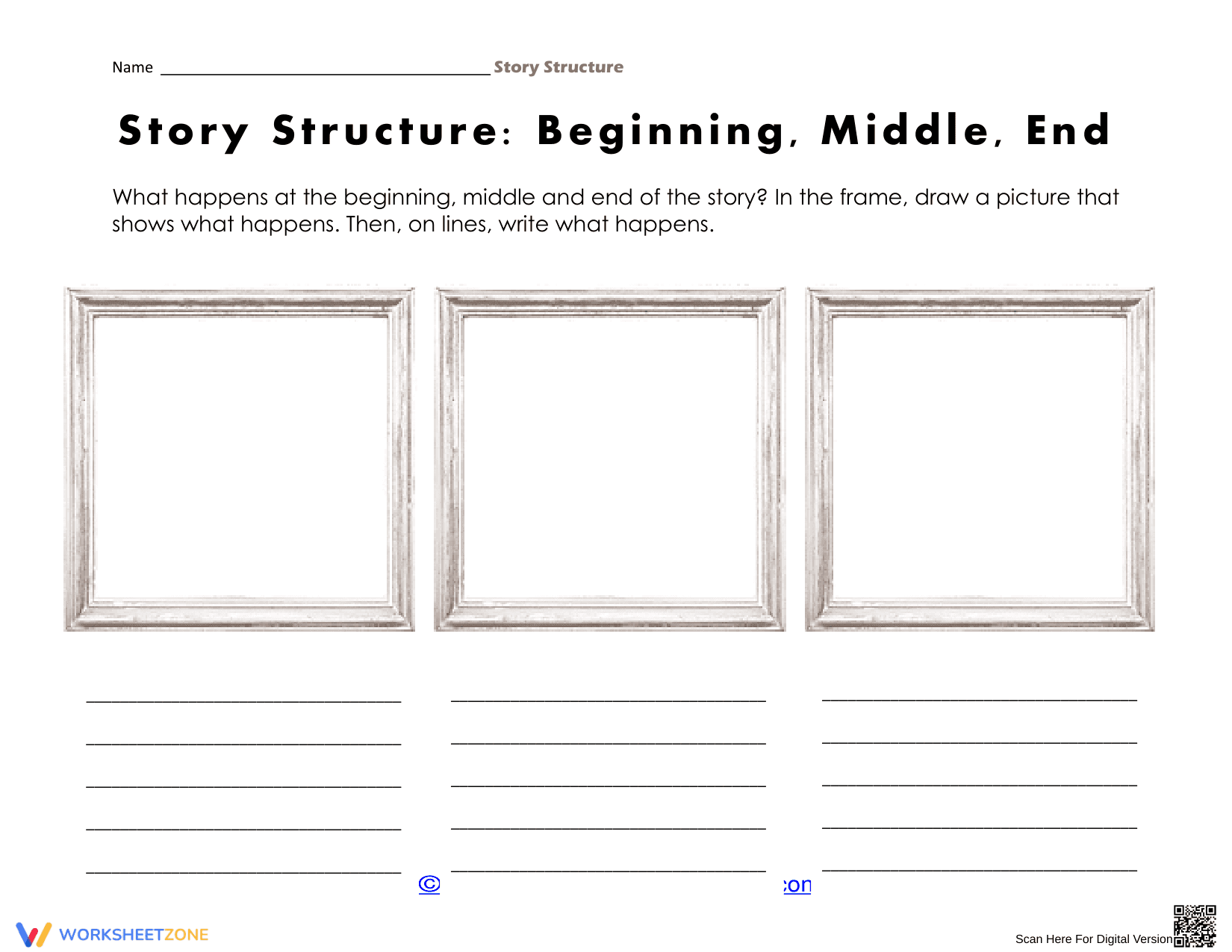

Essential Story Structure Worksheet: Beginning, Middle, End
Paste this activity's link or code into your existing LMS (Google Classroom, Canvas, Teams, Schoology, Moodle, etc.).
Students can open and work on the activity right away, with no student login required.
You'll still be able to track student progress and results from your teacher account.
This essential story structure worksheet helps students in Grades 3, 4, and 5 master the fundamentals of narrative sequencing. By identifying and retelling the beginning, middle, and end of any text, learners strengthen their comprehension and summary skills. This printable resource provides a structured framework for students to visually and textually demonstrate their understanding of story progression.
At a Glance
- Grade: 3–5 · Subject: English Language Arts
- Standard:
CCSS.ELA-LITERACY.RL.3.2— Recount stories and determine the central message through key details and sequencing- Skill Focus: Story Structure (BME)
- Format: 1 page · 3 problems · Answer key included · PDF
- Best For: Independent practice or quick reading assessment
- Time: 15–20 minutes
What's Inside
This focused one-page printable features three dedicated sections for the beginning, middle, and end of a story. Each segment includes a spacious drawing frame for visual representation and four lines of horizontal ruling for written description. The dual-modality design supports diverse learners by allowing them to sketch their ideas before translating them into formal writing, ensuring a comprehensive grasp of plot development.
Zero-Prep Workflow
The zero-prep design of this worksheet ensures immediate classroom implementation. First, print the single-page PDF. Second, distribute copies to students along with their current reading selection. Third, review work using the clear sections to provide instant feedback on sequencing accuracy. This efficient workflow makes it an ideal resource for sub plans or morning work.
Standards Alignment
This resource is directly aligned to CCSS.ELA-LITERACY.RL.3.2, which requires students to recount stories and determine the central message through key details. By breaking the narrative into three parts, students practice selecting relevant details that define the story arc. This standard code can be copied directly into lesson plans, IEP goals, or district curriculum mapping tools.
How to Use It
Use this worksheet as a formative assessment after a whole-class read-aloud to check comprehension. Teachers should observe whether students distinguish between the climax and resolution during the drawing phase. It also serves as an excellent post-reading activity for small group guided reading, requiring only about 15 to 20 minutes for completion.
Who It's For
This worksheet is designed for elementary students in Grades 3 through 5, particularly those developing their narrative writing and reading comprehension abilities. It provides necessary scaffolding for students who struggle with long-form summaries by chunking the task into three manageable parts. It pairs naturally with any short story, picture book, or literary passage used during direct instruction.
According to research by Fisher & Frey (2014), the use of visual scaffolds is critical for developing the gradual release of responsibility in literacy instruction. This worksheet addresses the cognitive load of retelling by providing a clear structure for CCSS.ELA-LITERACY.RL.3.2. By integrating drawing and writing, students engage multiple neural pathways, improving retention of story elements. Research from the NAEP highlights that students who successfully identify key plot points are more likely to master higher-order inference skills. This tool provides the foundational practice necessary for such mastery, allowing teachers to gather data on sequencing abilities. The structured format ensures that the skill focus remains on the beginning, middle, and end, making it a key component of a research-based literacy curriculum.


