


























1 / 3
0
Views
0
Downloads

0.0
0
Save
0 Likes
Share
Dive into the Classic Aladdin Story
0 Views
0 Downloads
Paste this activity's link or code into your existing LMS (Google Classroom, Canvas, Teams, Schoology, Moodle, etc.).
Students can open and work on the activity right away, with no student login required.
You'll still be able to track student progress and results from your teacher account.
Information
Description
What It Is:
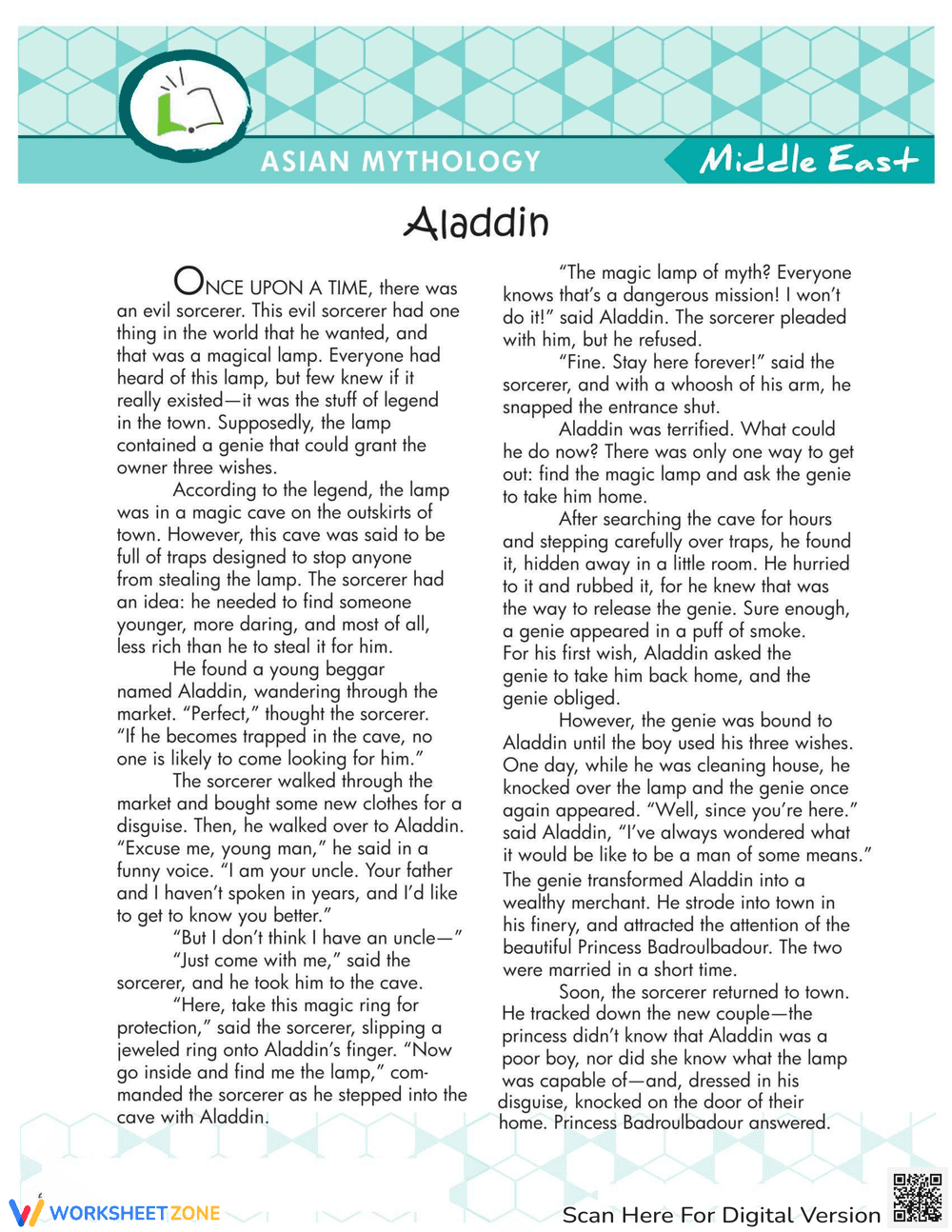
This is a reading comprehension worksheet featuring the story of Aladdin from Asian Mythology, specifically from the Middle East. The worksheet presents a condensed version of the classic tale, outlining the sorcerer's quest for the lamp, Aladdin's adventure in the cave, and his initial wishes granted by the genie.
Grade Level Suitability:
Suitable for grades 3-5. The vocabulary and sentence structure are relatively simple, making it accessible for younger readers, while the story's complexity provides a good exercise in reading comprehension.
Why Use It:
This worksheet enhances reading comprehension skills, introduces students to classic mythology, and promotes cultural awareness by exposing them to a story from Middle Eastern folklore. It also helps develop vocabulary and improve reading fluency.
How to Use It:
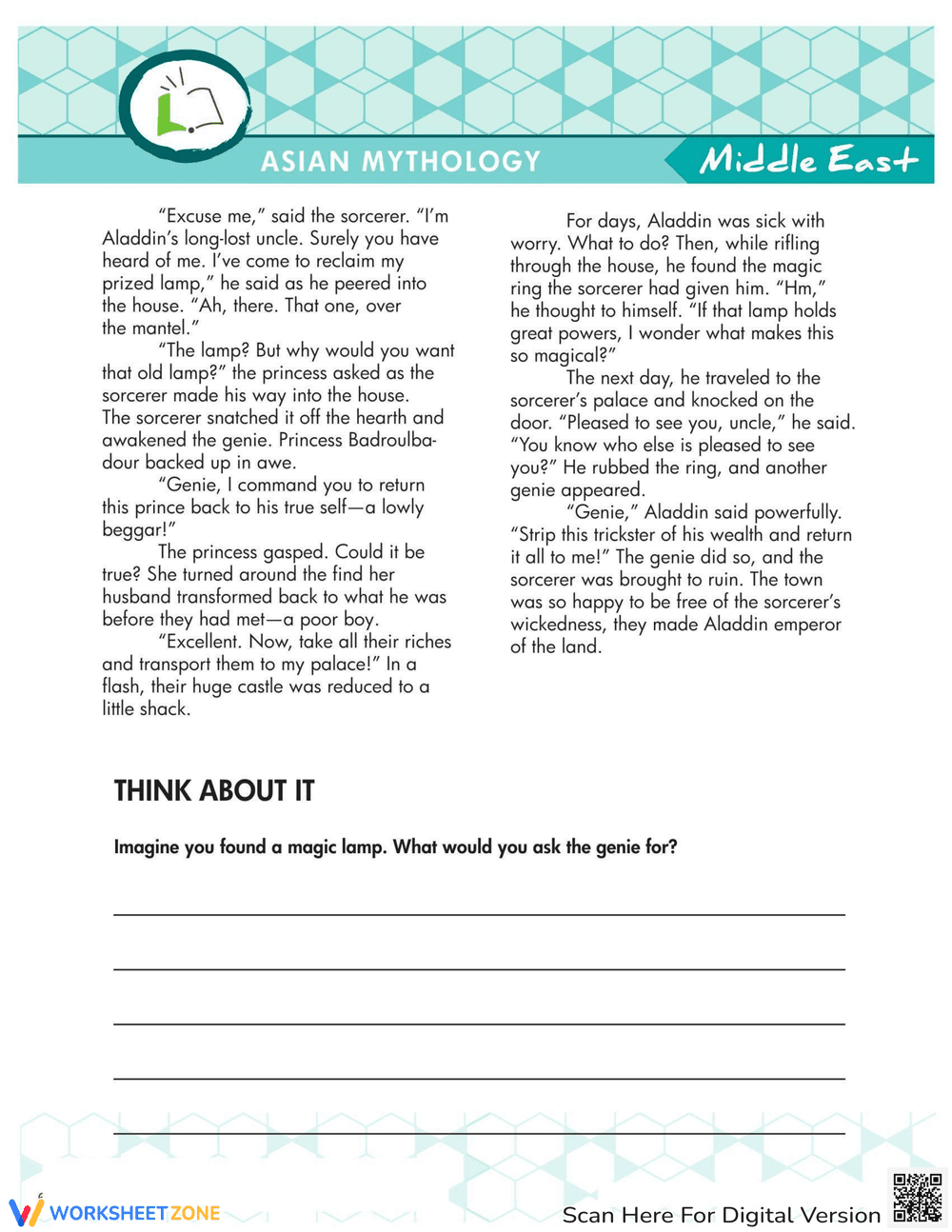
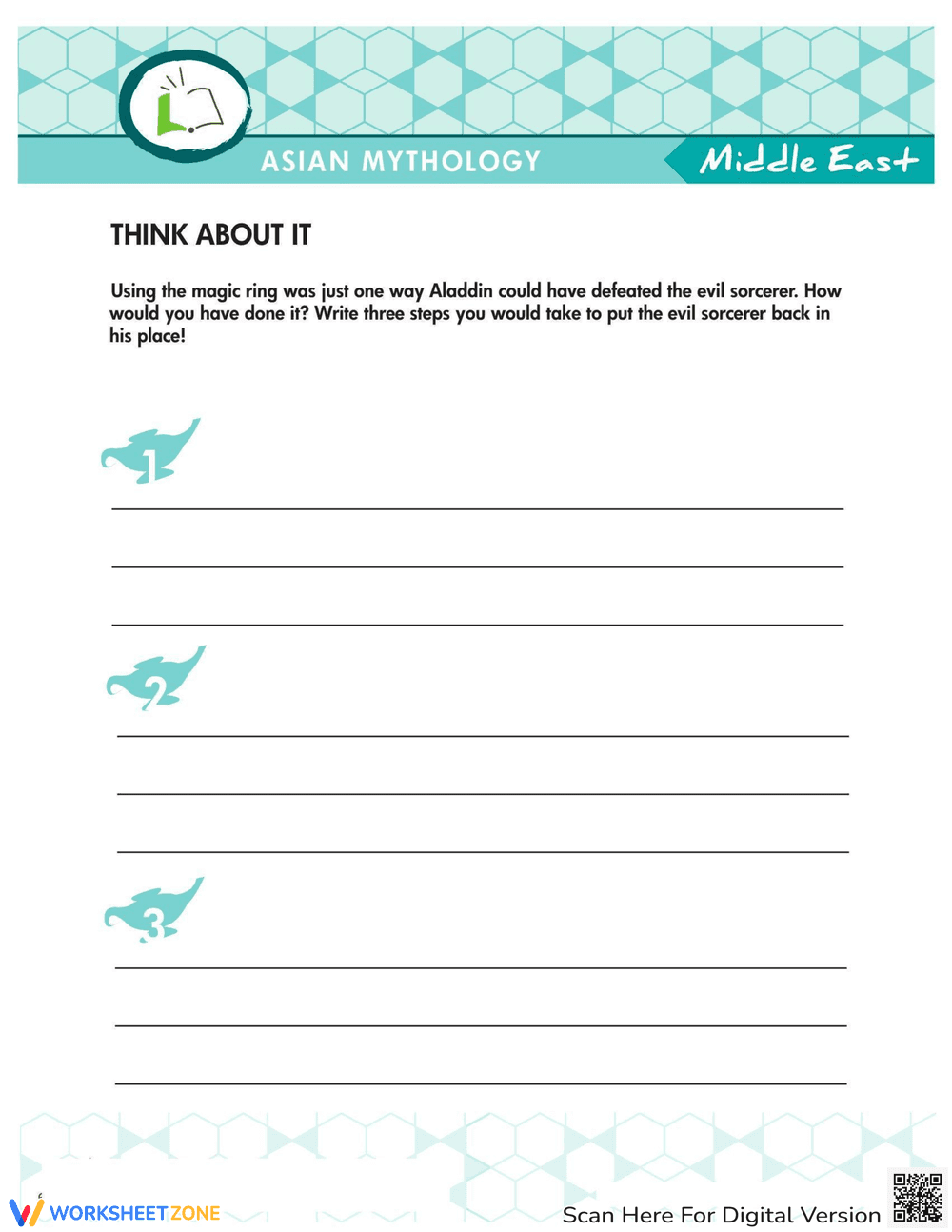
Students can read the story individually or as a class. After reading, they can answer comprehension questions (not visible but implied), discuss the themes, or retell the story in their own words. The worksheet can also be used as a springboard for further research into Middle Eastern culture and mythology.
Target Users:
Elementary school students, particularly those in grades 3-5, and ESL learners who are working on improving their reading comprehension and vocabulary skills. Teachers can use this as a supplemental activity during a unit on mythology or world cultures.
This is a reading comprehension worksheet featuring the story of Aladdin from Asian Mythology, specifically from the Middle East. The worksheet presents a condensed version of the classic tale, outlining the sorcerer's quest for the lamp, Aladdin's adventure in the cave, and his initial wishes granted by the genie.
Grade Level Suitability:
Suitable for grades 3-5. The vocabulary and sentence structure are relatively simple, making it accessible for younger readers, while the story's complexity provides a good exercise in reading comprehension.
Why Use It:
This worksheet enhances reading comprehension skills, introduces students to classic mythology, and promotes cultural awareness by exposing them to a story from Middle Eastern folklore. It also helps develop vocabulary and improve reading fluency.
How to Use It:
Students can read the story individually or as a class. After reading, they can answer comprehension questions (not visible but implied), discuss the themes, or retell the story in their own words. The worksheet can also be used as a springboard for further research into Middle Eastern culture and mythology.
Target Users:
Elementary school students, particularly those in grades 3-5, and ESL learners who are working on improving their reading comprehension and vocabulary skills. Teachers can use this as a supplemental activity during a unit on mythology or world cultures.


