Making Connections Printable Worksheets for 4th Grade
These making connections printable worksheets for 4th grade give teachers two distinct skill tracks: the reading comprehension strategy of linking a text to personal experience, other books, or real-world events, and the sentence-level grammar work of using conjunctions and transitions to express those relationships in writing. Each worksheet targets one of these skills, so teachers can use them to close a specific gap or run them in sequence as students move from reading strategy into writing application.
What Each Worksheet Practices
The reading comprehension side covers all three connection types students are expected to use in Grade 4. Text-to-self worksheets ask students to read a passage, identify a moment or idea that connects to their own experience, and write an explanation that pushes past "this reminds me of..." into why that connection helps them understand the text. Text-to-text worksheets pair two short passages — often one narrative and one informational — and give students a graphic organizer for mapping thematic or structural similarities. Text-to-world worksheets present an informational article and prompt students to connect a specific concept to a broader event or issue they have background knowledge about.
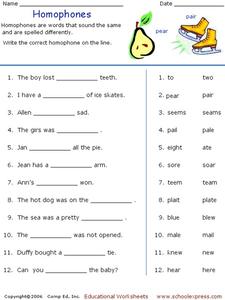
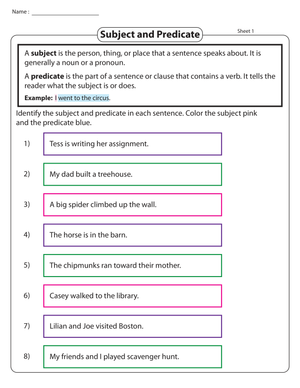
The grammar side targets coordinating and subordinating conjunctions. Students work with pairs like because and so, although and even though, and transition phrases like however and therefore. The core task across these worksheets is sentence combining: students read two related but separate statements, identify the logical relationship between them — contrast, cause, addition, or concession — and rewrite them as a single, correctly punctuated sentence. Later worksheets shift to analysis, asking students to identify which conjunction is doing the connecting work inside a paragraph they did not write themselves.
The Errors That Show Up Most Often in Student Work
On the reading comprehension side, the error that appears most consistently is the connection that turns into a tangent. A student writes "This reminds me of when my uncle lost his job" and then describes that memory in full. The personal link is real, but the student never loops back to explain what that experience reveals about the character's situation — which is where the actual comprehension work lives. These worksheets build in a second prompt that explicitly asks students to complete the thought: "This helps me understand the text because..." That step is where most of the analytical thinking happens, and the majority of students need several rounds of practice before they do it without the nudge.
On the grammar side, the conjunction error to watch for is logical reversal with although. Students new to this word place the clauses in the wrong order — the surprising idea ends up where the expected one belongs, and the sentence means the opposite of what the student intended. One worksheet in the set addresses this directly by having students circle the clause that carries the unexpected information before writing the combined sentence. That single additional step catches most reversals before they get written down.
Building These Worksheets Into a Literacy Block
Making connections printable worksheets for 4th grade fit most naturally in two places during the school day. The first is the five to eight minutes before a shared reading when students are settling — a sentence-combining worksheet activates connection thinking before the class moves into text discussion. The second is immediately after independent reading during literacy centers. Students who complete a text-to-self or text-to-world worksheet right after finishing a chapter have the specific passage details they need to write a genuine connection, rather than reconstructing plot from memory during a homework assignment later that night.
These worksheets also serve as efficient formative snapshots after a class novel or shared text. Rather than assigning a full written response, distribute a text-to-text worksheet that names the shared text and leaves the second text open for the student to choose. Students select a book from their own reading history, complete the graphic organizer, and write one paragraph using at least one subordinating conjunction. The finished worksheet tells you what you need to know about both comprehension and grammar application in about five minutes of student work.
Standard Alignment
The reading comprehension worksheets address RI.4.3, which asks fourth graders to explain relationships between events, procedures, and concepts in informational texts based on specific text evidence. That standard hinges on exactly the kind of causal and comparative thinking the connection strategy builds. When a student links a passage about drought to prior knowledge about crop failure, they are doing the analytical work RI.4.3 requires — drawing relationships using both text evidence and background understanding, not just retelling.
The grammar worksheets address L.4.1 and L.4.3. L.4.1 covers command of conventions including producing complete sentences and correcting fragments and run-ons — both of which come into direct practice when students combine clauses with coordinating and subordinating conjunctions. L.4.3 covers word choice and sentence variety for meaning and effect, which is exactly the thinking behind selecting although over because when the logical relationship calls for contrast rather than cause. These two standards appear together at Grade 4 because it is the first year students write multi-paragraph informative and narrative texts independently, and sentence variety is one of the clearest markers of developing craft at that level.
Tailoring These Worksheets for Your Range of Readers
For students who are still building reading fluency, the reading comprehension worksheets work better when the passage is read aloud before independent work begins. Making connections printable worksheets for 4th grade can also be adjusted for students who freeze in front of open prompts by adding a sentence frame to the connection response box: "This connects to _____ because _____." That structure alone produces noticeably stronger responses from students who would otherwise leave the box blank or copy a line from the passage instead of making a genuine connection.
For students who are ready for more, require two different connection types for the same passage — a text-to-self and a text-to-world — and then ask them to write one sentence explaining which connection gave them a deeper understanding of the text and why. That comparison pushes into the evaluative reasoning that fifth grade writing demands. On the grammar side, stronger students benefit from working backward: given a mentor sentence from a published text, they identify the conjunction relationship before writing a parallel sentence of their own, which builds analytical reading and sentence-level writing at the same time.
Frequently Asked Questions
Do these worksheets cover all three reading connection types?
Each of the three connection types — text-to-self, text-to-text, and text-to-world — has dedicated worksheets with distinct prompts and graphic organizers suited to that kind of thinking. The text-to-text worksheets include a comparison graphic organizer; the text-to-world worksheets build in a background-knowledge activation prompt before the main response. Each worksheet stands alone, so teachers can pull individual items for warm-ups, small group work, or center rotations without working through the set in any fixed order.
Can these be used with 3rd or 5th grade students?
Third graders working above grade level can handle the text-to-self and sentence-combining worksheets with minimal adjustment — the passages sit at a late-third to mid-fourth grade complexity level. Fifth graders reviewing foundational skills will find the reading comprehension worksheets accessible, though by mid-year the grammar worksheets may feel like reinforcement rather than new learning. Both groups benefit most from formative use: a quick check after shared reading rather than a primary instructional tool.
How should I use these worksheets to check comprehension after a class read-aloud?
Making connections printable worksheets for 4th grade work best as formative tools when completed immediately after a shared reading — not assigned as homework. When a student fills in the worksheet while the text is fresh, the response reflects genuine comprehension rather than reconstructed memory. Look specifically at the explanation clause: the sentence where the student justifies why the connection is meaningful. Students who write strong connection statements but thin explanations need more instruction in text-based reasoning, not in the connection strategy itself. That distinction matters for planning what comes next in your unit.
Clear All