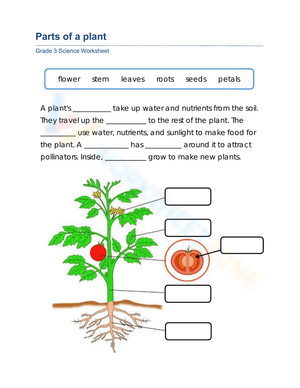
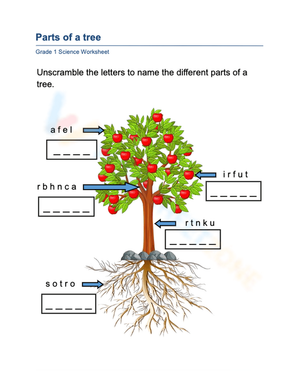
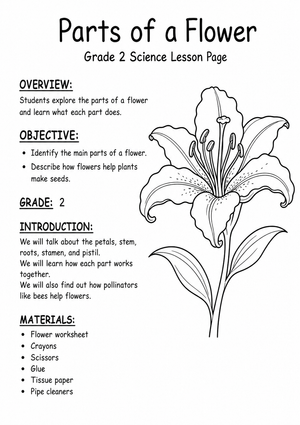
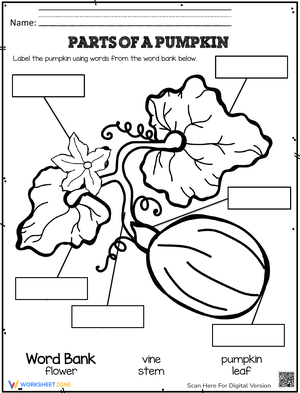
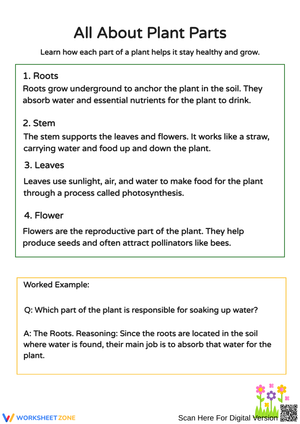
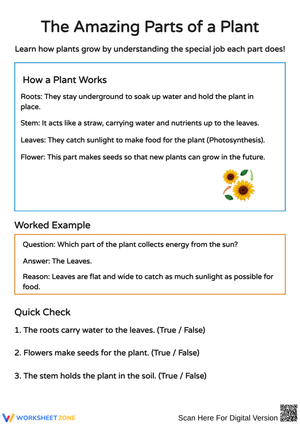
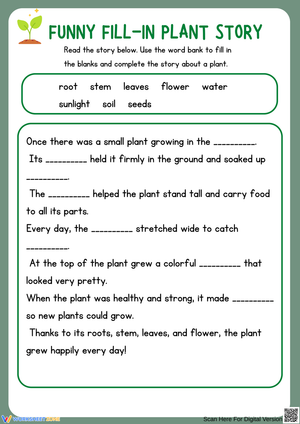
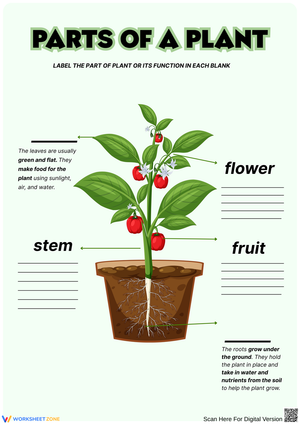
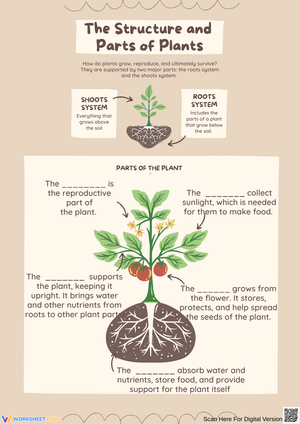
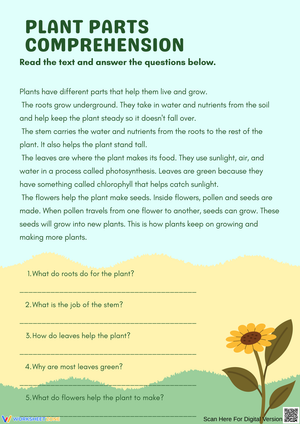
3rd grade parts of a plant pdf worksheets give science teachers a reliable, print-ready resource for one of the grade's foundational life science topics — identifying plant structures and explaining what each part does. The set covers roots, stem, leaves, flowers, fruit, and seeds through diagram labeling, function matching, and short written-response tasks. These materials fit across the arc of a plant unit, from first introduction through review and end-of-unit assessment.
What Each Worksheet Targets
The core instructional goal at this grade is getting students to do two distinct things with the same content: name a part when they see it on a diagram, and explain its job in plain language. Those skills are related but not the same, and students can master one while still struggling with the other. A well-structured set of 3rd grade parts of a plant pdf worksheets addresses both explicitly rather than treating labeling as the finish line.
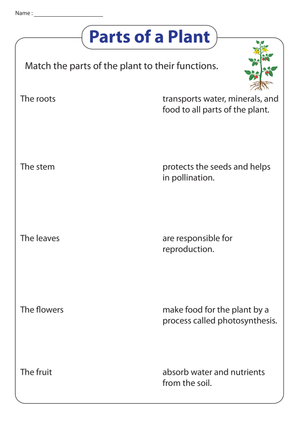
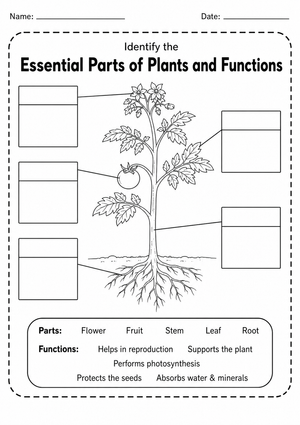
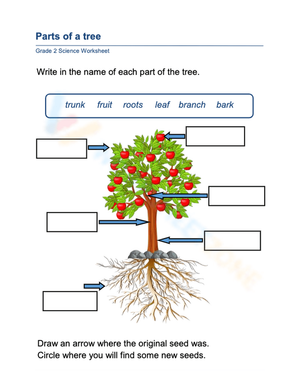
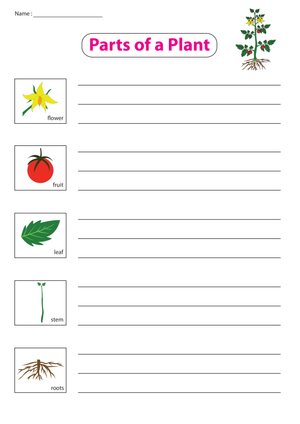
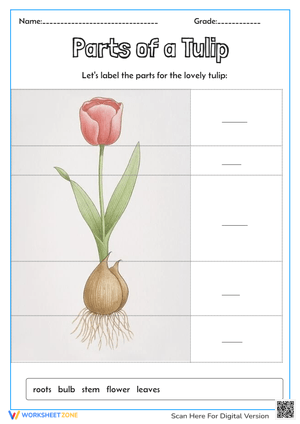
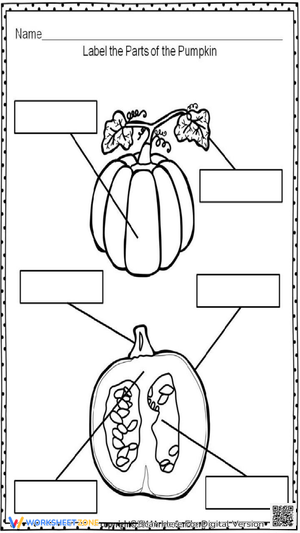
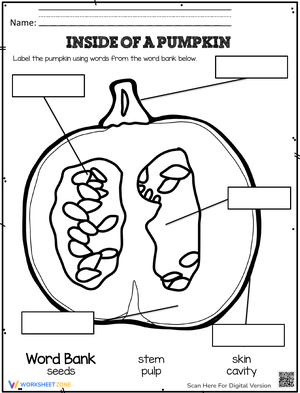
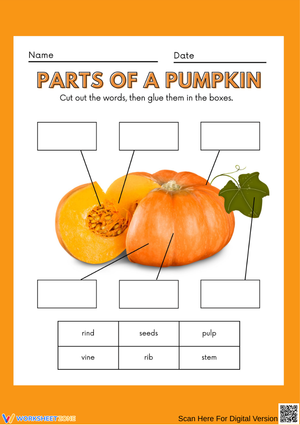
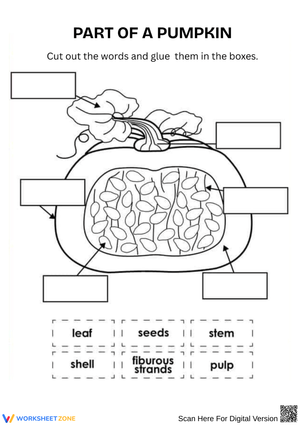
Labeling tasks ask students to match written terms to the correct structure on an unlabeled diagram. Function-matching tasks pair each part with a brief description of what it does. Short written-response tasks ask students to explain functions in their own words — which is where genuine comprehension surfaces. Sorting activities, where students group plant parts by the kind of job they perform, give students a different angle on the same material and expose misunderstandings that a labeling check alone will not catch.
The set stays within the Grade 3 instructional boundary: students should know that leaves are where the plant makes its food, not that they can explain the biochemistry of photosynthesis. That boundary shapes what a correct student response looks like on every task in the set.
Frequent Student Errors Worth Anticipating and Addressing
The most persistent error in Grade 3 plant work is what we might call the leaf-food confusion. Students who can recite "leaves help the plant make food" often interpret that as leaves delivering food to the plant from outside — the way watering works. Ask them what would happen if you removed all the leaves, and many will say the plant would starve because nothing could bring it food anymore. The concept of leaves as the production site, not a delivery system, takes more than one pass to build. Written-response tasks surface this gap faster than any labeling check will.
Stem-versus-trunk is a second consistent problem. Students who correctly label the stem on a sunflower diagram hesitate when shown a tree and asked to identify the same part. The word trunk is more familiar, and many third-graders treat it as an entirely different structure rather than a woody type of stem. A brief direct statement during instruction — "a trunk is a kind of stem" — prevents this from hardening into a long-lasting misconception.
Root visibility causes similar trouble. Students often believe all roots are underground and invisible by definition. When shown a photo of mangrove roots above the waterline, or an orchid with aerial roots clinging to a surface, they frequently decide those structures cannot be roots. Each worksheet that includes real-world plant photographs rather than only a stylized garden-plant drawing will expose this assumption faster than a standard diagram ever could.
Building These Worksheets Into Your Science Block
A reliable opening sequence: bring in a real plant or project a high-quality image, ask students what they notice before naming anything, and then introduce terms as students point to the structures they already observed. After that guided naming discussion, a labeling worksheet works as the task that fixes vocabulary in place — not as the first exposure to the words, but as the step that makes them stick.
One classroom move worth keeping is a two-pass routine on any labeling worksheet. On the first pass, students write only the part names. On the second pass — using a different color pencil — they go back and add a short function phrase next to each label. That small routine makes it easy to look at student work and see immediately whether a student is stuck on vocabulary, on the science concept, or on both. It also builds the habit of treating name and function as two separate things worth knowing.
For centers, pairing one labeling worksheet with one function-matching worksheet in the same station keeps the work time short and the purpose clear. Students can check each other's labeling before moving to the matching task. For end-of-lesson assessment, a diagram-plus-function worksheet with no word bank gives you a retrieval check — which tells you more than a recognition-based multiple-choice format does. For homework, send the clearest diagram-and-label worksheet in the set, one that uses simple directions and a familiar format so the task does not require explanation from home.
Adjusting the Set for a Range of Learners
Students who need reading support do better when the diagram is large, the word bank is visible, and the directions stay brief. The range of task types within 3rd grade parts of a plant pdf worksheets — from labeled diagrams with word banks to open-ended function writing — makes tiering support straightforward without creating entirely separate materials. Preteaching roots, stem, and leaves before students open the worksheet keeps decoding from competing with science thinking. Once those three are solid, adding flowers, fruit, and seeds goes quickly because students are building on something stable.
For students working at grade level, the labeling-plus-function combination is the right target. They should write the function in their own words rather than select from a list — that step reveals whether students have internalized the idea or are just pattern-matching to the answer that looks familiar. The difference shows up clearly in a set of papers from any class.
Students who finish quickly respond well to extension prompts that require reasoning beyond identification. A prompt like Which plant part do you think the plant could least afford to lose, and why? asks them to weigh what they know about function — a genuine science-thinking task, not just extra practice. Multilingual learners often benefit from keeping a simple labeled reference diagram nearby while they work, so they can check a part name without stopping the task entirely.
Frequently Asked Questions
Which plant parts are typically addressed at the Grade 3 level?
Most Grade 3 plant instruction covers six main external structures: roots, stem, leaves, flowers, fruit, and seeds. Students learn a basic function for each part and are expected to explain it in plain language — roots absorb water and anchor the plant, the stem supports and transports, leaves produce food, flowers lead to fruit, and fruit protects the seeds inside.
How do these worksheets connect to hands-on plant observation?
The worksheets work best alongside direct observation rather than in isolation. After students label a diagram, having them examine a real plant or a seed packet and locate the same structures they just named on paper turns vocabulary into something attached to a real object. Even a class windowsill plant or a few seeds in a clear cup gives students enough to work with. The worksheet captures what students know in writing; the observation confirms whether that knowledge transfers to an actual plant.
Can these worksheets work for substitute science lessons?
These 3rd grade parts of a plant pdf worksheets are well-suited for substitute-led lessons because the diagrams are self-explanatory and the directions are brief. Labeling and matching tasks work better in that setting than open-ended writing tasks do — less ambiguity about what a correct answer looks like, and easier for a non-specialist to facilitate. Including the answer key in the sub folder makes whole-class review at the end of the period possible without any science background.
How can teachers tell when students are ready to move past plant-part identification?
The clearest signal is whether students can write a function explanation without a list of choices to select from. If a student correctly labels all six parts and writes a sentence for each explaining — in their own words — what that part does for the plant, they have hit the Grade 3 target for this content. Students who label accurately but produce vague function notes like "leaves do the leaf thing" or "the stem holds the plant" need another pass through the concept before moving on to comparative plant work or life cycles.












 Interactive Worksheet Maker
 Quiz Maker
 Word Search Maker
 Crossword Puzzle Maker
 Word Scramble Generator
 Sentence Scramble Generator
 Handwriting Worksheet Generator
 Name Tracing Generator
 Fill In The Blank Generator