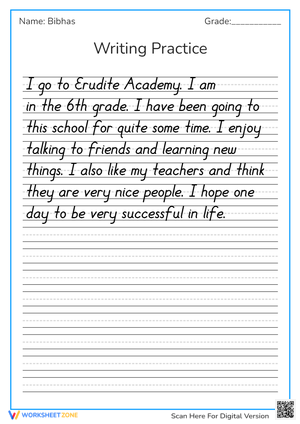
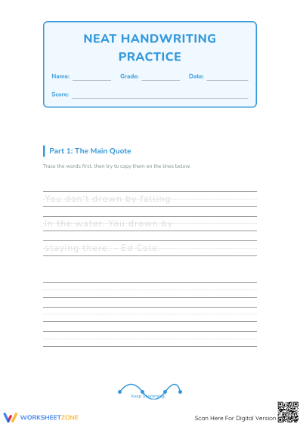
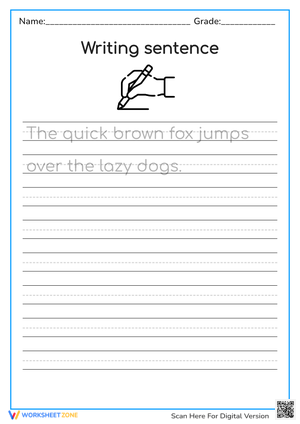
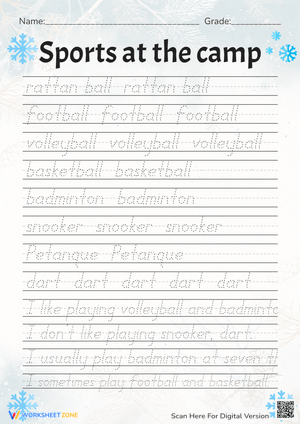
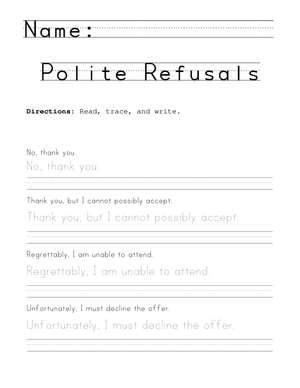
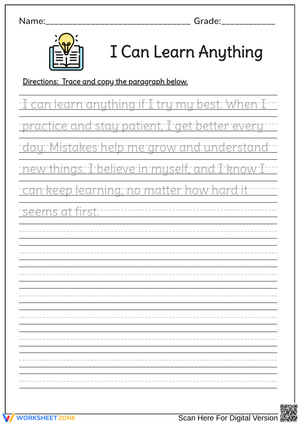
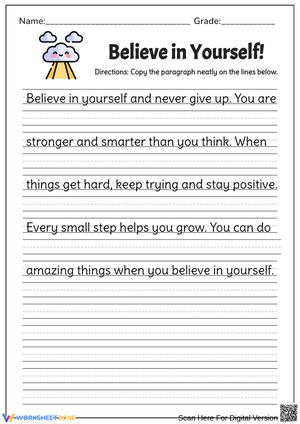
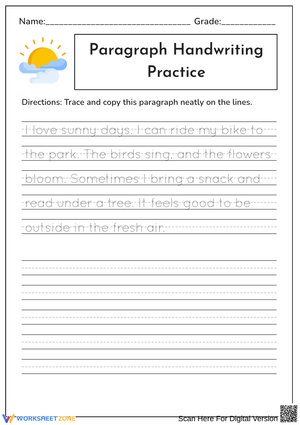
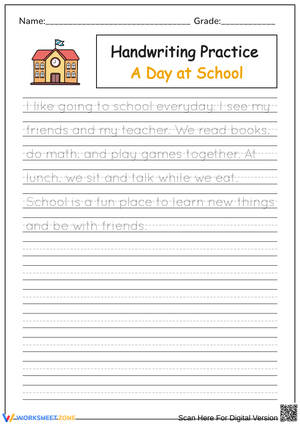
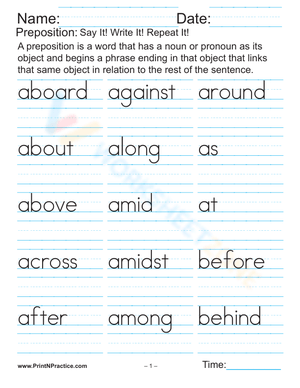
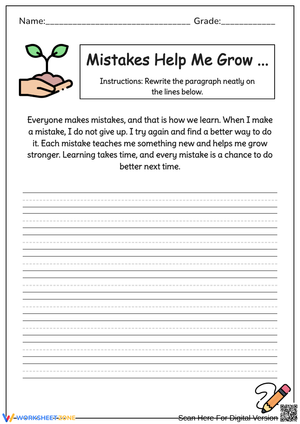
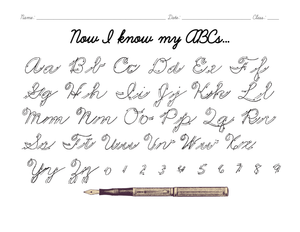
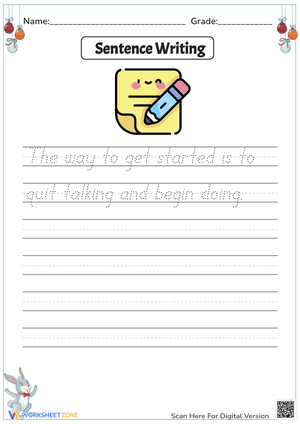
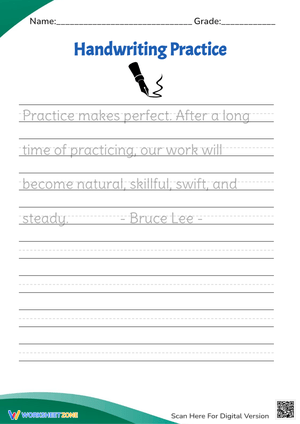
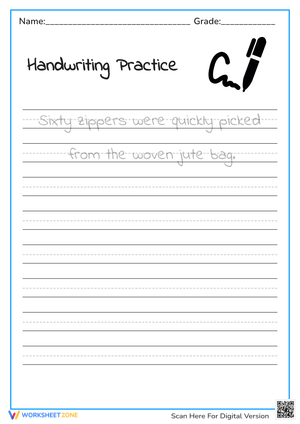
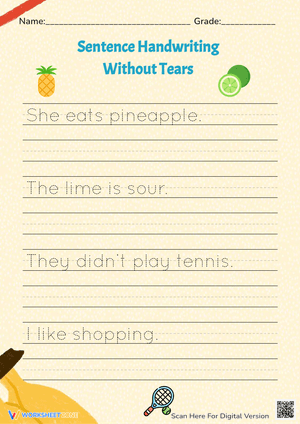
These 3rd grade daily handwriting worksheets give teachers a structured, print-ready practice set built around the central handwriting challenge of third grade: the full shift from manuscript printing to cursive, with all the stroke patterns, connection habits, and spacing demands that transition requires. Each worksheet moves through letter formation, word-level copying, and sentence application in one contained session — short enough to fit a morning warm-up, specific enough to show a teacher exactly where each student's formation is coming apart.
What Each Worksheet Covers
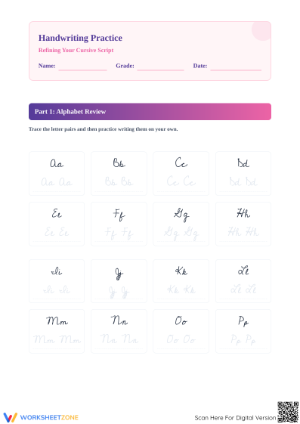
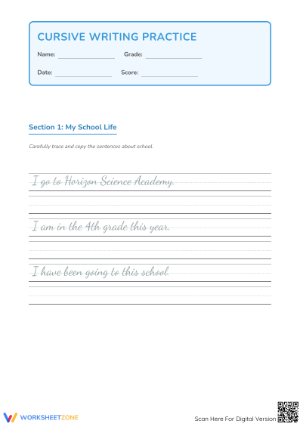
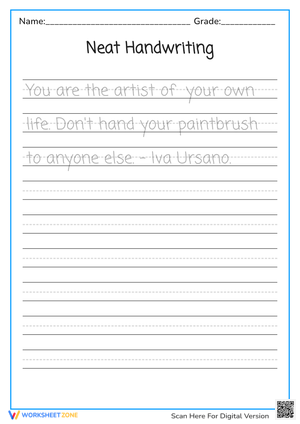
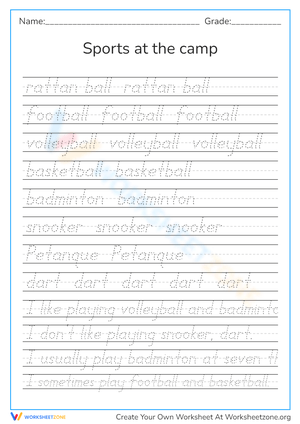
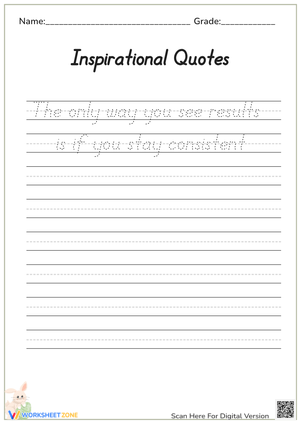
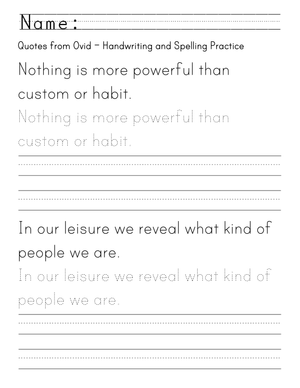
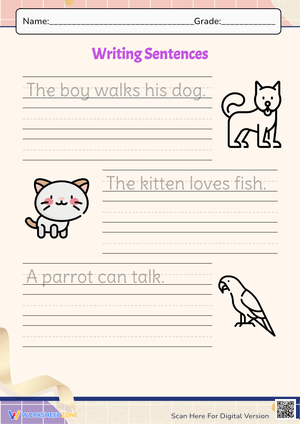
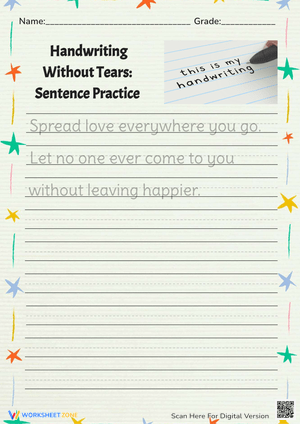
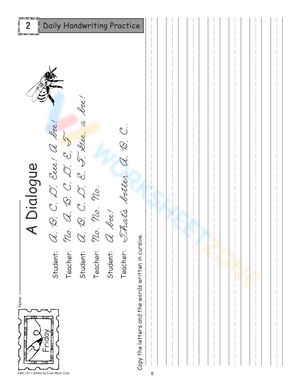
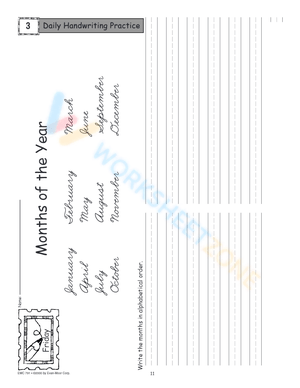
The set builds through three skill layers. At the letter level, each worksheet presents one or two cursive letterforms on a standard four-line guide: solid baseline, dotted midline, waist line, and ascender line. Students trace the model, then reproduce it on blank lines below without looking at the model. That retrieval step matters more than tracing alone because it pushes the motor pattern into memory rather than just the eye. At the word level, students copy words chosen specifically to require the connections the featured letter makes — not arbitrary vocabulary, but words where the target letter's entry and exit strokes actually appear in context. Sentence-level work closes each session with a short copying phrase that gives the target letters meaningful placement without overwhelming a writer who is still internalizing the new script.
This 3rd grade daily handwriting worksheets set also covers manuscript review. Third graders still write in print daily — on math assignments, science notes, standardized test responses — and those skills need maintenance even while cursive gets priority. The balance between the two scripts is built into the weekly sequence, so teachers don't have to make that call each morning.
Errors Worth Watching For When Students Work These Sheets
The error that appears most consistently at this level isn't poor letter formation in isolation — it's letter height inconsistency within words. A student who can produce a correct cursive l in isolation will write it the same height as a short letter like a the moment they move into copying a full word. The dotted midline on each worksheet makes this error immediately visible, which is why walking the room during the first five minutes of practice does more than any front-of-room demonstration.
A second reliable problem: students reverse their slant direction letter by letter instead of maintaining a consistent forward lean across an entire word. It shows up most sharply in words with alternating tall and short letters — "little," "bottle," "middle." Students are treating each letter as a separate object rather than part of a moving line. One intervention that outperforms verbal reminders: have the student draw a single light diagonal guide line with a ruler across one practice word before copying it. A physical reference changes behavior faster than spoken direction every time.
Word spacing is the third consistent breakdown point. Students compress words into what reads as one long joined string. Teaching the finger-space rule helps, but what actually changes the behavior more reliably is having students underline each word in their finished sentence with a different-colored pencil. Seeing words as distinct visual units on the page corrects spacing faster than any amount of telling.
Fitting These Worksheets Into Your Weekly Routine
The slot that works best for most third-grade classrooms is the ten-minute settling window after morning meeting, while students get organized at their desks before the first academic block begins. The task is self-starting — students pick up a pencil and begin without needing directions — which lets the teacher take attendance, handle notes home, and still scan the room for grip and posture problems in the first few minutes. Using the 3rd grade daily handwriting worksheets set as a consistent daily opener also trains students to treat handwriting as a regular academic task rather than something that happens only on special occasions.
A second effective placement is the transition back from specials — after PE, art, or music — when students need a focused, low-demand task to settle before independent reading or math. Handwriting fills that window cleanly because it requires enough attention to quiet a restless room without competing cognitively with whatever comes next.
For logistics: laminating a class set and storing the worksheets at a writing station with dry-erase markers removes the daily printing burden entirely. Students erase and reuse, and the novelty of markers keeps engagement noticeably higher than pencil-and-paper repetition alone. For accountability, students can trace one completed word with a finger onto a blank sheet in their writing folder before erasing — a twenty-second self-check that reinforces the motor pattern one more time.
Standard Alignment
The Common Core State Standards don't include a cursive-specific benchmark at grade 3 — that decision was left to individual states. Most state frameworks, however, place cursive introduction explicitly in third grade, and many district scope-and-sequence documents treat it as a non-negotiable third-grade skill. CCSS.ELA-Literacy.L.3.3 addresses language conventions in written work broadly, and legible handwriting is the baseline condition for any written convention to be assessed at all: a student whose cursive is unreadable can't demonstrate anything about word choice, sentence structure, or punctuation. Daily practice isn't peripheral to the L.3 standards — it's the prerequisite for meeting them.
Adjusting the Set for Writers at Different Levels
For students still working on manuscript consistency, the earlier worksheets in the set — which revisit print letter proportions before introducing cursive strokes — function as standalone review. Those students build consistency on the same four-line guide structure the cursive learners are using, just with print letter targets. They're not held back waiting for cursive readiness; they're doing meaningful, aligned work on the same tool.
For students who move through the standard material quickly, the sentence-level task extends naturally. A student who finishes the modeled sentence copies two or three additional sentences from a class poem or a content-area text, using the same target letters. The enrichment stays inside the same worksheet rather than requiring a separate document to prepare and distribute.
The 3rd grade daily handwriting worksheets set also aligns well with OT-supported instruction. The four-line guide structure and the isolated-then-connected practice sequence match what most OT-informed handwriting programs emphasize, so the classroom teacher and the specialist can coordinate without the student working from two conflicting frameworks at the same time.
Frequently Asked Questions
Should third graders practice both print and cursive every day?
Yes, but with a clear division of purpose. Use the daily handwriting session for cursive, where students slow down and focus on formation. Use print for everything else — math, science, journaling — so it stays automatic. Keeping the two modes separated by task prevents the most common mixed-script problem: students inserting print letters into cursive words mid-sentence because both scripts are in active, undifferentiated rotation.
How many minutes per session is actually productive?
Ten to twelve minutes is the ceiling for productive practice at this age. Past that point, hand fatigue sets in and letter quality drops — students aren't building good habits, they're reinforcing tired, imprecise ones. A session that ends while students still feel capable does more for long-term development than a longer session where quality collapses in the final minutes.
What do I do about a student with persistent poor pencil grip?
Start the referral process, but don't wait on it before acting in the classroom. A triangular grip aid placed on the student's desk alongside the worksheet corrects the most common pinch-grip pattern without requiring an OT visit first. Put it there without making it a formal assignment — most students adopt it within a week when it's simply present rather than prescribed.
How do these worksheets work for left-handed writers?
The guide lines and letter models work fine for left-handed students, but paper positioning is critical. Left-handed writers should rotate their paper counterclockwise about 45 degrees so they're writing at the same angle relative to their forearm as a right-handed student — this prevents the hooked wrist position that causes smearing and fatigue. One brief one-on-one demonstration at the start of the unit handles this for most students.












 Interactive Worksheet Maker
 Quiz Maker
 Word Search Maker
 Crossword Puzzle Maker
 Word Scramble Generator
 Sentence Scramble Generator
 Handwriting Worksheet Generator
 Name Tracing Generator
 Fill In The Blank Generator