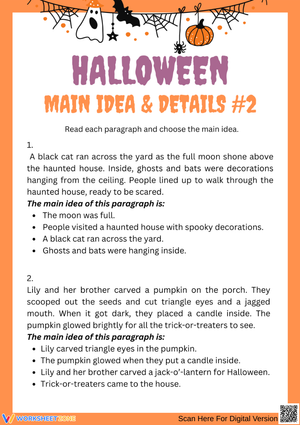
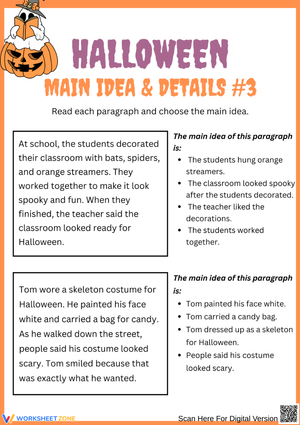
These main idea in nonfiction worksheets for 3rd grade give teachers a set of short informational passages paired with text-dependent questions that draw a clear line between topic, main idea, and supporting details — exactly the distinction Grade 3 readers need the most practice holding. The passages are short enough that students can reread while answering, which keeps mental energy on comprehension rather than tracking where they left off. Each worksheet stands alone, so a teacher can pull one for a Monday warm-up, drop it in a literacy center, or use it as a quick exit check without restructuring anything around it.
The Specific Skills Each Worksheet Targets
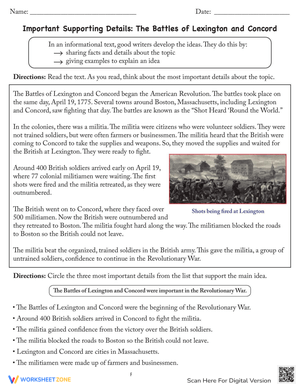
Third graders are formally expected to identify the main idea of an informational text and explain how key details support it — a skill that sounds simpler than it is. The challenge is not decoding; it is making a judgment call about which idea carries the most weight. These worksheets give students repeated practice doing exactly that across varied nonfiction topics: animal behavior, weather patterns, community roles, simple biographies, and basic science concepts.
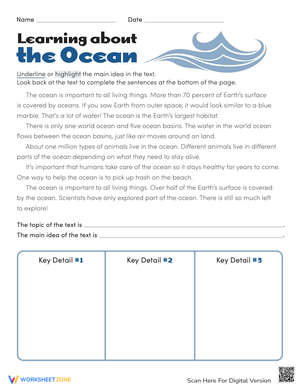
- Topic identification: Students name the subject of the passage in one or two words before doing anything else.
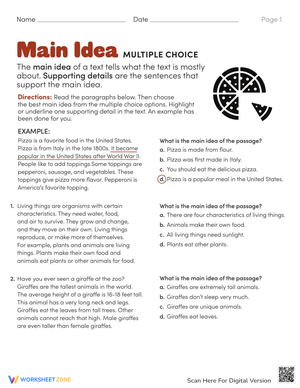
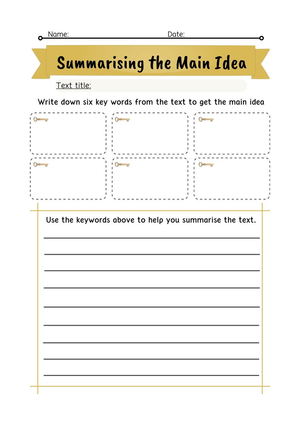
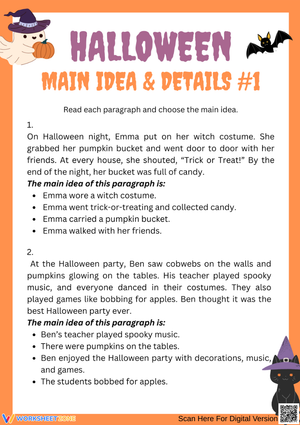
- Main idea selection and construction: Some worksheets ask students to choose the main idea from three options; others ask them to write it in their own words using a sentence frame or without one.
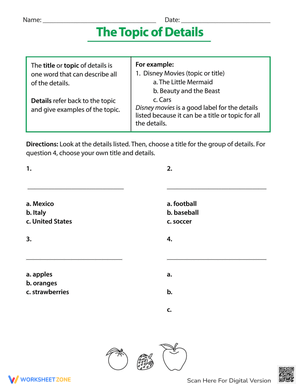
- Detail sorting: Students underline or list two or three details from the passage that support the main idea they identified.
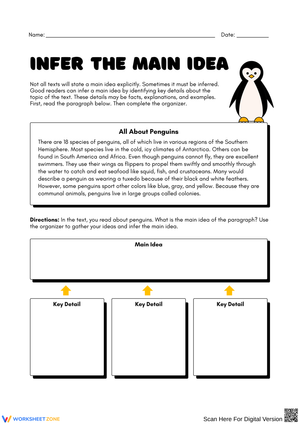
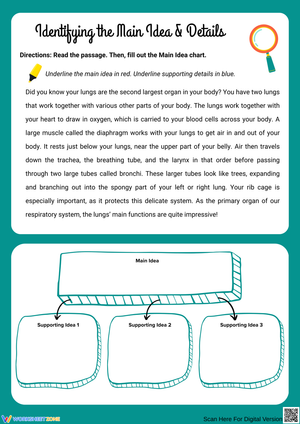
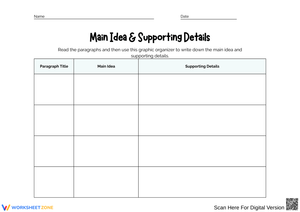
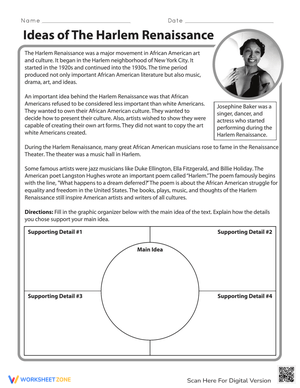
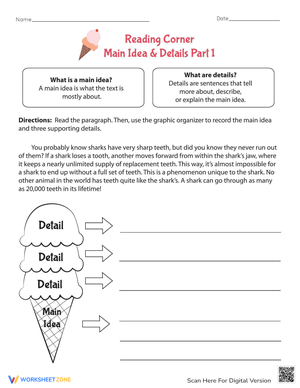
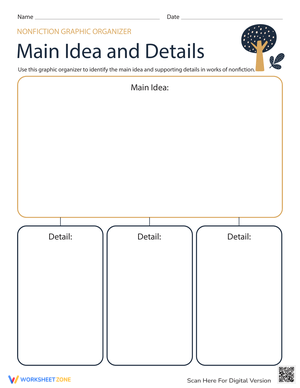
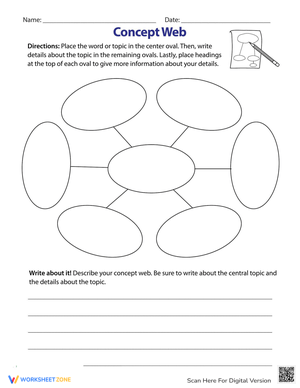
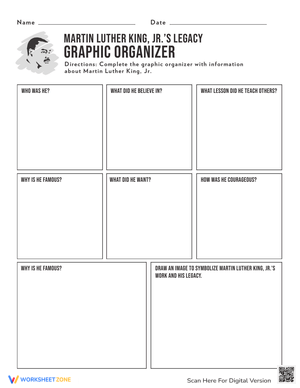
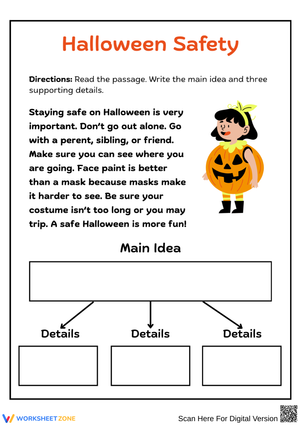
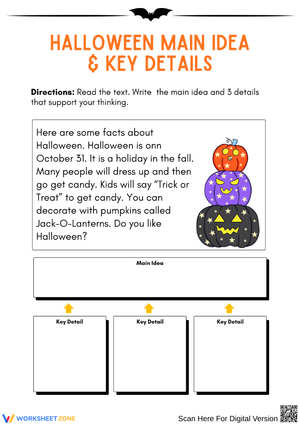
- Graphic organizer completion: Main idea boxes with branching detail lines give students a visual structure for organizing their thinking before they write.
- Explanation and justification: On more demanding worksheets, students explain why one of the other answer choices is only a detail, not the central point.
That last task — explaining why an answer is wrong — is where third-grade thinking tends to separate. Students who can articulate "that sentence is only one example; it doesn't tell the whole point" have genuinely internalized the skill, not just guessed correctly.
Student Errors Worth Anticipating Before You Print
The most common error in third-grade main idea work is treating a vivid detail as the central point. A passage about how honeybees communicate might mention that bees "dance" to show other bees where flowers are. Students find this detail memorable and write it as the main idea — not because they misread, but because the fact felt significant. The author's actual point (that bees have a complex communication system) is more abstract and requires a wider view of the passage. These worksheets include passages where the interesting detail is deliberately tempting, which makes the error surface in a controlled setting rather than on a test.
A second pattern is conflating topic with main idea. Students write "bees" or "rainforests" when asked for the main idea, giving the subject instead of a claim. This is especially common early in third grade, when students have been rewarded for naming what a text is about. The worksheets address this directly by asking topic and main idea as two separate questions and requiring a complete sentence for the second one.
A third error is anchoring on the first sentence. Students assume the opening line states the main idea and stop looking. In passages where the main idea appears mid-text or is reinforced in the final sentence, these students choose the wrong answer with complete confidence. Noticing this pattern during a small-group check tells a teacher whether a student has internalized a real reading strategy or learned a shortcut.
Building These Worksheets Into Your Lesson Plans Across the Week
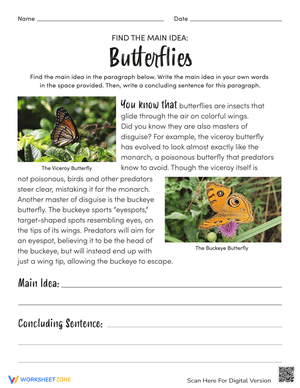
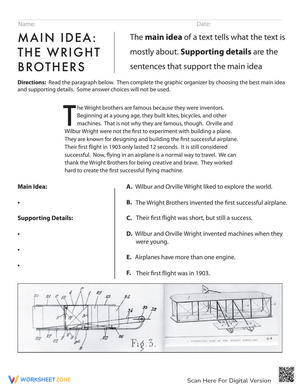
A natural rhythm for main idea in nonfiction worksheets for 3rd grade is to sequence them by level of independence across the week rather than by topic. Monday's worksheet asks students to choose the main idea from two clear options and underline one supporting detail. Wednesday's moves to three answer choices with two details to identify. Friday's worksheet asks students to write the main idea without any options and complete a graphic organizer with supporting details. That arc follows a gradual-release structure without requiring teachers to write new materials each day.
These worksheets also fit naturally into the parts of a reading block that are easy to fill poorly. The eight minutes after direct instruction ends but before small groups start — when some students are ready and others need a transition — is a clean place for an independent passage. Literacy centers run smoothly with a printed worksheet, highlighters, and a simple direction card at one station. End-of-lesson exit checks take three minutes and immediately show which students can identify the main idea without teacher support and which ones need to be pulled the next morning.
One classroom move worth building into any review day: ask students to cross out one detail in the passage they find interesting but that does not capture the author's central point before they answer the main question. That small step makes thinking visible and surfaces exactly the students who are drawn to flashy facts instead of the broader argument.
Standard Alignment
These worksheets align to CCSS.ELA-LITERACY.RI.3.2: "Determine the main idea of a text; recount the key details and explain how they support the main idea." This standard sits at the center of the Grade 3 informational reading strand and connects forward to RI.4.2, which asks students to explain how details develop a main idea — a more analytical version of the same core skill. Teachers planning across a full year will find the set fits both initial instruction in fall and review before spring benchmark testing, since the worksheets address the standard at multiple levels of independence and require students to produce written evidence, not just select answers.
Adjusting the Set for Mixed-Ability Classrooms
For students reading below grade level, the most useful adjustment is reading the passage aloud together before independent work and reducing the number of answer choices. Some students benefit from receiving the main idea statement up front and being asked only to find two or three details that support it — reversing the task removes selection pressure while still requiring them to engage with the text and identify relevant evidence.
For students who move through the basic questions quickly, two adjustments increase rigor without requiring a different worksheet. First, ask them to write a sentence explaining why each wrong answer choice falls short — too narrow, too specific, or only a single example. Second, ask them to complete the sentence: "The author wants readers to understand this because…" That follow-up requires reasoning about purpose rather than just content, and most third graders find it genuinely hard.
Main idea in nonfiction worksheets for 3rd grade that include graphic organizers are especially easy to adapt because the organizer itself becomes optional for students who no longer need the visual structure. Those students write their response in paragraph form while others continue using the organizer — same passage, same questions, different output format.
Frequently Asked Questions
What is the difference between topic and main idea, and how do I explain it to eight-year-olds?
Topic is the subject — usually a noun or short phrase. Main idea is what the author wants you to know about that subject — always a complete thought. The clearest explanation at this age: "The topic is what we're talking about. The main idea is what we're saying about it." A passage about monarch butterflies might carry a main idea of "monarch butterflies travel thousands of miles each year to survive the winter." One is a label; the other is a claim.
Can I use these worksheets with students who are still working on fluency?
Yes, with adjustment. Read the passage aloud or have a partner read while the less fluent student follows along. The comprehension skill — identifying the main idea — is entirely separable from oral reading fluency, and mixing the two in the same session often means you end up assessing the wrong thing. When the passage is read aloud, students who struggle with decoding can still demonstrate strong main idea thinking.
How many exposures does a third grader typically need before this skill holds independently?
There is no fixed number, but the pattern we see in student work suggests students need at least six to eight exposures across varied passage topics before they reliably distinguish main idea from supporting detail without teacher support. Spaced practice — one or two worksheets per week over several weeks — produces more durable retention than completing several in a single sitting. These main idea in nonfiction worksheets for 3rd grade are built to support that kind of distributed practice because each one is short enough to fit into a single session without overwhelming the lesson.












 Interactive Worksheet Maker
 Quiz Maker
 Word Search Maker
 Crossword Puzzle Maker
 Word Scramble Generator
 Sentence Scramble Generator
 Handwriting Worksheet Generator
 Name Tracing Generator
 Fill In The Blank Generator