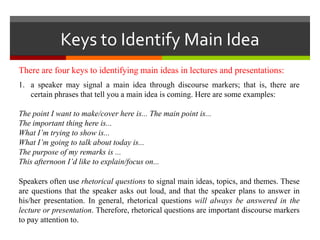
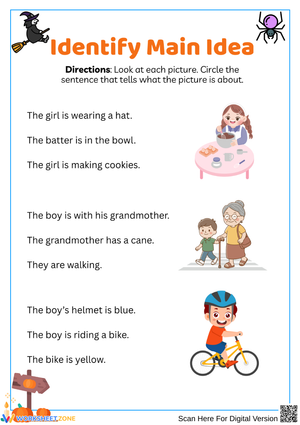
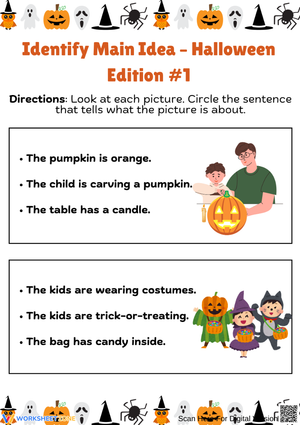
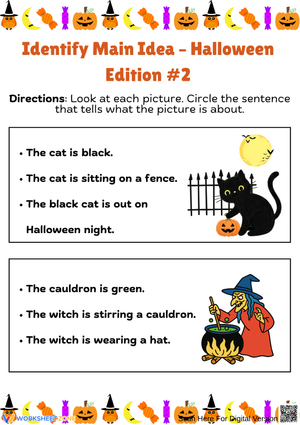
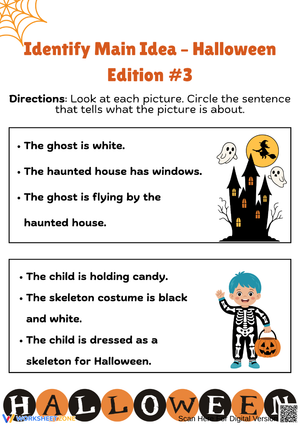
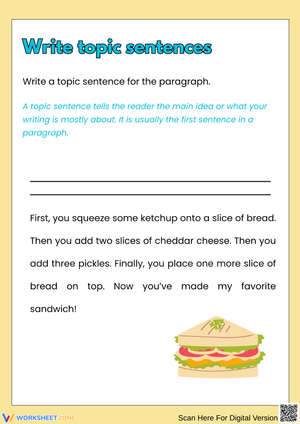
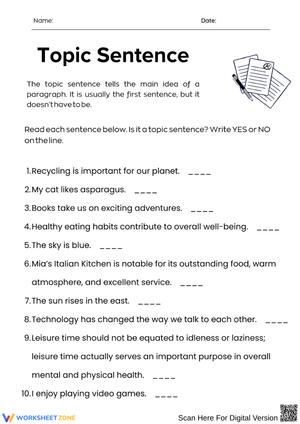
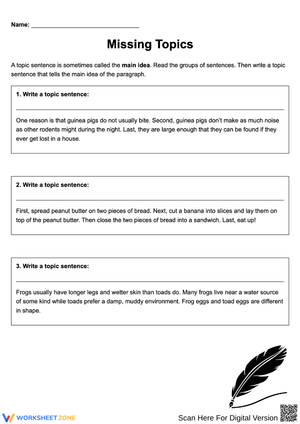
These 3rd grade main idea worksheets give students the structured practice they need to move from naming a topic to stating what the author actually wants them to know about it — a distinction that trips up more third graders than most teachers expect going into the unit. The set covers topic-versus-main-idea, supporting detail identification, and implied main idea in multi-paragraph texts, with passages drawn from science and social studies content.
The One-Word Answer Problem: Topic vs. Main Idea
The most consistent error in third-grade reading comprehension isn't misreading individual words — it's handing in one-word answers when asked for a main idea. A student who reads a passage about pollinators writes honeybees and considers the task complete. That's the topic, not the main idea. The actual answer — something like honeybees are essential to the food supply because they pollinate crops — requires synthesizing across the paragraph rather than naming its subject. Every worksheet in this set asks for a complete sentence, which forces that cognitive move without needing a reminder from the teacher every time.
This distinction sits at the center of CCSS.ELA-LITERACY.RI.3.2, which asks third graders not just to identify a main idea but to explain how key details support it. One useful classroom framing: the topic answers "What is this about?" while the main idea answers "What does the author want me to know about it?" Students who practice stating both separately stop conflating them within a few repetitions.
Skills These Worksheets Build
Each worksheet targets one or more of the following skills:
- Topic-versus-main-idea sorting: Students categorize provided phrases into two columns, distinguishing a one-word subject from a complete claim about that subject.
- Supporting detail identification: Students mark which sentences in a paragraph directly support the main idea and which are distractor details — accurate but off-point facts that don't advance the central argument.
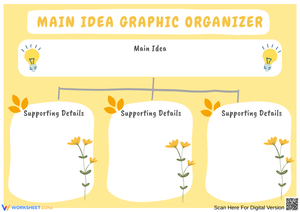
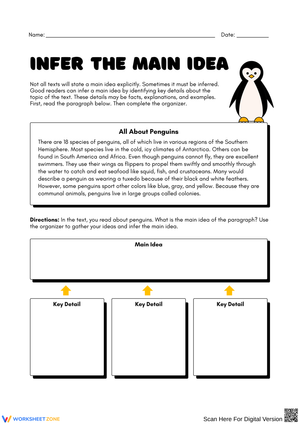
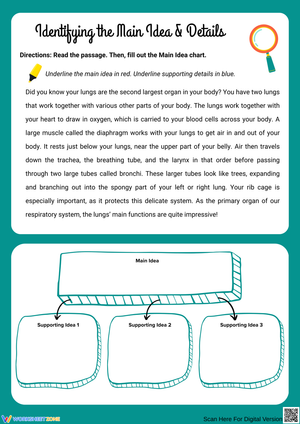
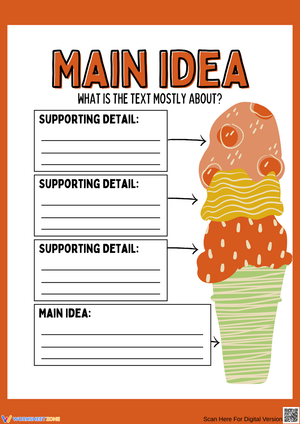
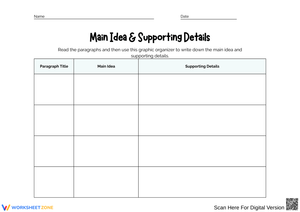
- Graphic organizer completion: Two formats appear across the set — a table model (main idea as the tabletop, supporting details as legs) and an umbrella model — so teachers can use whichever visual their class responds to.
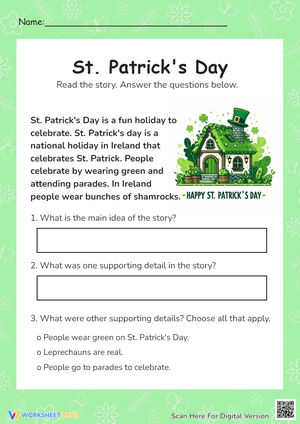
- Multiple-choice main idea practice: Short passages with four answer choices train students to eliminate options that are too narrow (one detail only) or too broad (going beyond what the text actually states).
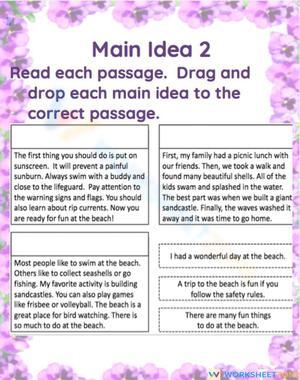
- Implied main idea in multi-paragraph texts: Passages where no single sentence states the main idea directly, requiring students to construct it from the pattern of details across the full text.
Mistakes Students Make That These Worksheets Help You Catch
Two patterns show up reliably in third-grade work on this skill. The first is what some teachers call the "interesting fact trap" — students pick the most surprising sentence in a passage and call it the main idea. In a text about how ants communicate using chemical signals, the sentence about ants lifting 50 times their body weight consistently pulls this response, even when the passage never develops that point. Worksheets that ask students to cross out the sentence that doesn't belong — rather than just identify what does — expose this error clearly, because explaining absence is a different cognitive task than recognizing presence.
The second pattern is over-broad answers. When students don't know what to write, they default to vague claims: This is about animals. It's not wrong, but it doesn't demonstrate the synthesis RI.3.2 requires. The complete-sentence format built into each worksheet pushes students toward precision, and a quick scan during independent work makes these responses easy to spot before they solidify into habits.
Fitting These Worksheets Into the Week
These resources work well as Monday warm-ups following a shared reading from the previous week — the gap between reading and retrieval reveals what actually stuck versus what students were simply following along with in the moment. Most third graders finish one worksheet in 8 to 12 minutes independently, which fits into the window between the reading block and specials, or the transition after morning meeting. For whole-group introduction, projecting a worksheet and completing it aloud gives teachers a natural think-aloud frame: "I notice the author keeps coming back to the same problem across three different sentences — that repetition usually points me toward the main idea."
Small-group work is where 3rd grade main idea worksheets earn the most instructional mileage. When four or five students read a passage together and argue about which answer is correct — "No, that's just one detail, it doesn't cover everything else in the paragraph" — they're doing exactly the reasoning RI.3.2 asks for, and the teacher can listen for misconceptions that would be invisible in a full-class setting.
Adjusting the Work Across Ability Levels
For students who freeze at blank spaces, providing three supporting details and asking only for the main idea reduces the initial cognitive demand significantly. Once a student has done that version three or four times with consistent accuracy, moving to a worksheet where they fill in both the details and the main idea feels like a natural progression rather than a sudden jump. The reverse works for students ready to push further: give them a main idea statement and ask them to write the paragraph that would support it, converting the reading task into a writing one.
Students who handle stated-main-idea worksheets quickly and accurately often need the implied main idea format to stay genuinely engaged. 3rd grade main idea worksheets built around implied main ideas require inferential synthesis — the kind of reasoning state assessments begin testing in third grade — so they carry both enrichment value and practical assessment preparation for that group.
Standard Alignment
These worksheets address CCSS.ELA-LITERACY.RI.3.2, which asks students to determine the main idea of an informational text, recount the key details, and explain how those details support the main idea. In classroom terms, RI.3.2 sits at the center of the shift from narrative to informational reading that defines the third-grade year — students are now expected to extract and evaluate what a nonfiction author is arguing, not just follow a story. The multiple-choice format worksheets also reflect the item type most commonly used to assess this standard on state reading exams, giving teachers a low-stakes formative check that mirrors the testing format before high-stakes windows arrive.
Frequently Asked Questions
How do I help a student who keeps writing the topic instead of the main idea?
The fastest fix is the "So What?" follow-up. When a student writes dogs, ask: "So what about dogs?" Whatever comes next is closer to the main idea. Doing this two or three times with concrete objects before touching a worksheet — a bag containing a toothbrush, toothpaste, and dental floss, for example — builds the habit in a low-stakes setting. Once students have named the main idea of the bag ("keeping your teeth clean"), transferring that thinking to a paragraph feels less abstract. Most students internalize the question-and-answer move after three or four oral practice rounds.
What should I do when a student writes something too vague, like "This is about nature"?
That response usually signals the student is avoiding close reading rather than attempting it. Ask them to point to three specific sentences in the passage and read each one aloud, then ask: "Does your sentence cover all three of those?" The self-evaluation almost always reveals the problem on its own. Having students underline or annotate before writing anything slows the impulse to fill in the blank quickly — the physical marking step converts skimming into actual reading.
Can these worksheets be used for RTI small groups?
For Response to Intervention use, 3rd grade main idea worksheets with short, high-interest passages and sentence starters — "The author wants us to know that..." — give students a linguistic frame without supplying the answer. For Tier 2 groups, keep passage length to one paragraph until students demonstrate consistent accuracy across several sessions before moving to two-paragraph texts. Graphic organizer worksheets where the supporting details are already filled in work well for Tier 3 students — they see the relationship between evidence and claim before being asked to construct it independently.












 Interactive Worksheet Maker
 Quiz Maker
 Word Search Maker
 Crossword Puzzle Maker
 Word Scramble Generator
 Sentence Scramble Generator
 Handwriting Worksheet Generator
 Name Tracing Generator
 Fill In The Blank Generator