3rd Grade Encanto printable worksheets for ELA Practice
These 3rd grade encanto printable worksheets resources center the Encanto theme on real literacy skills — character traits, inference, sequencing, and short written response — rather than on film-recall questions that only students who watched the movie recently can answer well. Each worksheet targets one defined ELA skill, keeps directions short, and includes enough text on the worksheet for students to do the thinking without needing outside knowledge. The set works across multiple parts of the school day and covers the kind of skill practice third graders need from first quarter through spring.
What's Inside the Set
The worksheets address a range of Grade 3 reading and writing skills, and each stays focused on a single task so teachers can assign specific worksheets to match current instruction. The skills covered include:
- Character traits: Students read a short passage, choose a trait, and cite at least one detail from the text that supports the choice — not just the moment that reminded them of the character.
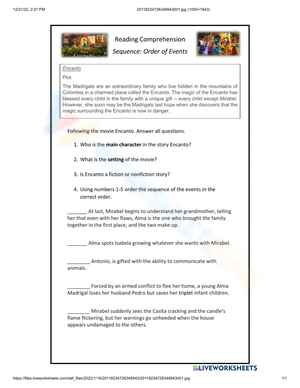
- Sequencing: Learners arrange events in order, identify beginning-middle-end structure, and explain the relationship between two events using either sentence frames or open response.
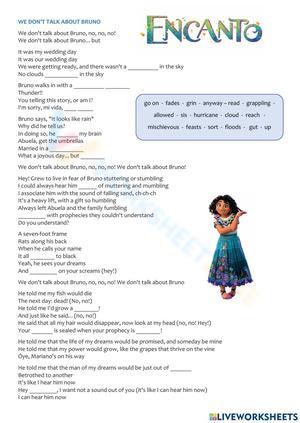
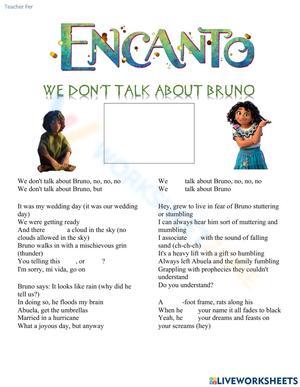
- Vocabulary in context: Students use surrounding sentences to figure out word meaning, match terms to definitions, or rewrite a sentence using a synonym.
- Inference: Readers identify clues in a short passage and explain what can be concluded — the why behind a character's action or the reason a problem exists.
- Theme and author's message: Students move beyond plot retelling and articulate the central lesson in a passage, using a sentence starter such as The author's message is ___ because ___.
- Grammar and mechanics: Themed sentences serve as editing practice — correcting capitalization, adding end punctuation, or identifying parts of speech in context.
Every passage on each worksheet is original and self-contained. Students do not need to recall specific scenes to complete the task.
Frequent Errors Worth Watching For Before You Assign These
Character trait tasks produce one of the most consistent errors in third grade: students describe what a character does instead of what a character is. A student writes "Luisa lifts things" rather than "Luisa is responsible" or "Luisa is anxious under pressure." The trait and the evidence are not the same thing, and many 8- and 9-year-olds treat them as interchangeable. These worksheets ask students to first name the trait, then cite the action that proves it — a two-step structure that forces students to hold both parts in mind at once rather than collapsing them into a single vague answer.
Theme is the other predictable trouble spot. Students at this level often write a plot summary when asked for a lesson or message. A response like "Mirabel tries to save the family house" restates events rather than extracting meaning. The worksheets on theme include a brief model response at the top so students see the difference between "what happened" and "what the story teaches." That model is particularly useful during the first few weeks of introducing theme as a formal concept, which typically falls around second quarter in most Grade 3 pacing guides.
For inference, watch for students who make reasonable-sounding guesses without anchoring them to the text. The inference worksheets ask students to underline the clue first, then write the conclusion — a sequence that catches students who are inferring without evidence before the habit settles in.
Building These Worksheets Into Your Weekly Plans
The most efficient structure is a skills rotation across Monday through Friday. Assign vocabulary on Monday when students are fresh, move into inference or sequencing mid-week when the class has momentum, and land on short written response on Thursday or Friday when students have had time to revisit the concepts in other contexts. That rhythm also makes grading predictable — one skill type per day means you are not switching evaluation criteria every few minutes while you move through a stack.
For literacy centers, these work best when paired with a simple answer-recording routine. Students underline the text evidence, mark their answer, and flip the worksheet facedown when finished. That small procedure cuts the "I don't know what to do with it" interruptions during independent rotation time. For sub plans, the grammar and sequencing worksheets are the safest choices — the tasks are concrete, the directions are direct, and students can self-check sequencing answers through partner comparison after finishing.
Morning work is another strong fit, especially on days when you need a quiet, focused start before the reading block. A vocabulary or character traits worksheet gives students something purposeful to do in the 8 to 10 minutes between arrival and morning meeting — and it previews the day's reading focus at the same time. The turn-and-talk before independent work is worth the two minutes it takes: students who verbalize their thinking about a character trait or theme idea write more complete responses than students who go straight from directions to pencil.
Standard Alignment
The 3rd grade encanto printable worksheets set aligns primarily with CCSS.ELA-LITERACY.RL.3.1 (citing textual evidence to answer questions), RL.3.2 (determining the central message or lesson), and RL.3.3 (describing characters and explaining how they respond to events). These three standards form the backbone of most third-grade reading instruction from first quarter through state assessment season. The vocabulary worksheets connect to L.3.4 (using context clues to clarify word meaning) and L.3.6 (acquiring and using grade-appropriate vocabulary). Grammar practice worksheets address L.3.1 and L.3.2 at the sentence level. Because each worksheet maps to a specific standard rather than several at once, teachers can assign them within a unit without having to retrofit the activities into instruction that was already planned.
Adjusting the Set for Mixed-Ability Groups
The 3rd grade encanto printable worksheets format supports tiered instruction without requiring separate materials for every reading level. For students who need additional support, add a word bank to the character traits and vocabulary worksheets — students still do the analytical work, but the retrieval demand drops enough for them to access the skill. Sentence frames are useful for inference and theme responses: The text says ___, which shows that ___ gives hesitant writers a structure to follow without removing the cognitive demand of identifying evidence.
For students who move quickly, extend any written response by requiring a second piece of evidence or a brief counterargument. A character trait response that normally ends after one supporting detail can grow into a two-sentence constructed response when you add the follow-up prompt "Now find one moment where the character acts differently — and explain why." That extension fits on the existing worksheet without printing additional materials.
Students identified for intervention benefit most from the sequencing and vocabulary worksheets, where the skill is concrete and the success criteria are easy to name. Reserve inference and theme worksheets for small-group instruction so you can prompt strategically rather than leaving those students to stall through a task that needs live conversation to make sense at their level.
Frequently Asked Questions
Do students need to have watched Encanto to complete these worksheets?
No. Each worksheet includes its own short passage, summary, or scenario. Students who have seen the film may recognize the characters quickly, but the academic task depends entirely on reading the text on the worksheet — not on remembering the movie. That design decision matters when you have students in the same class with very different media exposure at home.
How long does each worksheet take to complete?
Most worksheets take between 12 and 20 minutes for a typical third grader working independently. Grammar and vocabulary worksheets run shorter; inference and written response worksheets run closer to 20 minutes. That range fits both morning work slots and a full independent practice block after a mini-lesson.
Can these be used for formative assessment?
Yes — especially the character traits, inference, and short written response worksheets. Because each worksheet focuses on one skill and asks students to show their reasoning in writing, the finished worksheets give a clear snapshot of whether a student can apply a standard with minimal guidance. The student work is easy to scan quickly for evidence patterns and gaps before planning the next lesson.
Are these printable in black and white?
The set prints clearly in black and white. The design avoids heavy shaded backgrounds that go muddy on a standard school copier. Clean line work and readable fonts are the baseline — the 3rd grade encanto printable worksheets set does not depend on color to be functional or visually appealing to third graders.
How do these fit into a workshop model literacy block?
During independent reading time or immediately after a mini-lesson, these worksheets serve as the practice component of gradual release. Assign the worksheet at the skill you most recently modeled in whole-group instruction so the connection between teaching and practice stays immediate. The self-contained format also makes them a natural choice as the independent task students complete while you pull a small reading group to the back table.
Clear All